Richard Thomas became one of the most recognizable young actors on American television almost overnight when The Waltons premiered in 1972. He was just 21 when he took on the role of John Boy Walton, the eldest son who served as the show’s narrator, an aspiring writer, and one of its main emotional centers. By 1973, he had won a Prime Time Emmy for his performance. The success seemed like everything a young actor could want, but Thomas worried about the long-term cost.
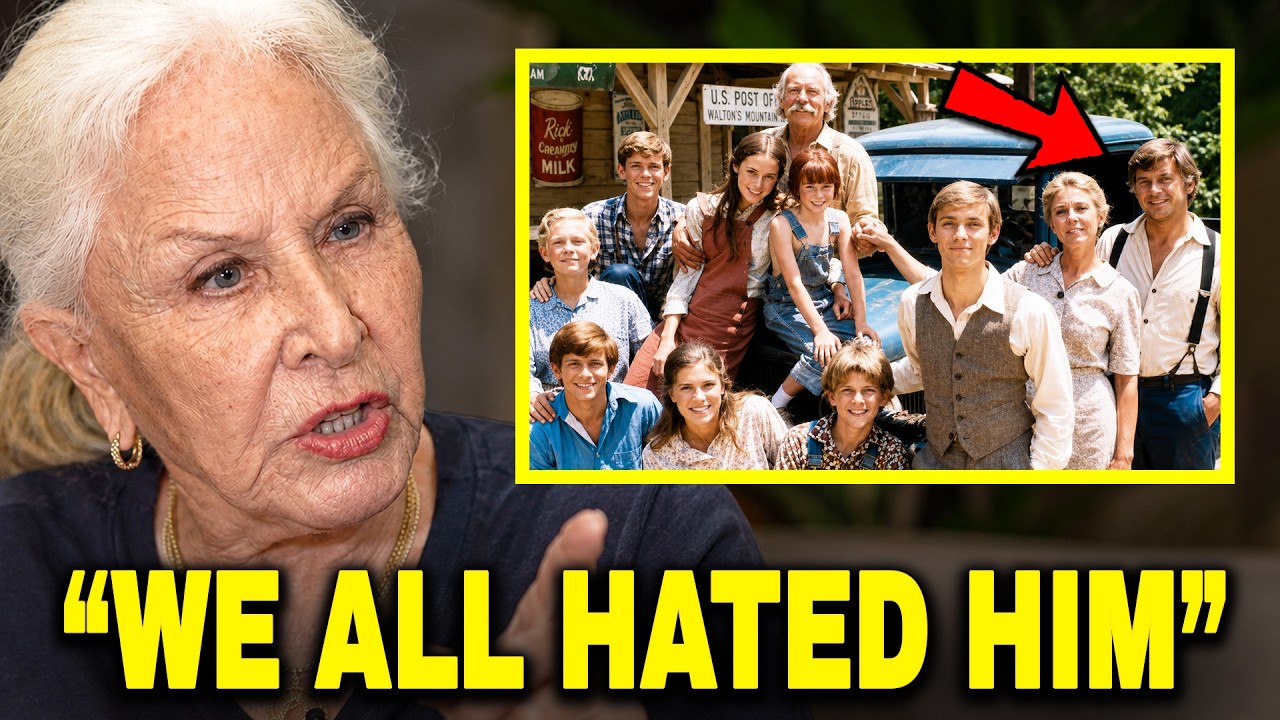
He had stage training and had studied at Columbia University, and he wanted to explore film and other types of roles. The more closely audiences associated him with John Boy, the harder it became for him to imagine being accepted as anyone else. After the fifth season in 1977, Thomas decided he would not return for the sixth. He was not fired or forced out over a dispute with production.
He left on his own because he believed staying on the series could limit the kind of career he wanted to build. The writers used John Boy’s established dream of becoming a writer to write him out. The character moved to New York City to pursue his writing career, a storyline that made sense because it followed something viewers already knew about him. The producers also left the door open for a return, and Robert Wightman was eventually brought in to take over the role for the eighth and ninth seasons.
The absence of the original John Boy was noticeable. Thomas had been the narrator and one of the main figures viewers followed from the start, so removing him changed the balance of the series. For Thomas, leaving meant the freedom to perform on Broadway, appear in films and television movies, and continue building a respected career, though the major film career he had imagined never developed exactly as he had expected. Will Geer was already an experienced actor long before he became Grandpa Zebulon Walton.
When the series premiered, audiences knew him as the warm, outspoken grandfather who helped hold the Walton household together. But the man playing him had lived through a far more difficult chapter of American history than his on-screen character ever faced. Long before The Waltons, Geer had supported labor organizing, taken part in civil rights efforts, and become involved with left-wing political groups. He was also a close friend of folk singer Woody Guthrie.
These activities were part of his professional identity during a time when political beliefs could have serious consequences in Hollywood. In 1951, Geer was called to testify before the House Un-American Activities Committee, which was investigating alleged communist influence in American entertainment. He refused to cooperate, and the decision had devastating professional consequences. Geer was blacklisted, effectively shut out of mainstream Hollywood work.
Instead of appearing regularly in major productions, he spent more than a decade finding work wherever he could, performing on stage and becoming involved with community theater. The period lasted for years, not because Geer had lost his talent, but because his professional opportunities had been restricted due to his political history and his refusal to cooperate with the committee. By the time The Waltons premiered, Geer was in his late sixties. The role gave him a level of mainstream recognition that had been taken away from him years earlier.
He remained with the series through the fifth season before his story ended in a way that had nothing to do with disagreements or career ambitions. Geer died on April 22, 1978, at the age of 76. Rather than inventing an elaborate storyline, the series allowed Grandpa Walton to die between seasons. Ellen Corby also had an impressive career long before she became Grandma Esther Walton.
She had worked as a character actress for decades and was an Academy Award nominee for her performance in I Remember Mama. Grandma Walton quickly became one of the show’s most memorable characters, known for her sharp personality and dry sense of humor. Her scenes with Will Geer were especially important to the show’s family dynamic. Audiences responded strongly, and so did the television industry.
Corby won three Prime Time Emmys for playing Grandma Walton in 1973, 1976, and 1977. Then, in November 1976, everything changed. Corby suffered a severe stroke at age 66 while The Waltons was still in production. The stroke seriously affected her speech and mobility, and it was uncertain whether she could return at all given the demanding weekly schedule.
The production chose a direct approach: Grandma Walton suffered a stroke in the show’s storyline as well. Corby’s real medical situation was not hidden from the audience. The character’s condition became part of the Walton family’s story, allowing the writers to adjust the role around Corby’s actual condition rather than expecting her to immediately return to her previous workload. Corby eventually returned beginning with the seventh season, but her appearances were more limited and the production had to work within the physical effects of the stroke.
She remained part of the series through the later seasons and returned for the reunion movies that followed. What viewers saw on screen was closely connected to what Corby herself had experienced. Michael Learned became one of the defining faces of The Waltons when she took on the role of Olivia Walton. Olivia was patient, hard-working, and devoted, but she was not written as a perfect mother.
Learned gave her quiet strength while also showing the pressure of raising a large family during the Depression. She won the Prime Time Emmy for Outstanding Lead Actress in a Drama Series four times for the role, in 1973, 1974, 1976, and 1979. After seven seasons, Learned decided to leave. The reason was not a feud, scandal, or sudden dislike of the people around her.
She was exhausted. The Waltons required roughly nine to ten months of production each year, and Learned had spent seven consecutive seasons working under that schedule. Her decision was not about rejecting Olivia Walton. She continued to speak warmly about her castmates and her experience on the show.
Her problem was the amount of time and energy the production took from her life. She wanted to work on other projects, have more control over what she did professionally, and step back from the constant demands of the series. The writers wrote Olivia out by having her contract tuberculosis and leave Walton’s Mountain to receive treatment at a sanitarium. The storyline gave the character a serious but believable reason to be away while keeping the door open for a return.
Learned did return for later appearances and for the reunion movies. Her departure is interesting to compare with Richard Thomas’s. Thomas left because he worried John Boy would become the only role audiences could see him playing. Learned was not primarily worried that Olivia would prevent her from becoming another kind of actress.
She was tired of the production itself. Even four Emmy awards were not enough to make her continue with a schedule that had become too demanding. Patricia Neal was supposed to play Olivia Walton before Michael Learned ever took the role. The part was first offered to an actress who was already one of Hollywood’s most respected dramatic performers.
Neal had won the Academy Award for Best Actress for her performance in Hud, and Earl Hamner Jr. , the creator of The Waltons, specifically wanted her for Olivia. He believed she had the grounded, strong quality needed to hold the family together. But in February 1965, while she was pregnant with her fifth child, Neal suffered three massive strokes in rapid succession.
She was only 39. The medical emergency left her partially paralyzed and caused serious problems with speech and other abilities. Recovery required years of extensive rehabilitation. Neal fought her way back to acting.
In 1968, she received an Academy Award nomination for her performance in The Subject Was Roses, proving the strokes had not taken away her ability to perform. However, returning to acting was not the same as being physically ready for every type of job. A weekly television drama demanded a very different commitment from an individual film performance. The production schedule could run for most of the year, with large amounts of dialogue, long hours, and a consistent performance level from episode to episode.
For someone still dealing with the physical consequences of multiple major strokes, that schedule presented serious challenges. Neal ultimately withdrew from the project before filming began. Michael Learned was then brought in to play Olivia Walton, and audiences eventually came to associate the character completely with her. Learned went on to win four Emmys for the role, but that version of Olivia only existed because Patricia Neal could not take the job.
We can never know exactly what The Waltons would have looked like with Neal playing Olivia. What we do know is that Hamner had wanted her for the role, and her health made the demanding schedule unrealistic. Neal did not walk away because she had lost interest in acting or lacked ambition. She had already rebuilt her career after a devastating medical crisis.
The strokes had changed what she could realistically take on, even though they had not destroyed her talent. Kami Cotler and John Walmsley took very different paths after The Waltons. Cotler played Elizabeth Walton, the youngest child. When the series began in 1972, she was only 6 years old.
By the time it ended in 1981, she was 15. Almost her entire childhood was spent working on a nationally watched television show. After the series ended, Cotler went to college instead of immediately searching for another major acting role. She eventually became a teacher.
The decision does not appear to have been a failed attempt to remain in Hollywood. She simply chose not to make acting the center of her adult life, stepping away from the industry to build an identity not based on Elizabeth Walton. Walmsley played Jason Walton, the musical member of the family. He had genuine musical interests outside acting, and that connection continued beyond the role.
Unlike Thomas, he stayed with the series for all nine seasons. He made the opposite choice, remaining until the show ended, then gradually moving toward music composition and production. His career moved away from acting and toward music, but leaving the spotlight did not mean abandoning creativity. It meant focusing on a different form of creative work.
For Cotler especially, what happened after the show suggests that walking away from acting can sometimes be a deliberate decision to build a life around something else. Their time on the series gave them an unusual childhood and professional experience, but it did not have to determine what they would do for the rest of their lives. The Waltons may have looked like one of the happiest families on television, but behind the wholesome stories and famous good nights, several cast members faced challenges that shaped their careers and lives in ways most viewers never knew about.