For six seasons, millions of viewers watched Rick Dale and his family restore forgotten relics on the History Channel’s hit series American Restoration, turning rusty soda machines and vintage gas pumps into treasures. Then, without warning, the Dale family vanished from television in 2015. The shop closed its doors,and fans were left to wonder what had happened. Behind the cancellation was a story of corporate strategy, conflict over authenticity,and a family business destroyed by the very network that made it famous.
Rick Dale had spent decades perfecting his craft at his Las Vegas shop, Rick’s Restorations,before television ever came calling. He first appeared as a guest expert on Pawn Stars starting in2009, restoring antiques like a Coca-Cola vending machine for Rick Harrison. His appearances generated strong viewer retention,and the History Channel’s production company, Leftfield Pictures, saw an opportunity fora spin-off centered on his talent. American Restoration premiered on October25th,2010, drawing over5 million viewers, becoming one of the network’s highest-rated spin-offsand running over130 episodes across six seasons from2010 to2015\.
But the demands of production quickly became a double-edged sword;the network placed the shop on a punishing schedule, demanding up to26 episodes per year. This forced an artisanal business to complete complex historical rebuilds in days rather than months,pressuring craftsmen to cut corners against Rick’s strict standards. Producers staged fake bargaining sequences, sourced rare items on tight 48-hour deadlines,and even secretly used replica parts, violating Rick’s purist craftsmanship ethos. The Las Vegas heat,exceeding110 degrees in unairconditioned work bays,caused camera equipment to overheat, delaying shoots and pushing filming into the night.
Editors also manufactured drama,portraying younger cast members liketeenage son Tyler as lazyand incompetent,and stepson Bretly Otterman as bumbling comic relief,leading to real-world mockeryand deep family resentment. Behind the scenes, Rick was grieving his father,who passed away in2010 just as season one began filming. He had also suffered a painful divorce,and a2003 fire that destroyed his workshop and uninsured inventory. Cowboy,a genuinely volatile metal worker, clashed constantly with directors over being filmed,while secondary cast members received flat,standard reality TV stipends despite the network’s massive ad revenue,breeding resentment.
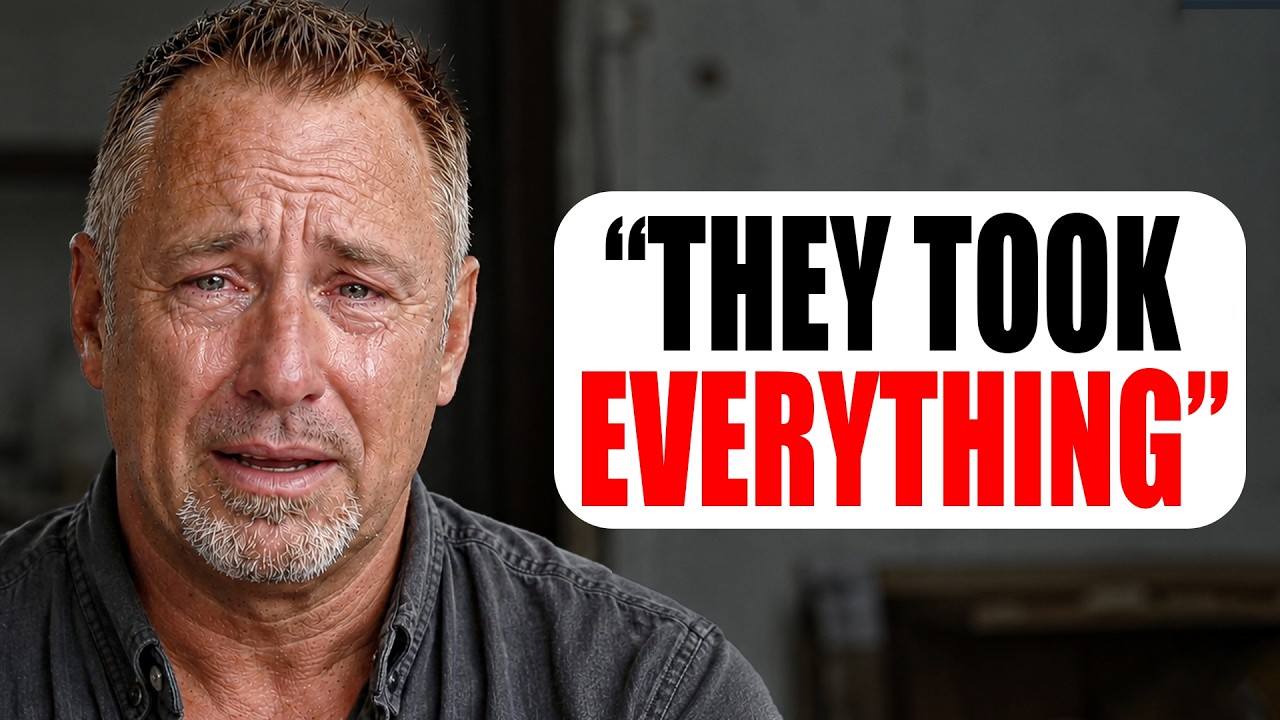
In2015,at the conclusion of season6,the network made the executive decision to completely fire Rick,the entire cast,and his family crew. There was no farewell episode,no official announcement. Strict non-disclosure agreements legally silencedthe Dalesfor months,leaving fans to speculate while the network quietly prepared a reboot. Once the legal window cleared,Rick released an emotional social media video,visibly upsetand explicitly stating he had been blindsided andfired,and begging fans to protest the network’s web pages.
The History Channel rebooted the show in2016 as season7,replacing the single Las Vegas shop with five rotating restoration businesses across America. Fans boycotted the new format,lacking family chemistry,viewership plummeted,and the network permanently canceled the entire franchise after just13 episodes. The cancellation brought financial ruin;Rick had expanded his shop,hired extra staff,and scaled overhead to accommodate tourist influxfrom the show. When the network’s marketing apparatus vanished,walk-in traffic dried up,and he was forced to liquidate Rick’s Restorations permanently.
Today,Rick andhis wife Kelly founded an independent artisanal business,My Best Font Forward LLC,based in Las Vegas,focusing on custom laser-cut metal art,and signs. He also authored the collector’s reference book Classic Soda Machines. Tyler walked away from commercial TV,now operating a custom woodworking and welding business from a vintage Airstream trailer. Bretty quietly returned to local automotive mechanical work,and Cowboy completely vanished from public life,retiring to a private existence.
The story of American Restoration’s end remains a cautionary tale about corporate miscalculationand the cost whenan entertainment machine values logistics over the people who made a show special.