Before Batman ever aired, Burt Ward was an unknown college student with no acting experience. His first audition for the role of Robin went so well that he was called back the very next day. For the follow-up, he brought a friend to spar with on camera and even carried in a wooden board so he could demonstrate breaking it with his bare hand. That confidence and athleticism landed him the part, and he changed his name from Burt Gervis to Burt Ward just before the series premiered in January 1966.
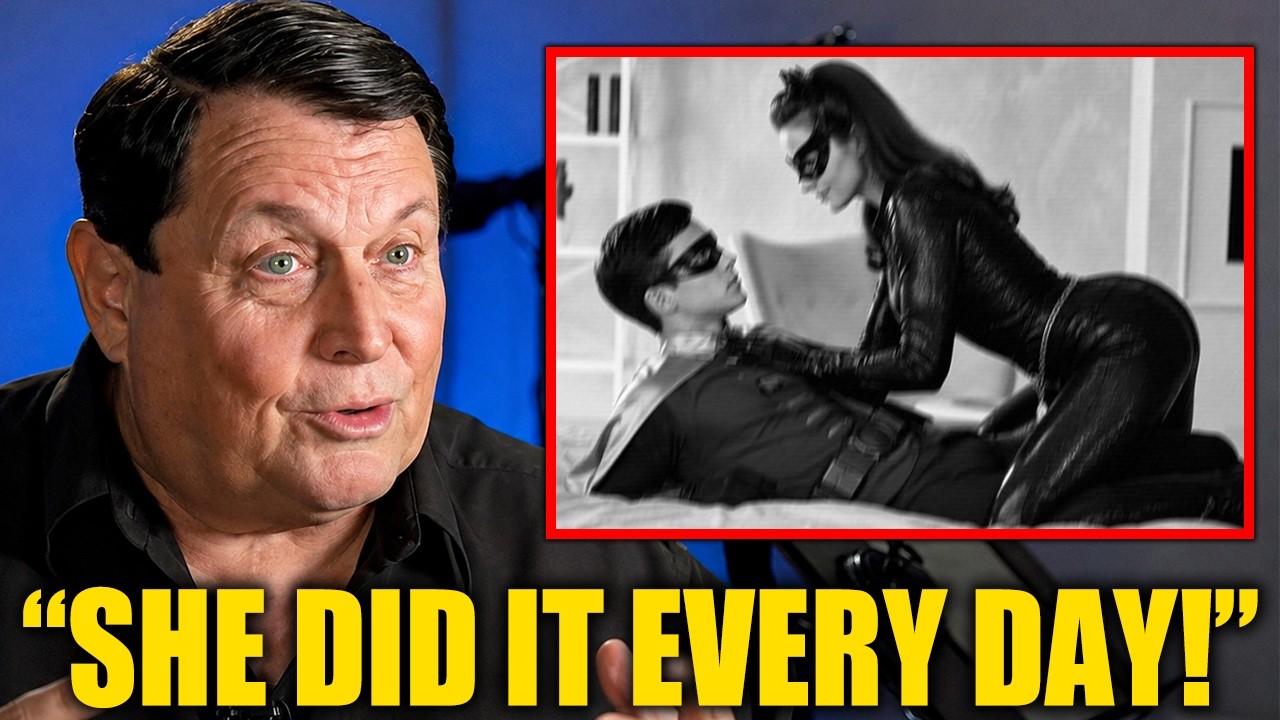
The show became an instant phenomenon, attracting children, adults, and college students alike with its campy humor and colorful action. Almost overnight, Ward went from anonymity to one of the most recognized faces on television. At just 20 years old, he suddenly found himself living a life of nonstop promotional tours across America, where he and Adam West traveled from city to city visiting television stations, schools, shopping centers, and parades in full costume. Behind the scenes, however, his personal life was collapsing.
During the show’s first season, his marriage to Bonnie Lindsay fell apart shortly after the birth of their daughter, and the couple filed for divorce. Rather than slow down, Ward buried himself in work and accepted as many appearances as possible, using the exhausting schedule to avoid thinking about his personal problems. . In 1995, Ward published his memoir, My Life in Tights, which revealed just how wild his lifehad become during the height of the show’s popularity.
He wrote that women, often older than him and sometimes married, frequently approached him on tour and found creative ways to pass him their phone numbers. He admitted that he was young, newly famous, and caught up in the excitement, and that he sometimes responded by writing back and arranging to meet after the day’s events ended. One story from those years became the most unforgettable. During a promotional tour, Ward invited a woman back to his hotel room.
A short time later, a furious husband began pounding on the door, shouting threats to kill whoever was inside. Ward looked through the peephole and saw only the chest of a very large man demanding his wife come out. The woman insisted she was not married and claimed she had no idea who the man was. The pounding grew more violent, and Ward called Adam West in the next room for help.
West jokingly told him not to worry, saying “Batman will save you,” then opened his own door to investigate. When the angry man spotted West, he started charging toward him, and West quickly slammed his own door shut and locked it. He then called Ward back and warned him to get out of the room as fast as possible. With the door nearly giving way, Ward and the woman escaped through the sliding glass door at the back of the room, which opened onto the ground floor courtyard.
The woman ran one direction, while Ward, wearing only his underwear, sprinted across the hotel grounds, through the car park, and into the nearby streets. Hotel guests noticed the commotion, staff called the police, and officers eventually placed Ward in a police car while they sorted out the situation. The truth turned out to be stranger than expected. According to Ward, the man had not caught him with his wifethat night.
He had actually met the same woman in a different city the previous week. She later admitted the encounter to her husband during an argument, and the husband tracked the promotional tour to its next stop, located the hotel, and confronted him there. Afterward, West teased Ward that he had learned an important lesson, advising him to always check for a wedding ring before getting involved with anyoneor at least look for the mark where one had recently been removed. Another memorable chapter came when Batman crossed over with The Green Hornet.
The show’s publicity department had heavily promoted Ward as a martial arts expert, with some materials incorrectly calling him a black belt in karate or Taekwondo. Ward had trained seriouslyin Taekwondo and reached the rank of brown belt before joining the series, but the exaggerated reports caused real tension when filming began. The Green Hornet’s sidekick, Kato, was played by Bruce Lee, an old friend of Ward’s from their days living in the same apartment building before fame. The original script called for Robin to defeat Kato in their fight scene, but Bruce objected strongly, insisting the fight should end in a draw to protect his character’s credibility.
As filming approached, Ward noticed Bruce refusing to acknowledge him on set, looking at him with what seemed like obvious anger. Ward worried that the false publicity about his martial arts background had damaged their friendship. Then, as soon as the director called action, Bruce charged straight at him with complete intensity. Ward instinctively stepped backward, and a crew member jokingly shouted that Robin looked like he was running away.
At that exact moment, Bruce stopped and burst into laughter. He walked over and hugged Ward. The cold behavior had all been a practical joke, encouraged by crew members who wanted to see Ward’s reaction. Bruce explained that he was genuinely happy to see how far they had both come.
The two old friends laughed together, and the fight was carefully staged to satisfy both shows, allowing each character to remain believable without clearly losing. It later became one of the most famous crossover moments in television history. During the show’s second season, Ward met actress Kathy Kersh, who appeared in two episodes playing a character named Cornelia. They developed a relationship quickly and decided to marry.
Their marriage reflected the fast pace of his life during those years, with both even releasing music recordings around the same time. Ward’s record, Boy Wonder I Love You, was written by Frank Zappa and featured him reading romantic messages rather than singing. Kathy also released a record, which Ward helped produce. Neither recording became a major success, but they remain interesting pieces of Batman history.
The marriage did not last, however, and by 1969, the same year Batman came to an end, they divorced. It was another difficult chapter in a life that had already included two failed marriages before he reached his mid-twenties. After Batman was canceled, Ward faced the challenge of typecasting. To audiences around the world, he was Robin, and casting directors struggled to picture him as anyone else.
Throughout the 1970s and 1980s, he accepted work wherever he could find it, appearing in dozens of low-budget horror, science fiction, and independent films. Although those movies never reached the popularity of Batman, they allowed him to continue working as an actor during a difficult period. Reflecting on his years on the show, Ward often pointed to his friendship with Bruce Lee as one of its most meaningful parts, recalling how the man he met before either of them was famous remained warm, loyal, and playful even after both became television stars. Bruce’s prank on set reminded Ward that despite fame, his old friend had not lost the personality that first brought them together years earlier.
.