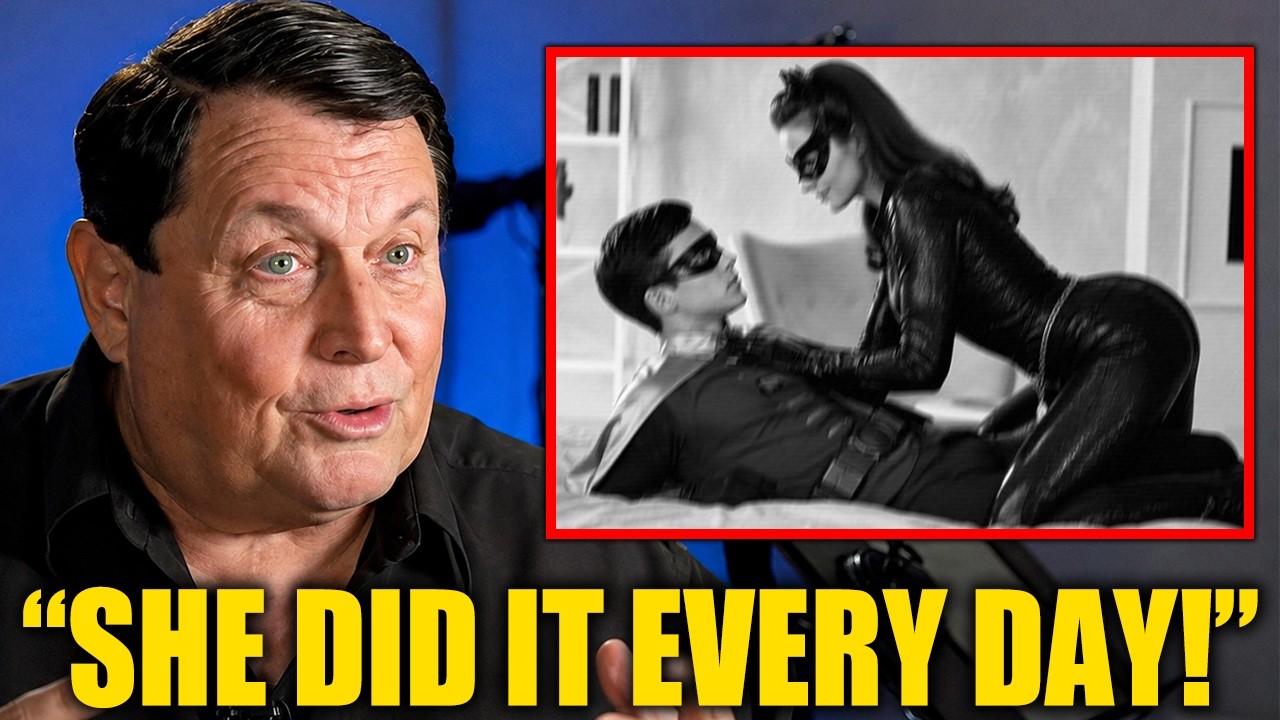
When Burt Ward stepped into the role of Robin on the 1966 Batman television series, he became an instant television icon. But behind the colorful costume and the campy action, his life off camera was filled with stories far stranger than anything viewers ever saw on screen. From dangerous stunts and an unexpected friendship with Bruce Lee to a terrifying encounter with a furious husband, Ward’s years on the show became the basis for a memoir that revealed just how wild fame could be. Long before millions knew him as Robin, Ward was simply Burt John Gervis Jr.
, a young boy growing up in Los Angeles. Born on July 6th, 1945, he was raised in a family that encouraged hard work and trying new things. His father owned a traveling ice show called Rhapsody on Ice, and that unusual family business gave Ward an opportunity very few children ever experienced. He became a professional ice skater when he was only 2 years old, and his talent caught enough attention that he was even featured in Strange as It Seems, a magazine that highlighted unusual stories.
During that time, he earned the nickname Sparky because he could click his skates together to create sparks when the rink lights were turned off. Away from the ice rink, Ward had another passion that would shape his future. He loved comic books, with Superman and Superboy being his favorites, though Batman was another hero he admired. Sports also became an important part of his life.
In high school, he ran track, played football, competed in wrestling, and eventually focused on Taekwondo, working his way up to a brown belt. Those athletic skills would later become one of the biggest reasons he stood out during the Robin auditions. After graduating, Ward enrolled in college and earned his real estate license, planning a practical career in his father’s business. Acting was not part of his plans.
He had never taken acting lessons or performed in plays. While living in an apartment building filled with aspiring actors, his life took an unexpected turn. One neighbor who caught his attention was a young martial artist named Bruce Lee. At the time, neither man was famous.
They became friends because they shared an interest in martial arts, often talking together, exploring Chinatown, and sharing meals. Bruce even invited Burt to his apartment for dinner, where he met Bruce’s wife and their baby son, Brandon Lee. Ward always remembered Bruce as someone whose martial arts skills were far beyond his own, but that never affected their friendship. Everything changed in 1965 when Ward overheard other aspiring actors talking excitedly about a new television series based on Batman.
He immediately became interested, but there was one problem. He had no acting experience and no agent. Instead of giving up, he simply walked into a talent agency and asked if he could audition. The staff were surprised, but they eventually told him where the auditions were being held.
On the form asking for his agency, he wrote down the name of the agency he had visited. Under special skills, he listed his athletic background, football, wrestling, and taekwondo training. His first audition went well enough that he was invited back the next day, then asked to return again to demonstrate stunt work. Wanting to make the strongest impression possible, Ward brought a friend to spar with him and brought a wooden board to demonstrate breaking it with his hand.
His confidence, energy, and athletic ability impressed everyone watching. Producer William Dozier immediately noticed Ward had exactly the youthful enthusiasm they wanted for Robin. After several rounds of testing, Ward narrowly won the role, while Adam West was chosen to play Batman. Before the series premiered, Ward made one final change.
He altered the spelling of his first name from Burt to Burt because he thought it looked better on screen. He also replaced his surname, Gervis, with Ward, using his mother’s maiden name after people frequently mispronounced Gervis. That decision marked the beginning of a career that would change his life forever, but getting the role was only the beginning, because playing Robin quickly became far more dangerous than he ever expected
When Batman premiered in January 1966, it became an instant hit. Almost overnight, Ward went from being an unknown young man with no acting experience to one of the most recognizable faces on television.
The studio launched one of the biggest promotional campaigns television had seen at the time, and once audiences saw the colorful costumes, comic book action, and unusual style, they were hooked. Ratings climbed quickly, making Batman one of the biggest television successes of the 1960s. Part of the show’s success came from the fact that it appealed to so many different people. Young children loved watching Batman and Robin stop criminals.
Adults who had grown up reading Batman comics found something to enjoy as well. Meanwhile, teenagers and college students appreciated the show’s campy humor, exaggerated action, and playful dialogue
That success also meant Ward and West became extremely busy away from the studio. During filming, their schedules were already demanding, but once a season finished shooting, their work was far from over. To keep public excitement high, Batman and Robin traveled across America almost constantly, making personal appearances wherever they were needed.
These promotional tours became a major part of Ward’s life, with the studio organizing every detail. They would arrive in a city and usually spend several days there. The first day often involved visiting the local television station, filming promotional clips, and meeting station executives. The second day usually focused on schools, where they appeared in full costume as Batman and Robin, visiting classrooms or speaking to large groups of children during assemblies.
The third day often featured large public events, including parades, shopping center grand openings, department store visits, and thousands of photographs. Sometimes the famous Batmobile joined them, making the events even bigger attractions. Wherever they went, enormous crowds gathered. Children wanted autographs, parents wanted photographs, and reporters wanted interviews.
Ward quickly learned that being Robin meant very little privacy
Although these appearances looked exciting, they also required tremendous energy. Traveling from city to city every week became physically exhausting, leaving very little time to rest. At only 20 years old, Ward suddenly found himself living a life that few people could prepare for. One moment, he had been a college student planning a career in real estate.
The next, he was recognized almost everywhere he went. As exciting as the attention was, adjusting to sudden fame was not always easy. Every public appearance required him to be smiling, energetic, and enthusiastic, even when he was tired or dealing with personal problems
Unfortunately, those personal struggles began almost as quickly as his career took off. During the same period that Batman was becoming one of television’s biggest hits, Ward’s first marriage to Bonnie Lindsay was falling apart.
The couple had welcomed their daughter, Lisa, but the pressures of his demanding schedule and rapidly changing life placed enormous strain on their relationship. Only months after their daughter was born, Ward and Lindsay filed for divorce. The end of his marriage was deeply painful. Behind the smiles he showed fans at public appearances, he was dealing with heartbreak.
Rather than stepping away from work, Ward made the opposite choice, accepting as many promotional events as possible to stay constantly busy. Keeping his schedule full became his way of coping with everything happening away from the cameras. To fans, he remained the cheerful boy wonder who always seemed full of energy, but behind the scenes, he was learning that fame brought just as many challenges as opportunities
And as his popularity continued to grow, his life off camera became even wilder than anything viewers ever saw on Batman. Many years after the show ended, Ward surprised fans by sharing stories that had never been told during its original run.
In 1995, he published his memoir, My Life in Tights, which quickly became known for its honest and often shocking behind-the-scenes stories. According to Ward, one of the biggest surprises was discovering that the attention wasn’t just focused on Batman. At first, he assumed Adam West, who played the title character, would naturally receive most of the fan attention. Adam certainly had plenty of admirers, but once Ward joined him on promotional tours, he realized Robin had developed a huge following as well
Ward was only around 20 years old during the height of the show’s popularity.
He was still adjusting to life as a television star when he began noticing that women were going out of their way to meet him. Many simply wanted an autograph or a photograph, but others were much more direct about their intentions. To Ward’s surprise, many of these admirers were not young fans. He later recalled that a large number of the women who approached him were older than he was, often in their 30s or 40s.
Some were even married. At first, he said he did not always realize that, but as the promotional tours continued, he quickly understood that his new celebrity status attracted all kinds of attention
After spending all day meeting fans, Ward and West would return to their hotels, but that often did not mean the attention had stopped. Ward said some women found creative ways to contact him. They would quietly slip handwritten notes into his hand during public appearances, or find other ways to pass him their phone numbers.
After a while, he admitted that he began responding the same way. He kept small notes with him and would write back, arranging to meet later after the day’s events had ended. Looking back, Ward openly admitted that he was young, newly famous, and caught up in the excitement surrounding the show
One story from those years became the most unforgettable of them all. During one promotional tour, Ward invited a woman to his hotel room after one of the day’s appearances.
Everything seemed perfectly normal until there was a loud pounding on the hotel door. Someone outside was shouting angrily and threatening to kill whoever was inside. Ward rushed to the door and looked through the peephole. All he could see was the chest of a very large man standing outside.
The shouting continued, and it quickly became clear that the man believed his wife was inside the room. Ward turned to the woman and asked if she was married. She insisted she was not and claimed she had no idea who the angry man was. The pounding became even more violent.
Ward knew opening it would be a terrible idea, so he picked up the phone and called the room next door, where Adam West was staying. He asked Adam if he could hear the noise. Adam jokingly replied, “Don’t worry, Robin. Batman will save you.
” Feeling confident, Adam opened his own hotel room door to see what was happening. The moment the angry man noticed him, he started walking straight toward Adam instead. Adam quickly slammed his door shut, locked it again, and returned to the phone. His confidence disappeared almost instantly.
According to Ward, Adam simply said the man was enormous, and told him to get out of the room as fast as possible
Before Ward could think of another plan, the angry husband kicked the hotel room door so hard that it nearly gave way. There was only one escape route left. Ward quickly pulled on his underwear, while the woman grabbed a few clothes of her own. They rushed through the sliding glass door at the back of the room, which opened onto the ground floor courtyard.
Just as they escaped outside, another powerful kick finally forced the hotel room door open. The chase was on. The woman ran in one direction, while Ward ran in another. Wearing nothing but his underwear, he sprinted across the hotel grounds, through the car park, and into the nearby streets, trying to stay ahead of the furious husband.
By now, hotel guests had noticed the commotion. Staff called the police as people looked outside to see what was happening. When officers arrived, they found Ward running through the area in his underwear, and placed him in a police car while they sorted out the situation
The truth turned out to be stranger than anyone expected. The angry husband had not caught Ward with his wife that night.
According to Ward, he had actually met the same woman in a different city the previous week. She later admitted the encounter to her husband during an argument, and the husband became determined to find the television star. Somehow, he tracked the promotional tour to its next stop, located Ward’s hotel, and confronted him there. Once everything finally calmed down, Adam West could not resist making jokes about the whole experience.
Ward recalled Adam teasing him by saying he had learned an important lesson and should always check for a wedding ring before getting involved with anyone. If there was no ring, Adam joked, he should at least look for the mark where one had recently been removed. Years later, Ward laughed while telling the story, but he also admitted that the frightening experience changed the way he looked at fame, relationships, and the unexpected situations that celebrity could create
As unbelievable as those stories were, another memorable chapter was waiting when Ward reunited with his old friend Bruce Lee. Their reunion during the famous Batman and The Green Hornet crossover has become one of the most talked about moments from the series.
It was a story that mixed friendship, misunderstandings, television publicity, and one unforgettable fight scene. As Batman became one of television’s biggest hits, the show’s publicity department worked hard to promote its stars, and Ward’s athletic background became a major selling point. Since he performed many of his own stunts, magazines and newspapers often described him as a martial arts expert. The problem was that many of those reports stretched the truth.
Ward had trained seriously in Taekwondo and had reached the rank of brown belt before joining the series. However, some publicity materials mistakenly called him a black belt. Others claimed he was a black belt in karate instead of Taekwondo. At times, the terms karate, kung fu, and Taekwondo were used almost interchangeablyin advertisementsâ and magazine articles, even though they are different martial arts
Television producers decided to create a crossover between Batman and The Green Hornet, another action series produced around the same time.
The crossover was expected to attract huge audiences because it brought together two popular crime-fighting teams. For Ward, however, the crossover meant something even more personal. The Green Hornet’s trusted partner, Kato, was played by none other than Bruce Lee. The two friends had not forgotten each other since their days living in the same apartment building before fame found them.
But as filming approached, Ward began hearing rumors that Bruce was unhappy with the planned fight scene. According to the original script, Robin was supposed to defeat Kato during their confrontation. Bruce Lee strongly objected. He believed Kato should not lose outright, especially since audiences already knew him as an exceptionally skilled martial artist.
Bruce insisted that if the fight happened, it should at least end in a draw. For a young actor who was still building his career in Hollywood, standing up to producers showed just how strongly he believed in protecting the credibility of his character
As Ward prepared for filming, he noticed something unusual. Whenever he saw Bruce on set, Bruce refused to acknowledge him. There was no smile, no greeting, and no conversation.
Instead, Bruce looked at him with what Ward believed was obvious anger. Ward began worrying that the false publicity about his martial arts background had damaged their friendship. He feared Bruce thought he had personally claimed to be a world-class martial artist when he knew that was not true. The misunderstanding weighed heavily on Ward.
Losing the respect of someone he admired as much as Bruce Lee was the last thing he wanted
Then filming began. As soon as the director called for action, Bruce charged straight toward Ward with complete intensity. Ward instinctively stepped backward, and one of the crew members jokingly shouted that Robin looked like he was running away. At that exact moment, Bruce suddenly stopped.
Instead of attacking, he burst into laughter. He walked over to Ward and gave him a big hug. The serious expression, the cold behavior, and the angry looks had all been part of a practical joke. Bruce admitted that members of the crew had encouraged him to pretend he was upset just to see Ward’s reaction.
The prank instantly broke the tension. The two old friends laughed together, and Bruce explained that he was genuinely happy to see how far they had both come. Only a few years earlier, they had been neighbors practicing martial arts on their apartment balconies. Now they were starring in two nationally broadcast television series and sharing scenes together
Once the misunderstanding disappeared, filming the crossover became a memorable experience for everyone involved.
The fight between Robin and Kato was carefully staged to satisfy both shows, allowing each character to remain believable without clearly losing. The sequence went on to become one of the most famous crossover moments in television history and remains a favorite among fans of both series. Looking back, Ward often said the entire experience reminded him of Bruce Lee’s true character. Bruce was confident and protective of his craft, but he was also warm, loyal, and had a playful sense of humor.
The prank showed that despite becoming famous, Bruce had not lost the friendly personality that first brought them together years earlier
But even after the cameras stopped rolling, Ward’s life continued to take unexpected turns. While he was enjoying the success of Batman, his personal life continued to change just as quickly as his career. During the second season of the series, he met actress Kathy Kersh, who appeared in two episodes titled “The Impractical Joker” and”The Joker’s Provokers. ” She played Cornelia, a young woman caught up in one of the Joker’s schemes.
The two spent time together while filming and quickly developed a relationship. Their romance moved fast and before long, they decided to get married. Their marriage reflected the fast pace of Ward’s life during those years. The couple even shared another unusual connection.
Around the same time, both released music recordings. Ward’s record,”Boy Wonder I Love You,” was written by Frank Zappa and featured him reading romantic messages rather than singing in the traditional sense. Kathy also released a record, which Ward helped produce. Although neither recording became a major success, they remain interesting pieces of Batman history
Unfortunately, their marriage did not last.
By 1969, the same year Batman came to an end, Ward and Kersh divorced. It was another difficult chapter in a life that had already included two failed marriages before he reached his mid-twenties. The cancellation of Batman marked the end of one of television’s biggest pop culture sensations. After three seasons, the series was taken off the air.
Although the show had attracted enormous attention, ratings had begun to decline, and rising production costs also made it harder to continue. For Ward, the biggest challenge came after the cameras stopped rolling. Like many actors who become closely identified with one famous role, he found himself facing typecasting. To audiences around the world, he was Robin.
Casting directors struggled to picture him as anyone else. Even though he wanted to take on different characters, many producers only saw the colorful sidekick from Gotham City
Finding major acting roles became much harder than he expected. Instead of starring in big television series or Hollywood films, Ward accepted work wherever he could find it. Throughout the 1970s and 1980s, he appeared in dozens of low-budget horror, science fiction, and independent movies.
Some were serious, while others embraced over-the-top stories and unusual characters. Although these films never reached the popularity of Batman, they allowed him to continue working as an actor during a difficult period