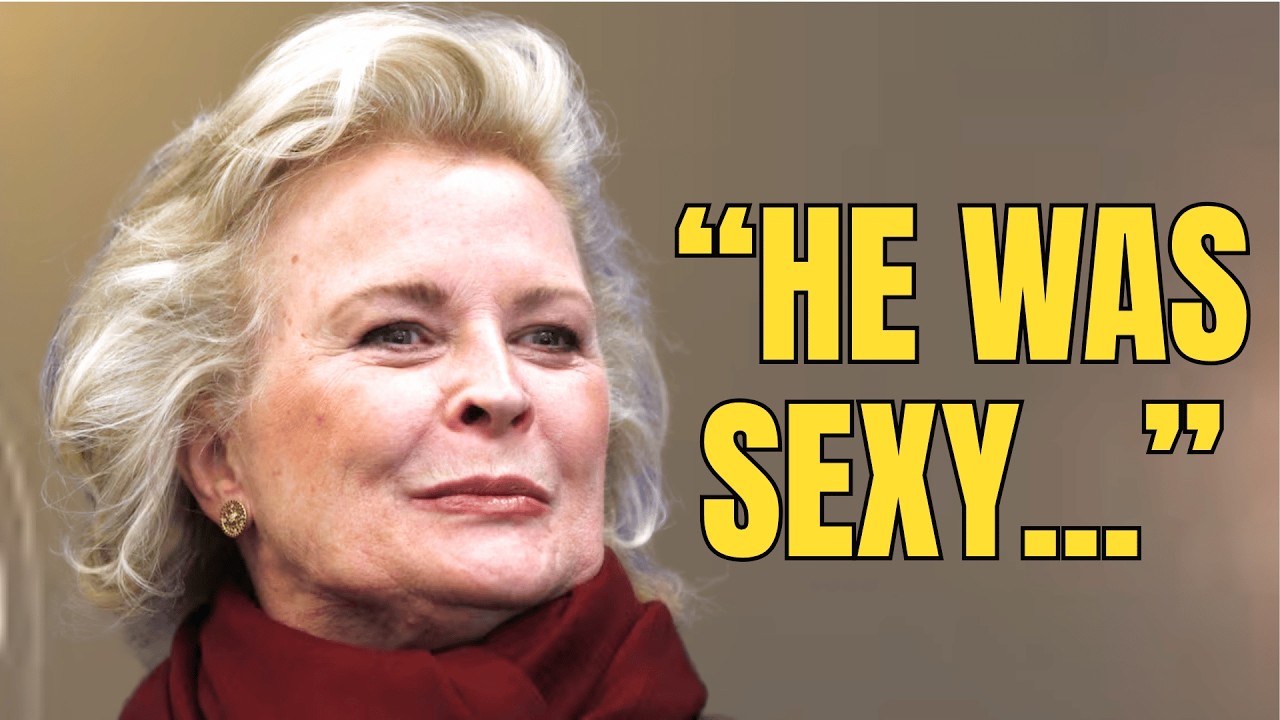
She went on a date with Donald Trump and was home by 9:00. She raised a fictional child on television and drew a rebuke from the Vice President of the United States. She lost two husbands—one to cancer, one to Parkinson’s—and kept performing her dry, unmistakable wit well into her 80s. Candice Patricia Bergen was born on May 9, 1946, in Los Angeles.
Her father, Edgar Bergen, was a world-famous ventriloquist best known for his wooden alter ego, Charlie McCarthy. Candice grew up convinced the dummy received better treatment than she did. The dummy got the best lines, the spotlight, and a satin-lined case. She spent her childhood in Beverly Hills in an era when Sunset Boulevard still permitted horses, and she attended the opening of Disneyland in 1956 at age 10.
She knew Liza Minnelli from age seven and moved through a particular stratum of Los Angeles that no longer quite exists. At 18, she enrolled at the University of Pennsylvania. Bored one evening in her dormitory, she accepted a date with a Wharton student named Donald Trump. Asked about the evening decades later, Bergen was unsparing.
Trump picked her up in a burgundy limousine, wearing a burgundy three-piece suit with burgundy patent leather boots. “It was very color-coordinated,” she told Harry Connick Jr. in 2017. When Andy Cohen pressed for details, Bergen said she was home very early and there was no physical contact whatsoever.
Her overall assessment: “He was a good-looking guy and a douche. ”
Bergen left Penn in her sophomore year to pursue modeling and acting. She appeared in films through the late 1960s and 1970s, was photographed by Bert Stern for Vogue in 1967, and worked with Richard Avedon. She briefly lived in a house on Cielo Drive in Beverly Hills with music producer Terry Melcher; shortly after they moved out, the address became the site of the Manson murders.
She also went on a single date with Henry Kissinger, which went nowhere. She tried photojournalism, spending 10 days with Jane Goodall at Lake Tanganyika in Tanzania, surviving largely on bananas while baboons rattled her door each morning. She shot Muhammad Ali and covered the Ku Klux Klan for The Today Show. Then she reached an unusually honest conclusion: she was not good enough to do it at the level she wanted, so she stopped.
At a dinner party in the late 1970s, she met French filmmaker Louis Malle. Their first meeting was awkward. Bergen’s caftan kept sliding; neither was at ease. A friend, photographer Mary Ellen Mark, looked at the situation and declared Bergen would marry Malle.
They married in 1980, six months after seriously beginning to date. “When you’ve dated a lot of people and you’re 34, you kind of know,” Bergen later said. Malle was 47. The marriage spanned an ocean.
Malle was rooted in France; Bergen was in Los Angeles, and from 1988 onward she spent five days a week on a CBS soundstage playing Murphy Brown. The show, created by Diane English, centered on a 40-something, twice-divorced, recovering-alcoholic investigative journalist at a fictional Washington newscast—ferociously competent, intolerant of fools, and profoundly alone. Bergen said she had never seen a character like that on television before. The show was a hit from its first season.
Their daughter, Chloe, was born in 1985. Bergen had been deeply ambivalent about motherhood, once wondering whether she could love a baby as much as a dog. The ambivalence vanished when Chloe arrived. Bergen calls her daughter Bunny to this day.
The show’s writers worked Bergen’s real pregnancy into the fourth season. In May 1992, Murphy Brown gave birth to a child she chose to raise alone. More than 33 million people watched. Two days later, Vice President Dan Quayle delivered a speech naming the fictional character directly, saying the show mocked the importance of fathers and called Murphy’s choice “just another lifestyle choice” dressed up as acceptable behavior.
The speech ignited a national argument Quayle lost in real time. Bergen was frightened. “I was really afraid to go out,” she said in a CNN retrospective. “There was such an energy coming that was so huge that I didn’t know how to manage it.
” She hid behind her curtain while Diane English made a single public statement. The season 5 premiere answered directly from Murphy’s news desk: families come in all shapes and sizes, and perhaps the Vice President might expand his definition. It became one of the most-watched episodes of the entire run. Murphy Brown won 18 Emmys over 10 seasons.
Bergen won five for Outstanding Lead Actress and became the highest-paid actor on American television, man or woman. At the 2024 Emmy Awards, at age 78, she delivered a joke about J. D. Vance’s “childless cat lady” remark with the timing of someone who has been making the argument for 30 years.
“Oh, how far we’ve come,” she said. “Today, a Republican candidate would never attack a woman for having kids. So, as they say, my work here is done. ”
Through the final years of Murphy Brown, Louis was dying.
He had been diagnosed with lymphoma, which progressed slowly and then not so slowly. He died on Thanksgiving Day, 1995, at their home in Beverly Hills. He was 63. Chloe was 10.
Bergen has described how Chloe took it upon herself to care for her father without being asked. She went to Disneyland and returned with large padded Goofy slippers. Louis put them on and refused to take them off. He was buried in them.
Chloe also read to him every night. Bergen called that the most important thing her daughter has ever done, and dedicated her 2015 memoir, A Fine Romance, as a love letter to the child who showed her what grace under grief looks like. Bergen did not date for three years after Louis died. In 1999, 60 Minutes producer Don Hewitt and his wife, Marilyn Berger, introduced her to Marshall Rose, a New York real estate developer and philanthropist who had also lost his spouse.
They married in June 2000. Rose was a self-made man from Brighton Beach, Brooklyn, who oversaw Frank Gehry’s IAC building and the renovation of Madison Square Garden, served 30 years on the board of the New York Public Library, loved the Knicks, loved books, and loved his golden doodle, Jerry. Bergen said she prioritized the marriage above almost everything else: “I’m always grateful when I get offered something that engages me. It’s for the right amount of time, and I don’t have to leave my husband for more than a week or two.
That’s really all I ask. ”
Marshall Rose died on February 15, 2025, at home in New York City, surrounded by family, from complications of Parkinson’s disease. He was 88. Bergen and Rose were three months shy of their 25th wedding anniversary.
Candice Bergen turned 80 on May 9, 2025. She had 50 people coming to a dinner club. In a podcast conversation with Chloe recorded before the celebration, she said that frankly, being in the country with her daughter and grandchildren was the dream. She had never asked Chloe to have children.
She said she loved the grandchildren to death—Alice was filled with love; Arty, she paused and chose the word deliberately, was filled with explosives. She has been called Charlie McCarthy’s sister, Murphy Brown, the highest-paid actor on television, and a feminist icon. These days she is mostly called Toto, the name her grandson Arty gave her when he was 18 months old. She turned 80.
She still has the timing. She still finds a way to make grief and joy sit in the same sentence without either canceling out the other.