Modern humans are biologically tropical animals. With thin skin, sparse body hair, and a metabolism built for the African savanna, a person stepping onto the ice age steppe without proper gear would freeze to death in less than half an hour. Yet for nearly 100,000 years, our ancestors not only survived some of the harshest glacial cycles in Earth’s history, they thrived in them, enduring average winter temperatures of around minus 30°C with nothing but stone, bone, and collective intelligence. The common image of an Ice Age human as a shivering brute wrapped in a crude bearskin huddled in a cave is almost entirely a fantasy, according to archaeologists.
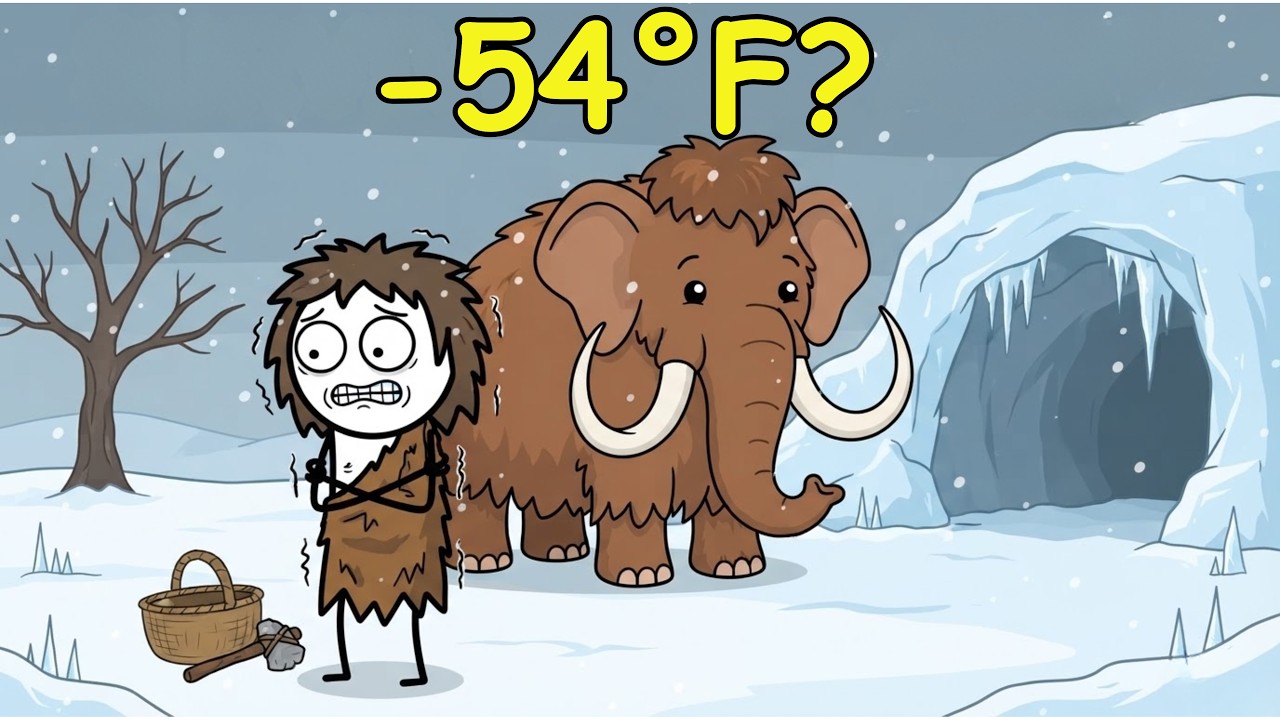
Caves, while offering a stable temperature of about 10°C, were often damp, dark, poorly ventilated, and frequently occupied by massive cave bears. Moisture trapped in a cave could soak clothing, and at 40 degrees below zero, damp clothes were a death sentence. Caves were temporary bunkers, not permanent homes. Surviving the Ice Age required mastering the laws of thermodynamics, an idea argued by archaeologist Dr.
Ian Gilligan, who sees a thermal transition as key to the development of modern humanity. Fire alone was not enough, however. The body itself had to generate heat, and ancient humans possessed a hidden biological advantage: brown adipose tissue, or BAT. Unlike white fat, brown fat is packed with mitochondria and burns calories specifically to produce heat through non-shivering thermogenesis.
Research by scientists like Dr. Shingo Kajimura suggests people living in extreme cold environments have significantly more active brown fat, meaning Ice Age humans were likely cold-adapted in ways modern people can barely comprehend, generating steady internal heat even while sleeping on frozen ground. That biological furnace demanded enormous fuel, driving an obsessive pursuit of fat. Eating only lean meat could cause protein poisoning, or rabbit starvation, where the liver fails under the metabolic load, leading to starvation even with a full stomach.
Ancient hunters therefore targeted the calorie-dense marrow, brain tissue, and thick back fat of megafauna like the woolly mammoth, where a single animal provided enough high-density fuel to sustain a small tribe for weeks. Containing a high-revving metabolism also meant preventing heat from escaping, leading to one of humanity’s most significant technological leaps: the invention of the needle. Before eyed needles, people wore simple draped hides, which allowed heat to escape through gaps, a method used by Neanderthals for millennia. Around 40,000 years ago, Homo sapiens began crafting fine needles from bird bone and ivory, enabling tailored clothing with fitted sleeves, trousers, and hoods.
At the Sungir site in Russia, dating back 34,000 years, individuals were buried in what appear to be prehistoric parkas complete with sewn trousers and boots, forming a single cohesive thermal system. Thousands of ivory beads decorated these garments, but the seams were the key: sealing out wind and trapping warm air against the skin created a portable tropical microclimate. However, perfectly insulated clothing posed a lethal problem: sweat. Once an inner layer became damp with perspiration, it lost insulating properties, and when a person stopped moving, that moisture froze, drawing heat away 25 times faster than dry air.
Ancient humans became expert material scientists, choosing specific furs for specific functions. Wolverine fur lined hood ruffs because it resists frost from breath, while reindeer hide formed the main body because its hollow hairs trap an extra layer of air. They also mastered brain tanning, using fatty acids from an animal’s own brain to make hide soft, supple, and breathable, allowing moisture to escape while retaining heat—a high-performance material system that functioned like modern breathable fabrics thousands of years before their invention
When landscapes lacked natural shelter, humans engineered remarkable structures. At sites like Mezhyrich in Eastern Europe, archaeologists have found mammoth bone houses.
These were intricate architectural feats: a single house used mandibles from up to 95 mammoths to form a circular foundation, with walls of stacked femurs and pelvic bones arranged in a herringbone pattern for stability against steppe winds, topped by a dome of interlocking tusks likely covered with heavy hides. Bone and earth provided excellent insulation, turning these shelters into thermal batteries. A small fire would heat the thick walls, which then radiated warmth back into the living space long after flames died. Inside, people could sit without heavy parkas, repairing tools, sewing, and socializing.
To prevent fires from thawing the permafrost floor into mud, engineers lined hearths with stone or raised bone platforms, insulating the heat from the frozen ground
The most powerful survival tool, however, was not technological but social. In extreme cold, groups functioned as a single organism: 20 people meant 20 radiators. Communal sleeping arrangements shared body heat, reducing the individual caloric cost of staying warm. Groups also preserved specialized knowledge, remembering which river crossings were safe or which winters had been catastrophic, passing this information down through stories.
These narratives were technical manuals disguised as myth, the software that operated their bone-and-stone hardware
The bond between humans and dogs also began during this era, as research by Dr. Pat Shipman suggests. Wolves and humans formed hunting alliances that provided a decisive advantage, and dogs offered critical winter warmth. Sleeping with dogs, whose body temperature exceeds a human’s, added layers of living insulation, giving rise to the concept of a cup three-dog night as a survival strategy.
Despite these sophisticated adaptations, survival was never guaranteed. The archaeological record reveals bottlenecks where human populations plummeted, with entire groups wiped out by prolonged winters or failed migrations. Survivors were not merely tougher, they were more intensely cooperative, connected to each other and the realities of their environment. They lived with constant vigilance, negotiating with the cold rather than attempting to conquer it
Reflecting on this record, researchers argue that modern humans have not grown smarter since the Ice Age, only more comfortable.
Central heating and factories have replaced internal biological radiators and bone needles. Yet the cold still waits beyond the walls, and the ancient biology remains within, ready for a winter that never ends. Our ancestors did not just survive the ice; they were forged by it, becoming the most cooperative, creative, and communicative species on the planet. They saw the frozen wasteland not as a killer but as a resource—tracks of a meal, material for shelter, insulation for a floor.
The lesson of their survival is both sobering and unifying. As humans, we remain thin-skinned tropical animals, only minutes from a frozen death, held alive by collective memory and cooperation. The shiver felt on a cold day is a physiological ghost of an era when the wind meant everything, and the only barrier against extinction was the person beside you and a fire that could never be allowed to die. In the end, the Ice Age did not merely happen to humanity, it made humanity, whittling away everything nonessential until only a creature that could see a home in a frozen world remained.
The coldest danger, then, was never the outside temperature but the cold within, and the heat created for one another has always been the most powerful argument against winter