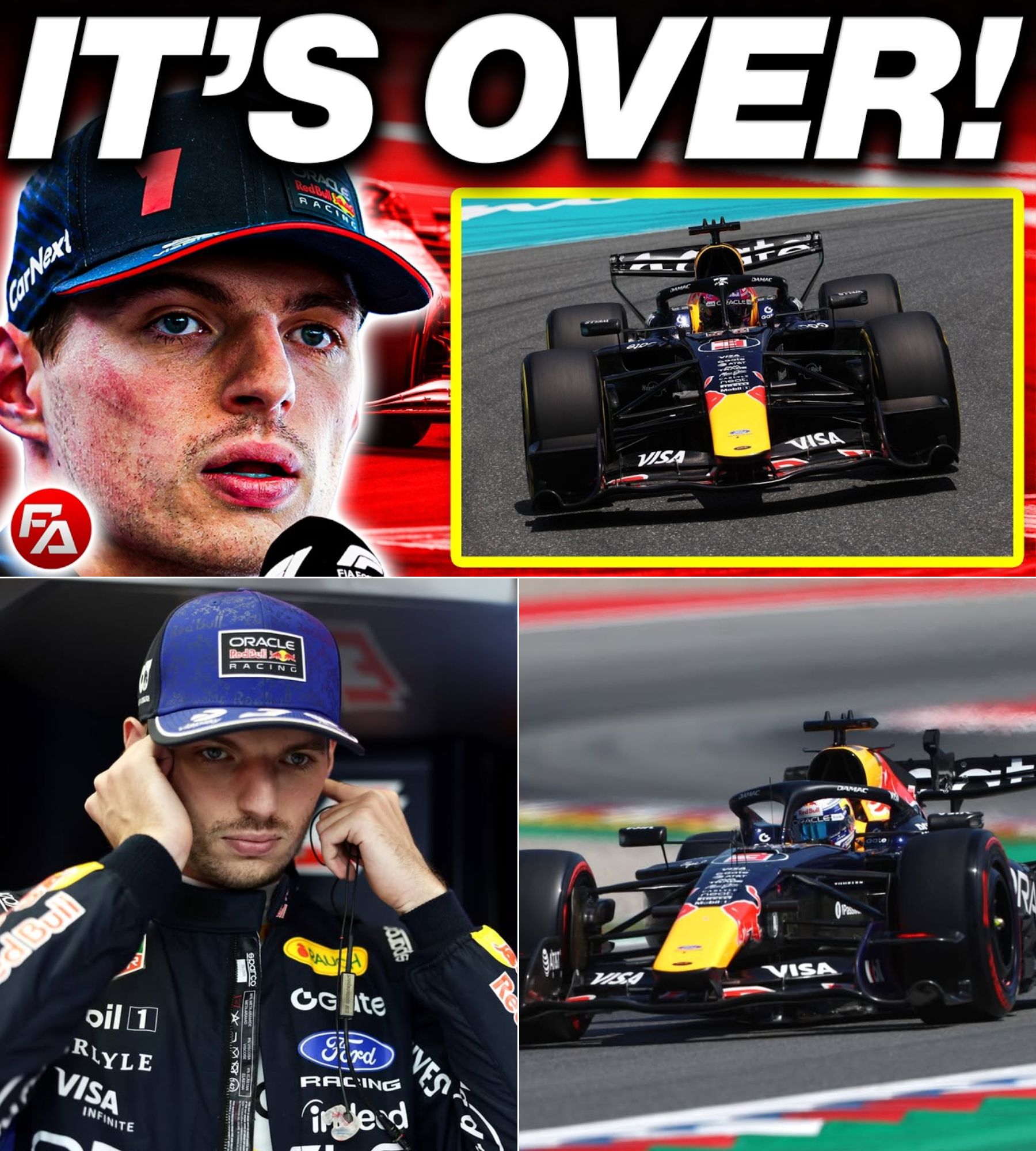
Max Verstappen’s recent comments about his future with Red Bull have sent shockwaves through the Formula 1 community. With the paddock buzzing, one pressing question looms: what if Verstappen decides he’s had enough? The once-dominant partnership between the driver and the team now faces uncertainty, and the stakes have never been higher.
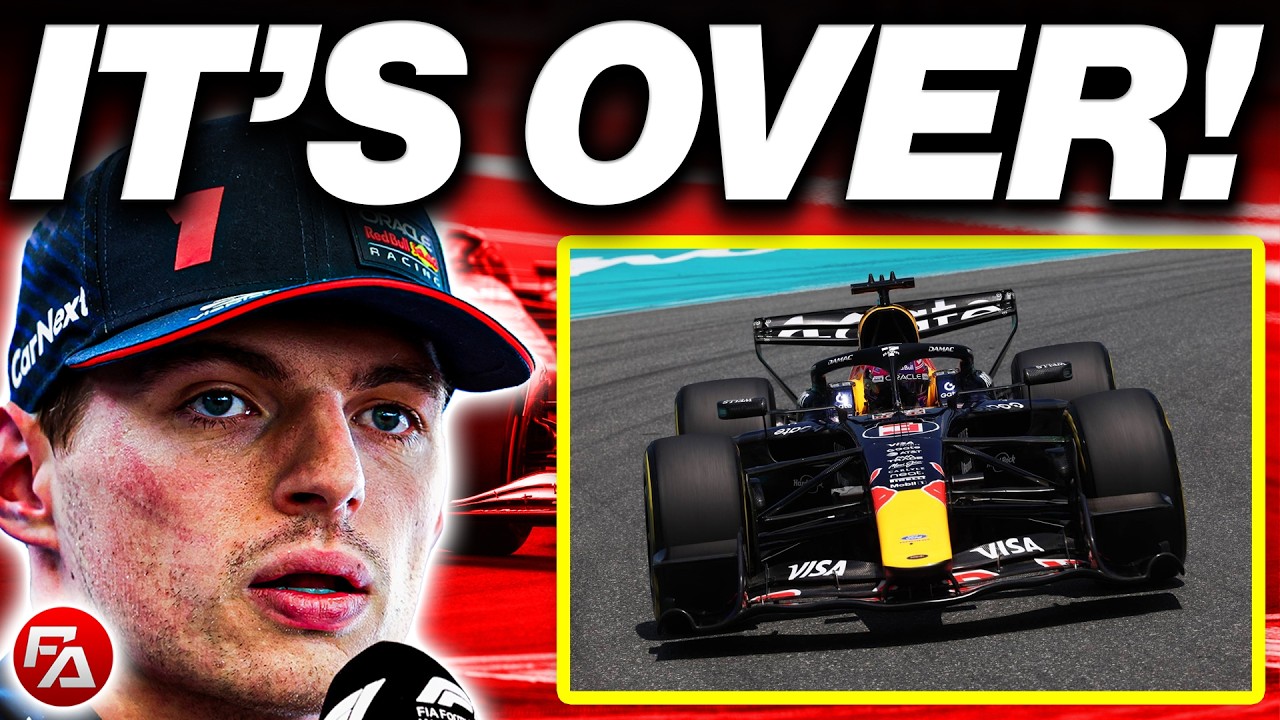 For years, Verstappen and Red Bull were synonymous with success, racking up championships and shattering records while leaving competitors in their wake. However, the landscape of Formula 1 can shift dramatically, and now Red Bull finds itself grappling with a challenge that transcends mere performance metrics. According to insiders close to Verstappen, Red Bull recently sought a public commitment from him to remain with the team beyond 2026. They wanted a definitive statement to reassure everyone that their future was secure. But Verstappen declined to provide that assurance, a decision that could prove pivotal as the season unfolds.
This request for commitment isn’t just a formality; it underscores a deeper issue within the team. Red Bull is reportedly attempting to lure engineers and technical talent from rival teams, fully aware that their current car is underperforming. Every potential recruit is asking the same question: Will Verstappen stay? The answer to that question could dictate the future of the team. Verstappen’s refusal to publicly commit suggests he may be weary of carrying the team’s burdens alone. Helmut Marko, a prominent figure at Red Bull, recently acknowledged that without Verstappen, the team would be losing an astonishing 18 seconds per race. That’s a staggering admission, revealing just how much Verstappen compensates for the car’s shortcomings.
Verstappen’s frustrations have been evident throughout the season. After a disappointing fourth-place finish in Barcelona, he candidly remarked on the team’s lack of pace, stating, “We just didn’t have the speed to keep up with the cars ahead.” Such comments indicate a growing concern about Red Bull’s competitiveness, especially as he has echoed similar sentiments in Monaco and Canada. Once the dominant force, Red Bull now finds itself trailing behind Ferrari, Mercedes, and McLaren.

While Verstappen is officially contracted until 2028, there’s a performance clause that could change everything. If he isn’t in the top two of the drivers’ championship by the summer break, he reportedly has the option to leave early. Currently sitting in seventh place with 55 points, the gap to championship leader Kimi Antonelli, who has 156 points, seems daunting. The focus is shifting from whether the clause exists to whether it will be activated, raising the stakes for both Verstappen and Red Bull.
Verstappen has consistently stated that he will continue racing as long as he remains competitive and enjoys the sport. However, the key word here is “winning.” He has little interest in long-term rebuilding projects and is looking for immediate results. After his remarks in Barcelona, he confirmed his intention to race next season but notably did not specify that he would be with Red Bull. This careful choice of words has not gone unnoticed in the paddock, raising eyebrows and fueling speculation.
The tension between Verstappen and Red Bull is palpable. The team sought certainty, but Verstappen offered none. Instead, he appears to be assessing whether Red Bull can still deliver the winning car he desires. The upcoming races, particularly Austria, will be crucial—not just for the championship but for the future of this partnership.
Austria is set to be more than just another race; it’s a critical moment that could determine whether Red Bull can reassure Verstappen that their championship-winning days are not behind them. The relationship is not broken, but it is undeniably fragile, and that fragility has the potential to attract attention from rival teams.
As the summer break approaches, the reality is becoming increasingly clear: Verstappen has not promised Red Bull anything. And in the world of Formula 1, what remains unspoken can often carry more weight than words.
Mercedes has emerged as a potential player in discussions about Verstappen’s future. Toto Wolff has openly expressed admiration for him, and rumors suggest that Mercedes may have already made a move. Former driver Ralf Schumacher claims Verstappen received an offer from Mercedes but turned it down due to unsatisfactory financial terms. This raises questions about the dynamics at play, as Mercedes currently boasts a strong driver lineup with Kimi Antonelli and George Russell.
If Verstappen were to leave Red Bull, finding the right destination could be more complex than it appears. Ferrari seems less likely to accommodate him, given their established drivers. McLaren, however, is intriguing, boasting a competitive car and a strong team dynamic. But racing alongside Lando Norris could present a fierce challenge, one that Verstappen may not be eager to embrace.
Red Bull is acutely aware of the precariousness of their situation. They are bringing a significant upgrade package to Austria, aimed at addressing the weight issues of the RB22. However, Verstappen has already cautioned that these upgrades may not be sufficient to close the gap to their competitors. His words suggest a lack of confidence in the team’s ability to turn things around quickly.
As Austria approaches, the pressure mounts. This story transcends a mere contract clause; it’s about trust and belief in a partnership that has redefined modern Formula 1. Should Verstappen choose to leave, Red Bull would not only lose a driver but the very face of their championship legacy. The silence from Verstappen speaks volumes, and as he continues to evaluate the team’s progress, the question lingers: will he decide to give Red Bull more time, or is it time for him to explore new horizons?