For nearly a century, the fate of Russia’s last royal family remained one of history’s most haunting mysteries.
Did Grand Duchess Anastasia escape?
Did the young heir Alexei survive?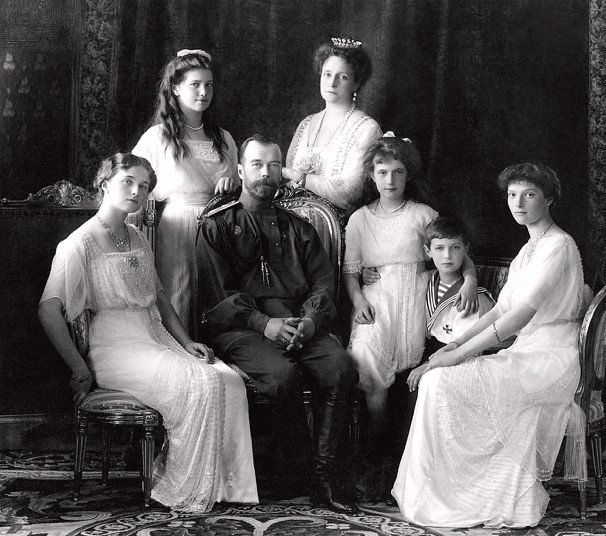
Were the Romanovs truly wiped out in a basement in 1918, or had history gotten the story wrong?
For generations, people wanted to believe that at least one child had escaped the nightmare.
Then DNA science arrived.
And what it uncovered was far more horrifying than any legend.
The Night the Romanov Dynasty Ended
By 1918, the Russian Empire had collapsed.
Tsar Nicholas II had abdicated.
His wife Alexandra and their five children—Olga, Tatiana, Maria, Anastasia, and Alexei—were prisoners of the Bolshevik government.
In the early hours of July 17, 1918, the family was awakened and told they were being moved for their safety.
Instead, they were led into the basement of the Ipatiev House in Yekaterinburg.
Waiting for them was an execution squad.
What followed was not the swift execution often portrayed in history books.
Witness accounts describe chaos.
Gunfire echoed through the room.
Smoke filled the basement.
Jewels secretly sewn into the daughters’ clothing reportedly acted like primitive armor, deflecting some bullets and forcing the executioners to resort to bayonets and rifle butts.
Within minutes, eleven people were dead.
But the killers faced a new problem.
How do you make an entire royal family disappear?
The Secret Burial
The bodies were loaded onto trucks and taken into the forests outside Yekaterinburg.
The original plan was to hide them in an abandoned mine shaft known as the Four Brothers Mine.
To prevent identification, the corpses were stripped and treated with sulfuric acid.
The plan failed.
The shaft was too shallow.
The remains were still visible.
Fearing discovery, the executioners moved the bodies again.
Most were buried in a hidden grave along Koptyaki Road.
For decades, the burial site remained one of the Soviet Union’s deepest secrets.
The Discovery That Created More Questions
In 1991, after the collapse of the Soviet Union, investigators finally opened the grave.
Inside were nine skeletons.
But there should have been eleven.
Two bodies were missing.
The discovery ignited worldwide speculation.
Had Alexei escaped?
Was Anastasia still alive?
For decades, impostors had claimed to be surviving Romanovs.
Suddenly, those stories seemed possible.
The mystery had only grown deeper.
Science Enters the Investigation
The 1990s marked a revolution in forensic DNA analysis.
Scientists believed genetics could finally answer questions that history could not.
Led by forensic experts including Dr. Peter Gill, researchers extracted DNA from the damaged remains.
To verify the identities, they needed living relatives.
An extraordinary connection led them directly to Buckingham Palace.
Prince Philip, Duke of Edinburgh, was a maternal relative of Tsarina Alexandra.
He agreed to provide a DNA sample.
When scientists compared his mitochondrial DNA with the remains, the match was undeniable.
The skeletons belonged to Alexandra and three of her daughters.
The Romanov grave was real.
But two children were still missing.
The Anastasia Myth Finally Falls Apart
For decades, the most famous claimant was Anna Anderson.
She insisted she was Grand Duchess Anastasia.
Many believed her.
Books were written.
Movies were made.
Supporters defended her story for more than sixty years.
DNA ended the debate permanently.
Samples preserved from Anderson’s medical records were tested.
The results showed she was not Anastasia.
She was genetically unrelated to the Romanovs.
One of the greatest royal mysteries in modern history collapsed overnight.
Yet the biggest question remained.
Where were the missing children?
The Horrifying Discovery Made in 2007
Nearly sixteen years after the first grave was opened, researchers returned to the area.
Following clues left by execution commander Yakov Yurovksy’s own writings, searchers examined a second location roughly seventy yards away.
What they found shocked everyone.
Instead of complete skeletons, investigators uncovered a shallow pit containing charred bone fragments and teeth.
The remains had been burned.
Crushed.
Scattered.
Treated again with sulfuric acid.
This was not simply a burial.
It was an attempt to destroy two bodies so completely that identification would become impossible.
The brutality stunned even experienced forensic experts.
DNA Delivers the Final Answer
Technology had advanced dramatically since the 1990s.
Scientists extracted both mitochondrial and nuclear DNA from the tiny fragments.
Independent laboratories in Russia, Austria, and the United States examined the evidence.
Every result pointed to the same conclusion.
The remains belonged to two Romanov children.
One was a teenage boy.
The other was a young woman.
DNA proved they were the biological children of Nicholas and Alexandra.
Y-chromosome testing confirmed the boy was Alexei.
The statistical chance of error was effectively zero.
The missing Romanovs had finally been found.
The Dark Truth Behind the Mystery
The DNA evidence solved the mystery.
But it destroyed the comforting myth.
There was no miraculous escape.
There was no hidden princess living under another name.
There was no secret survival.
Every member of the Romanov family died in Yekaterinburg.
What the science ultimately revealed was not a tale of hope, but one of extraordinary violence.
The executioners didn’t simply kill the family.
They spent days attempting to erase them from history.
The separate destruction of Alexei and his sister revealed a level of panic and desperation that historians had not fully understood.
The goal was not merely execution.
It was annihilation.
Why the Romanov Mystery Still Haunts the World
For nearly ninety years, the missing children allowed people to imagine a different ending.
The story of Anastasia became a symbol of survival against impossible odds.
DNA brought certainty.
But certainty came at a cost.
Because the truth proved darker than the legend.
The Romanov mystery was never about a lost princess.
It was about how far people were willing to go to erase an entire family from existence.
And thanks to modern genetics, history can no longer hide what happened in the forests outside Yekaterinburg in the summer of 1918.