The roar of 100,000 fans at Monza turned to a collective gasp of horror on September 10, 1978, as a fiery, multi-car pileup on the opening lap of the Italian Grand Prix transformed a championship decider into a desperate rescue mission. In the twisted, burning wreckage of his Lotus 78 lay Ronnie Peterson, the beloved Swedish driver known as “Super Swede,” trapped and fighting for his life as fellow competitors sprinted toward the flames. The 34-year-old, who had started from the third row, was the victim of a chain-reaction collision that would ultimately claim his life less than 24 hours later, leaving the sport in a state of profound shock and mourning.
The tragedy began to unfold before the race even started. Peterson, a two-time Formula 1 World Championship runner-up, had suffered a disastrous practice session, damaging his primary Lotus 79 beyond repair and bruising his legs in the process. The team’s spare 79 chassis was meticulously set up for his taller teammate, Mario Andretti, and was not a viable option.
 Forced into the older, less competitive Lotus 78, Peterson was already at a disadvantage, but the true danger lay in the chaotic start that followed. As the grid formed, multiple drivers later reported that the starting light was triggered prematurely, causing the cars at the rear to surge forward while the front-runners remained stationary, creating a dangerous compression of the field as they barreled toward the first chicane.
As the pack approached the high-speed corner, the front four drivers navigated through cleanly, but the accordion effect behind them proved catastrophic. Peterson, struggling with his older machinery and a poor getaway, was overtaken by several rivals. Further back, Jody Scheckter and Ricardo Patrese, who had started deep in the field, moved to the right in an attempt to gain position.
Patrese then abruptly moved back ahead of James Hunt, clipping the British driver’s car and triggering a violent chain reaction that ensnared Peterson and several others. The impact sent Peterson’s Lotus careening hard into the barriers, where it burst into flames before bouncing back into the middle of the track, trapping the Swedish driver inside the inferno.
In a moment of extraordinary bravery, James Hunt, Clay Regazzoni, and Patrick Depailler sprinted through the smoke and heat to reach their stricken colleague. Ignoring the risk of exploding fuel and searing flames, the trio worked frantically to extricate Peterson from the cockpit. Hunt later recounted the harrowing experience, revealing that he deliberately tried to shield Peterson’s gaze from his own severely injured legs, hoping to spare him the psychological trauma of seeing the extent of the damage.
The heroic efforts of these drivers were undeniably instrumental in pulling Peterson from the wreckage, but the scene remained a visceral, deeply traumatic tableau that would haunt the paddock for decades.
Once freed, Peterson was conscious and alert, laid on the asphalt as track marshals battled the blaze. His injuries, while severe, initially appeared to be confined to his legs, which had been crushed in the impact. The focus of the medical teams, however, was momentarily diverted by the condition of Vittorio Brambilla, who had been struck on the head by a flying wheel and was slumped unconscious in his own car.
Sid Watkins, the F1 medical delegate, and his team rushed to Brambilla’s aid, extracting the Italian driver who would survive but never race in Formula 1 again. Both Peterson and Brambilla, along with other injured drivers, were rushed to a hospital in Milan, while race organizers controversially cleaned the track and restarted the race.
At the hospital, X-rays revealed the devastating extent of Peterson’s trauma: approximately 27 fractures scattered across his legs and feet. After consultations with the injured driver, doctors decided to move him to intensive care to stabilize his condition, though a disagreement arose among the medical staff regarding the urgency of surgically fixing all the fractures. Some argued for immediate intervention, while others believed stabilization could wait.
 During the night, Peterson’s condition took a sudden and catastrophic turn for the worse. He developed a fat embolism, a serious complication where fat droplets from the broken bones entered his bloodstream and blocked vital vessels. By the morning of September 11, 1978, his kidneys had failed, and at 9:55 a.
m. , Ronnie Peterson was declared dead.
The news sent a shockwave through the racing world. At the very same Grand Prix where tragedy struck, Peterson’s teammate Mario Andretti had clinched the World Championship, a victory that was rendered hollow and bittersweet by the loss. Andretti later reflected on the cruel irony, stating that it was profoundly unfair to have such a tragedy connected with what should have been the happiest day of his career.
He admitted he could not celebrate, knowing the trophy would be forever linked to the memory of his fallen friend, but he also expressed a poignant certainty that Peterson would have been happy for him. Peterson was posthumously awarded second place in the 1978 Drivers’ Championship, a somber testament to his exceptional season, which had included victories in South Africa and Austria.
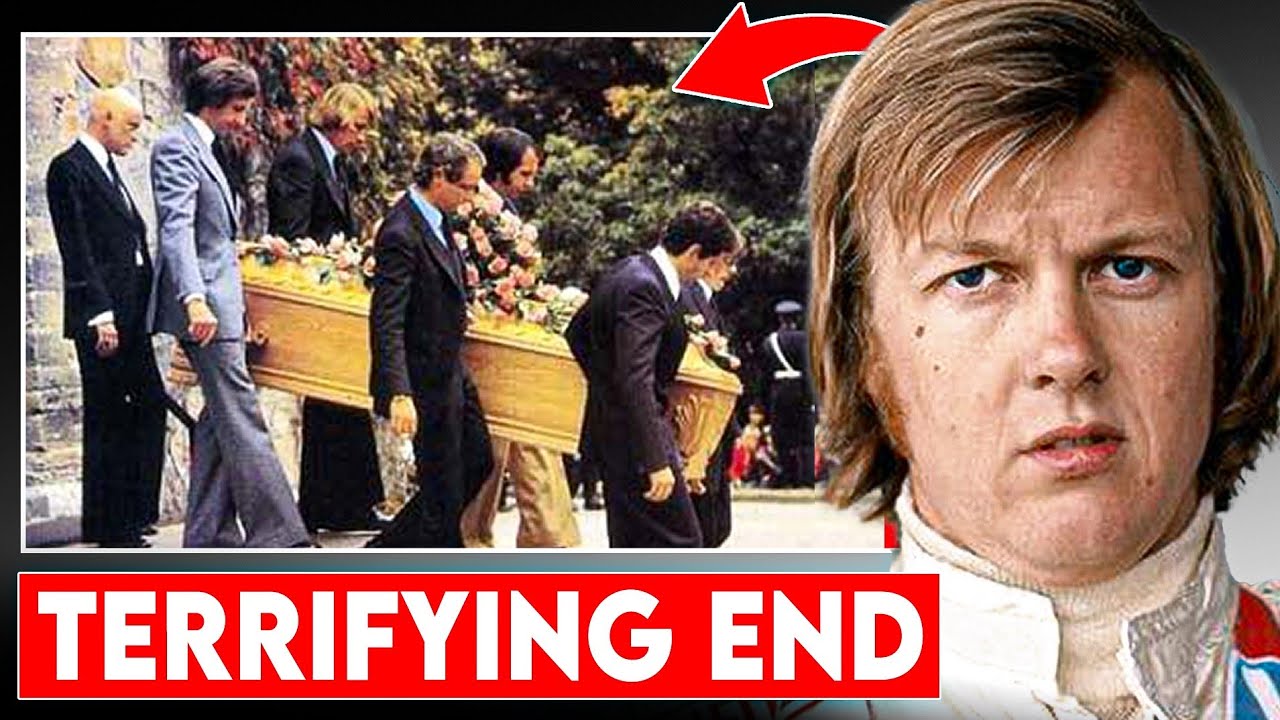
The funeral of Ronnie Peterson was a somber, heart-wrenching affair attended by the entire racing community. The pallbearers included some of the most iconic names in motorsport history: James Hunt, Jody Scheckter, John Watson, Emerson Fittipaldi, Gunnar Nilsson, and Niki Lauda. The ceremony served as a heartfelt tribute to a racer whose life and career had been cut tragically short.
The grief, however, did not end with the burial. The aftermath of the crash sparked a wave of recrimination and legal battles. James Hunt, in particular, was vocal in his criticism of Ricardo Patrese, holding the Italian driver responsible for the first-lap collision.
As a result, Patrese was suspended from competing in the subsequent United States Grand Prix, a punishment that reflected the deep anger within the Grand Prix Drivers’ Association.
 The legal proceedings extended far beyond the paddock, reaching the Italian Criminal Court. Ricardo Patrese was charged with manslaughter, accused of making an unsafe maneuver on the track that was deemed a significant contributing factor to the crash. Race director Gianni Restelli also faced charges related to the premature starting signal that had bunched up the field.
After a lengthy legal process that dragged on for years, both Patrese and Restelli were acquitted of all criminal charges on October 28, 1981. The verdicts did little to quell the controversy, but they closed a painful chapter for those involved, leaving the sport to grapple with the enduring questions of safety and accountability that the tragedy had raised.
The personal devastation of Peterson’s death extended to his family, most tragically his wife, Barbro. Struggling deeply with the untimely loss of her husband, she battled overwhelming grief for nearly a decade before taking her own life on December 19, 1987. She was laid to rest beside Ronnie in the Peterson family grave in Örebro, Sweden, where the couple now rests together in a heartbreaking testament to their bond.
The double tragedy underscored the profound human cost of the sport, moving beyond the statistics of crashes and championships to the quiet, enduring sorrow of those left behind.
Despite his premature departure, Ronnie Peterson’s legacy has only grown in stature. He is widely regarded as one of the greatest Formula 1 drivers never to have won a championship, and he is celebrated as Sweden’s finest racing talent. A 2016 academic study that used mathematical models to evaluate driver influence versus their machinery ranked Peterson as the 21st best Formula 1 driver of all time, and the sixth best driver never to have clinched a title.
His enduring legacy continues to inspire admiration and respect among fans and experts alike, a testament to his raw speed, fearless overtaking, and the sheer joy he brought to the sport.
In his hometown of Örebro, a statue of Peterson, crafted by Richard Brixel, stands as a permanent honor to his legacy. The official Ronnie Peterson Museum, opened on May 31, 2008, by his daughter Nina Kennedy, serves as another enduring tribute to his impact on motorsport. A documentary titled “Super Swede: A Film About Ronnie Peterson,” directed by Henrik Jansson-Schweizer, features insights from racing legends like Mario Andretti, Emerson Fittipaldi, Nina Kennedy, and Niki Lauda.
 The film, along with various short tributes, can be found on platforms like YouTube, ensuring that new generations of racing fans can learn about the man behind the legend.
The tributes have continued into the modern era, demonstrating the timeless nature of Peterson’s appeal. During the 2014 Monaco Grand Prix, fellow Swedish Formula 1 driver Marcus Ericsson paid homage to Peterson by wearing a specially designed helmet modeled after Peterson’s iconic style. This tribute extended to Ericsson’s victorious race in the 2022 Indianapolis 500, where he donned a similar helmet, keeping Peterson’s memory alive in the world of racing.
These gestures highlight how Peterson’s journey holds a special place in the hearts of fans, transcending the decades since his death.
Peterson’s journey to the pinnacle of motorsport began in karting, the traditional starting point for many future open-wheel racers. He quickly rose through the ranks, winning multiple karting titles, including two Swedish championships in 1963 and 1964. His success paved the way for a move to Formula 3, where he showcased his prodigious talent by winning the Monaco Grand Prix Formula 3 support race in 1969.
Later that same year, he clinched the FIA European Formula 3 Championship, establishing himself as a rising star destined for greatness. In 1970, Peterson made his Formula 1 debut with the March factory team, beginning a career that would be defined by brilliance and tragedy.
Over three years with March, Peterson secured six podium finishes, with a standout performance in 1971 where he finished as the runner-up in the Drivers’ Championship. His skill caught the attention of Colin Chapman, leading to a move to Team Lotus in 1973, where he partnered with the reigning Champion Emerson Fittipaldi. Peterson flourished at Lotus, claiming seven victories in his first two seasons, including a career-best 52 points in 1973.
Following a challenging 1975 season, Peterson returned to March and captured his final win for the team at the 1976 Italian Grand Prix. He then spent the 1977 season with Tyrrell before rejoining Lotus in 1978 as the second driver alongside Mario Andretti.
The 1978 season was a testament to Peterson’s remarkable skill and resilience. Despite being relegated to the number two driver role, he consistently outperformed expectations, securing wins in South Africa and Austria. His exceptional performances throughout the season ensured that, even in death, he secured a posthumous second place in the Driver Championship Standings, a final, poignant acknowledgment of his extraordinary talent.
Peterson’s life was nothing short of extraordinary, from thrilling his fans with race victories to bringing them to tears with his tragic death. He lived a remarkable and inspiring life that touched the hearts of many, and his story remains one of the most heart-wrenching and enduring in the history of Formula 1.