Kim Darby looked like she had made it.
A breakout role opposite John Wayne.
Critical attention.
A BAFTA nomination.
And a face Hollywood suddenly wanted everywhere.
But behind the success of True Grit was a much darker story.
Pressure.
Typecasting.
Dangerous attempts to stay thin.
A career that seemed to lose momentum just as quickly as it had exploded.
And a young actress discovering that Hollywood could celebrate you one year and quietly move on the next.
For Kim Darby, fame was not the beginning of an easy life.
It was the beginning of a fight to survive it.
Long before audiences knew her as Mattie Ross, she was Deborah Zerby.
She was born into a family of performers and grew up surrounded by show business from an early age.
Entertainment was not something distant.
It was the environment around her.
That background exposed her to unusual people and unusual places, including time spent around a club associated with Jack Ruby.
Years later, the connection would seem almost surreal given Ruby’s place in American history.
But for Darby, it was simply one more strange chapter in a childhood already shaped by performers, movement and instability.
As she got older, Deborah Zerby decided to create a new identity.
Kim Darby.
The name was cleaner.
More marketable.
More suited to the acting career she wanted.
And Hollywood began paying attention.
Darby started appearing in television.
She took guest roles and gradually built a reputation as a young actress capable of conveying vulnerability without seeming weak.
One of her early memorable appearances came in Star Trek, where she played Miri.
The role helped put her in front of a wider television audience.
But television was only the beginning.
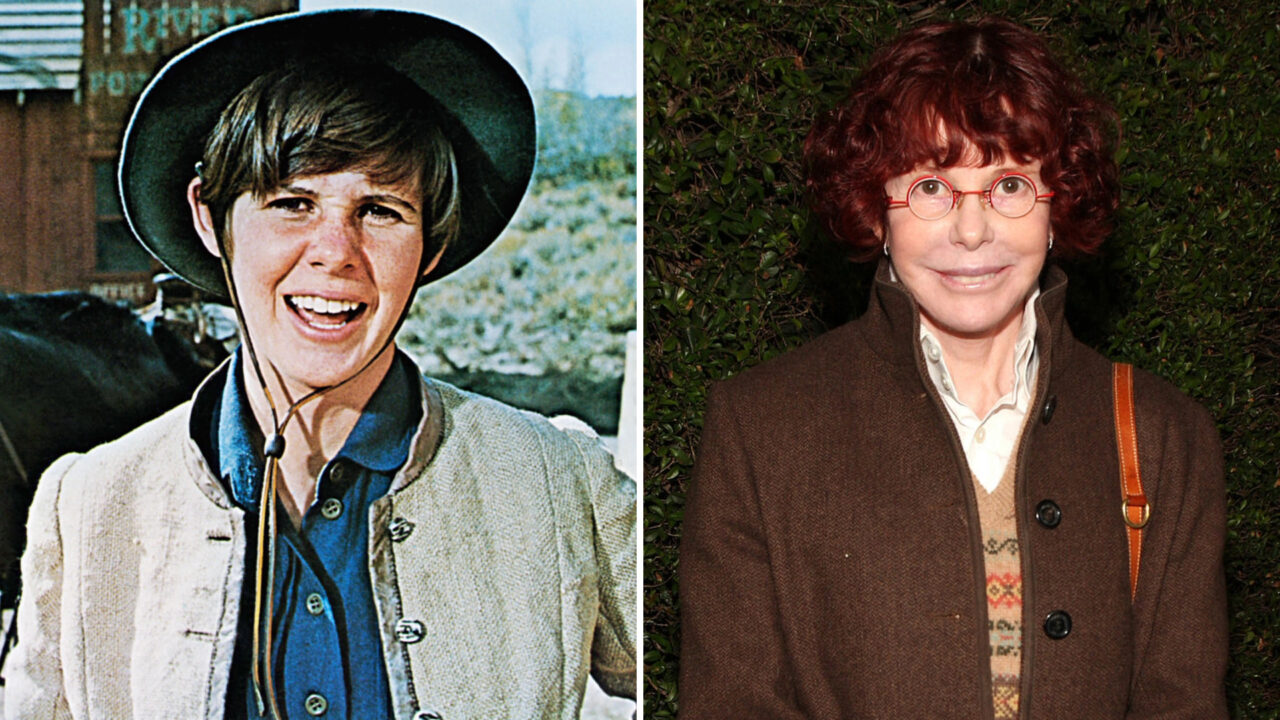
Then came True Grit.
In 1969, Darby was cast as Mattie Ross opposite John Wayne.
The role demanded confidence.
Mattie was stubborn.
Determined.
Unwilling to be intimidated by older men.
Darby gave the character the forcefulness required to stand beside one of the biggest movie stars in the world.
The film became a major success.
John Wayne won the Academy Award for Best Actor.
And Darby earned a BAFTA nomination.
On paper, this should have been the beginning of an enormous film career.
But success came with pressure.
Sudden attention meant scrutiny.
Appearance mattered.
Weight mattered.
The kind of roles Hollywood believed she should play mattered.
And Darby would later speak about the unhealthy choices she made trying to fit those expectations.
Amphetamines became part of that struggle.
They helped her remain thin.
They also damaged her health and, by her own later account, hurt her career.
This was not an unusual pattern in old Hollywood.
Actors were expected to maintain an image.
How they achieved it was often treated as secondary.
But the consequences were personal.
For Darby, the effort to remain marketable came at a real cost.
And while she was dealing with those pressures, Hollywood was also deciding what kind of actress she was allowed to be.
That became another problem.
Darby had a naturally vulnerable quality on screen.
Directors and producers saw it.
Audiences responded to it.
But success in a particular type of role can quickly become a trap.
She began being associated with women in danger.
Women under pressure.
 Women being victimized.
The more she played those characters, the more difficult it became to escape them.
Meanwhile, the film career many expected after True Grit never fully materialized.
There were opportunities.
There were near-misses.
There were projects that seemed promising.
But the momentum was uneven.
Hollywood had not forgotten Kim Darby.
It simply never decided what to do with her.
Television offered more possibilities.
And in 1973, she appeared in Don’t Be Afraid of the Dark.
The horror film would eventually become one of the defining cult titles of her career.
Darby played a woman increasingly terrorized inside her own home.
The role once again used her ability to communicate fear and emotional instability.
But this time, the material had a lasting afterlife.
The film became a cult favorite.
Years later, audiences continued discovering it.
Darby also found success in Rich Man, Poor Man in 1976.
The miniseries became a major television event and showed that she could still command attention beyond the role that had made her famous.
But the pattern remained.
Powerful performances.
Strong television work.
Yet no consistent return to the kind of film stardom True Grit had once seemed to promise.
Her personal life was equally eventful.
Darby’s marriage to actor James Stacy was short-lived.
But Stacy’s later life would become marked by tragedy after a devastating motorcycle accident left him severely injured.
Darby repeatedly found herself connected, directly or indirectly, to people and events that carried extraordinary dramatic weight.
It added to the sense that her real life could sometimes be stranger than the roles she played.
Still, Darby continued working.
That persistence mattered.
By the 1980s, she began moving away from the vulnerable-young-woman image that had dominated so much of her earlier career.
One of the most unexpected turns came with Better Off Dead in 1985.
The dark comedy gave Darby a chance to play with a completely different tone.
Absurd.
Comic.
Strange.
It allowed audiences to see a side of her that Hollywood had rarely used.
And that became part of her second act.
Darby did not simply disappear because the movie industry stopped treating her as a leading lady.
She adapted.
She found television.
She found cult projects.
And eventually, she found another way to use what decades in the industry had taught her.
Teaching.
Darby became involved in acting instruction, including work at UCLA.
That transition makes sense.
Few teachers could offer students a more complicated education in what acting really means.
Darby had experienced sudden fame.
She had worked with legends.
She had been typecast.
She had made unhealthy sacrifices for an industry obsessed with appearance.
She had seen opportunities disappear.
And she had rebuilt herself more than once.
That knowledge could not be learned from theory alone.
Kim Darby’s story is often reduced to one film.
True Grit.
One role.
Mattie Ross.
One image of a young actress standing defiantly beside John Wayne.
But her life was far more complicated.
She was a child of performers who reinvented herself.
A television actress who became a film star.
A rising talent whose success came with dangerous pressure.
A performer who watched Hollywood struggle to see her as anything beyond vulnerability.
And an actress who eventually learned how to survive by refusing to depend entirely on the industry that had once made her famous.
The destruction in Kim Darby’s story was never complete.
Because she kept rebuilding.
She moved from movies to television.
From drama to horror.
From cult comedy to teaching.
Hollywood may not have given her the long leading-lady career that once seemed inevitable.
But it also never managed to erase her.
True Grit made her famous.
Don’t Be Afraid of the Dark gave her cult immortality.
And everything that happened between those two points revealed just how difficult survival in Hollywood could be.
Kim Darby’s career was not a simple rise and fall.
It was a series of reinventions.
And that may be the real mystery.
Not why Hollywood failed to keep her at the top.
But how she kept finding a way forward after it did.