Princess Anne, long regarded as the most discreet and disciplined member of the British royal family, has broken her silence on one of the most sensitive questions surrounding the crown: whether King Charles is merely holding the throne for Prince William. Her comments, measured and practical rather than emotional, carry unusual weight because she rarely speaks publicly on such matters. For more than 50 years, Anne has followed an unwritten rule to speak only when it matters. She has weathered royal scandals, a public divorce, serious horse falls, and even an attempted kidnapping without issuing press releases or giving tearful interviews.
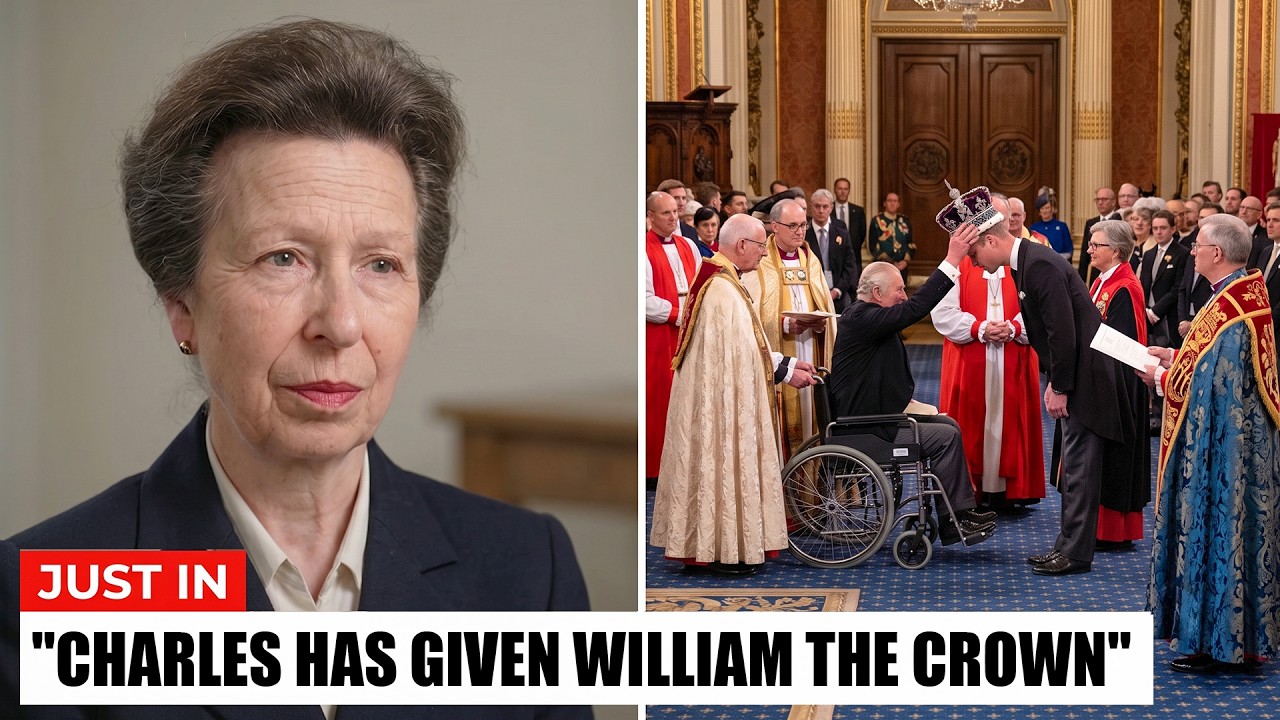
That makes her recent intervention all the more notable. The timing is significant. Public debate about Charles’s position intensified after Denmark’s Queen Margrethe II stepped down in favor of her son, King Frederik X. That event prompted discussion in Britain about whether Charles should follow suit and let the more popular Prince William take over sooner.
A YouGov poll from May 2022, just four months before Queen Elizabeth’s death, found that while 57 percent of people believed Charles would be a good king, 77 percent believed William would do better. The comparison never faded. Royal biographer Robert Hardman addressed the issue directly in his book “The Making of a King: King Charles III and the Modern Monarchy. ” He noted that one thing that upsets Charles is the label “caretaker,” which implies he is only looking after the monarchy until William arrives.
Those close to Charles argue that view is wrong. Princess Anne agreed, but her agreement revealed something more significant. She did not offer her brother emotional support, nor did she dismiss the comparison to Denmark. Instead, she took a practical stance based on her own experience, arguing that starting a reign later in life has distinct advantages.
Her argument was that a monarch who has watched, learned, and developed strong beliefs over the years brings valuable experience to the role. When someone starts later, they have more experience and their own opinions to rely on. The perspective is significant coming from her. Anne is not known for flattery.
She is straightforward and says exactly what she means. Had she been defending her brother out of loyalty, her words would likely have been warmer. Instead, she offered a measured, almost clinical opinion that carries more weight than any palace statement. It was not an emotional response but a clear position from someone regarded as a credible voice within the royal family, not because of her title, but because she has never said anything she did not believe.
The palace may have been prepared for her words, but the wider public was beginning to notice a shift. Charles is still king, but reports suggest William is increasingly making the key decisions. The official story from Buckingham Palace is that Charles, though battling a form of cancer that has not gone into remission, remains fully in charge. He is working, traveling, and showing up.
He has not given up any power. William has his own office and staff, and the two work closely together. When they disagree, William respects his father’s choices. But another story has emerged.
By early 2026, it became harder to ignore the gap between the official account and reality. Celebrity journalist Rob Shuter, known for breaking royal news, reported that while Charles is still king, William is making the key decisions. A source said William is focused on the future, not on feelings. “It is about protecting the brand,” the source said.
That phrase does not sound like how loyal sons talk about their fathers. It sounds more like what a successor would say about the institution they are taking care of. This suggests an important change in the British monarchy that palace communications cannot hide. Power is not being handed over formally.
Instead, it is slowly leaking away, and no official statement can change that. Signs of the change are visible. At a German state banquet in late 2025, Kate wore a tiara that only reigning queens have worn before. A source told Us Weekly that the choice was intentional, signaling that the monarchy is strong no matter what happens to the king.
William and Kate are taking on significant responsibilities that go beyond ceremonies. Reports in early 2026 indicated that William is being set up to oversee a key royal institution. This is not just preparation for the future but a response to the current situation. Observers say this is happening with Charles’s silent agreement, even though he is not happy about it.
One source mentioned that Charles is uncomfortable with the change. He has waited his whole life to be king. His mother reigned for 70 years, and he began his rule in 2022. Now, because of his health, attention is shifting toward his son.
The source stated: “He doesn’t feel great about it. He has finally gotten the role he has waited for his whole life. Now that he’s king, everyone is focused on who will come next. ”
That summary captures the sadness of the king’s situation.
This is not a story of a man giving up power out of selfishness or neglect. It is about a man who has dedicated his life to his role, and now his illness is forcing him to share it sooner than he expected. Formally, power has not changed hands. The palace will clarify that.
But what the sources describe and the growing public evidence suggests is something deeper. It is not a transfer of power but a slow, steady change. Princess Anne is witnessing it all firsthand. The British monarchy relies on rituals and regular public appearances.
It involves tasks such as cutting ribbons, presenting medals, and hosting ceremonies. These jobs may not be glamorous, but they are essential in connecting the crown to the people. Princess Anne has been doing this work longer and harder than anyone else in the royal family. In 2025, she completed 478 official engagements.
In 2024, it was 457. In 2023, she completed 433. For several years, she has been the most active royal with impressive consistency. At 75 years old, she works harder than younger members of the royal family without complaint and without the help of a PR team.
She started her public service in 1969 at just 18 years old. In comparison, Prince William completed 202 engagements in 2025. While that is a significant number, it is still less than Anne’s. The difference is noticeable, especially in investiture ceremonies where specific royals confer honors on the public.
These events are crucial interactions between the monarchy and the public. According to a source in the Sunday Times, Princess Anne still does most of these ceremonies even though William lives at Windsor. The situation irritates her. Anne believes that duty is essential for everyone with a royal title, especially someone preparing to be king.
Former royal butler Grant Harold noted that Anne gave William a strict warning about the monarchy’s future. Royal expert Hillary Fordwich pointed out a difference in approach between Anne and William. Anne embodies the traditional, committed approach to royal duty, while William prefers to focus on fewer, more impactful events. Both views have supporters.
As William gets closer to the throne, he will need to choose between adopting Anne’s understanding of duty and creating his own. When he becomes king, how he measures engagement will reflect his reign more than any speech he gives. When people talk about Princess Anne, one phrase often comes up: she tells the truth. She does not share the polished version of the truth that the palace might prefer.
She speaks her honest opinion, even if it is uncomfortable or not what Buckingham Palace would approve. This honesty makes Princess Anne both a valuable and potentially risky ally for Prince William. Royal expert Richard Fitzwilliams called Anne “absolutely pivotal” to the monarchy’s survival during challenging times. He meant that not just in terms of her ceremonial duties but more in terms of the advice she gives and the example she sets.
As King Charles faces pressure from William over issues like Prince Andrew, Anne offers practical, down-to-earth advice. Fitzwilliams emphasized that anyone on the throne must listen to different viewpoints, not just those from staff concerned about their own jobs or influenced by the media. Anne provides honest opinions without a personal agenda, just focusing on the monarchy’s long-term success. People have said Anne is a great solace to William as he approaches kingship.
A royal commentator noted her presence is dominant, meaning she brings authority and experience into discussions. Her views carry weight and cannot be easily ignored. Descriptions of her often include “no-nonsense,” reflecting the straightforward honesty that also defined her mother, Queen Elizabeth II, and earned public trust. Another important point is that Princess Anne is 18th in line to the throne due to the succession rules at her birth.
If modern rules had applied, she would have been fifth in line, just behind William and his children. This means Anne has not sought power for herself. Instead, she has chosen duty. When someone who genuinely prioritizes duty speaks about the institution, their words lack personal ambition.
This quality is rare in any royal setting. William has many people advising him, including staff, courtiers, policy advisers, and a strong Princess of Wales. However, Princess Anne is different. She does not seek titles or favors.
She only cares about ensuring the crown survives. There is a tension in the British monarchy that is rarely discussed. The palace avoids it, and most royal reporters do, too. Even in off-the-record conversations that sometimes come out in Sunday newspaper profiles, this issue is overlooked.
It is the tension between a king who is not yet ready to let go and an heir who cannot wait much longer. King Charles waited 73 years to become king. He spent those years as the heir apparent, observing from the sidelines and forming opinions he could not act on. His mother reigned for 70 years, and becoming king felt like a distant future, a dream that never seemed to come true.
But in September 2022, it did happen. Then cancer changed everything within two years. By late 2025, palace officials announced that Charles would reduce his cancer treatment in 2026. The wording was cautiously optimistic but hid a tougher truth.
The cancer had not gone away. Some palace briefings even described his health as precarious. The narrative shifted from a monarch shaping a legacy to an institution preparing for a change. Charles seemed aware of the shift and was not at peace with it.
An insider revealed that he disliked William’s growing influence. After a lifetime of waiting, Charles finally became king and had his ambitions. He wanted a smaller monarchy, a modern institution, and a reign that reflected his vision, not just his mother’s. Now, the conversation was focused on how the transition to William would happen.
This shift is painful to witness for anyone. Princess Anne’s comments, however, offered a much-needed perspective. She communicated that Charles deserves his reign and that experience is important. Arriving at the throne with many years of experience is not a disadvantage.
It is an advantage. The narrative that sees him as just a caretaker misinterprets what a long journey to power means for a person. If Anne is correct, and she usually is, then Charles is not just a temporary figure. He is a king with more knowledge than any monarch before him.
Whether he can fully express that knowledge due to his health is unclear, but dismissing him as merely a placeholder for William is, as Anne states, simply wrong. This tension matters beyond mere palace gossip. It reveals how transitions in monarchy operate. When power shifts between generations due to declining health rather than death, there is no clear handover.
There are competing influences, overlapping authority, and ongoing negotiations about who is really in charge. Princess Anne understands this better than anyone. She witnessed her mother’s reign slow down. She observed how the institution manages transitions that are always challenging.
When she chose to speak, she addressed not just the relationship between Charles and William but something much more significant. No one individual owns the crown. It is about continuity. Right now, that continuity relies on two men figuring out how to pass power along, with one woman who knows how this should work.
Princess Anne does not speak to draw attention. When she does speak, it means something is happening in the institution. It involves health, duties, and the delicate balance between honoring a king’s dignity and preparing for the kingdom’s future.
This situation is far from over, and all future developments will be linked to the dynamics at play now.