Waking up at 3:00 a. m. on a regular basis is not a sign that something is broken. For most people, it is a predictable consequence of how human sleep is actually structured, combined with hormonal cycles that begin preparing the body for morning hours before the alarm goes off.
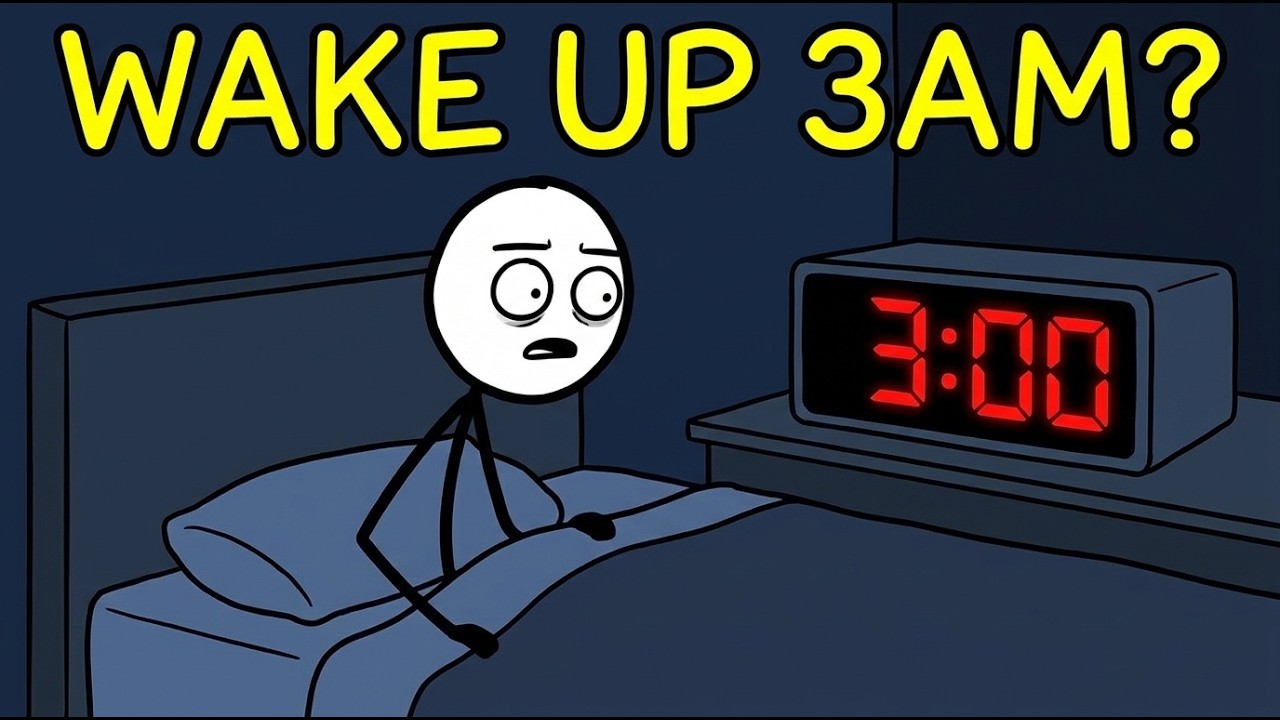
Sleep does not happen as one continuous block. It runs in roughly 90-minute cycles that alternate between deep slow-wave sleep and lighter REM sleep. The first half of the night is dominated by deep, restorative sleep, while the second half is dominated by REM sleep, which is lighter and much easier to disrupt. The transition between these two halves typically falls between midnight and 3:00 a.
m. for people on a conventional schedule, and it often involves a brief period of near-waking before the REM-dominant second half begins. For most people, this brief arousal passes without notice because they fall back asleep quickly. Those who experience it as a frustrating problem are usually failing to return to sleep, and that failure has its own biological causes.
Cortisol plays a central role. The hormone follows a circadian rhythm, reaching its lowest point in the early hours of sleep and beginning to rise in the pre-dawn hours as a wake-preparation signal. For people who wake around 7:00 a. m.
, this rise begins around 4:00 to 5:00 a. m. For early risers, it can begin as early as 2:00 to 3:00 a. m.
People with elevated baseline cortisol, often due to chronic stress or irregular sleep schedules, can experience an earlier, steeper rise that promotes wakefulness at an unwanted time. Blood sugar is another factor. Glucose falls during the overnight fast, and if it drops too low, the body releases cortisol and adrenaline to mobilize stored glucose. That surge is associated with waking.
People with less stable blood glucose regulation, those who ate a high-carbohydrate dinner, or those who drank alcohol in the evening are more likely to experience nighttime drops significant enough to trigger the response. Alcohol has a particularly misunderstood relationship with sleep. It accelerates sleep onset and suppresses REM sleep in the first half of the night. As the alcohol is metabolized over several hours, REM rebounds in the second half, producing lighter, more fragmented sleep and more frequent awakenings.
The 3:00 a. m. waking after an evening of drinking follows the alcohol metabolism timetable directly. There is also a historical dimension that reframes the entire experience.
For most of human history, consolidated eight-hour sleep was not the norm. Pre-industrial societies widely practiced segmented sleep: a first sleep from shortly after dark until roughly midnight, a period of wakefulness lasting one to two hours used for prayer, conversation, sex, or light work, and then a second sleep until dawn. Historian Roger Ekirch documented this pattern in a landmark 2001 paper, drawing on court records, diaries, medical texts, and literary references that treated two-phase sleep as completely ordinary. The shift to single-block sleep happened rapidly in the 18th and 19th centuries with the spread of artificial lighting, which extended evening social activity and created pressure to wake at fixed times.
Within a few generations, the older pattern was forgotten and the middle-of-the-night waking that had been normal for most of human history was reclassified as insomnia. The problem, then, is not the waking itself. It is what happens next. In the pre-industrial context, waking in the middle of the night was expected and the time was used productively.
Modern sleepers, by contrast, lie awake calculating how many hours remain before the alarm, often checking a phone screen that confirms the time and activates the sympathetic nervous system at exactly the moment calm darkness is needed. Individual variation also plays a role. Early chronotypes have earlier cortisol rhythms and earlier REM windows, making early-morning waking more characteristic of their pattern. Room temperature matters as well: core body temperature reaches its lowest point around 4:00 to 5:00 a.
m. , and a bedroom warmer than about 19°C can interfere with the temperature drop needed to maintain deep sleep. Blue-spectrum light from screens in the two hours before bed suppresses melatonin and delays the circadian clock, contributing to lighter, more fragmented sleep in the second half of the night. Magnesium deficiency is a frequently overlooked contributor.
Magnesium regulates GABA receptors that promote sleep and helps manage cortisol response. Low levels are associated with more frequent nighttime awakenings and difficulty returning to sleep, and modern diets often lack magnesium-rich foods while including processed foods that deplete it. The content of 3:00 a. m.
thoughts is also not random. The shift toward lighter sleep combined with the beginning of the cortisol rise produces a brain that is more alert to threat and less capable of broad contextual evaluation. The prefrontal cortex, responsible for rational assessment and perspective, is less integrated with emotional centers in the half-awake state. Emotional centers fire at full intensity while the rational evaluation system runs at reduced capacity.
Problems that feel manageable in the afternoon can feel catastrophic at 3:00 a. m. because the brain evaluating them is in a specific altered state that reliably overestimates threat. For those lying awake, the worst response is checking the time.
Knowing it is 3:00 a. m. and calculating hours until the alarm triggers a cascade of cortisol and sympathetic activation that makes returning to sleep harder. If the time is unknown, the waking is just a waking, and many people fall back asleep within minutes without intervention.
If anxiety has already started, the evidence-supported approach is to get out of bed and do something calm in dim light: reading a physical book, light stretching, or other low-stimulation activity until sleepiness returns. Lying in bed becoming increasingly anxious conditions the bed to be associated with wakefulness. Diaphragmatic breathing directly activates the parasympathetic nervous system and counteracts sympathetic activation. A 4-7-8 pattern, four counts in, seven counts hold, eight counts out, produces measurable heart-rate slowing within a few cycles.
Writing thoughts down on paper reduces cognitive load by offloading concerns onto a record, signaling to the brain that they have been captured and can be addressed later. The tendency to cycle through the same worries is partly driven by the implicit fear that stopping will cause them to be forgotten. The cognitive reframe, accepting that waking at 3:00 a. m.
is not a crisis and that lying quietly in the dark provides some rest even without sleep, is harder to achieve in the moment but has the largest long-term effect on whether the waking becomes a chronic problem or remains an occasional feature of normal sleep variation. The 3:00 a. m. waking happens because the body is at the transition point between the deep-sleep-dominated first half of the night and the REM-dominated second half, at the moment when cortisol begins its pre-dawn rise.
This is the time when human sleep architecture has always been most prone to brief arousal. Medievals called it the canonical hour between first sleep and second sleep and used it for prayer. It happened to your great-grandparents, and it happens to you because human sleep has always been more structured and more interrupted than the eight-hour flatline the modern world decided was standard.
The waking becomes a problem not when it happens, but when the response to it generates enough anxiety and physiological activation to prevent the return to sleep that would otherwise occur naturally.