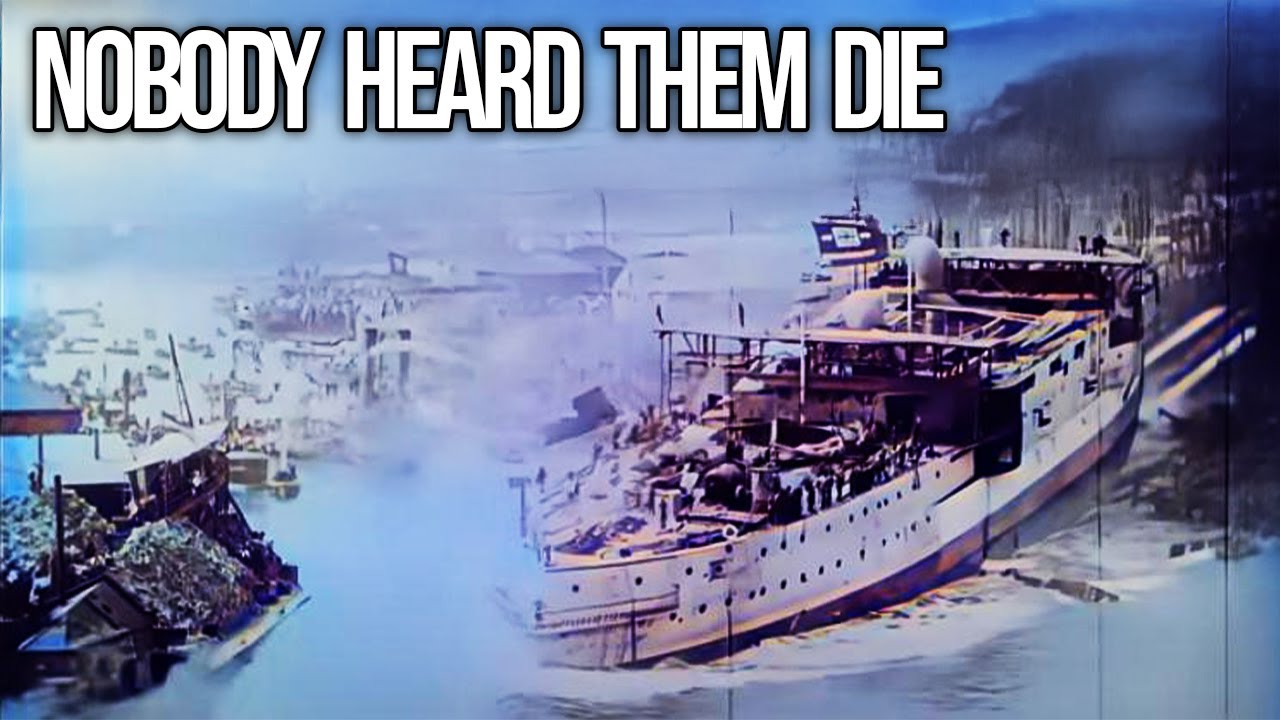
On the afternoon of June 21, 1898, a catastrophic maritime tragedy unfolded on the murky waters of Bow Creek in East London, claiming the lives of at least 38 spectators—many of them women and children—who had gathered to witness the ceremonial launch of the Royal Navy battleship HMS Albion. The disaster, which occurred in plain sight of thousands and was captured by two pioneering filmmakers, stands as one of the first mass-casualty events ever recorded on video, marking a grim milestone in the history of both naval engineering and visual journalism.
The day had begun with the promise of spectacle and civic pride. The Thames Iron Works and Shipbuilding Company, located in the industrial heart of Blackwall, had prepared meticulously for the launch of the Albion, a formidable Canopus-class pre-dreadnought battleship displacing over 13,000 tons. Armed with four 12-inch guns and a suite of secondary batteries and torpedoes, the vessel represented the apex of British naval power at the close of the Victorian era.
 The company had printed 20,000 tickets for the event, anticipating a massive turnout of dignitaries, workers, and their families. The American ambassador, alongside ambassadors from Turkey, Japan, and the Netherlands, had taken their places on ornate staging, while the Duchess of York was scheduled to perform the ceremonial christening.
As the clock approached 3:00 PM, the atmosphere along the banks of the River Thames and the River Lee was electric. Thousands of men, women, and children jostled for vantage points, eager to witness the 400-foot hull slide down the greased slipways into the water. Among the crowd were two men who would inadvertently document the impending horror: E.
P. Prestwich, who had positioned himself on the roof of the company’s main office, and Robert W. Paul, a pioneer of early cinema who had taken a boat onto the water to capture close-up footage.
Neither man knew that their cameras were about to record one of the deadliest launch accidents in British maritime history.
The fatal flaw of the day lay not in the battleship itself, but in a flimsy wooden gangway that had been erected for workers to cross a tributary of Bow Creek. The structure, approximately 100 feet long and 5 to 6 feet wide, was never designed to bear a crowd. At high tide, its surface cleared the water by a mere 3.
5 feet, and it was plastered with danger signs warning against unauthorized use. Yet, as the launch hour approached, hundreds of spectators—including yard workers and their families—ignored the warnings and police attempts to clear them, crowding onto the rickety bridge to secure an unobstructed view of the Albion’s descent. One yard hand, overheard joking with colleagues, quipped that the crowd on the bridge were “about to get their annual bath.”
The remark would prove tragically prophetic.
 At precisely 3:00 PM, the massive chains holding the Albion in place were released. The 13,000-ton hull, propelled by gravity and a thick coating of grease on the slipways, plunged stern-first into the mouth of the River Lee. The displacement of water was instantaneous and violent.
A colossal wave, surging with the force of thousands of tons of steel entering the water, swept outward toward both banks of the creek. The wave struck the crowded gangway with devastating force, washing the entire structure—and the estimated 200 people standing upon it—into the churning, muddy waters below.
The scene that followed was one of utter chaos and desperation. Eyewitnesses described a writhing mass of humanity struggling against the thick, viscous mud lining the riverbanks, the debris of the shattered gangway, and the still-settling hull of the Albion, which remained in the water just yards away. Cries and screams pierced the air, but they were largely drowned out by the cheers of the thousands of spectators on the opposite bank who had not yet realized what had occurred.
It took nearly ten minutes for the full scale of the disaster to become apparent to those outside the immediate vicinity, as the jubilant atmosphere of the launch masked the desperate struggle for survival unfolding in the water.
Rescue efforts were initiated almost immediately by a stroke of tragic fortune: a flotilla of small boats had been stationed in the river to clear launch debris from the water, and their crews quickly pivoted to pulling victims from the murky depths. Bystanders on the banks, many of whom had just witnessed the horror unfold, dove into the water without hesitation, risking their own lives to save strangers. Despite these heroic efforts, the death toll mounted rapidly.
Thirty-eight people lost their lives that day, their bodies pulled from the water covered in black sludge and tangled in the wreckage of the bridge. The victims were overwhelmingly from the working-class neighborhoods of East London, families who had come to enjoy a rare day of leisure and celebration.
 The human cost of the disaster was borne most heavily by women and children. Among the dead was Mrs. Isabelle White, whose body was recovered with her two daughters, five-year-old Lotty and one-year-old Queenie, still clinging to her dress.
All three were lifeless. The youngest victim was three-month-old Frank Southgate; the oldest was 64-year-old Eliza Tarbert. Many of the injured, dragged from the water with broken bones and severe hypothermia, would succumb to pneumonia in the days and weeks that followed, adding to the grim tally.
The tragedy struck a particularly raw nerve in the community, as it was not a naval battle or a storm that had killed these people, but a moment of civic celebration turned suddenly, inexplicably deadly.
In the aftermath, a formal inquest was convened to determine the cause of the disaster. The proceedings were fraught with emotion and recrimination. Critics pointed to the inadequate crowd control measures, the flimsy construction of the gangway, and the failure of the shipyard to anticipate the massive wave that would inevitably be generated by the launch of a 13,000-ton vessel.
Yet, despite these damning observations, no criminal charges were ever brought. The coroner’s jury returned a verdict of accidental death, a conclusion that shifted responsibility away from the shipyard and onto the victims themselves. The Times newspaper, in a particularly harsh editorial, placed the blame squarely on the dead, writing: “Deeply as we must all sympathize with the unfortunate people who fell victims to a natural but reckless curiosity, it must be recognized that they willfully risked their lives in spite of printed and verbal warnings and in defiance of the regulations of the yard and of the efforts of the police to enforce them.”
This callous dismissal of the victims’ suffering did not sit well with everyone. Arnold Hills, one of the owners of the Thames Iron Works, was deeply affected by the tragedy. Despite the legal exoneration, he took it upon himself to cover the funeral expenses for all the victims and provided mourning clothes for the bereaved families.
 He also made a substantial personal contribution to a relief fund established by West Ham Council to support those affected. The Royal Humane Society, an organization dedicated to recognizing acts of bravery in saving lives, awarded 27 silver medals to individuals who had distinguished themselves in the rescue efforts. These gestures of compassion, while meaningful, could not undo the devastation wrought on the families who had lost mothers, fathers, and children in a matter of seconds.
The disaster also marked a significant moment in the history of media. The footage captured by Prestwich and Paul, showing the wave sweeping the gangway into the water, was among the first examples of a disaster being recorded on film. The footage, though grainy and relatively tame by modern standards, was considered deeply controversial when it was screened in local theaters in the weeks following the tragedy.
Audiences, many of whom had lost friends or relatives in the event, were confronted with the stark reality of the disaster in a way that had never been possible before. This marked a turning point in the relationship between the public and tragic events, as the immediacy of moving images brought the horror of the world into the living rooms and theaters of ordinary people. It was, in many ways, the dawn of the era of visual journalism, where the suffering of strangers could be witnessed from a safe distance, a phenomenon that has become ubiquitous in the modern age.
As for HMS Albion herself, the ship that had inadvertently caused such devastation, her career continued largely without incident. She saw some action in the Eastern Mediterranean and served for over two decades before being sent to the breakers in 1920. She was not considered an unlucky ship, and her service record was unremarkable.
But the shadow of her launch never fully lifted. The disaster at Bow Creek became a cautionary tale, a reminder of the immense power of naval engineering and the fragility of human life when placed in its path.
Today, the site of the tragedy bears little resemblance to the industrial landscape of 1898. The Thames Iron Works is gone, replaced by modern apartment buildings and redeveloped waterfront properties. Bow Creek itself, now a muddy and somewhat desolate waterway, is a shadow of its former industrial self.
A memorial to the victims stands in East London Cemetery, a solemn reminder of the 38 lives lost on that sunny June afternoon. For the families of the victims, and for the community of East London, the tragedy of HMS Albion remains a deeply painful chapter in the region’s history—a day when a celebration of British naval might turned into a nightmare of mud, water, and death, forever captured on film for the world to see.