For centuries, Alpha Centauri has occupied a unique place in humanity’s imagination. Located just 4.37 light-years from Earth, it is the nearest Sun-like stellar system and the most realistic destination for any future interstellar mission. Scientists have studied it for decades, assuming our closest stellar neighbor would eventually become one of the best-understood planetary systems in the galaxy. Instead, the James Webb Space Telescope has revealed just how little we truly know.
Contrary to popular belief, Alpha Centauri is not a single star but a triple-star system consisting of Alpha Centauri A, Alpha Centauri B, and the faint red dwarf Proxima Centauri. While Proxima is known to host several planets, astronomers have never conclusively confirmed a planet orbiting either Alpha Centauri A or B, despite years of intensive searches.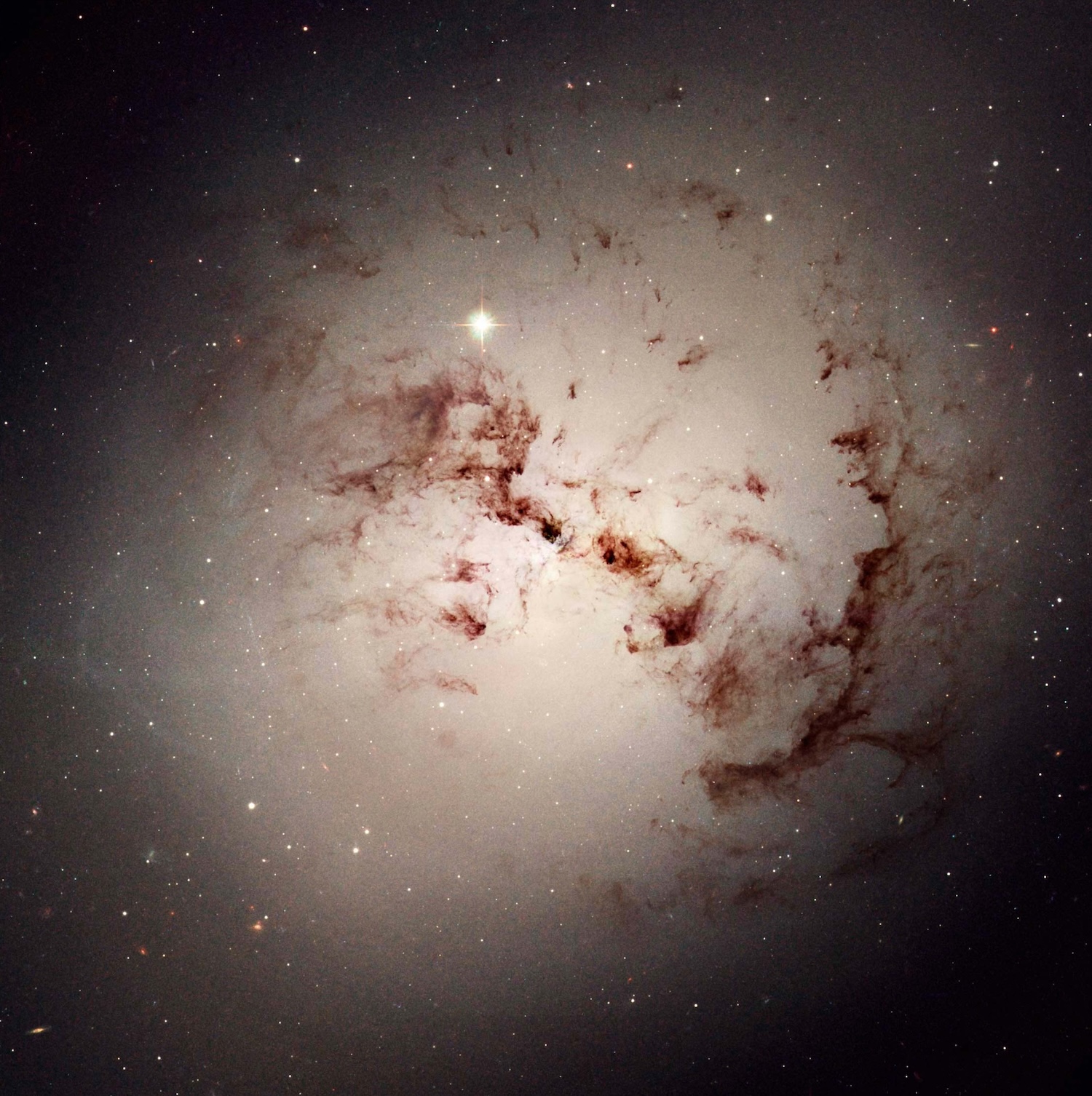
The reason is surprisingly simple: the system is incredibly difficult to observe. Alpha Centauri A and B are both extremely bright and orbit each other every 79.9 years, producing powerful gravitational effects and overwhelming glare that can easily hide or imitate the faint signal of an orbiting planet. Every major planet-hunting technique—radial velocity measurements, transit observations, and direct imaging—faces significant technical challenges in this binary system.
To overcome these obstacles, the James Webb Space Telescope used its Mid-Infrared Instrument (MIRI) together with a specialized coronagraph, which blocks much of a star’s overwhelming light to reveal extremely faint nearby objects. Because Alpha Centauri is so bright, engineers even had to develop a custom pointing procedure rather than using Webb’s normal target-acquisition system.
After carefully removing the overwhelming light from both stars, researchers identified a very faint infrared point source near Alpha Centauri A during observations conducted in August 2024. The object appeared more than 10,000 times dimmer than the star and was located at a projected distance of roughly 2 astronomical units, consistent with a possible orbit.
If this object were truly a planet, its infrared brightness would be compatible with a gas giant roughly comparable to Saturn. Such a discovery would be historic, becoming the closest directly imaged exoplanet candidate ever observed around a Sun-like star. Unlike most directly imaged exoplanets—which are typically massive, young, extremely hot worlds orbiting far from their stars—this candidate would represent a much colder and potentially more mature planetary system.
However, astronomy demands extraordinary caution. A faint infrared source near a brilliant star can have many explanations. It could represent a genuine planet, but it might also be a distant background object, scattered dust, an asteroid, or an optical artifact produced during the extremely complex image-processing required to suppress the starlight.
To test the discovery, Webb observed Alpha Centauri again in February 2025 and April 2025. This time, the mysterious point source was no longer visible. Rather than confirming or disproving the candidate, the follow-up observations introduced an even more intriguing possibility.
Computer simulations indicate that if the object is indeed a planet following a realistic orbit around Alpha Centauri A, it could easily have moved behind the region hidden by Webb’s coronagraph during the later observations. In other words, the apparent disappearance does not automatically eliminate the planetary interpretation. At the same time, it does not confirm it either.
For now, the candidate remains exactly that—a candidate. Additional observations with Webb and future extremely large ground-based telescopes will be needed to determine whether humanity has finally detected the first confirmed planet orbiting our nearest Sun-like stellar neighbor or whether the mysterious signal was simply another reminder of how challenging exoplanet discovery can be.
Rather than proving something impossible or disturbing, Webb’s observations demonstrate the remarkable sensitivity of modern astronomy. They also highlight that even the closest stellar system beyond our own continues to hold unanswered questions, reminding us that some of the greatest mysteries in the universe may still exist almost literally in our own cosmic backyard.