For more than half a century, Charles Duke has been remembered as the calm Southern voice that guided Apollo 11 safely to the lunar surface before becoming one of the astronauts who later walked there himself. Now, at 89 years old, Duke is sharing what he believes history has overlooked—not tales of extraterrestrials or hidden NASA conspiracies, but the astonishing reality of standing on another world.
Before Apollo 16, Duke was already part of history. As CAPCOM during Apollo 11, he delivered the famous response after Neil Armstrong’s lunar landing: “Roger, Tranquility. We copy you on the ground. You got a bunch of guys about to turn blue. We’re breathing again.” While the world celebrated Armstrong and Aldrin, Duke remained the unseen voice connecting Earth to the Moon. Years later, he would experience both sides of that journey, giving him a perspective shared by almost no one else.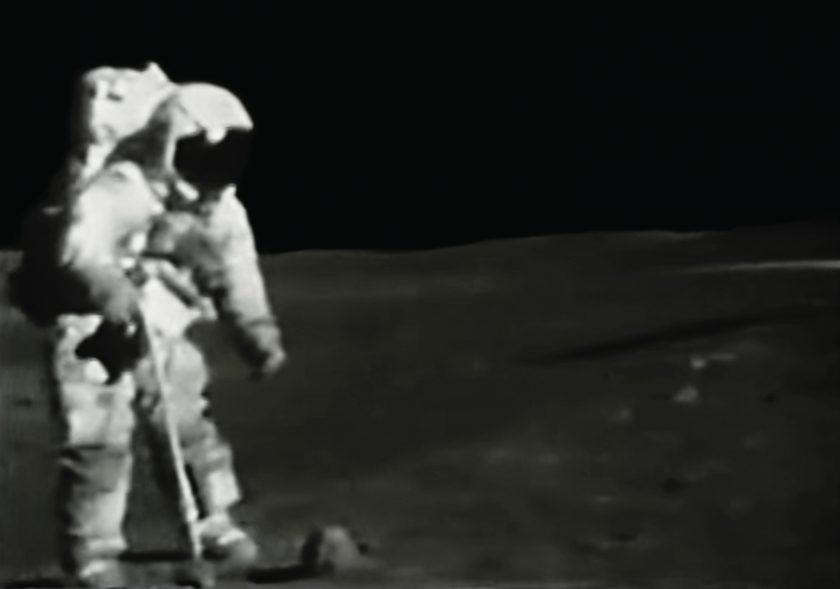
When Duke finally stepped onto the Moon in April 1972, he expected the familiar gray landscape he had studied for years. Instead, what shocked him most was the overwhelming contrast between the brilliant lunar surface and the absolute blackness of space above it. Without an atmosphere to scatter sunlight, the sky wasn’t dark blue or even deep black as seen from Earth—it was an endless void unlike anything human eyes experience here. Every shadow appeared razor-sharp, every rock looked unnaturally crisp, and the environment felt more alien than any photograph had ever suggested.
One of Duke’s biggest surprises challenges a popular image associated with the Apollo missions. During Apollo 16, the Earth was positioned almost directly overhead, meaning he could not simply look out and admire the famous “Earthrise” scene. His rigid spacesuit and helmet prevented him from comfortably looking straight upward, leaving him unable to enjoy the spectacular view many people assume every Moonwalker experienced. According to Duke, much of what the public imagines about life on the Moon comes from carefully selected photographs rather than the astronauts’ actual perspective.
The spacesuits themselves added another layer of difficulty. Their limited field of view forced astronauts to rotate their entire bodies rather than simply turning their heads. Walking, climbing slopes, and surveying the terrain required constant physical effort inside bulky equipment designed for survival rather than comfort. Duke has often explained that exploring the Moon felt far less graceful than the iconic footage suggests.
Yet Duke believes Apollo 16’s greatest legacy has little to do with breathtaking scenery. While Apollo 11 will always be remembered for humanity’s first steps, Apollo 16 quietly became one of the most scientifically productive lunar expeditions ever flown. Duke and commander John Young spent 71 hours on the lunar surface, completing three moonwalks while driving the Lunar Roving Vehicle across approximately 16 miles (26 kilometers) of rugged terrain.
Their mission collected nearly 96 kilograms (over 210 pounds) of lunar rocks and soil, drilled deep core samples, deployed advanced scientific experiments, and installed the Far Ultraviolet Camera/Spectrograph, the first astronomical telescope operated directly from the Moon. Free from Earth’s atmosphere, the instrument observed ultraviolet wavelengths impossible to study from ground-based observatories, opening an entirely new window for astronomical research.
Duke has long argued that Apollo 16 transformed scientists’ understanding of lunar geology. Samples collected from the Descartes Highlands overturned earlier assumptions that the region had been formed primarily by volcanic activity. Instead, researchers found evidence that much of the landscape had been shaped by massive impact events, significantly refining theories about the Moon’s evolution and, by extension, the early history of our own solar system.
Looking back today, Duke says the Moon was never the peaceful, postcard-like destination often portrayed in popular culture. It was a place of brutal contrasts, complete silence, harsh light, crushing isolation, and extraordinary scientific opportunity. His reflections are not about hidden secrets but about correcting decades of misconceptions created by simplified narratives and iconic photographs.
For Charles Duke, Apollo was never simply about planting a flag. It was about expanding human knowledge, proving that ordinary people could accomplish extraordinary things, and reminding future generations that exploration is driven not by certainty, but by curiosity. More than fifty years later, he believes those lessons remain every bit as important as the footprints still preserved in the lunar dust.