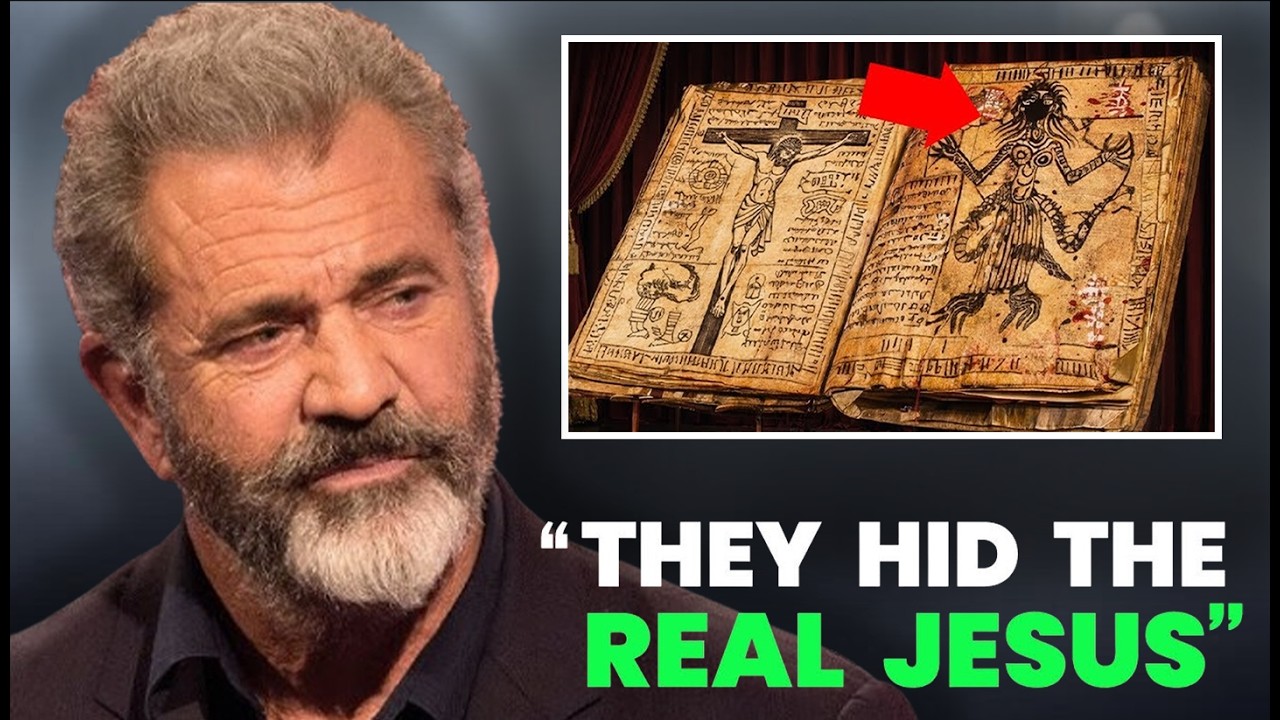
Mel Gibson’s upcoming film, The Resurrection of the Christ, promises to unveil an ancient, cosmic vision of Jesus, radically different from the familiar Western portrayal. Drawing on an Ethiopian Bible hidden for centuries, this revelation challenges long-held Christian assumptions with vivid descriptions of a powerful, awe-inspiring Christ.
For over two decades, Gibson has quietly developed a sequel to his groundbreaking 2004 film, The Passion of the Christ. Unlike the original’s focus on the final hours of Jesus’s life, this new project seeks to depict Jesus transcending earthly limits, journeying through hell and multiple heavenly realms.
Hollywood initially balked at Gibson’s vision, labeling it too surreal and risky. The cinematic conception of angels falling from heaven and reality itself tearing apart seemed like madness. However, Gibson’s concept is not a modern invention, but an ancient tradition preserved by Ethiopian monks for over 1,700 years.
The Ethiopian Bible, markedly different from Western versions, contains up to 81 or more books, including texts omitted by mainstream Christianity. It offers a portrayal of Jesus Christ as a cosmic, overwhelming figure—his hair like sunlit wool, eyes burning like crystal-encased fire, and presence bending reality.
This ancient Christ is not the gentle, pale figure popularized by Renaissance art. Instead, he is a blazing force of light and divine fire, inspiring awe and fear simultaneously. His voice resonates across dimensions; his presence silences angels and bends time and space.
These powerful descriptions hail from texts such as the Book of Enoch, widely read in early Christianity but dismissed and suppressed by church authorities over centuries. Their removal was part of a wider campaign to control spiritual narratives and consolidate religious authority in Rome.
Ethiopian Christianity, however, remained isolated, preserving these radical scripts independently. High in remote monasteries carved from cliffs, monks painstakingly copied and safeguarded these manuscripts, maintaining a distinct Christian tradition that predates many Western church doctrines.
Among the preserved texts, the Ascension of Isaiah stands out, describing a journey through seven heavenly realms and depicting Christ’s deliberate descent through these dimensions. Each stage veils his glory, culminating in the birth of a human child unaware of his own cosmic divinity.
Gibson’s film closely mirrors these ancient writings. He envisions a non-linear narrative spanning past, present, and otherworldly realms. His depiction of resurrection will reportedly showcase Christ reclaiming his full, boundless glory, confronting fallen angels and cosmic forces beyond ordinary comprehension.
This radical portrayal shifts the understanding of salvation and divinity. Unlike mainstream Christianity’s emphasis on human sinfulness and institutional mediation, the Ethiopian scriptures teach that humanity inherently carries divine light within—salvation arises from awakening this internal spark.
Such teachings posed a threat to organized religion’s control. If divine access is immediate and personal, institutions lose authority. Consequently, councils like Laodicea in 363 AD excluded these texts, enforcing a sanitized, manageable version of Christianity focused on hierarchical power and ritual mediation.
The political consolidation of Christianity under Constantine drove the erasure of these radical scriptures. The Church’s wealth and influence flourished by positioning itself as the indispensable gateway to salvation, marginalizing ideas suggesting direct, unmediated communion with the divine light inside each individual.
Meanwhile, Ethiopian Christians, shielded by geography and culture from Mediterranean politics and religious decrees, continued to embrace and perpetuate their comprehensive biblical canon. Their Bible contains several additional books, including the Book of Jubilees, the Maccabees, and the Ascension of Isaiah, among others.
The Garima Gospels, some of the oldest illustrated Christian manuscripts in existence, embody this heritage. Preserved in a remote Ethiopian monastery for over 1,500 years, they attest to an ancient, flourishing tradition of theology and artistry that survived Europe’s Dark Ages intact and largely unknown.
Ethiopian iconography reflects this cosmic Christ—depicted with dark skin, radiant gold halos, and penetrating eyes. Here, Christ is simultaneously majestic and gentle, fully human and fully cosmic, embodying a divine duality that commands reverence and inspires awe far beyond familiar Western depictions.
Modern scholarly efforts partnered with Ethiopian institutions aim to digitize and study these sacred texts and manuscripts, unraveling forgotten dimensions of Christianity. Findings suggest the Ge’ez gospel translation predates Western versions, and reveal a theological tradition centered on cosmic order restored through Christ’s miracles.
Within these ancient scriptures, Christ’s miracles are acts restoring universal harmony. Creation itself responds to him—waters obey his voice; storms are calmed because all of reality recognizes its creator. His incarnation and resurrection are portrayed not as mere events but as cosmic upheavals redefining existence itself.
The Resurrection of the Christ, slotted for a 2027 release in two parts through Lionsgate, is poised to bring this overwhelming vision to global audiences. With a substantial $100 million budget and filming underway in Rome, Gibson’s project aspires to revolutionize religious cinema by unveiling the cosmic Christ of ancient Ethiopia.
If Gibson succeeds, viewers will encounter a Christ whose presence fractures realities and challenges perception, not the muted, comforting figure many know. This portrayal aligns remarkably with the Ethiopian tradition, suggesting that the cosmic Christ was the original vision obscured by Western religious evolution.
The implications of this rediscovered version of Christ are profound, inviting believers and skeptics alike to reevaluate fundamentals of faith, divinity, and personal spiritual power. It posits that the kingdom of God is not merely a distant realm, but an internal awakening to the divine light resident within all people.
This ancient Christian perspective disrupts centuries of theological consolidation, prompting urgent questions about lost scriptures and suppressed truths. If one vision of history could be buried so completely, what other revelations remain hidden beneath institutional narratives—waiting to be recovered and reshaping our understanding of spirituality?
Mel Gibson’s upcoming film stands at the threshold of this revelation, potentially igniting a new spiritual awakening by reintroducing a Christ whose cosmic majesty compels awe and fear in equal measure. The world may soon witness a resurrection of faith, history, and theology long concealed in Ethiopia’s sacred highlands.
As the countdown to 2027 begins, anticipation mounts over whether this cinematic resurrection will merely entertain or deeply transform how humanity grasps its most influential spiritual icon and the vast, radiant cosmos he inhabits—far beyond any previous portrayal or doctrine.
This historic unveiling stems from centuries of preservation, defying geographical, political, and doctrinal forces that sought to confine Christianity within narrower confines. Through remote mountain sanctuaries, an ancient light has endured, poised to radiate anew across global consciousness and challenge the very core of religious tradition.
The Ethiopian Bible’s portrayal of Christ as a celestial judge and dimension-traversing savior reintroduces a cosmic theology absent from dominant Western narratives. As Gibson’s film delves into these realms, it promises not just storytelling innovation, but a radical restoration of a suppressed spiritual vision lost to time and power.
Scholars and theologians closely monitor this revival with a mixture of intrigue and caution, aware of its potential to disrupt established doctrines and inspire fresh awakenings. The ancient Ethiopian Christian tradition offers an unfiltered view into early Christianity’s rich diversity and the profound mysteries once central to faith’s origins.
Ultimately, this revelation challenges everyone to rethink what they believe about Jesus Christ. Are we ready to encounter a figure whose overwhelming presence wields power over reality itself? As Gibson’s Resurrection approaches, the world faces an unprecedented spiritual reckoning with the cosmic Christ hidden in plain sight for nearly two millennia.