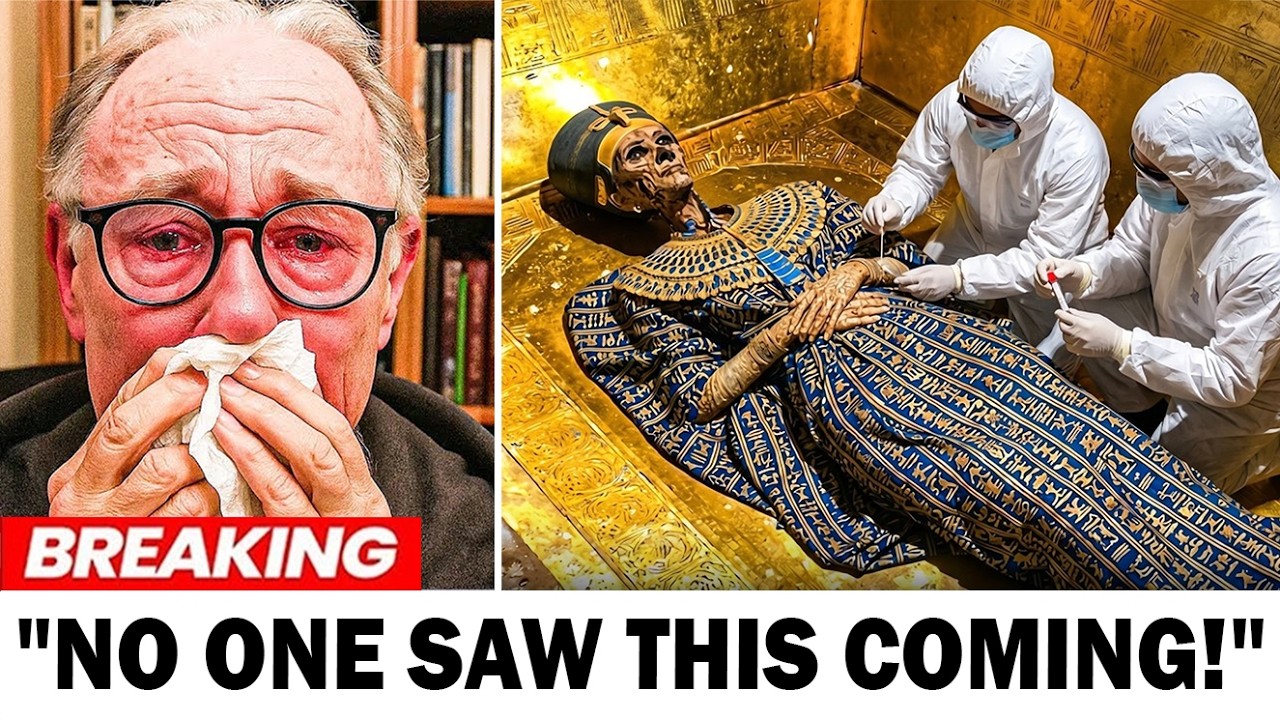
Ancient Egypt’s greatest enigma shatters as DNA and forensic breakthroughs unveil a horrific truth about Queen Nefertiti. Newly analyzed royal mummies reveal brutal injuries and a possible royal conspiracy to erase her existence, rewriting 3,000 years of history and exposing hidden violence beneath timeless beauty.
For centuries, Queen Nefertiti stood as a symbol of grace and power, immortalized by her iconic limestone bust. Yet, her physical remains eluded discovery, fueling decades of speculation about her fate. Now, with cutting-edge DNA sequencing and forensic imaging, scientists have unearthed chilling evidence that may finally solve this ancient mystery.
An unidentified female mummy, known as KV21B and found in the Valley of the Kings, shares a direct maternal lineage with Tutankhamun. This genetic link forces reconsideration: Could this be the long-lost Queen Nefertiti herself? The discovery reframes the narrative about the queen’s mysterious disappearance around year twelve of Akhenaten’s reign.
CT scans of KV21B’s remains reveal alarming trauma — shattered skull, broken ribs, and arms unnaturally distorted behind the body. Forensic experts say these injuries were inflicted near the time of death, suggesting violent circumstances rather than natural decay. This disturbing condition hints at ruthless political intrigue within the royal court.
The quest to locate Nefertiti’s tomb took a dramatic turn when archaeologists reevaluated King Tutankhamun’s burial chamber. British Egyptologist Dr. Nicholas Reeves proposed hidden rooms concealed behind painted walls might hold Nefertiti’s remains or secrets about her reign. Early radar scans showed anomalies but subsequent tests failed to confirm hidden chambers, leaving the mystery unresolved.
Further complicating the story is the theory that Nefertiti adopted a royal male identity as Pharaoh Smenkhkare after Akhenaten’s death. Inscriptions bearing male royal titles eerily connected to Nefertiti support this controversial idea. Artifacts altered hastily after Tutankhamun’s death might have originally belonged to her, indicating her reign was deliberately erased by successors.
Adding intrigue, the Younger Lady, a mummy discovered in tomb KV35, was genetically identified as Tutankhamun’s mother and Akhenaten’s sister. With violent injuries consistent with blunt force trauma, her fate remains enigmatically tied to royal power struggles. She could potentially be another concealed identity of Nefertiti or a key player in the same palace conspiracy.
Nefertiti’s six daughters, once prominently featured in temple reliefs and official records, similarly vanish from history after the twelfth year of Akhenaten’s rule. This mass disappearance coincides with the erasure of the Amarna period’s revolutionary religious reforms, hinting at a systematic campaign to remove this family from Egypt’s cultural memory.
Genetic analyses of the Amarna dynasty reveal inherited vulnerabilities likely resulting from extensive intermarriage within the royal bloodline. These weaknesses could have intensified the fatal consequences of trauma on individuals like KV21B, highlighting a grim biological legacy behind the political chaos and violent deaths recorded in this turbulent era.
The presence of severe trauma on multiple royal mummies, combined with sudden historical silences and altered inscriptions, paints a harrowing picture of palace betrayals, power plays, and attempts to rewrite Egyptian history. This dark undercurrent starkly contrasts with the serene image of Nefertiti known worldwide.
Though Nefertiti’s iconic bust captures eternal beauty, the reality uncovered by science reveals political ruthlessness, identity suppression, and a brutal end for one of history’s most powerful queens. The queen who once ruled alongside Akhenaten may have been systematically erased to secure a fragile dynasty’s future.
This breakthrough serves as a cautionary tale against accepting historical narratives at face value. As researchers continue to sift through fragments of evidence, the true story of Queen Nefertiti — her life, reign, and violent demise — emerges as one of ancient history’s most profound revelations.
The combined power of modern genetics and forensic analysis now challenges long-held assumptions about royal Egypt. Unmasking the hidden violence behind Nefertiti’s disappearance, this discovery demands urgent reexamination of long-suppressed chapters in the saga of Egypt’s Amarna dynasty.
As investigations deepen, the compelling enigma surrounding Nefertiti and her family forces Egyptologists to confront the possibility that some of history’s brightest icons were, in truth, victims of ruthless erasure and concealment under royal orders.
The quest to fully identify and understand KV21B and the Younger Lady continues, promising to reshape our grasp of ancient Egypt’s final enigmatic decades. Each new discovery draws the curtain back on the darkest intrigues hidden within pharaonic power struggles.
While the exact details of Nefertiti’s death and disappearance remain under investigation, the evidence of trauma and genetic connection cannot be ignored. It reveals a fragmented royal lineage entwined with violence and political obsession—a stark contrast to the queen’s enduring idealized portrait.
Historians now question the completeness of Egypt’s official records and recognize the deliberate nature of historical erasure during this period of upheaval. With every DNA sequence and imaging scan, more pieces of this shadowed puzzle emerge, redefining Egypt’s ancient legacy.
The implications extend beyond archaeology into cultural memory and identity, as Nefertiti’s story symbolizes the fragile intersection of myth, power, and truth. The queen who was long celebrated for timeless beauty is now revealed as a tragic figure 𝒄𝒂𝓊𝓰𝒉𝓉 in deadly court secrets and ruthless ambition.
These findings echo the long-hidden struggles of women in power, whose legacies were suppressed or rewritten by successors determined to erase inconvenient truths. Nefertiti emerges not only as a queen of magnificence but potentially as a victim of betrayal and covert political violence.
As this research sets a new course for Egyptological scholarship, the mysteries of Amarna’s royal family beckon further urgent study. The fusion of advanced technology and historical inquiry holds promise for uncovering more unsettling truths concealed by the sands of time.
The discovery transforms Nefertiti’s narrative from one of lost beauty to a compelling account of survival, rulership, and suppressed identity. This revelation challenges previous archetypes and invites global audiences to reconsider the complexities behind one of history’s most fascinating figures.
Ultimately, the collision of science and history reveals that beneath Nefertiti’s serene visage lies a story filled with hidden wounds, unnamed perpetrators, and the harsh realities of ancient power struggles—a story that will continue to captivate and shock the world for years to come.