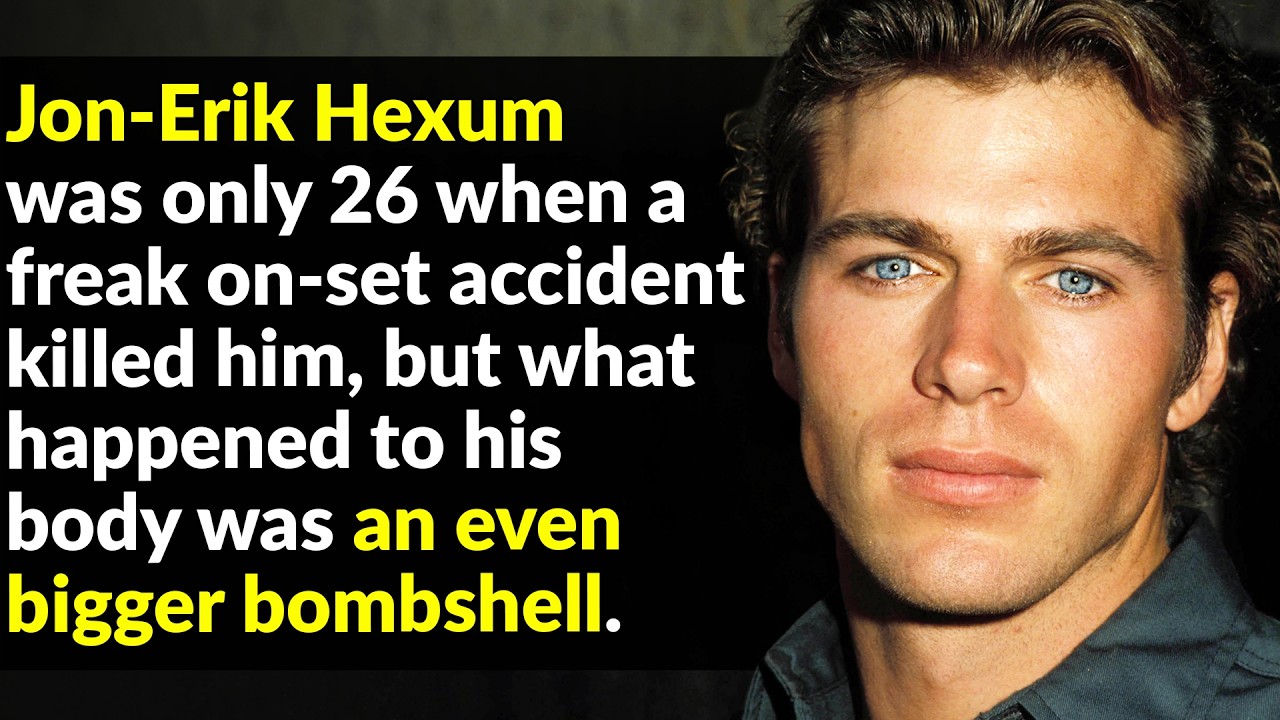
A 26-year-old television star known for his chiseled physique and rising career is dead after a devastating on-set accident, but his final act of generosity has given new life to multiple recipients. Jon-Erik Hexum, the lead actor in CBS’s “Cover Up,” died on October 18, 1984, six days after a blank round from a . 44 Magnum revolver shattered his skull during a break in filming.
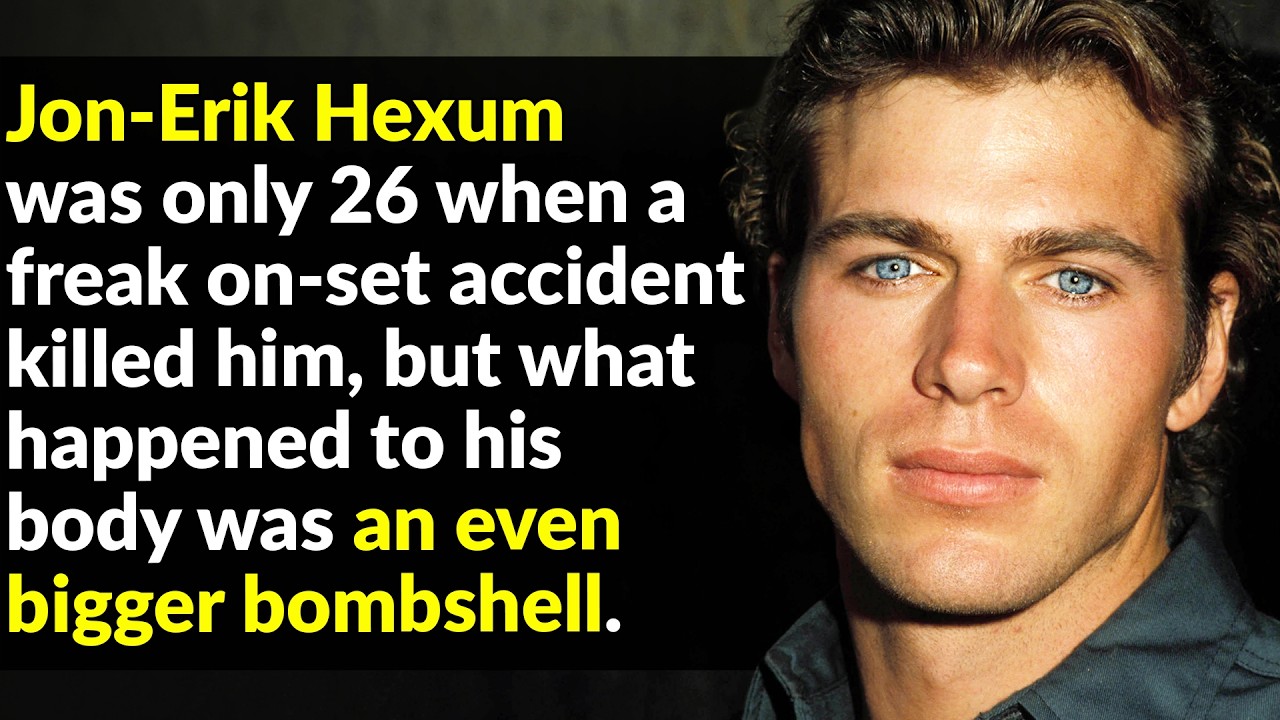 The accident, ruled accidental, cut short a promising career, but his decision to donate organs has turned tragedy into a lifeline for others.
Hexum’s story begins on November 5, 1957, in Englewood, New Jersey. Born to Norwegian immigrant parents, he grew up in a broken home after his parents divorced when he was four. His mother raised him and his older brother while working two jobs, yet she prioritized education and the arts.
Hexum took singing and dancing lessons, and by second grade he had his first taste of acting. In high school, he played multiple instruments, became a drum major, and even served as the school’s first male cheerleader.
After graduating in 1976, Hexum attended Michigan State University, studying political philosophy while hosting a local radio show as “Yukon Jack” and playing backup on the football team. Days after graduation, he moved to New York City to pursue acting, working as a cleaner to pay rent. Fate struck when a client, talent manager Bob LeMond, signed him on the spot.
LeMond convinced him to relocate to Los Angeles, where Hexum landed minor roles before his big break in 1982: the lead in NBC’s “Voyagers.”
“Voyagers” paid $10,000 a week, but it aired opposite “60 Minutes” and was canceled after one season. Hexum rebounded quickly. In 1983, Aaron Spelling cast him opposite Joan Collins in “Making of a Male Model,” a TV movie that played heavily on his physique.
Despite the commercial success, Hexum later called the film “exploitative” and “trashy.” Still, it cemented his status as a Hollywood hunk, and he posed shirtless for Playgirl in 1984.
 Hexum’s career continued to climb. He guest-starred on Spelling’s “Hotel” and earned his first feature film role in “The Bear,” a biopic about football coach Paul “Bear” Bryant. That film premiered just three weeks before his death, now serving as his only major movie credit.
In 1984, CBS gave him the lead in “Cover Up,” playing a former operative posing as a male model. The role seemed tailor-made for his talents and good looks.
But the set of “Cover Up” became the site of a nightmare. On October 12, 1984, the crew was filming the episode “Golden Opportunity” on Stage 18 at 20th Century Fox. A scene required Hexum to load a revolver with blanks.
After a long delay for a retake, Hexum grew restless and began joking around. He emptied the revolver except for one blank, spun the cylinder, and pressed the barrel to his right temple. Witnesses heard him say, “Can you believe this nonsense?”
or “Oh, well, what the hell?” before pulling the trigger.
Blanks are not harmless. The force of the explosion drove a quarter-sized piece of his skull into his brain, causing a catastrophic hemorrhage. Emergency crews rushed him to Beverly Hills Medical Center, where surgeons operated for five hours.
The damage, however, was irreversible. Hexum never regained consciousness. For six days he lay in a coma until doctors confirmed brain death.
On October 18, 1984, his mother made the agonizing decision to let him go.
 In the weeks before the accident, Hexum’s girlfriend, Elizabeth Daily, noted he was unusually stressed. “More stressed than I remember him ever being,” she later said. She had a premonition on the day of the accident and chose to visit him on set less than an hour before the shooting.
That visit would be her final good-bye. Hexum had also prepared for the possibility of death: he carried a California Organ Donor Card, inspired by his roommate’s cousin needing a liver transplant.
With his mother’s permission, Hexum’s body was flown to California Pacific Medical Center in San Francisco while still on life support. Surgeons removed his organs for transplant. His heart went to Michael Washington, a 36-year-old Las Vegas advertising executive and decorated Vietnam veteran who had been suffering from degenerative heart disease.
Washington had only months to live. The transplant gave him a second chance, and he lived for 18 more years with Hexum’s heart beating in his chest.
Washington initially did not know the donor’s identity until a floor nurse told him the truth: he had the heart of a TV star. He later watched episodes of “Cover Up” and expressed deep gratitude. Hexum’s family declined to meet him, saying it would be too painful.
Washington passed away in 2002, but he had raised two sons and lived a full life thanks to the gift.
Hexum’s other organs also saved lives. One kidney went to a critically ill five-year-old boy, and the other to a 43-year-old grandmother who had waited eight years for a match. One cornea restored sight to a 66-year-old man, and the other gave sight to a young girl.
His donated skin helped treat a three-and-a-half-year-old boy recovering from severe burns. In total, Hexum’s body gave life and health to at least seven people.

Authorities ruled the death accidental. After ten days at the coroner’s office, Hexum’s body was cremated, and his mother scattered his ashes in the Pacific Ocean near Malibu. His estate totaled $255,000, a fraction of what he might have earned.
His family later reached an out-of-court settlement with 20th Century Fox Television and Glen A. Larson Productions, the companies behind “Cover Up.”
The tragedy remains a haunting lesson in the dangers of prop firearms. Co-star Jennifer O’Neill had warned Hexum repeatedly to be cautious around the . 44 Magnum, recalling she had accidentally injured herself with a similar prop two years earlier.
But Hexum’s casual attitude proved fatal. The accident also underscored the need for stricter safety protocols on sets, a point that resonates even today.
Jon-Erik Hexum was only 26 when he died, but his legacy extends far beyond his brief television career. His good looks and talent made him a rising star, but his decision to donate his organs made him a hero. In the end, the man who was destined to become Hollywood’s next big thing gave the ultimate performance: saving the lives of others.
His heart, kidneys, corneas, and skin continue to beat, function, and heal in strangers who now carry a piece of his story with them.