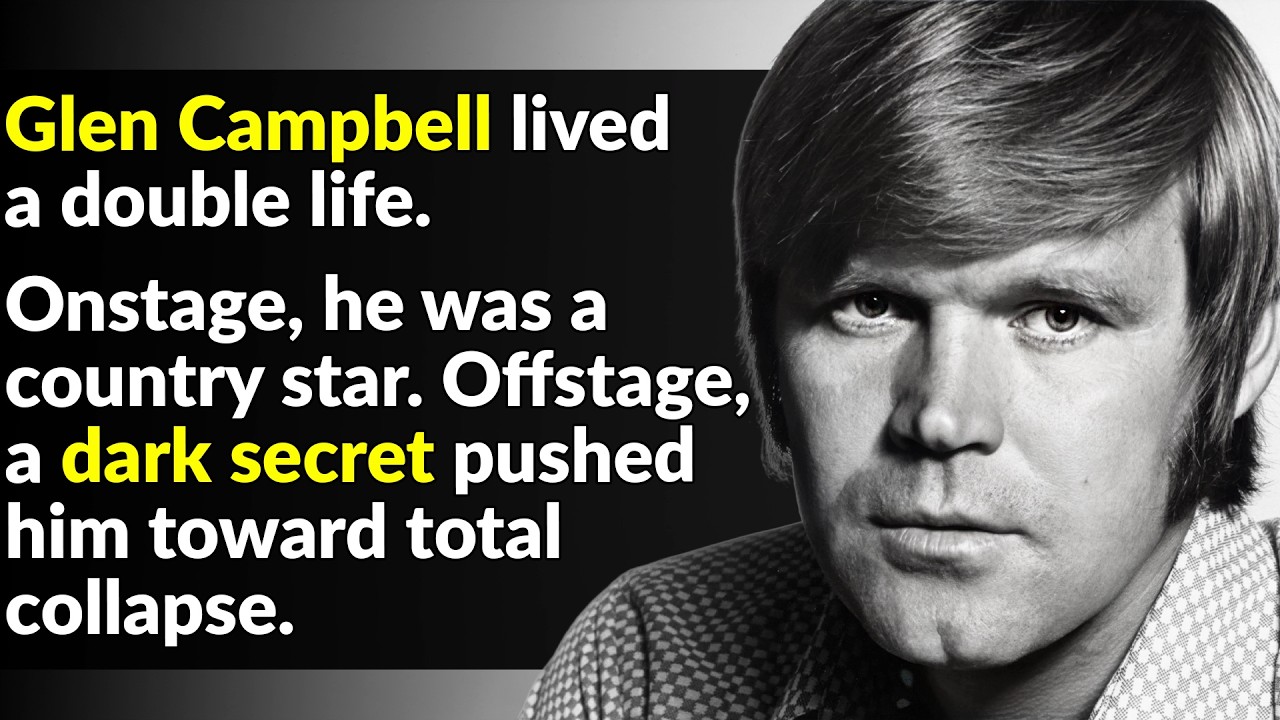
Glen Travis Campbell, the Rhinestone Cowboy whose polished stage persona masked a tortured soul, has died at the age of 81, leaving behind a legacy of soaring music and a life consumed by demons he could never fully outrun. The country music legend passed away on August 8, 2017, after a long battle with Alzheimer’s disease, but his obituary is not just a story of a golden voice—it is a chronicle of a double life that pushed him to the brink of collapse.
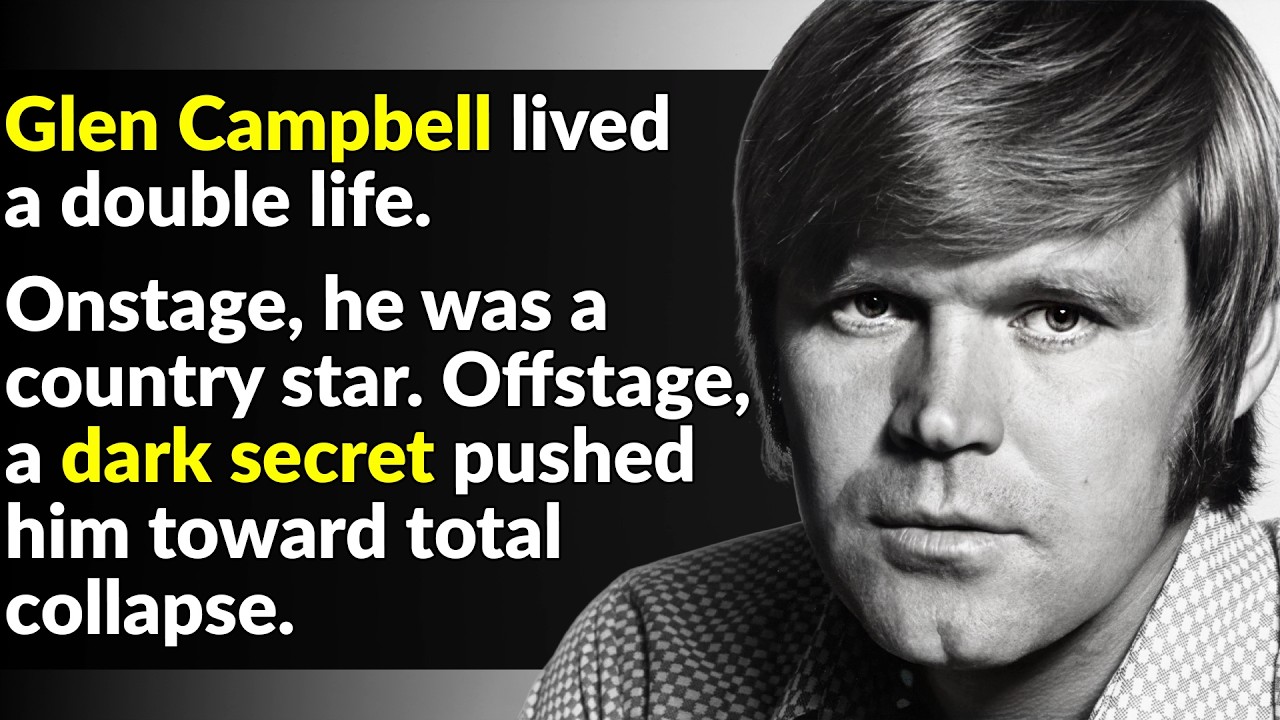 On stage, Campbell was the picture of polished country charm, a guitar-picking crooner who won Grammys, starred in films with John Wayne, and hosted his own television show.
But behind the curtain, the man who sang “Gentle on My Mind” was anything but gentle with himself. Failed marriages, turbulent romances, and a collection of vices—including alcohol and drugs—kept him from finding the happiness he craved for decades.
He finally found peace on a golf course with a surprising companion—his wife, Kim Woolen, who stuck with him through his darkest hours.
Too bad it came just a little too late, as the ravages of Alzheimer’s stole his mind before he could fully enjoy the serenity he had chased all his life.
Campbell was born into poverty on April 22, 1936, in Billstown, Arkansas, a tiny community where his family grew potatoes, corn, cotton, and watermelons. Sometimes money was so scarce that they had to eat squirrel just to survive.
The Campbells didn’t even have electricity in their home, but his father scraped together five dollars from deep in his pockets to buy a guitar from Sears when Glen was just four years old.
By age six, the young prodigy was already playing guitar for local radio stations, practicing every chance he got while still working on the farm. He had no teacher—he learned by listening to the radio, picking up melodies and techniques by ear.
At 14, he quit school in the 10th grade to join his brothers in Houston, trying his hand at installing insulation and pumping gas, but nothing interested him as much as the guitar.
His big break came at age 17 when he visited his uncle in Albuquerque, New Mexico, who had his own band. Campbell played with his uncle’s band on a radio show, then got an offer to appear on a children’s program on KOB television.
There he met Diane Marie Kirk, a 16-year-old pregnant girl. They married at the courthouse when Campbell was just 18, but the teenage marriage began with tragedy: their son, Glen Travis Campbell Jr. , was born two months premature on July 25, 1955, and lived only a few days.
The couple had a healthy daughter, Deborah Kay, the following year, but fatherhood could not stop Campbell’s musical ambition. In 1960, he moved to Los Angeles and became a session musician, joining a rock band called The Champs, known for the much-parodied song “Tequila.” But the band was just a stepping stone.
Campbell soon became part of the legendary Wrecking Crew, a group of session musicians who played on recordings for the Beach Boys, Frank Sinatra, Doris Day, Sammy Davis Jr. , and many others.
One star who felt a kindred spirit with Campbell was Elvis Presley.
When Campbell worked on the soundtrack for “Viva Las Vegas,” the two men bonded over their common backgrounds—both grew up picking cotton and living simple rural lives. But while their roots were simple, Campbell’s love life was anything but. He divorced Diane in 1959 and quickly remarried a beautician, Billie Jean Nunley, on September 20, 1959.
 They would have three children before divorcing in 1976, giving Campbell a running total of four kids by then.
In 1961, Campbell signed with Crest Records and released “Turn Around, Look at Me,” a moderate success that led him to form his own band, the GCs. The name was confusingly similar to Australia’s Bee Gees, and both bands recorded covers of the song, but neither had much luck with it.
The 1968 version by The Vogues was the most popular. As a session musician, Campbell played on an astonishing 586 recordings, yet he never learned to read music. When he worked with a large orchestra, he came clean about his inability, and the orchestra kindly played the piece once through so he could pick it up by ear.
Campbell’s big break in the spotlight came when the Beach Boys needed to replace Brian Wilson for a tour in 1965. Wilson was unglued from stress, and Campbell fit right in with his bass guitar and falsetto voice. As a reward, Wilson co-wrote a song called “Guess I’m Dumb” and offered it to Campbell, producing it himself.
The difficult song required Campbell to jump octaves, but it failed to chart. His first hit came later that year with a cover of Buffy Sainte-Marie’s “Universal Soldier,” a pacifist protest song that seemed to reflect his feelings about the Vietnam conflict. But when asked about draft card burners, Campbell shocked listeners by saying they should be hanged.
Campbell’s record company, Capitol Records, was ready to let him go after he failed to follow up “Universal Soldier.” They gave him one last chance, partnering him with producer Al De Lory. The result was “Burning Bridges,” a top 20 country hit.
Campbell and De Lory went on to make hits out of “Gentle on My Mind” and “By the Time I Get to Phoenix.” At the 1967 Grammy Awards, Campbell took home four trophies, two for each hit song. The following year, his album “By the Time I Get to Phoenix” beat out The Beatles for Album of the Year.
With all this attention, Hollywood came calling. John Wayne and his daughter went backstage after a concert and asked Campbell if he wanted to be in a movie. The film was “True Grit,” but the truth was that producers had wanted Elvis Presley for the role.
Presley’s demanding agent wanted his client’s name above Wayne and co-star Kim Darby, which wasn’t going to happen, so Campbell got the offer. With next to no acting experience, he took a huge risk. Director Henry Hathaway thought Campbell tensed up every time he yelled “action,” later calling his performance wooden and lazy.
Campbell himself was no fan of his acting, saying it made Wayne look so much better and helped the legend win his only Oscar. Despite this, Campbell received a BAFTA Award nomination for Most Promising Newcomer.
The camera liked Campbell, which got him his own TV show, “The Glen Campbell Good Time Hour,” a variety show combining music and laughs.
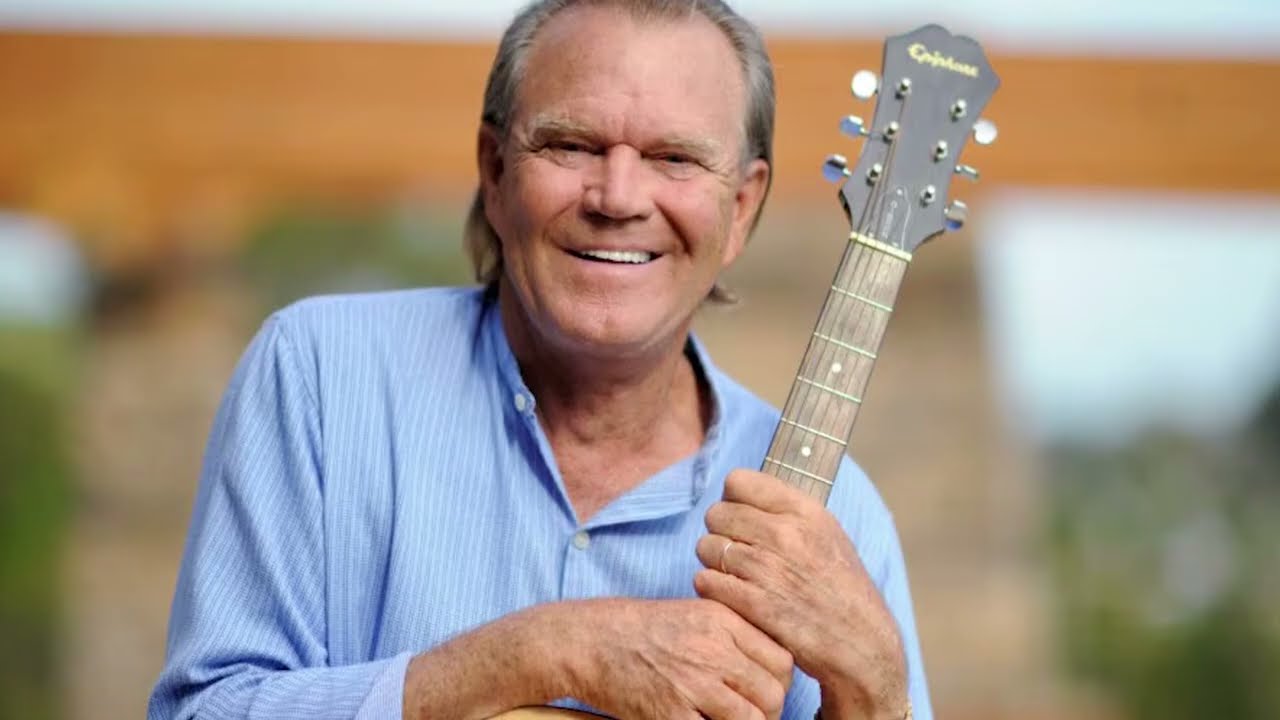 Behind the scenes were two up-and-coming writers: Steve Martin and Rob Reiner. Guests included big musical acts like the Beatles and Johnny Cash, and actors John Wayne and Carol Burnett. TV was working for Campbell, so he decided to give movies another try with “Norwood,” co-starring NFL quarterback Joe Namath.
The response was tepid at best; one critic called it hokey but harmless, another compared Campbell’s film career to Elvis Presley’s but not in a good way. It was his last feature film.
Campbell needed a hit song to return to music.
In 1974, he was in Australia when he heard a song on the radio that told the story of an aging musician looking back at his rise to fame. He could identify with “Rhinestone Cowboy” by Larry Weiss. When he returned to the states, he went straight to Capitol Records and recorded it.
The song reached number one on both the Billboard Hot Country Singles and the Billboard Hot 100, crossing over into pop music. A movie version was proposed, but Campbell declined the lead role. “Rhinestone” finally came out in 1984 with Sylvester Stallone and Dolly Parton, receiving nine Golden Raspberry Award nominations, with Stallone winning worst actor.
Campbell’s new level of fame brought problems. He dealt with it by drinking too much, and his lifestyle included cheating on his wife. Marriage number two ended in 1978, but his partying continued.
His huge profits from “Rhinestone Cowboy” started going up his nose. He would later credit his third wife, Sarah Barg, the ex-wife of singer and friend Mac Davis, for introducing him to drug use. After a few years with Barg, Campbell hit rock bottom, freebasing cocaine in Las Vegas.
He divorced her in 1980, but the person he traded her in for wasn’t much better.
Campbell started dating Delta Dawn singer Tanya Tucker, who was just 22 years old and already had her own issues with the bottle. The union was explosive.
He threw her a $57,000 22nd birthday party, and they made music together, earning a Grammy nomination for best country vocal performance for “Dream Lover.” But the relationship quickly turned into a nightmare. They were prone to very vocal public and sometimes violent fights.
He allegedly threw chairs, and she cracked his ribs. One fight in the New York Plaza Hotel left the room in tatters, costing Campbell $1,200 to clean up. When they decided to call it quits, Tucker asked for $3 million, claiming Campbell had knocked out her two front teeth.
She did not legally sue him, but the relationship was over. Campbell called it a poisoned relationship and his insanity; Tucker called him the love of her life.
To get over the disaster, Campbell went on a blind date with Kim Woolen in 1981, marrying her the next year without dealing with his addiction issues.
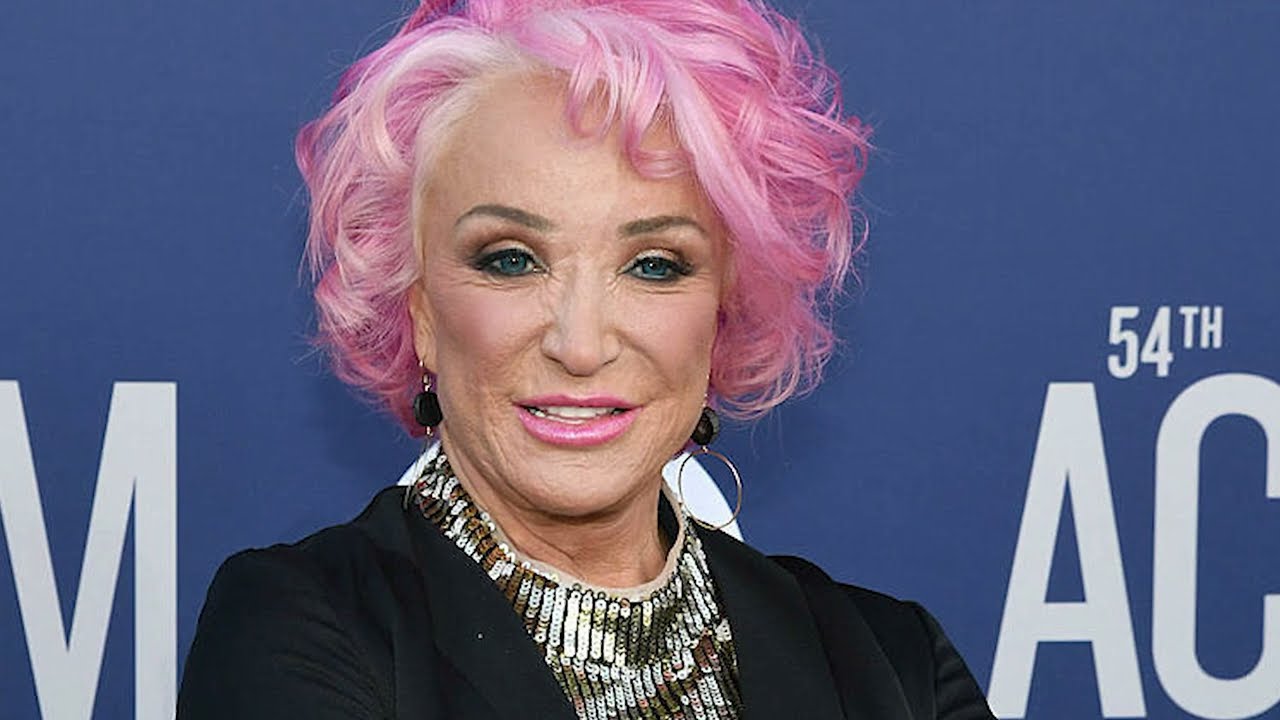 Woolen had little idea what she was in for. When she saw her husband high, she called him a monster. At one point, he even pointed a pistol at her.
She gave him an ultimatum: quit using or she’d be gone. She offered up the church she attended and a tape recording of an inebriated Campbell rambling incoherently. Hearing himself like that was enough for him to quit his vices, but it didn’t last as long as he hoped.
He may have been sober since 1989, but there were setbacks.
In 2003, Campbell was driving in Phoenix, Arizona, when officers pulled him over, suspecting he had been drinking and was over the legal limit. When they asked his name, he said he was Glen Campbell, the Rhinestone Cowboy.
He told them he had just ordered a Coke at the bar, but they were sure he was lying. He called it being overserved. Things got worse when he attempted to knee one of the officers in the leg.
Even the Rhinestone Cowboy couldn’t get away with this behavior. As they took him to the Phoenix station, some witnesses say he was singing his hit song “By the Time I Get to Phoenix.” The judge threw the book at him, sentencing him to 10 days in prison.
Campbell passed away on August 8, 2017, at the age of 81, after a long battle with Alzheimer’s disease. Tanya Tucker, who had been his turbulent lover, wrote and performed “Forever Loving You” as a tribute to her ex-boyfriend. When Campbell’s widow heard the song, she hit the roof, accusing Tucker of using Campbell’s demise for her own publicity.
Even after he was gone, Campbell’s life continued to be full of trouble. Over his lifetime, he had nine children. When the lawyers read his will, not all of them received an inheritance.
The three who got left out were from his marriage to Billie Jean Nunley. They fought to contest the will but eventually let it go for unknown reasons.
Despite these turbulent relationships, most have fond memories of Campbell as a gentle soul.
Shock rocker Alice Cooper had nothing but kind words to say, calling him a golden boy who could easily hang out with a variety of people. Campbell’s legacy as a musician is undeniable—his guitar work on hundreds of recordings, his crossover hits, and his enduring voice. But the story of Glen Campbell is also a cautionary tale about the cost of fame, the power of addiction, and the struggle to outrun the demons that haunt even the brightest stars.
He finally found peace on a golf course with his wife, Kim, but the disease that stole his memory made that peace bittersweet. Too bad it came just a little too late.


