Steve Harvey’s unexpected emotional reaction to Jaafar Jackson’s portrayal of Michael Jackson has sent ripples through the entertainment world. The legendary host, who once stood beside the King of Pop during a turbulent 2004 church visit, was reportedly moved beyond words watching the living tribute, intertwining past and present in a powerful moment of remembrance.
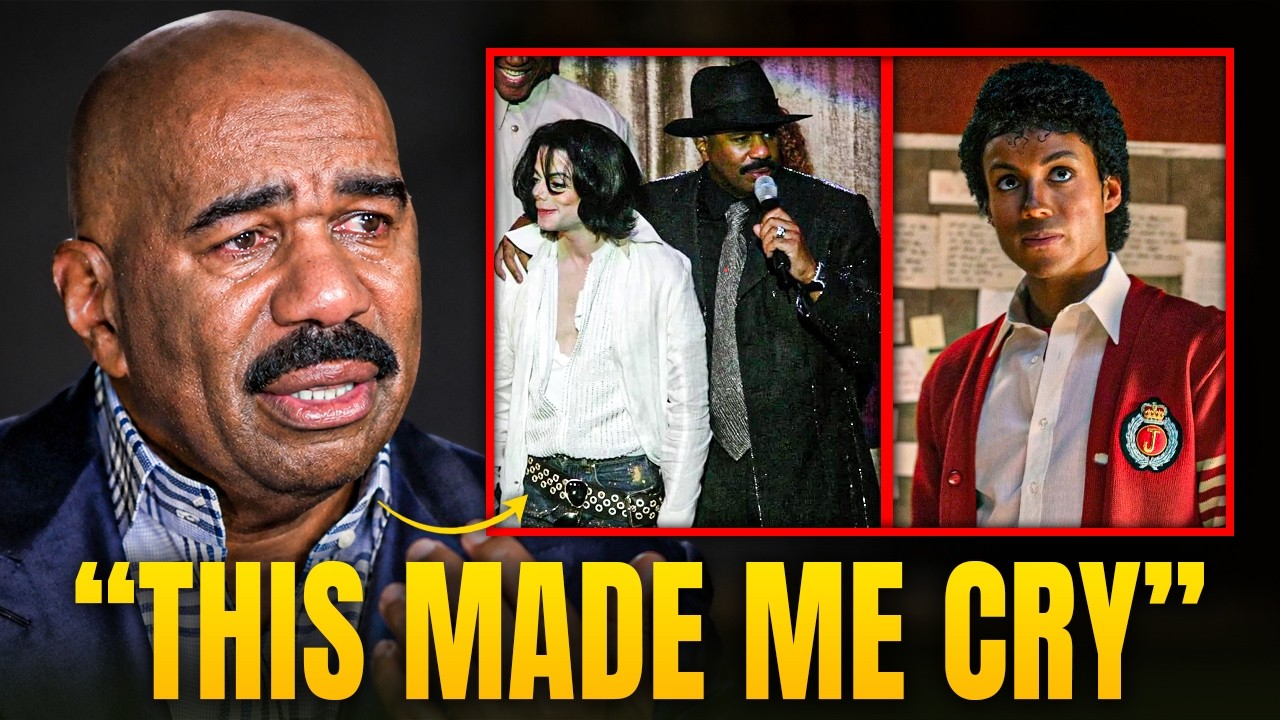
Jaafar Jackson, Michael Jackson’s nephew, has stepped boldly into one of pop culture’s most challenging roles. His uncanny resemblance and precision in embodying Michael—the iconic moves, the unmistakable voice—have reignited a national conversation about legacy and memory. Harvey’s reaction reveals a deeper connection beneath the surface of this high-profile casting.
The pressure on Jaafar is immense. He faces lifelong scrutiny, not just as an actor but as a family member embodying a man whose image bears the weight of decades—glory, controversy, and complicated legacy. Hollywood’s spotlight is unrelenting, but Jaafar carries this burden with a gravity amplified by his own bloodline.
Steve Harvey’s poignant recount of that 2004 morning at Los Angeles’ First AME Church sheds new light on Michael’s personal struggles behind the headlines. Accompanied by his attorney Tom Mesereau Jr. and brother Randy Jackson, Michael sought sanctuary not as a superstar but as a man seeking peace amid relentless public judgment.
That church moment, away from the glitz and glare, reveals the raw humanity of Michael Jackson—a reality starkly different from the stage icon who once electrified America. Harvey’s presence there was a rare, intimate witness of a vulnerable figure enshrouded by fame’s suffocating shadow, contrasting sharply with the image Jaafar now resurrects.
Michael’s legal battles had transformed his public image by 2004; he was no longer viewed solely as a pop genius but as a man under siege by the court of public opinion. This visit to First AME Church symbolized a quiet resistance—a yearning for normalcy and spiritual refuge amid persistent scrutiny.

The new biopic “Michael” places Jaafar directly in the cultural crosshairs. The film is more than entertainment—it’s a contested narrative shaped by family, the estate, Hollywood heavyweights, and divided fans. Each frame revisits Michael’s iconic hits, sparking fierce debates about which version of the King of Pop the world should remember.
Behind the scenes, the film has sparked internal family tensions. While Katherine Jackson praises Jaafar’s embodiment of Michael, Paris Jackson has publicly distanced herself, criticizing the project as “sugarcoated” and distancing herself from its creative decisions. This divide highlights the complexity of resurrecting Michael’s story on the big screen.
The production itself has faced turmoil: costly reshoots, delayed release dates, and legal hurdles create a volatile backdrop to the film’s launch. Every decision is magnified, with audiences and critics poised to analyze how this portrayal will influence Michael’s enduring cultural footprint.
Steve Harvey’s silent, emotional moment before watching Jaafar’s performance may not stem solely from the uncanny impersonation. It likely echoes Harvey’s own memories of Michael as a man struggling under the immense weight of fame, controversy, and yearning for moments of simple faith and dignity.
The duality of Michael Jackson’s public and private life remains at the core of this story. Jaafar resurrects the starry spectacle—hat, gloves, dance moves—while Harvey remembers a night of silent sorrow, a church visit where Michael sought sanctuary from a world that rarely allowed him peace.
This juxtaposition of past and present, performance and reality, creates a complex emotional landscape for viewers and for Steve Harvey himself. His reaction carries the weight of personal history; it reminds audiences that beyond the legend lies a man who once quietly sought solace in a church pew.
As Jaafar steps into the global spotlight, every gesture and note carries an immense burden. He must navigate the fervor of fan expectations, family legacies, and public skepticism—no ordinary role for a newcomer but one that demands authenticity intertwined with deep personal resonance.

Michael Jackson’s legacy remains one of the most challenging to portray, balancing the brilliance of his artistry against the shadows of his personal controversies. Hollywood’s portrayal influences how new generations will remember the King of Pop, making the film more than a biopic but a cultural milestone.
Steve Harvey’s role in this narrative is unique. Unlike the camera-ready sheen of Hollywood, he holds a piece of authentic history—a memory unvarnished by media spin. His experience underscores the enduring gap between Michael’s public image and the private struggles kept away from the spotlight.
The profound moment when Harvey witnessed Michael’s church visit stands as a stark contrast to the spectacle Jaafar now recreates. It is a reminder that behind every legend is a complex human story—one marked by both dazzling talent and deeply personal pain and resilience.
This story reframes the biopic beyond entertainment into something deeply evocative: a resurrection of memory, a collision of past and present. Harvey’s reaction signals a recognition not just of an actor’s skill but of the profound emotional weight that Michael’s image still carries.
As audiences prepare to see Jaafar bring Michael back to life, Steve Harvey’s visceral response offers a window into how deeply the Jackson legacy resonates beyond the stage. This convergence challenges everyone to confront the multi-faceted truths of a man who changed music but longed for quieter sanctuaries.
The cinematic return of Michael Jackson through his nephew prompts urgent questions: Whose story of Michael is being told? The artist celebrated in song and dance, or the man who once quietly walked into a church, burdened by the gaze of an unrelenting public and a turbulent past?
Jaafar’s debut is not just acting—it’s a pilgrimage. He carries the gaze of the world, the expectations of a family, and the shadow of an uncle whose life continues to spark admiration and debate. His performance is both tribute and reckoning, threading the fine line between legend and legacy.
Steve Harvey’s silent moment of breakdown is a testament to the enduring emotional complexity surrounding Michael Jackson’s life. It marks a rare public display of vulnerability tied to a personal memory, linking the past’s quiet church pew with the present’s public stage in a deeply human story.
This unprecedented emotional response resonates amidst a media landscape often driven by spectacle. Harvey’s story reminds us that fame and fortune do not erase the deep humanity of those behind the celebrity, and that some memories hold power far beyond the screen or stage.

In the face of ongoing controversy, family rifts, and cinematic portrayal, Michael Jackson’s story remains as contentious as ever. Yet, these layered recollections reveal the possibility of understanding, beyond applause or criticism, of a man whose legacy still commands profound reflection.
The film’s release promises to reignite conversations about fame, family, and the cost of public life. Jaafar’s portrayal, paired with Steve Harvey’s testimony, compels viewers to rethink Michael Jackson not just as a pop icon but as a multidimensional figure wrestling with his own humanity.
The public’s fascination with Michael continues to evolve. This moment, sparked by Jaafar’s performance and Harvey’s emotional reaction, crystallizes the powerful influence of memory, image, and personal connection in shaping how legends live on, reexamined by each new generation.
Ultimately, the story of Michael Jackson is inseparable from those who knew him personally. Steve Harvey’s recollection of that quiet church morning provides a poignant reminder: behind the global phenomenon was a man longing for peace—an image that no film can fully capture but every portrayal must honor.
As Jaafar Jackson wears the mantle of his uncle, every move lights the stage with nostalgia and complexity. Steve Harvey’s breakdown reminds us that beneath every public figure lies a private story—fragile, profound, and waiting to be told with honesty and heart beyond the bright lights.
This powerful intersection of memory and performance sets the stage for a biopic that is more than a retelling—it is a confrontation with legacy itself, inviting audiences to see Michael Jackson through multiple lenses: star, family, man, and myth intertwined in one unforgettable narrative.