**Jimin’s “Prince Terius” Nickname and Stanford Performance Spark Fan Admiration and Safety Concerns**
Park Jimin’s recent appearances during BTS’s Arirang World Tour have generated significant attention, with fans dubbing him “Prince Terius” after striking visuals and commanding stage presence in Mexico. The nickname quickly spread across social media, reflecting widespread admiration for his mature, elegant aura. However, alongside the praise, some fans have raised questions about crowd management and safety during high-profile events.
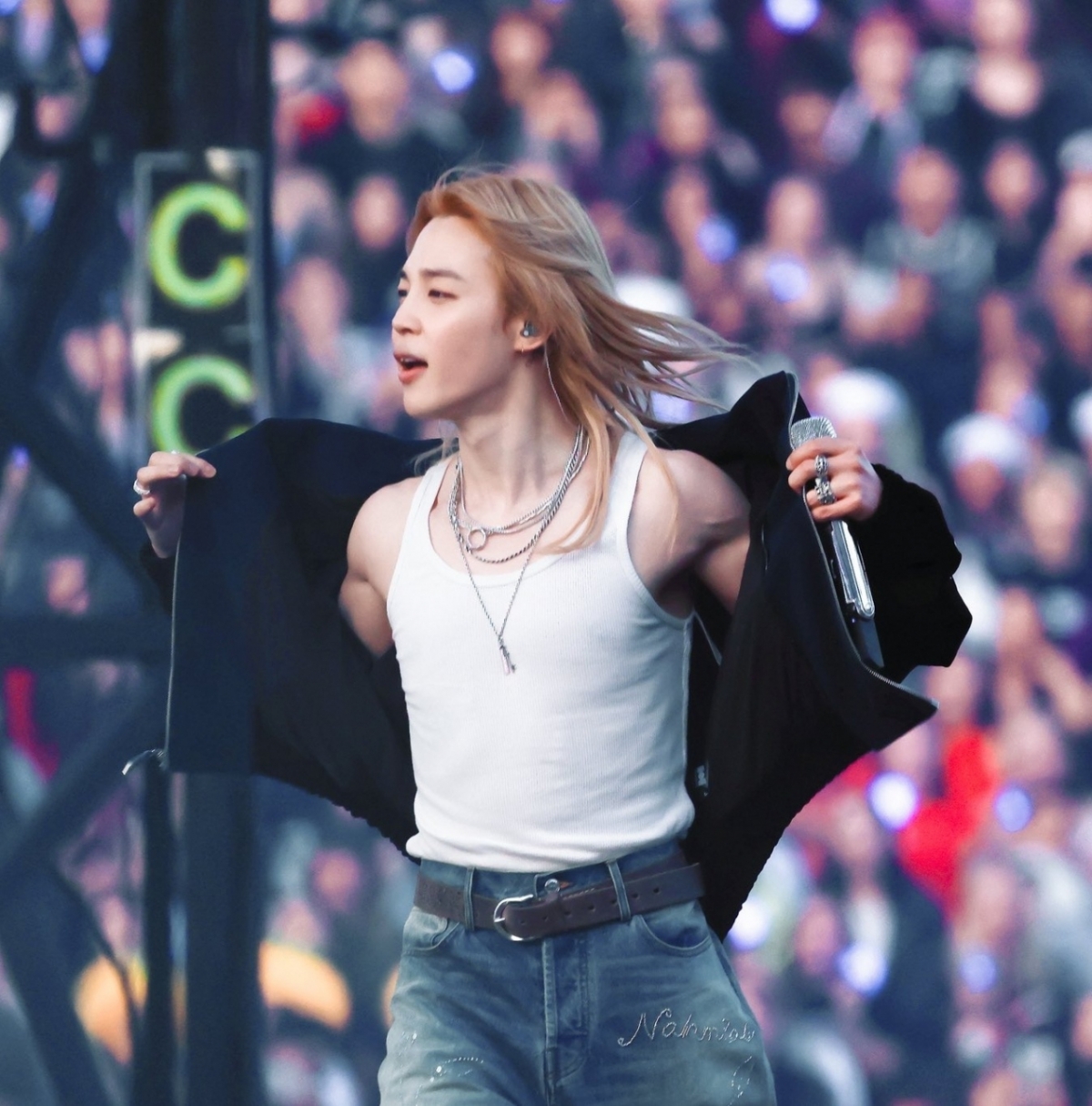
Jimin’s long blonde hair and confident demeanor during the Mexico shows created a striking impression. His poised movements and emotional delivery stood out, even among the group’s strong collective performances. The “Prince Terius” moniker emerged as fans compared his regal presence and charisma to a cinematic royal figure. Clips from the concerts circulated rapidly, amplifying discussions about his growth as a performer.
The conversation took a more serious turn as fans analyzed footage from Stanford and other stops. Some expressed concern over moments where crowd boundaries appeared less secure than expected. In large stadium settings, enthusiastic audiences can create pressure near stages and barricades. While Jimin maintained professionalism and continued engaging with fans, these observations prompted calls for stronger safety measures to protect both artists and attendees.
This dual reaction highlights the challenges of global stardom. Jimin has consistently delivered powerful vocals, precise choreography, and genuine emotional connection throughout the tour. His ability to captivate audiences has contributed to the strong demand that led to additional dates, including the third Stanford show. Yet increased visibility also brings heightened scrutiny and responsibility for event organizers.
Fans have responded with a mix of celebration and caution. Many praised Jimin’s dedication and artistic evolution while encouraging respectful behavior at concerts. Discussions emphasized the importance of maintaining safe distances and supporting better coordination at public events. The overall tone remains supportive, with ARMY communities focusing on positive appreciation alongside practical awareness.
Jimin’s impact extends beyond individual performances. His consistency, emotional depth, and stage command have helped define BTS’s return to live shows after military service. As the Arirang World Tour continues, moments like these underscore both the rewards and responsibilities that come with global influence.
The “Prince Terius” nickname and Stanford performances reflect Jimin’s growing artistic presence. At the same time, fan concerns about safety serve as a reminder that behind the spotlight stands a dedicated performer deserving of protection and respect. As the tour progresses, these conversations will likely shape how fans and organizers approach future events.
(Word count: 498)