10 September 2026
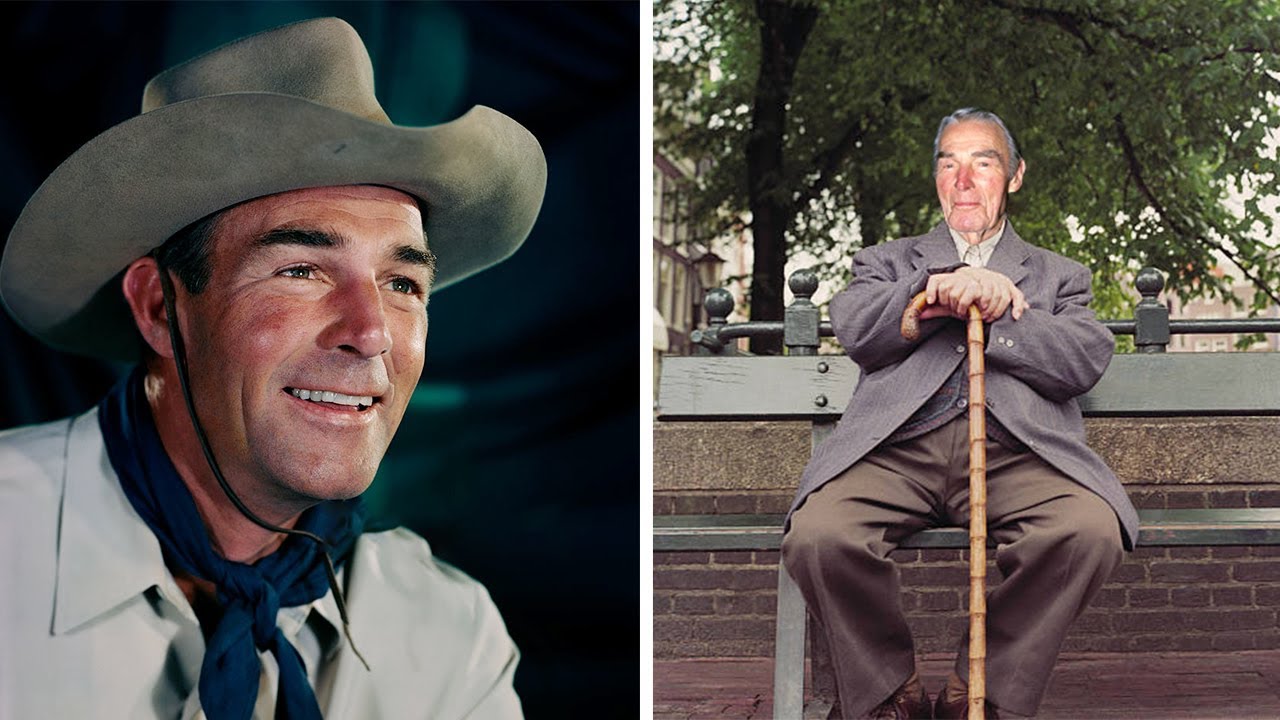
The final reel of Randolph Scott’s life closed on March 2, 1987, not with the crack of a six-shooter or the thunder of hooves, but with the silent finality of heart failure at the age of 84. The man who had personified the stoic, morally unambiguous hero of the American frontier for over three decades passed away in Beverly Hills, leaving behind a celluloid legacy that would define the genre for generations. Yet, the journey from the privileged lawns of Virginia to the dusty backlots of Hollywood was a path fraught with hidden turns, unspoken rumors, and a quiet, disciplined dedication that belied the glamour of his profession. Born George Randolph Crane in Orange County, Virginia, in 1903, Scott’s entry into the world was one of affluence and expectation. His education at the prestigious Woodberry Forest School was designed to mold a gentleman of industry, not a matinee idol. An accomplished athlete, Scott excelled in football, baseball, and swimming, displaying the physical prowess that would later make him so believable astride a horse. However, the trajectory of his life was irrevocably altered by the drums of war, when at the tender age of 19, he answered the call to duty and joined the United States Army. Scott’s military service was not a mere footnote in his biography; it was a crucible that forged the skills that would define his screen persona. Stationed in France as an artillery observer with the Second Trench Mortar Battalion, 19th Field Artillery Regiment, he was thrust into the harrowing realities of the Great War. It was during these formative years, amidst the mud and chaos of the Western Front, that he honed his horsemanship to a fine art and became proficient with firearms, skills that would later prove to be invaluable assets in his cinematic arsenal. The discipline and resilience cultivated during his service would become the bedrock of his character, both on and off the screen. Upon his return from Europe, Scott attempted to resume a semblance of normalcy, enrolling first at Georgia Tech and subsequently at the University of North Carolina. His aspirations of becoming a professional footballer, a dream fueled by his athleticism, were cruelly dashed by a debilitating back injury. Yet, true to the stoic nature he would later portray, Scott persevered, pivoting his focus toward academics and graduating with a degree in textile engineering and Manufacturing. It was during his collegiate years, almost by accident, that he stumbled upon his true calling: acting. The stage, he discovered, offered an arena where his physical presence and disciplined demeanor could be channeled into compelling performance. The leap from college theatrics to Hollywood stardom was facilitated by a singular piece of privilege: a letter of introduction from his father to the enigmatic millionaire filmmaker Howard Hughes. This missive, delivered in 1928, proved to be a golden ticket, securing Scott a small part in the film “Sharpshooters. This modest debut marked the inception of a career that would span over three decades and encompass nearly 100 films. The early years, however, were characterized by the grind of a bit player, appearing in productions like“Weary River” and“The Virginian, where he even served as Gary Cooper’s dialogue coach. This apprenticeship, though unglamorous, was instrumental in honing his craft, particularly with the advent of talkies, which demanded a new level of vocal discipline and emotional nuance from actors. Seeking to elevate his skills, Scott heeded the advice of the legendary director Cecil B. DeMille and enrolled at the Pasadena Playhouse, immersing himself in the rigorous world of stage performance. This period of intense study paid dividends in 1932, when his performance in the play“Under a Virginia Moon” caught the attention of Paramount Scouts. Impressed by his commanding presence, they proffered a contract, catapulting him from the ranks of aspiring actors to the status of a contracted movie star. Initially cast in romantic leads, Scott’s chiseled features and athletic build seemed destined for drawing-room dramas. Yet, it was the rugged terrain of the Western that would ultimately claim his heart and define his legacy. He began his apprenticeship in the genre with starring roles in a series of B-movies adapted from the novels of Zane Grey, titles such as“Wild Horse Mesa,”“Man of the Forest,”“Sunset Pass,” and“Wagon Wheels. These early forays, though modest in production value, allowed him to develop the laconic, upright persona that would become his trademark. The mid-1930s saw Scott demonstrating remarkable versatility, refusing to be typecast. He dazzled audiences in musicals alongside Fred Astaire and Ginger Rogers in“Roberta” and“Follow the Fleet, and even dabbled in horror with“Supernatural,” co-starring Carol Lombard. This eclecticism showcased his range, but it was his starring role in the 1936 adaptation of“The Last of the Mohicans” that proved to be a watershed moment, becoming a significant box office hit and cementing his status as a leading man. The following year, he shared the screen with the irrepressible Mae West in“Go West, Young Man,” further solidifying his star power. His contract with Paramount concluded in 1938, affording him greater autonomy over his career choices, a freedom he wielded judiciously. In 1940, he starred alongside his close friend, the debonair Cary Grant, in the screwball comedy“My Favorite Wife,” a collaboration that would fuel decades of speculation regarding the nature of their off-screen relationship, a rumor that neither man ever publicly confirmed nor denied, adding a layer of enigmatic intrigue to Scott’s private life. As the clouds of World War II gathered, Scott, ever the patriot, lent his talents to a series of war films, including“Coast Guard”(1939),“To the Shores of Tripoli”(1942,“Bombardier,”“Corvette K-225,” and“Gung Ho!” (1943). These roles, while capitalizing on the national mood, also reflected his own genuine military background. In 1945, he even tried his hand at swashbuckling adventure in“Captain Kidd,” demonstrating yet another facet of his acting ability. However, by the late 1940s, Scott made a decisive pivot, dedicating himself exclusively to the genre he loved most: the high-budget, Technicolor Western. He became synonymous with the tall, silent type, often riding his stunning palomino stallion, Stardust, into the frame. This period marked the peak of his popularity; consistently ranked among the top ten box office draws, he placed 10th in 1950, again in 1951, and once more in 1952, a testament to his immense commercial appeal. The final, most celebrated chapter of his acting career began with his formation of his own production company, Ranown Pictures, and a historic collaboration with director Budd Boetticher. Together, they crafted a series of seven lean, psychologically complex Westerns that would become the gold standard of the genre. Films like“Seven Men from Now”(1956,“The Tall T”(1957,“Ride Lonesome”(1959,and“Comanche Station”(1960, stripped away the operatic grandeur of traditional Westerns, replacing it with a stark, existential minimalism. Scott’s characters in these films were not merely heroes; they were haunted men, carrying deep, unspoken hurt, their stoic facades masking an inner pain that compelled them toward justice. This transformation from the light romantic lead of his youth to the rugged, world-weary avenger of his maturity was a masterclass in cinematic evolution, cementing his place in Hollywood history as the quintessential tough, lone hero facing a corrupt world. Scott’s career reached its magnificent crescendo in 1962 with his final film,“Ride the High Country,” directed by the legendary Sam Peckinpah and co-starring his old friend Joel McCrea. The film, a poignant meditation on aging, honor, and the passing of the Old West, served as a fitting eulogy for its star. Scott retired at the absolute height of his popularity, a rare feat in an industry notorious for discarding its veterans. His retirement, however, was not one of idleness. Having been financially astute, he had parlayed his fame into wise investments, securing a fortune that afforded him a life of comfort and philanthropy. In his later years, he became deeply religious, forging a close friendship with the renowned evangelist Billy Graham, finding a spiritual peace that contrasted sharply with the violence of his screen roles. Scott’s personal life, though less publicized than his career, was marked by both heartbreak and enduring love. His first marriage, to Aris Marr du Pont, a scion of the wealthy du Pont family, was brief and ended in divorce after just three years. He was subsequently linked romantically with several of Hollywood’s most prominent actresses, including Sally Blane, Claire Trevor, and Dorothy Lamour, adding to his reputation as a dashing leading man off screen as well.…