For millions of viewers, Don Knotts was the man who made America laugh.
The nervous expressions.
The trembling voice.
The unforgettable timing.
As Deputy Barney Fife on The Andy Griffith Show, he turned insecurity and panic into comedy gold.
But behind the laughter was a man carrying wounds few fans ever saw.
A difficult childhood.
Deep insecurities.
And, near the end of his life, a private battle he desperately wanted to keep away from the public.
Through it all, one woman remained beside him.
Frances Yarborough.
Born in Morgantown, West Virginia, Knotts grew up in a troubled household overshadowed by his father’s struggles with schizophrenia and alcoholism.
Home was not always a place of comfort.
And humor became something more than entertainment.
It became protection.
Knotts learned that making people laugh could relieve tension and help him escape, at least temporarily, from the fear surrounding him.
Years later, those same qualities would become the foundation of his career.
Hollywood audiences saw the anxious, high-strung characters and laughed.
But some of that nervous energy came from somewhere very real.
His breakthrough as Barney Fife transformed him into a television legend.
The role earned Knotts multiple Emmy Awards and made him one of the most beloved comedic performers of his generation.
Yet success never completely erased the insecurity beneath the surface.
He could make millions laugh while privately questioning himself.
After The Andy Griffith Show, Knotts continued building an impressive career in television and film, eventually becoming an enduring figure in American comedy.
His personal life, however, was more complicated.
Two marriages ended before Knotts found companionship again with Frances Yarborough.
They married in 2002.
By then, Knotts was entering a very different stage of his life.
The bright lights were beginning to fade.
His health was declining.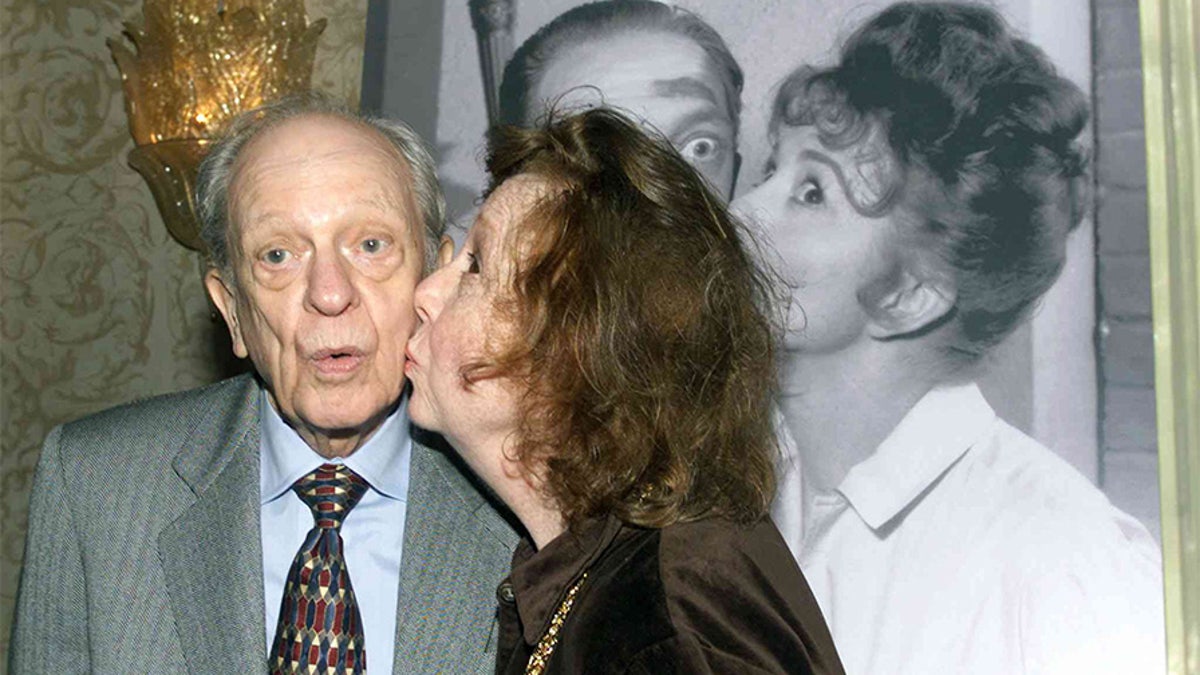
And Frances would soon become far more than his wife.
She became the person standing beside him through his most vulnerable years.
Knotts battled lung cancer while also suffering significant vision loss caused by macular degeneration.
For a man whose career had depended so heavily on facial expressions, physical comedy, and precise reactions, losing his health and independence was deeply difficult.
But Knotts reportedly did not want the world watching him become ill.
He had spent decades making audiences laugh.
He feared being seen as weak.
So he kept much of what he was experiencing private.
And Frances respected that decision.
She cared for him quietly.
She protected his privacy.
And even as his condition worsened, the outside world knew relatively little about what was happening behind closed doors.
The comedian millions thought they knew was fighting one of the hardest battles of his life away from the cameras.
There were no punchlines.
No Barney Fife expressions.
No audience waiting to laugh.
Just an aging man confronting illness with the woman he trusted beside him.
As his final days approached, Knotts made another deeply personal decision.
He did not want artificial life support.
On February 24, 2006, Don Knotts died at the age of 81.
His wife and children were with him.
For fans, the news marked the loss of one of television’s great comic performers.
But for those closest to him, it was the end of something far more personal.
The man behind Barney Fife was gone.
After his death, Frances largely withdrew from public attention.
It was fitting in a way.
She had protected Don’s privacy while he was alive, and she continued to honor the quiet world they had built together after he was gone.
Don Knotts spent much of his life turning fear into laughter.
The childhood insecurity that could have broken him instead became part of the vulnerability audiences loved.
He made nervousness funny.
He made weakness endearing.
And he transformed Barney Fife into a character generations would remember.
But during his final chapter, there was no character left to play.
There was simply Don.
A man facing illness, fading eyesight, and the end of his life.
And beside him was Frances—the woman who stayed when the laughter stopped, the cameras disappeared, and the private man behind one of television’s most beloved faces needed her most.