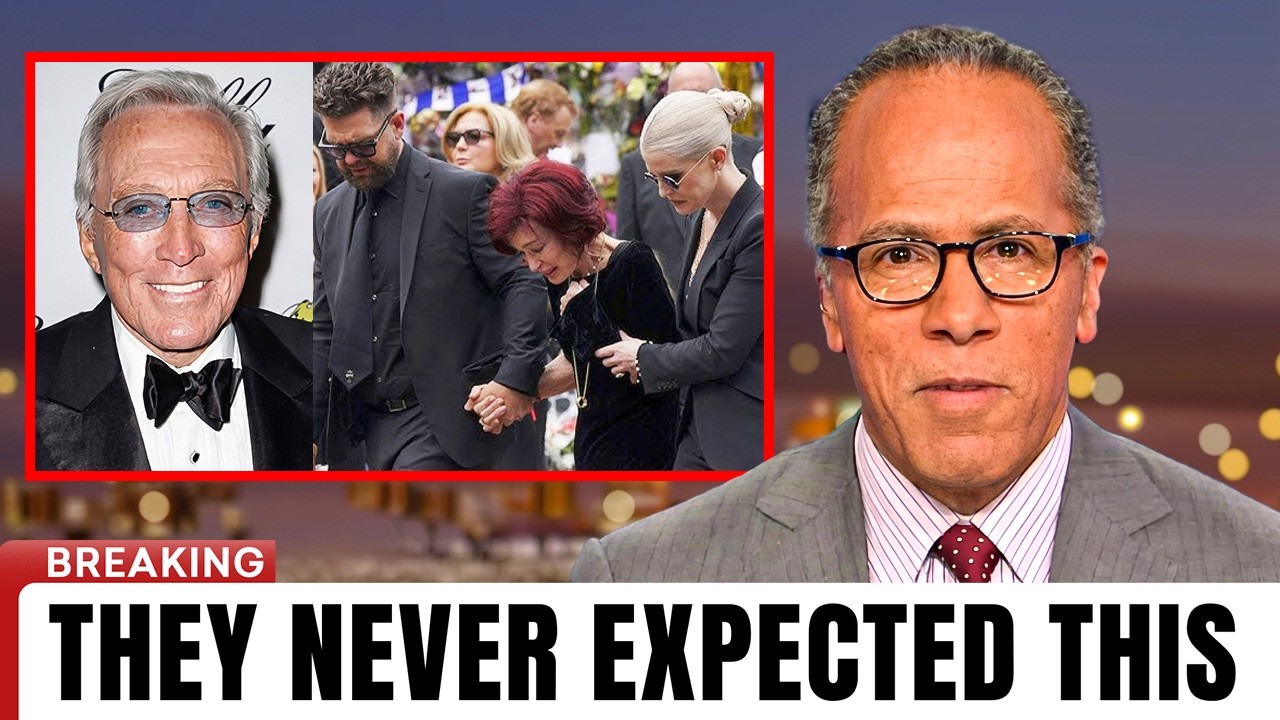
In the winter of 1992, when most 64-year-old stars were protecting what they had already earned, Andy Williams took $13 million of his own money and gambled it on a small town in the Ozarks that his Hollywood friends considered a joke. Two decades later, the numbers proved he had understood something the entertainment world had missed entirely. The story began in Wall Lake, Iowa, where Howard Andrew Williams was born on December 3, 1927. He was one of six children born to Jay and Florence Williams, and the family later moved to Cheviot, Ohio, a suburb of Cincinnati.
At just 8 years old, Andy began singing with his three older brothers, Don, Bob, and Dick, in the local Presbyterian church choir. The brothers became the Williams Brothers Quartet and worked their way from church performances to radio stations in Des Moines, Chicago, and Cincinnati before reaching Hollywood. In 1944, while still a teenager, Andy sang backup on “Swinging on a Star” with Bing Crosby, a record that won the Academy Award for Best Original Song. He was not even old enough to vote, and he had already performed on an Oscar-winning record with one of the most famous voices in the world.
After serving in the United States Merchant Marine during World War II, Williams reunited with his brothers and joined forces with Kay Thompson, a demanding MGM vocal coach who had worked with Judy Garland and Lena Horne. She drilled the group on phrasing, timing, and restraint. The Kay Thompson and Williams Brothers nightclub act became one of the highest-paid attractions in the country, and the discipline Thompson instilled stayed with Andy for the rest of his life. When the brothers went their separate ways, Andy struggled as a solo act until 1956.
That year, the same year Elvis Presley exploded onto the music scene, Williams broke through with “Canadian Sunset. ” His warm, understated style seemed out of step with the rise of rock and roll, yet his career kept climbing while louder stars came and went. He recorded 43 albums and earned three platinum records and 18 gold records. He received five Grammy nominations but never won a competitive Grammy, a surprising detail for one of the best-selling singers of his era.
Less known was his sharp business sense. Williams founded his own label, Barnaby Records, in the 1960s, and its roster included The Everly Brothers, Ray Stevens, and Jimmy Buffett. He understood that a performer gets paid well, but an owner keeps earning long after the applause ends. His signature song had an unusual history.
Henry Mancini and Johnny Mercer wrote “Moon River” for Audrey Hepburn to sing in “Breakfast at Tiffany’s” in 1961. Williams performed it at the 1962 Academy Awards, where it won Best Original Song, and the song became attached to him forever. Yet Williams never released “Moon River” as a single in the United States. The hit single version belonged to Jerry Butler.
Williams simply performed it, recorded it on an album, and made it the theme of his television show. That was enough to make the public connect the song to him for the rest of his life. “The Andy Williams Show” ran on NBC from 1962 to 1971 and won three Emmy Awards. His Christmas specials made him a permanent part of American holiday life.
The show also helped launch the Osmond Brothers, who became national figures through his stage. His public image was warm and safe, but his life was more complicated. Williams was a lifelong Republican, yet he opposed the Nixon administration’s attempt to deport John Lennon and admitted to experimenting with LSD. Most striking of all, in 1968, he became a vocal supporter of Robert F.
Kennedy’s presidential campaign. Kennedy was his close friend. On June 5, 1968, only hours after winning the California Democratic primary, Robert Kennedy was shot in Los Angeles. He died the next day.
At Kennedy’s funeral, Williams sang “The Battle Hymn of the Republic. ” He explained that they chose the song because Kennedy, despite having a terrible voice, had loved singing it on the campaign trail. To get through the performance, Williams told himself it was his job and that he could not let emotion interfere. He later admitted, “I really concentrated on not thinking about him.
”
The most shocking chapter of his life began in Aspen, Colorado. Williams had married French-born singer and actress Claudine Longet in December 1961. They had three children, Noelle, Christian, and Robert. The marriage ended in divorce in 1975, but they remained close.
Longet then began a relationship with Vladimir “Spider” Sabich, a champion skier who competed for the United States at the 1968 Winter Olympics and was understood to be the model for Robert Redford’s character in “Downhill Racer. ”
On March 21, 1976, Longet shot Sabich inside the bathroom of his Aspen chalet with a . 22 caliber German-made pistol that had been purchased by Sabich’s father. The bullet struck Sabich in the abdomen.
He lost a great amount of blood before the ambulance arrived and died on the way to Aspen Valley Hospital. He was 31 years old. Longet said the shooting was an accident. She testified that Sabich had been showing her how the gun worked when it fired and that she had never pointed it at him.
Prosecutors built a different case, suggesting Sabich had been bent over and facing away when he was shot. Longet had kept a diary describing the relationship as troubled, and friends said Sabich had planned to ask her to move out. But police mistakes doomed the case. Officers had failed to obtain a search warrant, and both the diary and a blood sample were ruled inadmissible.
Longet was charged with reckless manslaughter, which carried a possible sentence of up to 10 years. In January 1977, the jury convicted her of criminally negligent homicide, a misdemeanor. Her sentence was two years of probation, a $250 fine, and 30 days in jail. The Sabich family later filed a $1.
3 million civil suit that was settled out of court. As part of the settlement, Longet agreed never to speak publicly about Sabich or his death again. Through the arrest, the trial, and the national media storm, Andy Williams stood beside his ex-wife. He walked with her to the courthouse and cared for their three children.
Most stars would have stepped away. Williams walked into courtroom with her. That choice stayed attached to his legacy. When Williams died in 2012, retrospectives still mentioned the Aspen shooting in connection with his ex-wife.
Longet later married Ronald D. Austin in 1985, reported to have been one of her defense attorneys. She kept her life private and kept her promise. Claudine Longet died on May 14, 2026, at the age of 84.
Her nephew announced her death with a tribute that made no mention of the shooting, describing her light, elegance, talent, and kindness. After his television show ended in 1971, Williams returned to the road, and his Christmas tours became a powerful draw. But touring in his 60s was wearing him down. One night in Des Moines made the decision for him.
A snowstorm kept much of the audience away, and then the band’s equipment failed to reach Chicago in time for the next show. His musicians had to borrow instruments from a local high school band just to perform. Williams responded with two words: “No more tours. ”
He looked at Branson, Missouri, a small town in the Ozarks known mostly for country music and comedy acts.
In 1992, at 64, he built the Andy Williams Moon River Theater with his own money. He helped design the building himself, making it blend into the hills, with a man-made Moon River curving around the entrance. The theater opened on February 1, 1992. Williams went to work with a punishing schedule: two shows a night, six days a week, for nine months of the year, roughly 430 performances annually.
Over two decades, that reached close to 8,000 shows. In 1998, he told the Associated Press, “The fact is, most of my friends in LA still think I’m nuts for coming here. ”
His friends had misread the move. The steady money came from the theater, the tickets, the Christmas shows, and the Branson real estate around it.
The theater helped change the character of the whole town, drawing new audiences and different performers. He shared the Moon River stage with Petula Clark, Glen Campbell, Charo, the Osmond Brothers, and the Lennon Sisters. The theater became one of the most visited attractions in Branson. In November 2011, during a Christmas concert at his own theater, Williams told his audience he had been diagnosed with bladder cancer and planned to keep performing.
He did not release the news through a publicist. He stood on the stage he had built, in front of people who had bought tickets to see him, and told them the truth. Andy Williams died on the night of September 25, 2012, at his home in Branson after a year-long battle with bladder cancer. He was 84 years old.
He was survived by his second wife, Debbie, and his three children with Claudine Longet. His memorial was held at the Moon River Theater on Sunday, October 21, 2012. More than 1,000 people came. The Osmond brothers sang, Bob Newhart spoke and broke down, and video tributes came from Bill Cosby and Ethel Kennedy.
The service ended with the line Williams had used to close his shows for decades: “May each day of your life be a good day and good night. “