Avery Whitmore’s best friend and her husband were both injured at the ribbon-cutting for Nolan’s newest development. In the chaos, Avery’s husband shoved past her to reach Emmett first. He signed Emmett’s consent form, told the paramedics about Emmett’s “heart condition,” and made sure Emmett was prioritized. Avery signed her own consent form on a gurney in the hallway, holding the pen in her left hand because her right shoulder was broken.
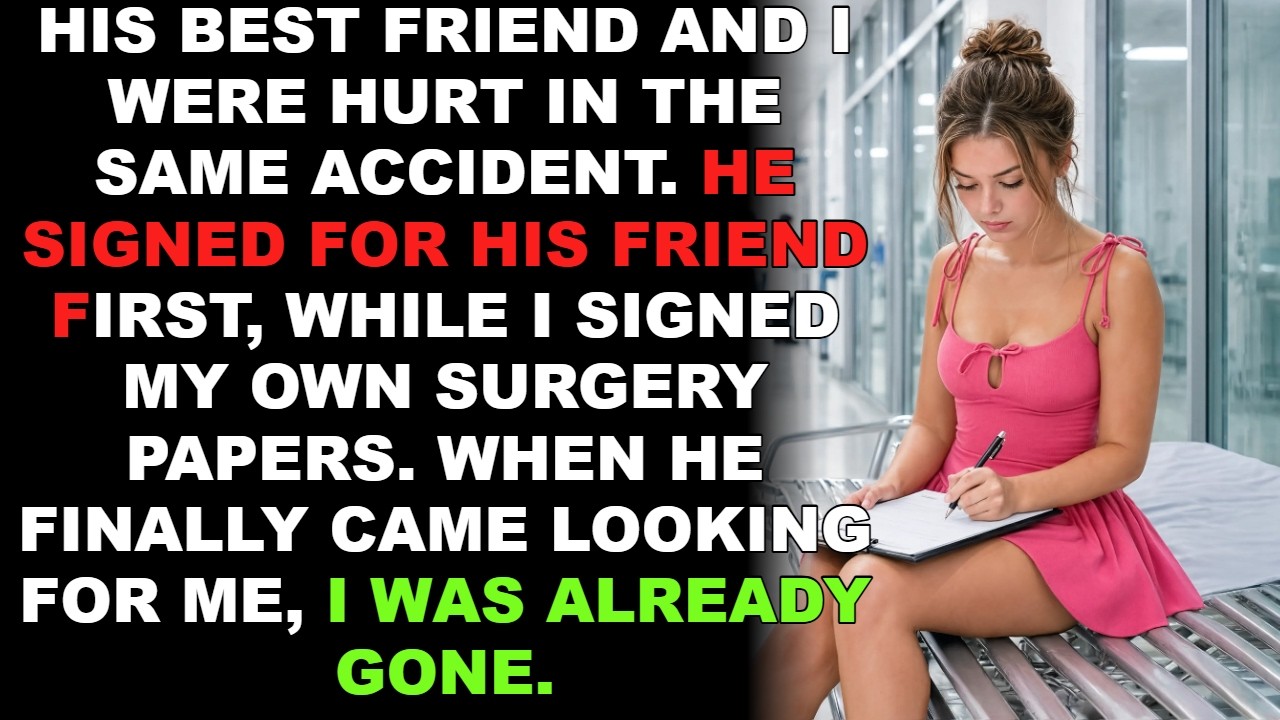
By the time Nolan came looking for her two hours later, she was already being transported to Northwestern with internal bleeding. That was just the most visible moment of a five-year pattern. Back when they got married, Nolan’s phone buzzed during the ceremony—Emmett, needing him. At the reception, Nolan disappeared for two hours to comfort Emmett in a coatroom.
On their anniversary, Emmett texted, and Nolan excused himself for twenty-six minutes. When Avery won her first major public bid, Nolan spent the afternoon with Emmett instead of celebrating with her. When her mother had a health scare, Nolan forgot the follow-up appointment because Emmett needed a ride. Avery had been “the reasonable one” the entire marriage.
She handled everything alone, quietly, while Nolan poured his attention into Emmett—a man with no formal cardiac diagnosis, who had never seen a cardiologist, whose “bad heart” existed only in his own descriptions and Nolan’s uncritical belief. The collapse at Aldine Tower was rated for thirty people. Fourteen were on it. Emmett got a superficial cut.
Avery got three rib fractures, a collapsed lung, and internal bleeding. Lying on the pavement, she watched Nolan kneel beside Emmett and tell the EMT, “He has a heart condition. He goes first. ” When the EMT asked Nolan to authorize Avery’s emergency surgery, Nolan glanced over for two seconds and said, “She’s conscious.
She can sign it herself. ”
She did. Then she said, “Northwestern,” and they took her. Under anesthesia, her brain surfaced the memories she’d been suppressing.
The postponed Portugal trip. The ski trip that was supposed to be just the two of them but became a Whitmore family affair. Christmas dinners where Charlotte smiled pleasantly and Avery refilled wine glasses. The voicemails that came after her surgery—Charlotte calling her “difficult,” telling her not to make things harder, reminding her who she was.
Avery had been unconscious when those messages were left. Her sister Rosalie answered the phone from Seattle and asked, “Do you want to come here? ” Avery said yes before she knew she meant it. The divorce started with a subpoena.
Nolan had withdrawn $280,400 from their joint accounts for Emmett-related expenses over five years. Avery had paid $94,000 for Whitmore family obligations out of her own pocket, because it was simply expected. Emmett’s medical records showed no cardiac condition of any kind. Nolan confronted Emmett, who admitted the truth: “You would have left.
If you didn’t think I needed you, you would have left me. ”
Nolan sent Avery the recording. No message attached. She felt something for him then—not hope, but the distant understanding you have for someone when the distance is already decided.
Charlotte demanded Avery appear at the Whitmore Foundation’s benefit dinner to “clear the air. ” Avery said yes. She prepared a presentation. At the gala, her face appeared on the ballroom screens.
She showed the triage reports, the consent form timestamps, the bank statements, the cardiac records. She played Charlotte’s voicemails over the speakers. She looked at Nolan in the front row and said, “I have been managing my own affairs since then, and I intend to continue doing so. ”
The screen went dark.
Nolan signed the divorce agreement twenty-two days later. Emmett released a statement painting himself as the victim. Avery posted two photos—her surgical incision and her shoulder brace—alongside the triage classification and the consent form timestamp. The statement came down within the hour.
Nolan visited Seattle once in December. He left a note with the receptionist: “I know I don’t deserve anything from you. I just wanted you to know that I understand now. I’m sorry I made you sign it yourself.
” Avery read it twice and put it in her coat pocket. The settlement closed in January. Her firm took on new projects in March, including a healing garden at a Seattle hospital. In April, she filed to restore her maiden name.
She walked out of the courthouse into an ordinary Tuesday afternoon, with a list in her pocket and opinions about creeping phlox to defend against her sister. The Aldine Tower courtyard opened in February, three months after the collapse. Avery flew back to Chicago for two days to see it. The plantings, the permeable pavers, the limestone walls catching the afternoon light—it looked exactly the way she had drawn it.
She stood in the center and breathed carefully, because the cold air still pulled at her repaired lung. She took the train back to O’Hare and flew home to Seattle. Her name, restored, fit the way it always had—like something made to last.