
Ferrari is gearing up for a thrilling showdown at the Austrian Grand Prix, with an engine upgrade that could reshape the competitive landscape of Formula 1. As the team prepares to unleash its first ADO-supported power unit revision, Toto Wolff’s earlier concerns about a sudden leap in performance may soon become a reality.
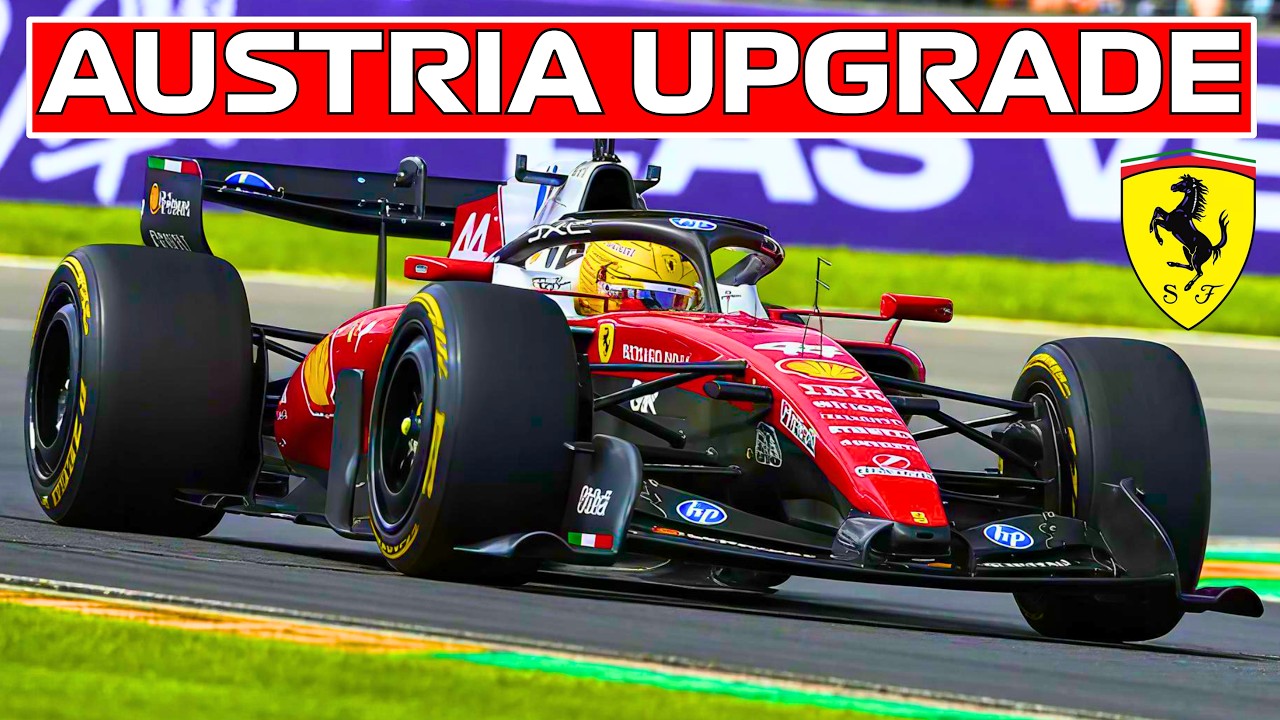
Back in the early discussions surrounding the FIA’s ADU system, Wolff cautioned against allowing a significant upgrade that could disrupt the competitive order. At the time, it seemed like a standard warning, but recent events have given it new weight. During the last race in Barcelona, Lewis Hamilton showcased a remarkable performance, clocking a time four-tenths faster than his teammate George Russell in the middle sector, despite managing energy rather than pushing to the limit. Ultimately, he lost pole position due to Ferrari’s engine struggling to match Mercedes on the straights. Russell even acknowledged that Hamilton should have claimed pole, with Wolff agreeing that the chassis was competitive; the only hurdle was a mere 20 horsepower.
Now, with Ferrari’s engine upgrade confirmed for Austria, the team is set to introduce crucial changes that could close that gap. Originally slated for a later date, the upgrade has been expedited due to rapid progress in their development program. The enhancements include modifications to the combustion chamber and a revised turbocharger, aimed at reducing the straight-line speed deficit that has plagued the SF26 throughout the season.
 If Ferrari manages to close even half of that 20 horsepower gap at the Red Bull Ring, Wolff’s earlier caution about a team potentially leaping ahead could turn into a stark reality. The Italian outlet Autora reports that the initial phase of Ferrari’s two-part engine program was initially intended for the Belgian circuit, but the urgency of the competitive situation has prompted an earlier rollout.
This first upgrade focuses on optimizing the combustion chamber and turbocharger, with the second phase expected after the summer break, targeting reliability and thermal efficiency. The changes to the combustion chamber aim to enhance efficiency at higher engine speeds while minimizing energy losses. Meanwhile, the turbocharger adjustments are designed to improve airflow at high RPMs without sacrificing the compact design that gives Ferrari an aerodynamic edge.

Interestingly, Ferrari’s approach remains unconventional, as they continue to push the boundaries of their hot engine philosophy. Reports suggest that the engine’s intake air temperature could reach as high as 110°C, a stark contrast to the typical range of 70 to 80°C. This strategy aims to create a more efficient cooling system, allowing for aerodynamic advantages elsewhere on the car.

As the team heads to Austria, the stakes are high. Hamilton’s performance in Barcelona demonstrated that the chassis is capable of competing at the front, but it was the horsepower deficit that held them back. If Ferrari can close that gap, it could dramatically shift the dynamics of the championship.
With just two weeks until the race, all eyes will be on the Red Bull Ring to see if Ferrari’s upgrades can turn the tide. Will this be the moment that Hamilton emerges as a genuine championship contender, or will the changes fall short of expectations? The countdown has begun, and the excitement is palpable.