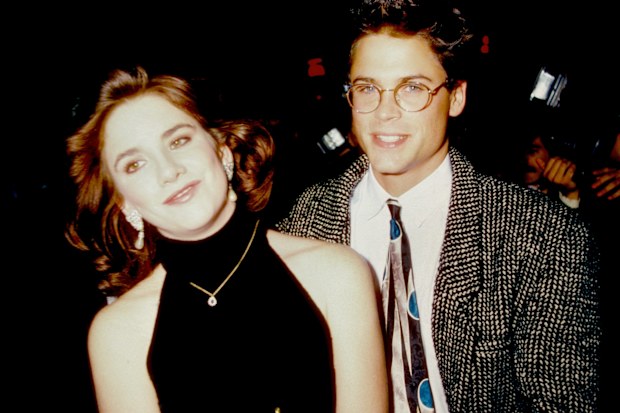
For millions of viewers, Melissa Gilbert will always be Laura Ingalls Wilder.
The braids.
The innocent smile.
The little girl running across the prairie.
But behind the wholesome image of Little House on the Prairie was a childhood far more complicated than television audiences ever imagined.
Fame came when she was only nine.
Growing up happened in front of millions.
And years later, Gilbert would finally speak openly about addiction, relationships, pressure, and the painful reality behind the image of Hollywood’s seemingly perfect child star.
Born in 1964, Melissa was adopted into a family already connected to show business.
She began performing while still extremely young, appearing in commercials before receiving the opportunity that would change everything.
At nine years old, she auditioned for Little House on the Prairie.
She won the role of Laura Ingalls.
And suddenly, Melissa Gilbert was growing up on one of America’s most beloved television programs.
From 1974 to 1983, she appeared in 191 episodes.
Audiences watched Laura experience childhood, adolescence, heartbreak, and eventually adulthood.
But while Laura’s world seemed comforting and familiar, Melissa was navigating the unusual pressures of becoming famous before she was old enough to understand what fame actually meant.
One of the most important figures in those years was Michael Landon.
On television, he played her father, Charles Ingalls.
Behind the scenes, Landon became enormously influential in Gilbert’s life as well.
Their connection helped make the Ingalls family believable to viewers and left an emotional mark on Gilbert long after the series ended.
But eventually, Little House was over.
And Gilbert faced the problem that destroys many child-star careers.
How do you convince audiences to stop seeing the child they loved?
She refused to remain trapped on the prairie.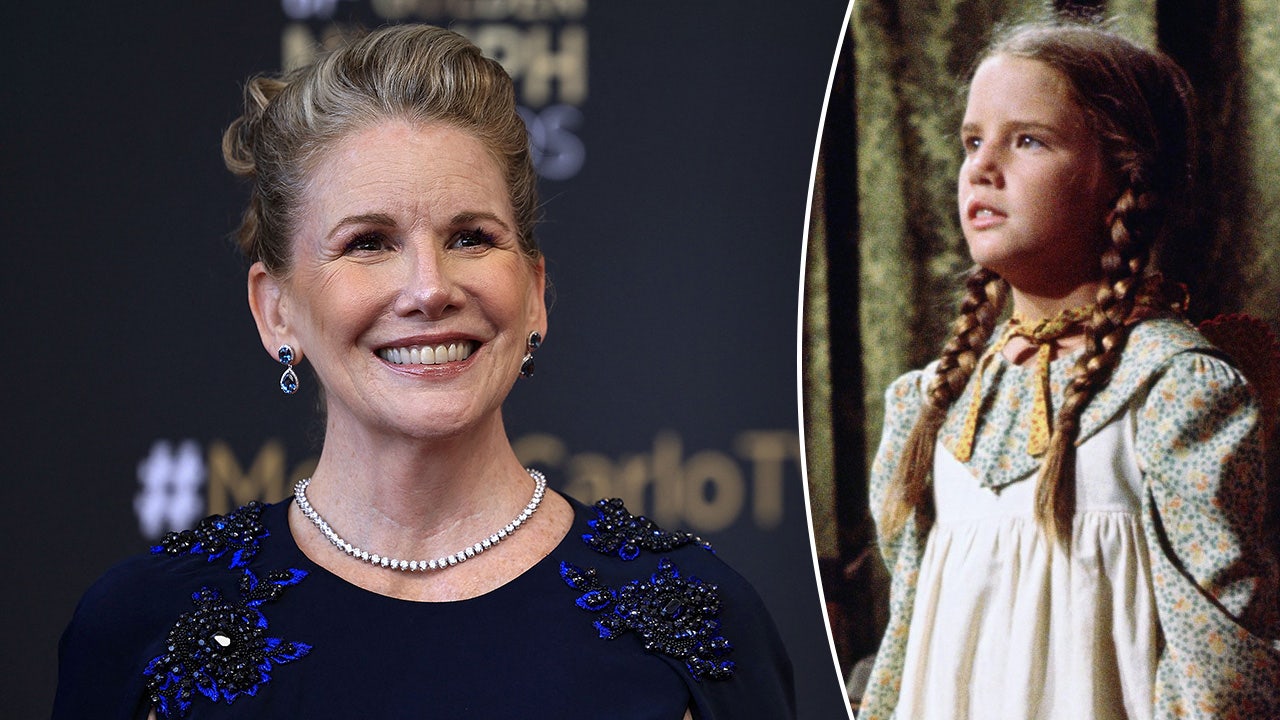
Gilbert deliberately pursued more demanding material, including projects such as The Miracle Worker and The Diary of Anne Frank.
The roles allowed her to demonstrate that she could handle serious dramatic work far beyond Laura Ingalls.
Yet professional success did not mean her private life was equally simple.
Behind the scenes, Gilbert struggled with the consequences of growing up inside Hollywood.
The pressure.
The expectations.
The complicated relationships.
And eventually, addiction.
For years, the public image and private reality existed side by side.
Then Gilbert decided to talk about it.
In her 2009 memoir, Prairie Tale, she stripped away much of the mythology surrounding her life.
Instead of presenting herself as the eternally wholesome girl audiences remembered, she wrote candidly about her mistakes, struggles, and experiences with addiction.
It was a dramatically different portrait from the one television had created.
But that was precisely the point.
Melissa Gilbert had never actually been Laura Ingalls.
She was a real person who had grown up under extraordinary circumstances.
And her willingness to acknowledge the darker chapters challenged the assumption that childhood fame had given her a perfect life.
Gilbert also eventually turned her attention toward improving the industry in which she had grown up.
From 2001 to 2005, she served as president of the Screen Actors Guild.
It was a significant transformation.
The little girl who had once worked inside Hollywood was now helping represent the people who made Hollywood possible.
She advocated for performers and workplace protections, using decades of personal experience to understand how vulnerable actors could sometimes become within the entertainment business.
As she grew older, Gilbert’s priorities changed again.
The constant pursuit of Hollywood visibility became less important.
She married actor and director Timothy Busfield, and together they eventually embraced a quieter life in upstate New York.
For someone who had spent much of childhood surrounded by cameras, that privacy represented a striking change.
There was less glamour.
Less obsession with celebrity.
And more distance from the world that had defined her since childhood.
But one connection to her Little House years remained deeply emotional.
Michael Landon died from pancreatic cancer in 1991.
His loss affected Gilbert profoundly.
In later years, she became involved in efforts connected to pancreatic cancer awareness and research, helping turn that personal loss into advocacy.
Today, Melissa Gilbert’s story looks very different from the fairy tale audiences might once have imagined.
She experienced extraordinary success.
But also enormous pressure.
She became one of television’s most famous children.
Then spent years proving she could become something beyond that child.
She experienced personal struggles and addiction.
Then chose to discuss them publicly rather than protect an illusion of perfection.
And after decades of Hollywood attention, she ultimately found value in something much quieter.
Family.
Purpose.
Privacy.
The rumors and mythology surrounding Melissa Gilbert were inevitable because millions of people felt as though they had watched her grow up.
But they had really watched Laura Ingalls grow up.
Melissa’s own journey was messier.
More painful.
And far more human.
Perhaps that is the biggest truth she has revealed.
Behind one of television’s most innocent faces was never a perfect Hollywood life.
There was simply a young girl trying to grow into herself while the entire world was watching.