Loretta Swit, who played Major Margaret “Hot Lips” Houlihan on MASH for all 11 seasons, nearly walked away from the series because she believed the character was being reduced to a caricature and a sexual punchline. Her determination to protect Houlihan’s dignity eventually reshaped one of television’s most memorable female characters, but not before one particular script put her convictions to the test. Swit, born in Passaic, New Jersey, in 1937, built her career through theater and guest roles on series like Hawaii Five-O and Mission Impossible before landing the role of Margaret Houlihan in the 1972 television adaptation of MASH. From the start, she saw more in the character than the scripts presented.
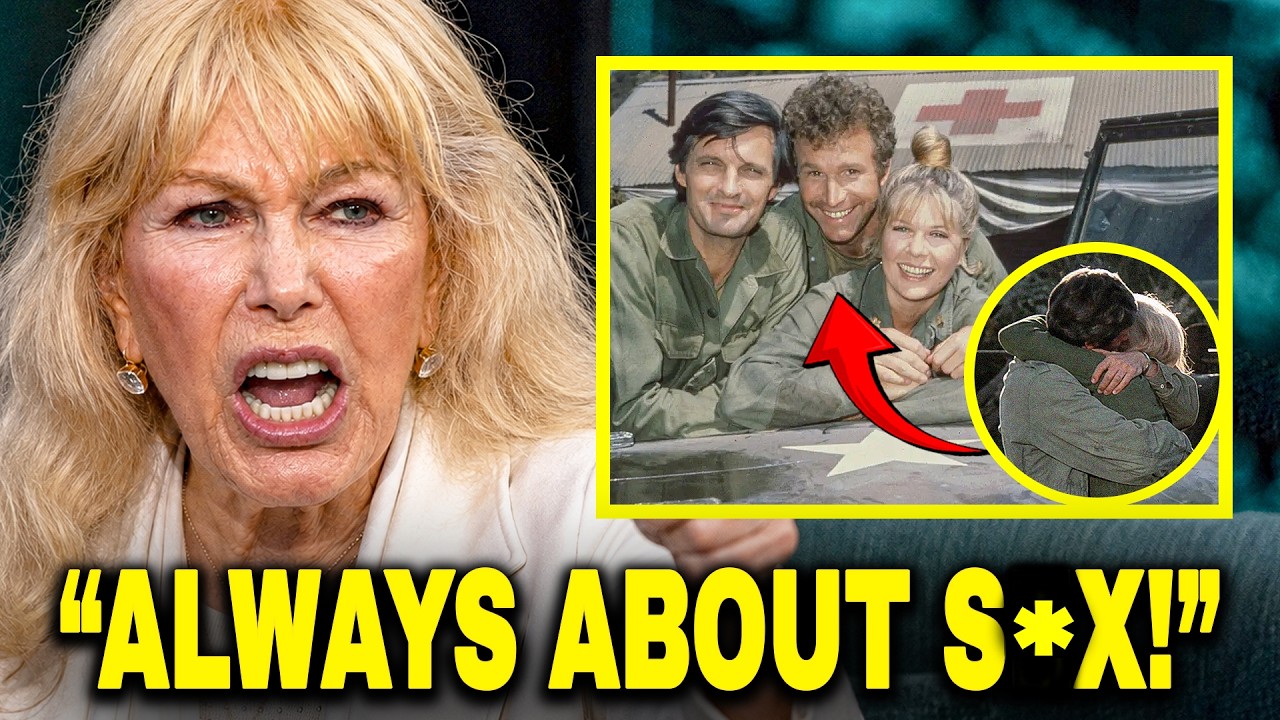
Margaret was often defined by her secret affair with Major Frank Burns and the nickname Hot Lips, which came with plenty of jokes. Swit believed Margaret was a dedicated army officer, an exceptional nurse,and a woman whose professionalism was constantly overlooked. MASH premiered on CBS in September 1972, adapted from Richard Hooker’s novel and the 1970 film. The show followed surgeons, nurses, and support staff at the 4077th Mobile Army Surgical Hospital during the Korean War.
It balanced comedy with heartbreaking drama, a blend that became its defining strength. The cast included Alan Alda as Hawkeye Pierce, Wayne Rogers as Trapper John McIntyre, Mlan Stevenson as Lieutenant Colonel Henry Blake, Larry Lynville as Frank Burns, Gary Berghoff as Radar O’Reilly, Jaime Farre as Maxwell Clinger, and William Christopher as Father Mulcahy
Early on, Margaret was often the butt of jokes, but Swit worked quietly with writers and producers to reveal deeper layers. Her pushback began with the season one episode Edwina, which originally centered on a nurse whom none of the men wanted to date because she was supposedly unattractive. Co-creator Larry Galbart later confirmed the original script relied heavily on jokes at her expense.
The writers rewrote the episode so Edwina became known for being accident-prone rather than being mocked for her looks. That change reflected a larger concern Swit had been developing about how female characters were treated on the show
By the fourth and fifth seasons, Swit felt Margaret had become trapped in a cycle she no longer wanted to play. She reached her limit and made it clear to producers that unless Margaret was allowed to grow beyond being a caricature and a sexual punchline, she was prepared to leave the series altogether. This time, the producers listened.
Margaret’s affair with Frank Burns ended. Her story lines became more personal and emotionally layered. Audiences watched her transform into one of the show’s most respected characters, remaining disciplined and strong but also vulnerable, compassionate, and deeply human
That evolution became one of the defining arcs of the series. Swit remained with MASH for all 11 seasons, one of only four cast members to stay from beginning to end, alongside Alda, Farre, and Christopher.
She and Alda were the only actors to appear in both the pilot and the record-breaking finale. She appeared in all but 11 of the series’ 256 episodesand won two Emmy awards. She often spoke fondly of episodes like Hot Lips and Empty Arms, Margaret’s Engagement, and The Nurses, which showed Margaret as a fully realized person
MASH itself underwent significant changes over its run. Wayne Rogers and Mlan Stevenson departed after season three, leading to the arrival of Mike Frell as BJ Hunut and Harry Morgan as Colonel Sherman Potter.
Larry Lynville left, replaced by David Ogden Stiers as Charles Emerson Winchester III. When Gary Berghoff stepped away, Jaime Farre’s Clinger took over Radar’s duties as company clerk, with GW Bailey joining as Sergeant Luther Rizzo. Alan Alda became increasingly involved in shaping the show’s direction, co-writing 13 episodes and directing 31, including the finale. He became the first person to win Emmy awards for acting, writing, and directing on the same series
The show also faced creative battles behind the scenes.
Producers originally did not want a laugh track, but CBS insisted audiences expected it in a half-hour comedy. The compromise was that the laugh track would never be used during operating room scenes. One proposed episode showing soldiers deliberately standing outside in freezing temperatures to become sick enough to be sent home was reportedly rejected by CBS as too unpatriotic. Wayne Rogers was able to leave the show without legal consequences because he had never signed his contract, objecting to its outdated morals clause.
When Stevenson decided to leave, producers chose not to give Henry Blake a happy farewell. They distributed scripts with the final page removed, revealing only after filming that Radar would announce Henry’s death. The cast’s stunned reactions were genuine, and the scene was filmed in just two takes, sparking more than a thousand angry letters from viewers
The series finale, Goodbye, Farewell, and Amen, aired on February 28th, 1983, attracting roughly 77% of all Americans watching television that night. More than 121 million people watched, making it the most watched scripted television episode in American history, a record that still stands.
The show’s popularity also transformed advertising, with a 30-second commercial that cost around $30,000 when the series began eventually selling for approximately $450,000 during the finale. MASH also launched three spin-offs: Trapper John, MD, which enjoyed long-term success; Aftermash, which reunited Colonel Potter, Clinger, and Father Mulcahy at a veteran’s hospital; and Walter, which attempted to continue Radar’s story. One final piece of MASH history almost disappeared forever. In the penultimate episode, characters buried a time capsule beneath the Fox Ranch set.
Just two months later, construction workers accidentally uncovered it. One worker contacted Alda, who simply told him to keep it
Swit’s willingness to stand her ground didn’t just protect Margaret Houlihanit helped make her one of the lasting reasons MASH is still celebrated decades later. Her refusal to accept a diminished version of her character ensured that Margaret’s growth became one of the show’s most enduring legacies.
The series, which spent 11 years telling the story of a war that lasted just over three years, remains a cultural touchstone that proved comedy and heartbreak could exist in the same conversation.