Loretta Swit nearly walked away from MASH over a script she believed crossed a line she was not willing to accept. The actress, who played Major Margaret “Hot Lips” Houlihan for all 11 seasons, pushed back when she felt the character she had worked hard to develop was being reduced to little more than a punchline. The confrontation was not her first behind-the-scenes battle over the show’s direction. Swit had long believed Margaret deserved more depth than the strict, often mocked head nurse that early scripts presented.
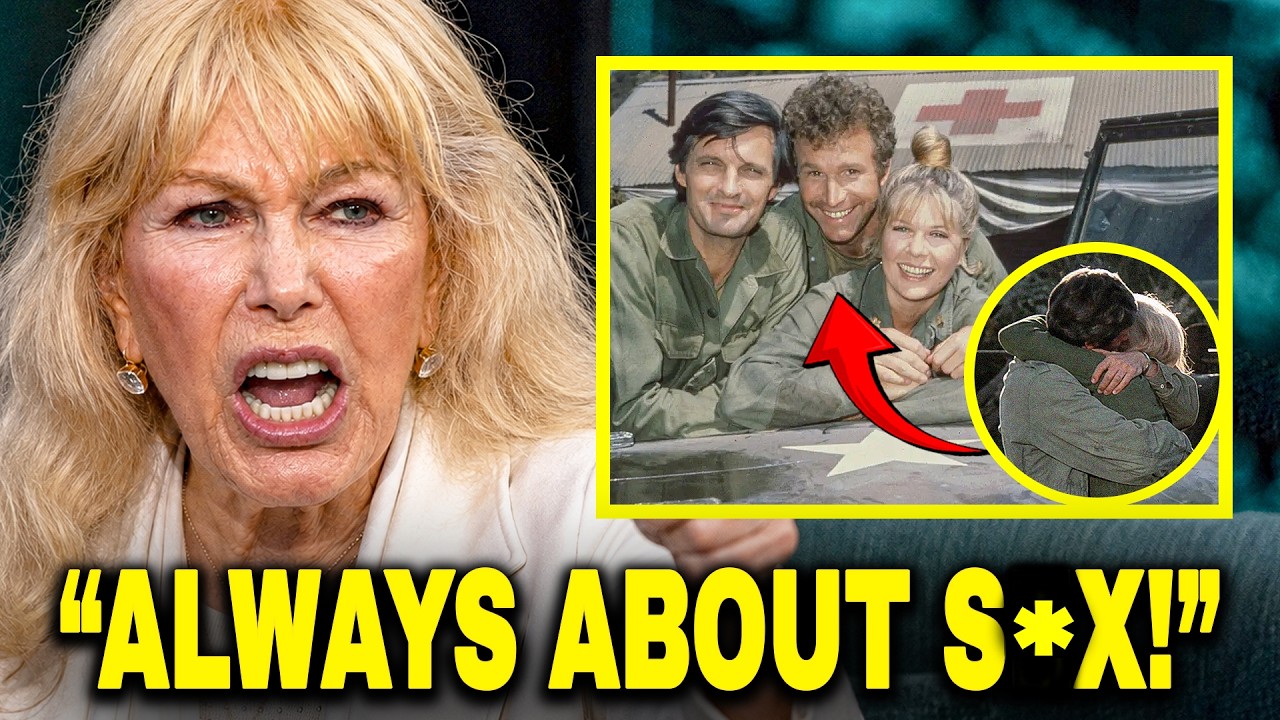
MASH premiered on CBS in September 1972, inspired by Richard Hooker’s novel and the 1970 Robert Altman film. The series followed the staff of the 4077th Mobile Army Surgical Hospital during the Korean War, balancing sharp comedy with the grim realities of combat medicine. It became one of the most celebrated shows in television history. The show’s writing evolved dramatically over its run.
Early seasons leaned on broader jokes, but as co-creators Larry Gelbart and Gene Reynolds moved on, Alan Alda became increasingly influential, steering the series toward emotional, character-driven storytelling. Margaret Houlihan evolved with that shift. Early on, she was defined by her secret relationship with Major Frank Burns and the “Hot Lips” nickname. Swit, however, saw more beneath the surface.
She viewed Margaret as a dedicated army officer, an exceptional nurse, and a woman fighting for respect in a camp where she was often underestimated. Swit’s campaign to protect that vision began early. In the first season, the episode “Edwina” was originally written around jokes about a nurse no one wanted to date because of her appearance. Co-creator Larry Gelbart later admitted the writers had made a mistake and rewrote the episode so Edwina’s comedy came from being accident-prone rather than being mocked for her looks.
That was a small change, but it reflected a larger concern Swit was raising behind the scenes. She felt women at the 4077th were too often treated as objects for jokes rather than fully realized characters. The biggest battle came during the fourth and fifth seasons. Swit felt Margaret had become trapped as Frank Burns’s secret lover and the target of humiliation that echoed the famous shower scene from the original film.
She made it clear to producers that unless the character was allowed to grow beyond a caricature, she was prepared to leave the series entirely. The producers listened. Margaret’s affair with Frank Burns was ended. Her storylines became more personal and emotionally layered.
She married, went through a divorce, formed genuine friendships with former rivals, and developed a nuanced understanding of the Korean people living near the camp. Her sharp edges softened without weakening her authority or strength. Swit stayed with MASH for every season, one of only four cast members to do so alongside Alda, Jamie Farr, and William Christopher. She appeared in all but 11 of the show’s 256 episodes and won two Emmy Awards for her performance.
Her insistence on protecting Margaret’s dignity left a lasting mark on the series. The character transformed from a comedic target into one of the show’s most respected and emotionally complex figures. Several other behind-the-scenes decisions also shaped the series. Wayne Rogers, who played Trapper John McIntyre, left after the third season without a signed contract, preventing producers from taking legal action.
McLean Stevenson’s exit the same year led to Henry Blake’s plane being shot down in a shock ending that drew more than a thousand angry letters from viewers. Casting nearly went in a different direction. Stevenson originally auditioned for Hawkeye, and comedian Robert Klein turned down the role of Trapper. The laugh track was imposed by CBS against producers’ wishes, with the deal that it would never appear in operating room scenes.
The finale, “Goodbye, Farewell and Amen,” aired on February 28, 1983, and was watched by more than 121 million people, making it the most-watched scripted television episode in American history. Commercial time during the broadcast sold for approximately $450,000 per 30 seconds. The show’s popularity continued through three spin-offs, though only “Trapper John, M. D.
” achieved long-term success. A time capsule buried beneath the Fox Ranch set during the penultimate episode was accidentally uncovered by construction workers two months later, and Alan Alda instructed the worker who found it to keep it. Swit continued acting after MASH, starring in the television movie that launched “Cagney & Lacey,” though contractual obligations prevented her from continuing in the series. She later hosted documentaries and animal-related programs, and she remained close friends with Harry Morgan and Alda until their deaths.
Her refusal to accept a script that undermined Margaret Houlihan ultimately helped reshape one of television’s most memorable female characters. Swit’s willingness to stand her ground did not just protect her role; it helped define why MASH is still remembered decades after its final episode.