The story of Cain and Abel, found in the fourth chapter of the book of Genesis, contains the first recorded murder in human history. Scholars note that the names themselves carry meaning in the original Hebrew. Cain’s name shares a root with a word meaning “to acquire” or “to forge,” while Abel’s name, “Hebel,” means “breath” or “vapor”—something real but momentary, something that rises and then is gone. Adam and Eve had been expelled from the Garden of Eden before the brothers were born.
The environment had changed around them, and their sons were the first human beings born entirely outside of Eden, with no memory of paradise. As the brothers grew, Cain became a farmer who tilled the soil, while Abel became a shepherd who kept flocks. Both occupations were essential to early human civilization. In Mesopotamian literature, the conflict between farmers and shepherds was a known theme, with the oldest surviving texts resolving such disputes through negotiation and compromise.
Genesis does not give that ending, and the tension between these two brothers does not resolve through dialogue. At a certain point, both brothers bring offerings to God. Abel brought from the firstborn of his flock and from their fat portions, indicating he gave the prime portion of his best animal. The text says only that Cain brought fruit from the ground, with no specification of quality or selection.
God accepted Abel’s offering but did not accept Cain’s. The simplest reading, that God preferred meat to vegetables, collapses under examination. The same scripture that contains Genesis later includes extensive protocols for grain offerings as entirely acceptable forms of worship. The rejection had nothing to do with profession.
The book of Hebrews later comments that Abel offered a more acceptable sacrifice by faith, suggesting that the offering revealed what was inside the person making it. Cain’s response to the rejection was anger. The text describes his face falling, which in the cultural context of the ancient world signaled shame and wounded pride. Cain did not look at Abel’s acceptance and examine himself.
He felt resentment toward Abel for having what he did not. Before any violence occurs, God speaks directly to Cain. God asks why he is angry and warns him: “Sin is crouching at the door. Its desire is for you, but you must rule over it.
” Scholars have debated the Hebrew word translated as “crouching” for centuries. The image is of a predatory animal waiting for opportunity, and the warning implies that what followed was not inevitable. God told Cain clearly that another path was available. The murder itself is described in very few words.
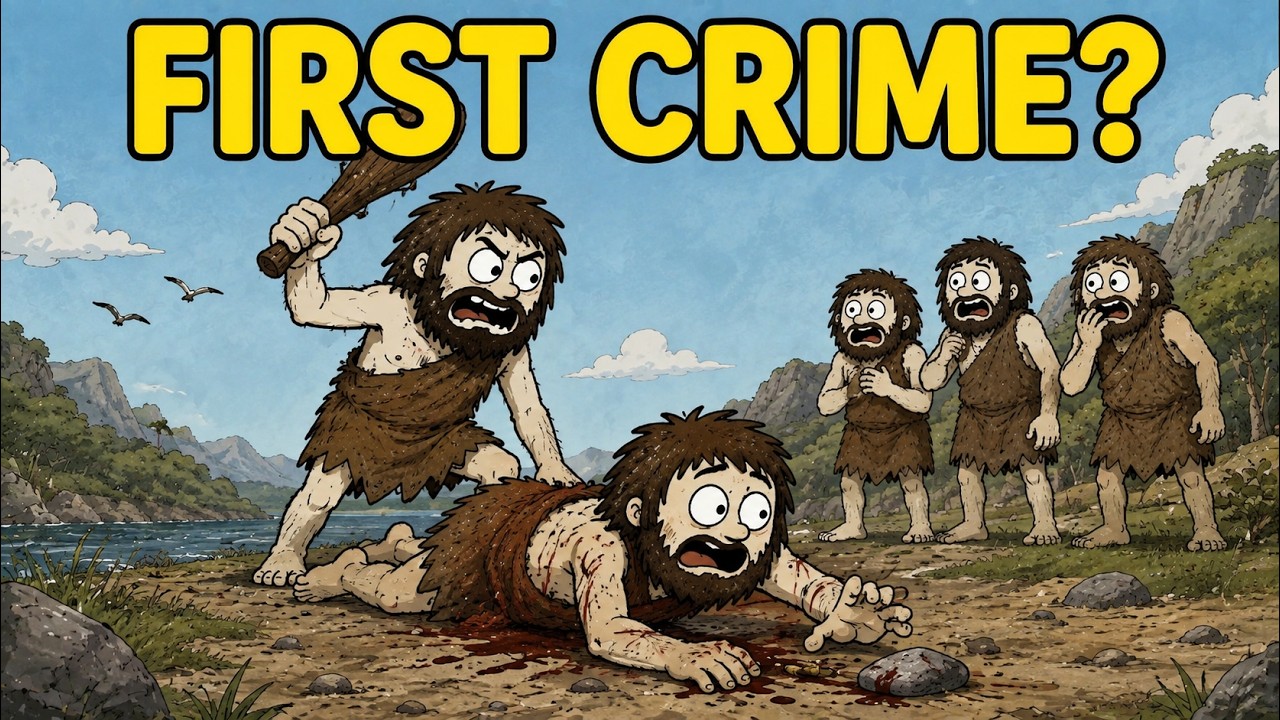
Cain spoke to Abel, and when they were in the field, Cain rose up against his brother and killed him. Some ancient manuscripts include additional words at the beginning of that sentence, suggesting a conversation preceded the violence. The field was not a family space or a place of witnesses, and the choice of location was deliberate. This was the first time a human body had ever been killed by another human’s hand, an act with no precedent.
After the crime, God asks Cain where Abel is. The question was an invitation to acknowledge what had happened. Cain’s response is one of the most famous lines in the Hebrew Bible: “I do not know. Am I my brother’s keeper?
” The philosopher Emmanuel Levinas, who survived the Holocaust, wrote extensively about this moment, arguing that Cain’s answer represents the most fundamental possible refusal of ethical life. To say “I am not my brother’s keeper” is to say that other human beings exist in a separate category from oneself. God’s response is one of the most poetic lines in scripture: Abel’s blood cries out from the ground. In the ancient world, blood shed upon the earth was not neutral.
It was a pollution that the land itself could not ignore, and innocent blood created an obligation for justice that the earth itself transmitted upward. This concept runs through thousands of years of scripture. God then pronounces judgment on Cain. Because Cain was a farmer, the ground would no longer yield to him its strength, and he was sentenced to become a wanderer.
The punishment was designed to mirror the crime, stripping him of the capacity that defined him. Cain’s response is unexpectedly human: he is afraid. This raises an immediate question: who exactly is Cain afraid of? The text makes clear that Adam and Eve had numerous children, and by the time of Cain’s crime, extended family networks existed.
In the ancient world, blood vengeance was the primary mechanism of justice, and Abel’s relatives would have had both the motive and the cultural mandate to execute Cain. God’s response to Cain’s fear is one of the most theologically striking moments in the narrative. God protects him, declaring that if anyone kills Cain, vengeance shall be taken on him sevenfold, and God placed a mark on Cain so no one who found him would kill him. The mark of Cain has generated more misinterpretation than almost any other detail in this story.
For centuries, various groups interpreted the mark as a physical alteration, and this interpretation was used to support racial theories. The text itself says none of those things. The Hebrew word for mark, “oth,” is the same word used for the rainbow God places in the sky after the flood. It is a sign, a token, a covenant marker.
The mark was protection, not a punishment. God had just sentenced Cain to exile and simultaneously protected him from the death that would otherwise have come for him. Cain departed and settled in a land called Nod, which means “wandering” in Hebrew. The man sentenced to be a wanderer settled in the land of wandering.
What he built there is the next surprise: Cain built a city. The first city in human history according to Genesis was built by the world’s first murderer. The text is making a claim about human civilization: the drive to build organized communities is sometimes powered by insecurity, by the need for protection, by the absence of a natural environment that will sustain you. The generations that followed Cain expanded that pattern.
By the seventh generation, a man named Lamech appears. Lamech’s sons were extraordinarily talented: one pioneered nomadic pastoralism, another is identified as the ancestor of those who play the harp and flute, and a third forged instruments of bronze and iron, the invention of metallurgy. Lamech also composed a song: “I have killed a man for wounding me, a young man for striking me. If Cain’s revenge is sevenfold, then Lamech’s is seventy-sevenfold.
” Lamech boasted about his violence and presented it as a point of pride. One murder six generations earlier had become a cultural value. The narrative then introduces a second son of Adam and Eve, Seth, born in place of Abel. Genesis draws a contrast between the two lines.
Cain’s line produces urbanization, music, metallurgy, and escalating violence. Seth’s line is characterized by something different: when Seth’s son Enosh is born, the text says that at that time, people began to call upon the name of the Lord. The psychology of what happened to Cain has been analyzed by thinkers across multiple disciplines. Cain’s emotional collapse begins with comparison.
In the moment of differential outcome, Cain does not ask what the difference reveals about himself. He asks why his brother has what he does not. The shift from a self-examining question to a comparative, accusatory question leads toward resentment. Modern psychology identifies this as narcissistic injury, and research literature on violence consistently identifies wounded pride as one of the most reliable predictors of aggressive behavior.
God’s warning about sin crouching at the door was an accurate description of what was happening inside Cain’s psychology before the crime. Had Cain responded to the initial rejection with honesty, the entire trajectory of the story changes. No murder, no exile, no mark. The text seems deliberately constructed to make clear that Cain’s murder was a choice, not a destiny.
Every opportunity for intervention was available to him, and he chose differently. That refusal to examine himself, not the moment in the field, was the real turning point. There are several misconceptions about this story that are not in the text. The first is that God rejected Cain because he was a farmer, which has no basis in scripture.
The second is that Cain’s punishment was purely punitive, but the mark of Cain dismantles this reading completely. The third misconception, one with a particularly damaging legacy, is that the mark was a racial or physical marker, a projection onto the text of later ideological agendas. The fourth is that the story is primarily about sacrifice. The central lesson is about the condition of the person making the offering.
The deepest reading of the story is a chain. An unrighteous heart came first, producing an offering that lacked genuine devotion. The rejection activated wounded pride, which became jealousy, which hardened into resentment. God warned Cain, and Cain refused to address it.
The resentment became rage, the rage became a decision, and the decision produced the first murder. The real failure happened long before the field, in every moment Cain refused to be honest with himself. The story ends not with resolution but with continuation. Cain’s line builds cities and creates culture and descends into normalized violence.
Seth’s line calls on the name of God and preserves a different orientation toward life. Neither line is monolithic, and the next chapters of Genesis show both lines failing. The origin point of the entire subsequent human drama is this story.
The first crime was the first demonstration of the complete chain of events that produces violence, a chain that begins inside a human heart long before any hand is raised.