The roar of the engines has long since faded, the champagne showers are a distant memory, and the thunderous applause of the crowds is now just an echo in time. For Emerson Fittipaldi, the man who once conquered the world of motorsport at breakneck speed, life has taken a hairpin turn into a much darker and more treacherous terrain, leaving the two-time Formula 1 World Champion fighting a battle far more daunting than any he ever faced on the asphalt. At 77 years old, the legendary Brazilian driver, who once had the world at his feet, is confronting a stark reality marked by bankruptcy, mounting legal pressures, and the painful erosion of a fortune built on sheer talent and audacity.
It is a tragic twist of fate that sees the man who dominated the fastest cars on Earth struggling to pay his own legal fees.
 The narrative of Fittipaldi’s life is a testament to the dizzying heights and crushing lows that fame and fortune can bring. Born in São Paulo, Brazil, the younger son of a famous motorsports journalist, he initially seemed destined to build a career in journalism, not international sports. However, his step in his youth drew him to the impossible speed of racing motorcycles and hydroplanes, foreshadowing a future that would be defined by speed and stamina.
By 1969, at just 23, he packed his bags and moved to Europe, armed with a talent so raw and obvious that it was only a matter of months before he was on the radar of major team owners. His early domination in Formula Ford, and later Formula 3, where he won the 1969 championship, served as the launching pad for an extraordinary trajectory into the upper echelons of motorsport.
His break into Formula 1 came amidst a tragedy and chaos that would shape his entire career. In 1970, Fittipaldi joined Lotus as a test driver, catapulted into the main seat after the untimely and devastating death of his teammate, Jochen Rindt, at Monza. That devastating loss and subsequent promotion saw him transformed from a rookie into the team’s lead driver.
In that same year, he took a historic and decisive victory at the United States Grand Prix, signaling that a new force had arrived. With the team’s fortunes rising, and with a performance of sheer brilliance in the 1972 season, Fittipaldi clinched his first Drivers’ Championship at the momentous age of 25, becoming the youngest champion in the history of the Formula 1 World Championship. He had once again achieved success and reached the pinnacle of the sport, which was a position that he had secured with his skills and resolve.
After his championship-winning season, 1973 delivered another heart-wrenching battle for the title. He won three of the first four races, but a mid-season change to new machinery cost him the edge, allowing rival Jackie Stewart to surpass him in the final standings. But it was his surprising move in 1974 that solidified his genius.
He left the prestigious Lotus team to join McLaren, then a challenger in the field. With the efficient and mechanically superior, Fittipaldi clinched his second World Championship title in 1974, beating Clay Regazzoni in a nail-biting, season-long fight that cemented his status as the greatest driver of this era. In 1975, while he added to his tally with two more wins, the dominant machine of Niki Lauda with his consistent runs came to challenge his control and take the title.
At the age of 30, with the peak of his powers, the shocking decision came. Fittipaldi left McLaren, a dominant team, to join his older brother Wilson’s smaller, independent team, the Fittipaldi Automotive. It was a deep loyalty to family and a desire for a new challenge that would ultimately prove disastrous to his professional career and his life.
The decision was a drastic and disastrous misstep that altered the path of his life. For the five seasons of this and with the defense of the team, he was only able to make a best finish of second place in the race, watching his F1 career regress in the face of the sport’s next generation of titans. He admitted as much recently, stating, “I was too involved in the problems of trying to make the team work and I neglected my marriage and my personal life.”
 By 1980, his final Formula One season was a disastrous series of poor finishes and inability to secure qualifying positions.
Despite walking away from Formula 1, Fittipaldi was determined to continue his path in the racing world. After a four-year hiatus, but at 37 years old, he returned to racing in America’s CART series, proving resilience and skills in a new environment. In 1985, he secured his first win at the Michigan 500, and by 1989 he had finally reached the glory of trying again.
He clinched the CART Championship title, and with significant performance at the 1989 Indianapolis 500 in 1989, it the race that started his legendary status. In a thrilling finale, he led with a man for the last few laps before a restarted race saw his lead slip. With a battle in turn three, he forced a confrontation and a spin, delivering a memorable and controversial victory.
His career was on a high plateau once more, success seeming to define his name.
His story turned abruptly when he was pushing 50 in 1996. A violent crash at the Michigan International Speedway left him severely injured, and was a very serious impact. But soon after, while still amid his recovery, flying a plane over his farm, disaster struck again.
His private plane lost power, plummeting 90 meters to the ground. This accident broke his back and left him with the significant permanent injuries. A few years later, his entire life’s narrative changed fortune.
It was in September 1997 that his financial troubles became public. The lawsuits started piling up, more than 145 legal cases were brought forward, with more than $8. 6 million in debt that emerged.
 His bank, and the biggest creditor, Saffey, in a panoply of legal action, accused the former F1 champion of hiding his wealth and living a lavish lifestyle while dodging his fiscal responsibilities in Brazil.
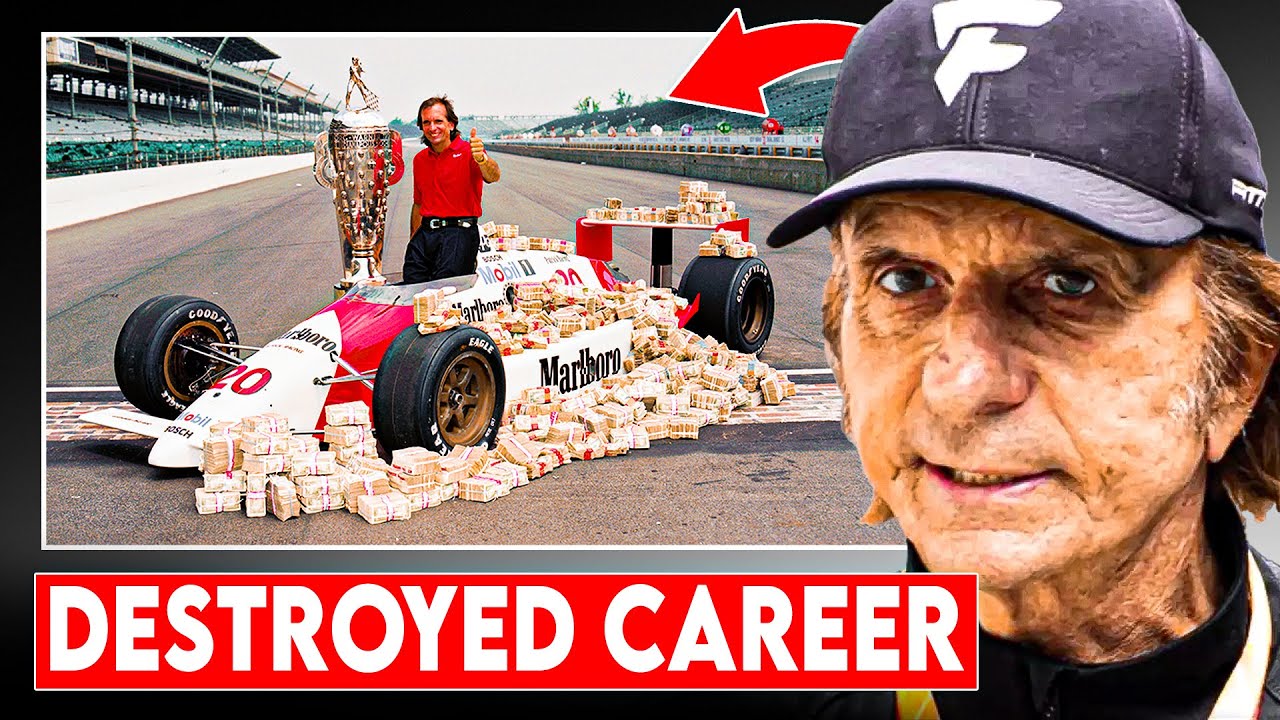
The tragic part of this fall from grace is his current, stated by his own legal team. In 2019, his lawyer had a legal petition and revealed that Fittipaldi, then 73, and unable to pay €2,000 in court fees, a mere fraction of his former fortune. The creditors placed a prohibition on his assets, including the car that won the Indianapolis 500, a history piece of his racing career and other trophies in his São Paulo museum.
In his defense, his lawyers have argued that his situation was and is dire. They expressed that the financial situation due to the assets being seized has become a troubling reality that shines a light on the larger and more profound trouble that many top-tier athletes face after their careers come to an end. The thread that turns from the highest peak to the lowest valley has struck the driver who was once constantly been subject to challenges.
The journey of Emerson Fittipaldi serves as a stark and unvarnished reminder that the glories of sport are ephemeral and leave no protection against the hazards of life and finance. The courtroom battles and the press reports detail a man who has fought against an unlikely opponent in retirement—a growing debt with his own personal inability to manage his former wealth. The racer who once pinpointed precise highs and lows on a circuit now navigates a more treacherous maze of legalities that he is seemingly ill-equipped to handle.
He once went from being the youngest champion in Formula 1 history to the 1996 CART series winner, yet now, his biggest legal troubles have stripped him of the trophies that marked his life and of his freedom.
This crisis is not unique to Fittipaldi but seems to a repeat of the common and troubling trend amongst elite athletes, who earn and lose vast fortunes in a tragic turn of scarcity. The story reveals the fragility of wealth, that when the income streams stop and the attention fades, a number of former titans find themselves caught in a downward spiral. The question, “How could a man with such massive earnings, race wins, and product endorsements find themselves unable to pay a mere amount in court costs?”
This is the defining story of his life today. There is a cruel irony in watching a man whose formula-1 career earned him millions, dominate the sport of the world, his count, now a testament to the financial mismanagement and that fate often deals a second and far less kind blow.
 As he celebrates his 77th year, the story remains a collision of contradictory narratives about the legend, and the ailing man, who is now. The racetrack gave the world everything, but after being forced to exit the course of speed, he was left with little. The loss of his right to to motor the cars, the loss of his collection and the loss of his will to move on from his painful physical and financial litigations, illustrate a story that is being played out in front of us.
The racing world will always remember Em for his unfathomable speed and his determination, but the new chapters of his life are less about the racetrack and more about a man trying to stay afloat in a sea of creditors and debt, still dreaming of a life that is as the money once was.
The ex-champion turned entrepreneur and private pilot, who broke barriers on the course, is now struggling under the weight of invaluable economic distress. The years of 2000 are turning faster than his final laps on a car he could ever execute. The story of Fittipaldi is a large and complex cautionary biography, that serves as a call to action for financial aid within athletes.
The blaring proof of his current status is the former champion, the man who raced so fluidly with an heart of fire, now living as a shadow, his path to the highest peaks being replaced by the challenges of an unforgiving economic system. The bids for life have not slowed, but they are keener on the ground as he deals with the injuries from the previous race and the fall from the sky.
His financial outcomes have been diminished, and his children, who are already in the racing world, remain an important part of the legacy, but the father, who achieved two rounds of the World Cup in F1 and one in a cart, now has the legal stigma and the world of the automobiles that he could not recapture on the track. He may have had a reputation for being a brave and a great racer, and due to this, his talent was unquestionable. Yet, no amount of talent on the track has been able to steer him clear of the oncoming collision in his personal life.
The question is whether the current times are a test, or if he will be able to navigate the curve and reach a safer haven, but the scenario to which in him. Now, a sadder and a more lonely existence, is the item that a fate of a lost champion.