The fallout from the 2026 U.S. Open is proving to be far bigger than anyone expected.
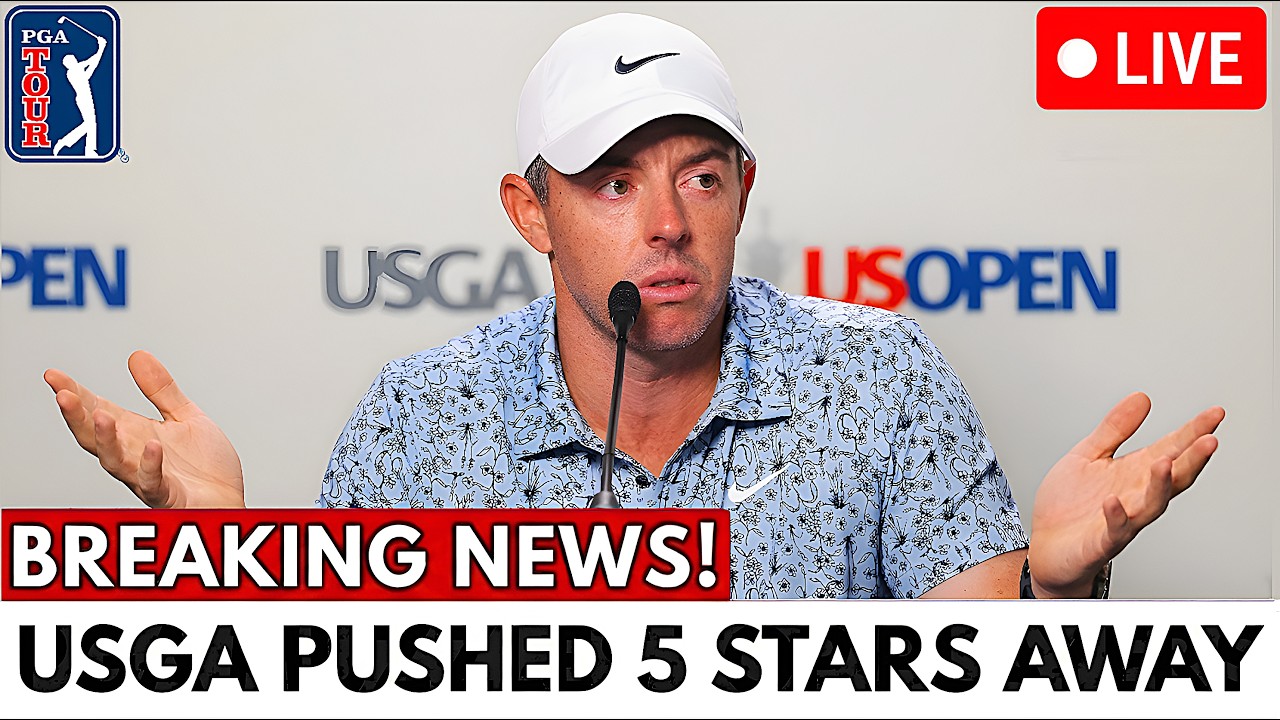
What began as two controversial officiating decisions at Shinnecock Hills has evolved into a debate that now stretches across the PGA Tour. With five of the sport’s biggest names absent from this week’s Travelers Championship and growing criticism surrounding the USGA’s handling of player conduct, questions about consistency, transparency, and fairness are dominating conversations throughout professional golf.
At the center of the controversy are two incidents that many players believe exposed an inconsistent application of the Rules of Golf.
The first involved Joaquin Niemann during the opening round of the U.S. Open.
After struggling on the difficult par-4 sixth hole, Niemann hit two drives out of bounds before finally finding the fescue. Frustrated after being denied relief from a fire ant nest and with play suspended due to darkness, he launched his club roughly 50 yards down the hole. The following morning, after signing his scorecard, Niemann was informed that the USGA had reviewed his conduct and issued him a two-stroke penalty under Rule 1.2a, the game’s Code of Conduct provision. His first-round score increased from 76 to 78.
The ruling immediately made headlines because it marked one of the most significant conduct penalties ever imposed during a major championship.
To Niemann’s credit, he responded brilliantly.
He fired a five-under 65 in the second round—the lowest score of the day—to make the cut before eventually finishing the championship at one over par. Afterward, Niemann accepted responsibility for his actions, admitting he wasn’t proud of the club throw and acknowledging that the penalty helped him reset mentally.
Not everyone agreed with the USGA’s decision.
Veteran coach Pete Cowen publicly criticized the ruling, arguing that similar emotional outbursts occur regularly without punishment. Cowen questioned why Niemann received a historic penalty based largely on eyewitness testimony while other players displaying comparable behavior escaped disciplinary action.
His biggest concern centered on consistency.
According to Cowen, the USGA’s explanation—that “not all throws are equal”—left too much room for subjective interpretation, making it unclear where officials draw the line between acceptable frustration and punishable misconduct.
That criticism gained even more momentum after footage emerged showing Jon Rahm kicking his driver repeatedly following an errant tee shot during the same championship.
Although the incident circulated widely online, the USGA took no public disciplinary action.
The contrast between Niemann’s two-stroke penalty and the lack of any announced response in Rahm’s case quickly fueled accusations of inconsistent enforcement.
The controversy didn’t stop there.
Throughout the U.S. Open, Wyndham Clark also remained under intense scrutiny following earlier incidents involving damaged lockers at Oakmont and several on-course emotional outbursts during the previous year. Yet despite continued public debate surrounding Clark’s behavior, no additional disciplinary action was announced.
By the time the championship ended, many inside golf were asking the same question:
How exactly is the Code of Conduct being enforced?
That uncertainty has carried directly into the Travelers Championship.
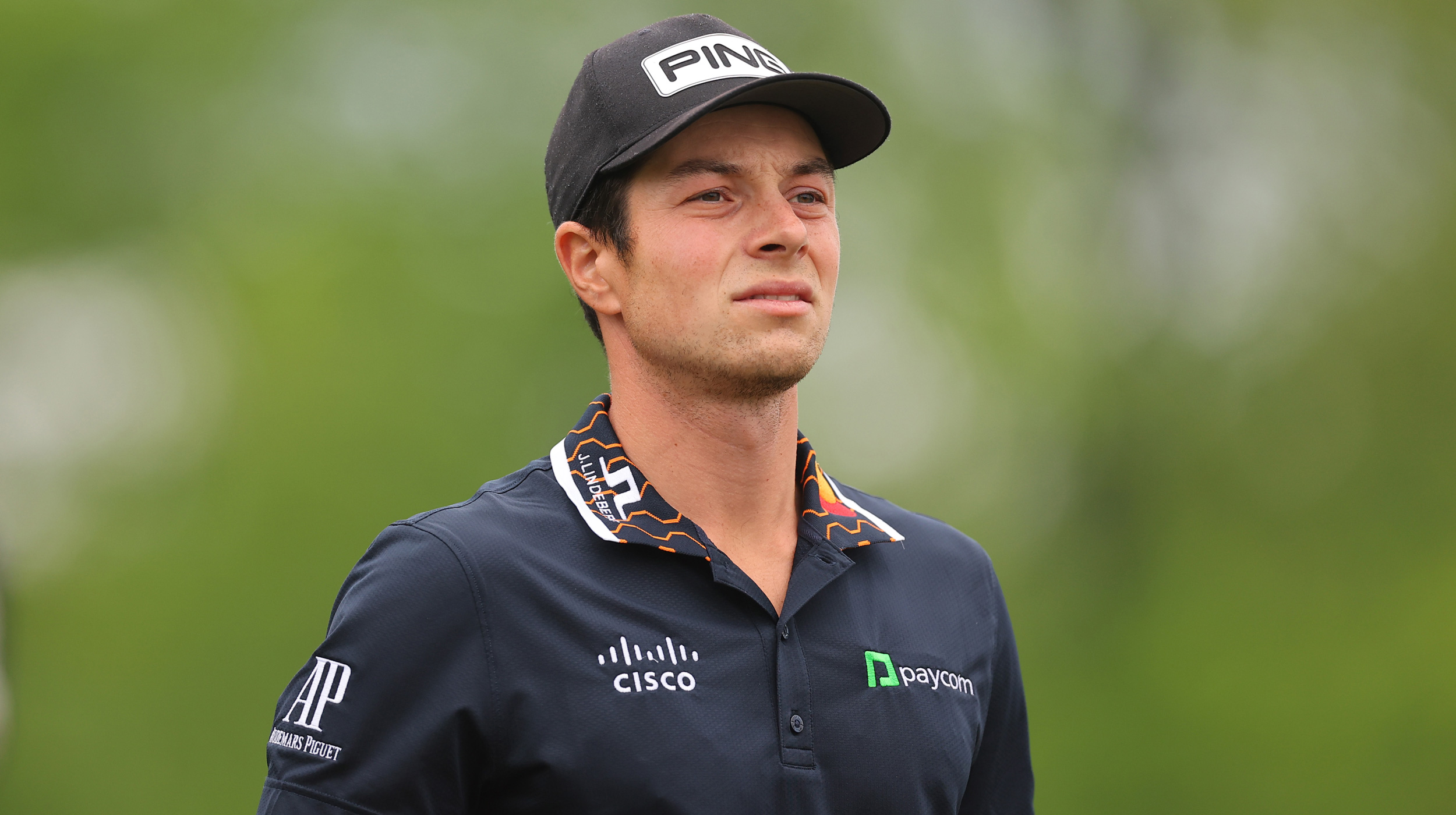
Five of the PGA Tour’s biggest stars—Rory McIlroy, Jordan Spieth, Collin Morikawa, Viktor Hovland, and Patrick Cantlay—are all absent from this week’s signature event. While each player has publicly cited scheduling decisions, workload management, or personal planning as reasons for skipping the tournament, their withdrawals have fueled speculation given how quickly they followed the events at Shinnecock Hills.
McIlroy, for example, has consistently maintained that he is reducing his tournament schedule after playing too much golf last season. His next scheduled appearance remains the Genesis Scottish Open ahead of The Open Championship. Similarly, Morikawa and Hovland have been selective with their schedules throughout the year, while Cantlay has long maintained an independent approach to PGA Tour commitments.
None of the five players has publicly linked their decision to skip the Travelers Championship to the USGA controversy.
Nevertheless, the timing has intensified discussion throughout the golf community.
According to the file, many conversations inside locker rooms have centered less on Niemann’s specific penalty than on uncertainty surrounding how similar incidents will be judged moving forward. Without published guidelines explaining why one player receives a penalty while another does not, concerns about inconsistent enforcement continue to grow.
As of now, the USGA has not issued additional clarification regarding how Rule 1.2a will be interpreted in future championships.
It has also not publicly addressed comparisons between Niemann’s penalty and other high-profile player outbursts that received no announced punishment.
That silence has become a story of its own.
With The Open Championship fast approaching, players know that emotions inevitably run high during major championships. Club throws, angry reactions, and visible frustration are hardly uncommon in professional golf.
What remains uncertain is where officials will draw the line the next time it happens.
Until the governing body provides greater clarity, debate over consistency and fairness is unlikely to fade.
And for many observers, the unusually depleted Travelers Championship field has only intensified scrutiny of a controversy that shows no sign of disappearing anytime soon.