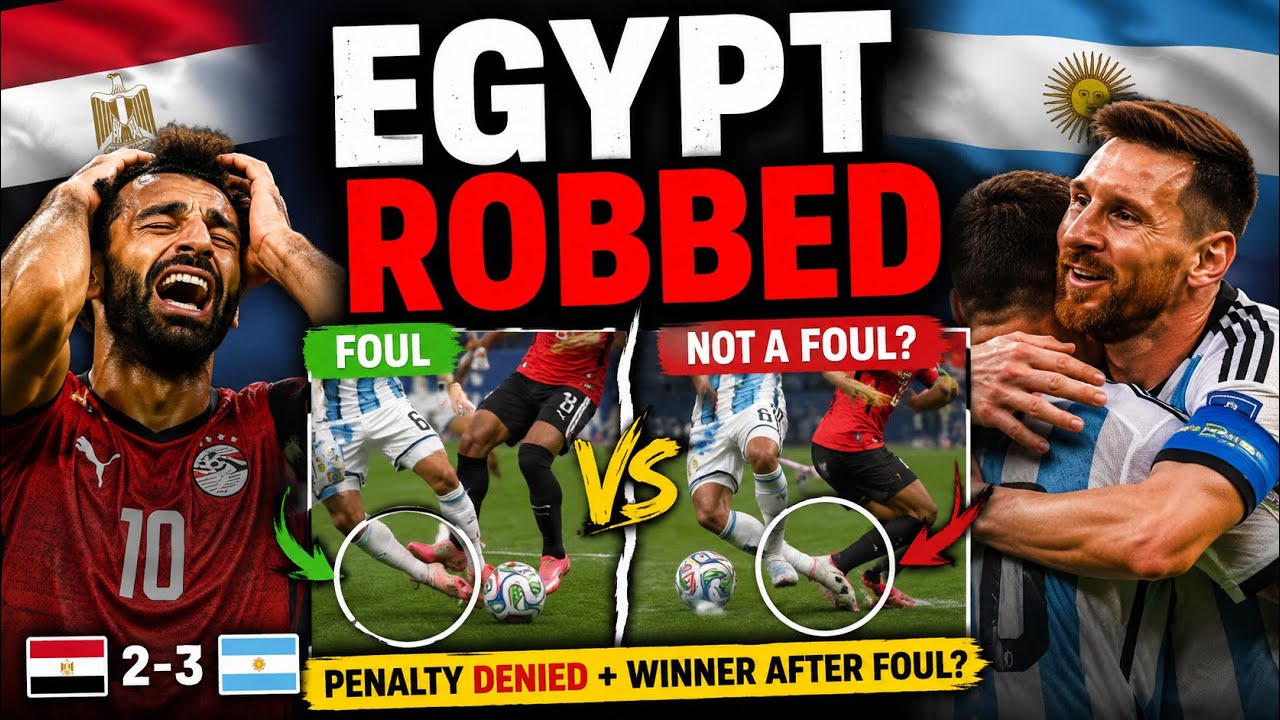
Mohamed Salah was controversially denied a penalty during the crucial Argentina vs Egypt World Cup clash, sparking outrage as Argentina’s match-winning goal followed immediately after. The referee’s inconsistent decisions have triggered fierce debate and protests, leaving Egypt’s players and fans feeling deeply wronged in a high-stakes elimination match.
In the tense round of 16 encounter, Egypt’s earlier goal was disallowed following a foul, setting a strict precedent. Yet, when Salah was clearly fouled in a similar manner mere moments before Argentina’s third goal, no penalty was awarded. The referee’s decision to wave play on has been slammed for inconsistency and unfairness.
The incident showed clear foot-on-foot contact, which impeded Salah’s attempt to win the ball. Such challenges typically warrant a penalty, or at the very least, a free kick. Instead, the referee allowed Argentina to counter-attack swiftly, leading to the decisive goal that sealed Egypt’s fate and ended their tournament run in heartbreaking fashion.
Fans, commentators, and Egyptian team officials have erupted in criticism, demanding accountability. The VAR and referee had already set a precedent by disallowing Egypt’s goal for a similar foul. Their failure to maintain consistent standards during such a pivotal moment is widely seen as a grave officiating error.
The emotional fallout for Egypt was immediate. Players’ protests at the referee’s call were met not with understanding but with red and yellow cards, escalating tensions on the field. Such disciplinary actions against justified complaints only intensified the sense of injustice felt across the Egyptian camp.
This controversial moment will undoubtedly be analyzed repeatedly in the days ahead. The lack of a penalty for Salah in identical conditions to the earlier foul overshadows the match outcome. It highlights ongoing concerns about refereeing consistency and VAR decisions in tournaments of this magnitude.
The referee’s failure to apply the same judgment twice in one match has sparked a fierce debate on fairness in the World Cup. For Egypt, it felt like a cruel twist of fate robbed them of a fair chance to challenge the football powerhouse Argentina on equal terms.
This match will be remembered not just for its on-field action but for the controversy that marred its conclusion. As Egypt exits the tournament, the controversy around Salah’s denied penalty will fuel further calls for officiating reforms and clearer application of video assistant referee technology.
Egypt’s team management denounced the decisions, citing the incident as a clear foul deserving of penalty recognition. Such calls are gaining momentum as experts dissect the footage and the rules, emphasizing the need for referees to uphold integrity in high-stakes matches.
The World Cup, a global stage of immense pressure and prestige, now faces scrutiny over officiating consistency that could influence outcomes dramatically. This latest debate exemplifies the challenges faced by referees balancing split-second judgments with the evolving standards of VAR technology.
As tournaments progress, the demand for transparency and fairness intensifies. The Egypt versus Argentina controversy serves as a stark reminder that technology and human decisions must align unequivocally to preserve the integrity of the sport.
Mohamed Salah’s denied penalty could become a landmark case, prompting FIFA and football authorities to revisit protocols surrounding fouls and video reviews. The incident throws into sharp relief the need for uniform interpretations of rules affecting critical moments.
The emotional toll on the Egyptian team runs deep, with players visibly frustrated and dismayed. Their World Cup journey ended not just by a formidable opponent but by questionable officiating choices that cast a shadow over their valiant performance.
Argentina’s victory, while deserved on talent, now carries an asterisk in the eyes of many fans and analysts. The match-winning goal’s legitimacy is questioned, underscoring the pivotal role referees play in shaping football history and tournament narratives.
This controversy also reignites conversations about the pressures referees face and the split-second nature of decisive calls on the pitch. It underscores the importance of consistency, especially when decisions can alter a team’s World Cup destiny.
In the aftermath, Egyptian supporters worldwide have voiced their disappointment on social media, demanding justice and accountability. Their frustration reflects a broader concern about fairness in international football competitions.
The spotlight now turns to FIFA and match officials to address this glaring inconsistency. Calls are mounting for clearer guidelines and stricter adherence to precedents to prevent similar controversies in future matches.
As the World Cup 𝒹𝓇𝒶𝓂𝒶 unfolds, the Salah penalty controversy serves as a potent reminder of football’s human element—where rules meet emotion, and where fairness must remain paramount to uphold the spirit of the game.
This incident could become a catalyst for renewed evaluations of referee training and VAR implementation worldwide. Ensuring equitable treatment on the pitch is critical as football continues to grow in global significance and viewership.
Egypt’s exit from the tournament, marked by this controversial moment, leaves a bitter aftertaste for the team and its supporters. Yet, it also ignites a crucial conversation about the refereeing standards that govern football’s grandest stages.
The match highlights the thin line between heartbreak and triumph in sports. Salah’s denied penalty and the referee’s inconsistent calls will be a major talking point, influencing how future matches are officiated and judged.
With the World Cup spotlight intensifying, this controversy adds fuel to ongoing debates about referee accountability and fairness in football. It underscores the urgent need for transparent and consistent officiating to preserve the competition’s credibility.
The Egypt-Argentina clash will be remembered not only for the scoreline but for the deep questions it raises about justice on the football field. The controversy surrounding Salah’s penalty denial stands as a powerful example of the game’s challenges at the highest level.
As the football community processes this contentious event, the call for reform grows louder. This moment could trigger significant changes designed to ensure that future World Cup matches are decided by skill and not by inconsistent refereeing decisions.