
Mein Sohn respektierte mich nicht – bis 300 Bundeswehr-Veteranen ihren Kommandeur salutierten
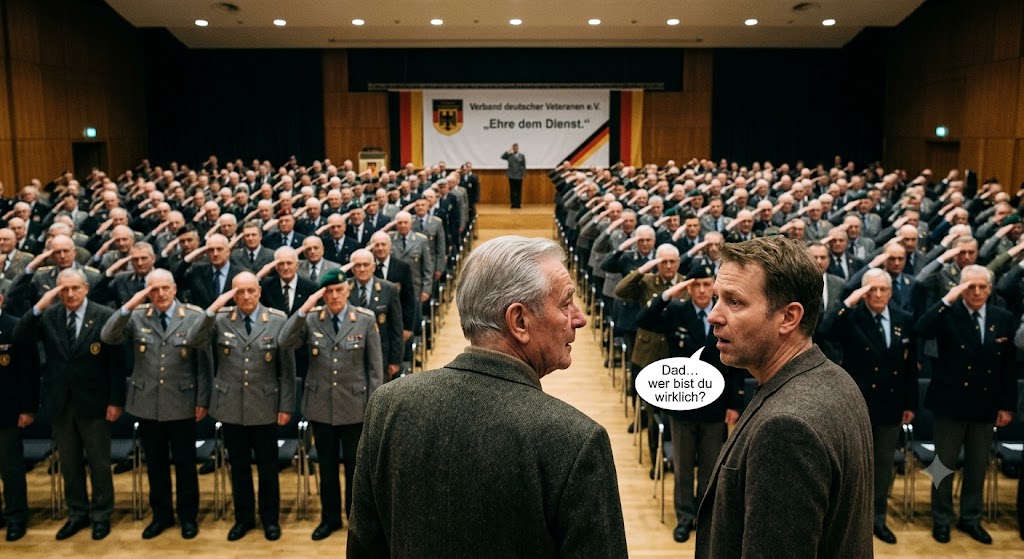
Niemand interessiert sich dafür, was du gemacht hast, schrieb mir mein Sohn. Lustig. Denn in dem Moment, als ich den großen Ballsaal der Nationalen Veteranen-Ehrung in Berlin betrat, erhoben sich mehr als 300 ehemalige Soldaten. Kein Wort. Kein Applaus. Sie standen einfach auf. Dann salutierten sie einer nach dem anderen. Der Raum wurde so still, dass man nur das Summen der Klimaanlage hörte. Ein pensionierter General kam auf mich zu, blieb drei Schritte entfernt stehen, nahm Haltung an und salutierte. „Willkommen zurück, Oberst.“
Erst dann schaute ich zur VIP-Tribüne. Mein Sohn Lukas war kreidebleich geworden. „Papa… wer bist du eigentlich?“
Drei Wochen zuvor.
Mein Name ist Friedrich Berger. Ich bin 68 Jahre alt, verwitwet und pensioniert. In unserem kleinen Ort bei Stuttgart kennt man mich als den ruhigen alten Mechaniker, der immer der Postbotin winkt und den Sonntagsgottesdienst nie auslässt. Morgens Kaffee, Zeitung, Vögel füttern. Danach helfe ich Nachbarn bei alten Traktoren oder Rasenmähern – meistens umsonst. Ein ruhiges Leben. Genau das, was meine Frau Anna sich immer gewünscht hatte.
Sie starb vor sechs Jahren an Brustkrebs. Das war schwerer als alles, was ich je erlebt hatte. Die Menschen denken, alte Soldaten reden ständig über die Vergangenheit. Ich nie. Meine Uniform, Orden und Fotos lagen seit Jahren verschlossen in einer alten Truhe im Schlafzimmer.
Leider interessierte sich mein Sohn Lukas (39) nie dafür. Er hatte eine erfolgreiche IT-Sicherheitsfirma in Stuttgart, schickes Haus, teures Auto, Golfclub. Ich war stolz auf ihn. Nur wünschte ich mir, er würde Erfolg nicht nur am Geld messen.
An einem Mittwoch kam die Nachricht: „Samstag Abendessen bei uns. Mama will die Familie zusammen haben.“ Kein Bitte. Nie. Ich antwortete: „Ich komme.“
Kurz darauf die zweite Nachricht: „Erzähl bitte nicht wieder diese alten Bundeswehr-Geschichten. Niemand kann damit etwas anfangen.“
Samstagabend fuhr ich mit meinem alten Passat in die noble Gegend. Liam, mein zehnjähriger Enkel, fiel mir um den Hals. Das machte die Fahrt wert. Lukas begrüßte mich mit einem geschäftsmäßigen Händedruck.
Bei Tisch saßen Geschäftspartner und Golfclub-Freunde. Als jemand fragte, was ich früher gemacht habe, antwortete ich: „Ich war bei der Bundeswehr.“ Ein höfliches „Ah“ – und das Thema war erledigt.
Später lachte einer über Militärausgaben im Fernsehen. Lukas stimmte ein: „Mein Vater tut immer so, als wäre die Bundeswehr ein großes Abenteuer gewesen. Wahrscheinlich hat er mehr Stiefel geputzt als Geschichte geschrieben.“ Alle lachten. Ich lächelte nur höflich.
Liam schaute verwirrt zwischen uns hin und her.
Auf der Heimfahrt war ich nicht wütend – nur traurig. Lukas hatte aufgehört, neugierig auf die Menschen zu sein, die ihn liebten.
Drei Tage später kam ein offizieller Brief vom Verteidigungsministerium. Ich war zur Nationalen Veteranen-Ehrung nach Berlin eingeladen und sollte den „Ehrenpreis für Lebenslanges Engagement“ erhalten. Eine handschriftliche Notiz lag dabei: „Viele Ihrer ehemaligen Soldaten haben sich persönlich dafür eingesetzt.“
Ich öffnete die alte Truhe. Der Geruch von Zedernholz stieg auf. Die Uniform lag noch genau so, wie Anna sie damals eingepackt hatte.
Lukas schrieb wieder: „Niemand interessiert sich mehr dafür, was du gemacht hast.“
Ich legte das Handy weg.
In Berlin angekommen, saß ich still in der ersten Reihe. Lukas und seine Familie waren als Sponsoren-Gäste da. Er schüttelte Hände, verteilte Visitenkarten – typisches Networking.
Dann begann die Ehrung. Der Moderator sagte: „Für mehr als 40 Jahre hat ein Mann jede öffentliche Auszeichnung abgelehnt… Oberst Friedrich Berger.“
Ich stand auf.
Und dann passierte es.
Der Moderator: „Alle, die jemals unter Oberst Berger gedient haben – bitte erheben Sie sich.“
Stühle scharrten. Erst einer, dann zehn, dann Hunderte. Über 300 ehemalige Soldaten standen auf – viele mit Stock, viele mit Prothesen, viele mit Tränen in den Augen. Dann salutierten sie alle gleichzeitig.
Ein vier-Sterne-General kam vom Podium direkt zu mir und salutierte: „Willkommen zurück, Herr Oberst. Sie haben mir damals das Leben gerettet.“
Im Saal war es totenstill.
Lukas war aufgestanden, ohne es zu merken. Sein Gesicht war aschfahl. „Papa… wer bist du?“
In der Pause erzählten mir ehemalige Soldaten ihre Geschichten: Der eine, dem ich nach einer Verwundung beigestanden hatte. Der andere, dessen Mutter ich die Beerdigung bezahlt hatte. Wieder ein anderer, den ich nachts hatte lernen lassen, obwohl er fast rausgeflogen wäre – heute hat er eine eigene Werkstattkette.
Lukas hörte zu. Zum ersten Mal ohne Geschäftsmaske.
Abends saßen wir in einem kleinen Café. Er sagte leise: „Ich dachte immer, Größe bedeutet, der Erfolgreichste im Raum zu sein.“
Ich lächelte. „Viele denken das. Aber was bleibt, sind die Menschen, deren Leben besser geworden ist, weil du da warst.“
Zurück in Stuttgart änderte sich etwas. Lukas kommt jetzt regelmäßig. Liam will mit mir angeln gehen. Und einmal im Monat besuche ich noch immer verwundete Kameraden.
Anna hatte immer gesagt: „Die größte Auszeichnung ist nicht der Orden, sondern dass die Menschen, die du nach Hause gebracht hast, ein gutes Leben führen.“
Sie hatte recht.
Manchmal ist die größte Genugtuung nicht Rache, sondern dass die Wahrheit schließlich ans Licht kommt – und dein Sohn endlich die Augen öffnet.


