For millions of viewers, The Andy Griffith Show represented the ideal small-town America—a place where problems were solved with kindness, neighbors looked after one another, and laughter came naturally. On screen, Mayberry felt timeless and unchanging.
Behind the scenes, however, life was moving forward.
Actors pursued new opportunities, personal health battles emerged, and unexpected career decisions gradually reshaped one of television’s most beloved casts. Years later, Don Knotts reflected on many of those departures, revealing that most were driven not by conflict or scandal, but by circumstances few viewers ever realized.
When The Andy Griffith Show premiered in 1960, neither Andy Griffith nor the producers expected it to become one of the defining sitcoms of American television. The chemistry between Griffith’s calm Sheriff Andy Taylor and Don Knotts’ nervous but lovable Deputy Barney Fife quickly became the heart of the series.
Barney’s exaggerated confidence, endless misunderstandings, and genuine loyalty made him an instant fan favorite.
Ironically, the character who became almost inseparable from Mayberry nearly disappeared because of a misunderstanding.
As the fifth season approached, Don Knotts believed the series was preparing to end. According to Knotts, he had been given the impression that Andy Griffith intended to conclude the show after five years. Wanting to secure his future, Knotts accepted a film contract with Universal Studios.
Only afterward did he discover that CBS wanted the series to continue.
By then, his contract prevented him from remaining as a regular cast member.
Years later, Knotts admitted that had he known The Andy Griffith Show would continue beyond its fifth season, he almost certainly would have stayed.
His departure was not caused by creative disagreements or personal resentment.
It was simply the result of unfortunate timing.
Although Barney Fife left as a regular character, Knotts returned for several guest appearances during the later seasons, and those episodes remain some of the series’ most memorable.
Another beloved resident of Mayberry also left because his popularity became impossible to ignore.
Jim Nabors introduced audiences to Gomer Pyle as a simple, kind-hearted gas station attendant whose distinctive voice and innocent outlook quickly made him one of television’s breakout characters.
Viewers embraced Gomer so enthusiastically that CBS developed an entirely new series around him.
In 1964, Nabors departed Mayberry to star in Gomer Pyle, U.S.M.C., where the character’s military adventures became another major television success.
His departure reflected the show’s remarkable ability to create characters audiences wanted to follow long after leaving Mayberry.
Not every departure, however, resulted from growing success.
Elinor Donahue, who portrayed pharmacist Ellie Walker during the first season, quietly exited the series after concluding that the role simply was not the right fit.
Donahue later explained that she never felt entirely comfortable within the show’s established rhythm. Much of the early attention naturally centered on Andy Griffith and Don Knotts, making it difficult for her character to develop the same strong identity.
There was no dramatic backstage conflict.
She simply believed the role was not working as she had hoped.
The writers gradually phased Ellie out, and the series continued without introducing another long-term romantic interest for Sheriff Taylor until years later.
One of the most heartbreaking departures involved Howard McNear, who played the gentle barber Floyd Lawson.
McNear’s warm humor and distinctive voice made Floyd one of Mayberry’s most recognizable citizens. But during the series, the actor suffered a serious stroke that significantly affected his mobility.
Rather than replacing him immediately, the production adapted.
Directors carefully staged scenes so McNear could remain seated whenever possible, minimized physical movement, and adjusted filming techniques to accommodate his health.
The accommodations allowed him to continue appearing for a time, but as his condition worsened, retirement eventually became unavoidable.
His departure reflected the compassion the production often showed its cast rather than a simple business decision.
Another beloved figure whose later appearances became limited was Frances Bavier, remembered forever as Aunt Bee.
Throughout the series, Bavier portrayed the caring, patient aunt who helped transform the Taylor household into one of television’s most beloved families.
After the original series ended, however, declining health gradually limited her public appearances.
Although reunion projects brought many familiar faces back together, Bavier was unable to participate in several of them because of ongoing medical issues.
Her absence was deeply felt by longtime fans.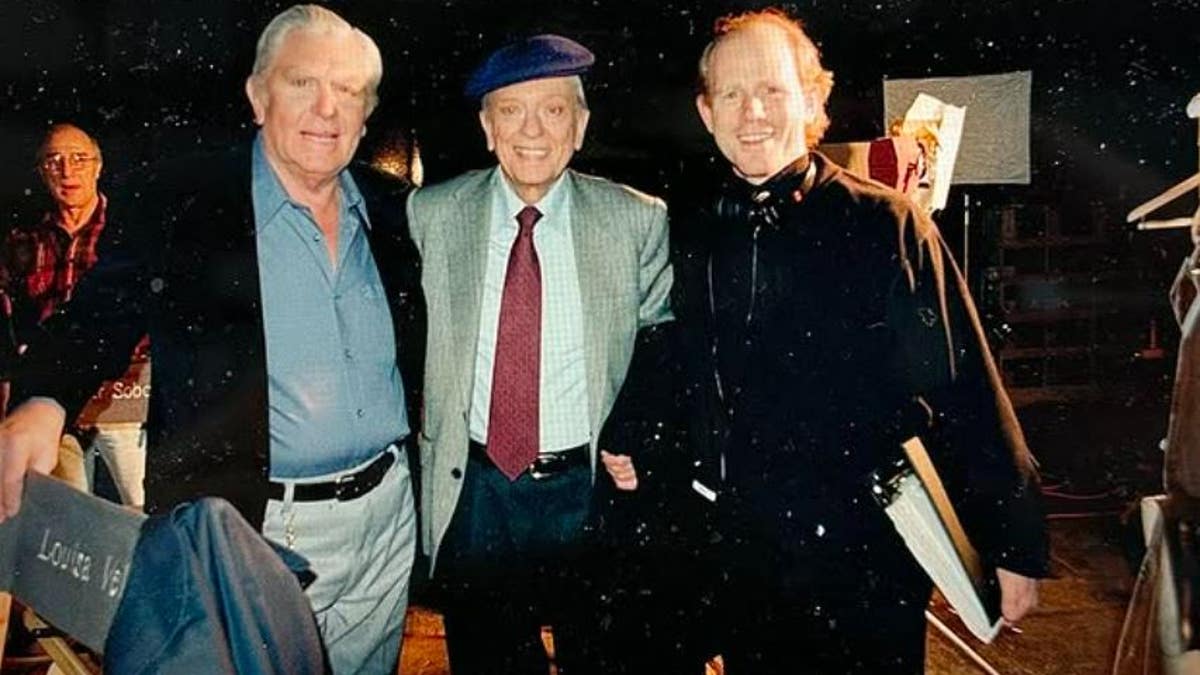
The series itself continued evolving after Barney’s departure.
Color episodes replaced black-and-white photography, new characters joined the town, and Andy Taylor’s world gradually changed. Yet despite those adjustments, the heart of Mayberry remained remarkably intact.
By the late 1960s, The Andy Griffith Show had become one of the highest-rated programs on American television.
Most series would have continued as long as possible.
Instead, Andy Griffith made an unexpected decision.
After eight seasons, despite the show’s extraordinary popularity, Griffith chose to move on and pursue new creative opportunities rather than allow the series to continue indefinitely.
His decision surprised CBS executives, who were eager to keep one of their biggest hits on the schedule.
Without Griffith, continuing The Andy Griffith Show in its original form no longer seemed possible.
The network instead launched Mayberry R.F.D., allowing many supporting characters to remain while acknowledging Sheriff Taylor’s departure.
Although successful in its own right, many viewers understandably associated Mayberry most strongly with Andy, Barney, Aunt Bee, Opie, and the familiar community they had grown to love throughout the 1960s.
Looking back, what makes these departures remarkable is how little bitterness accompanied them.
Unlike many television productions remembered for public feuds or contractual battles, The Andy Griffith Show largely changed because life itself changed.
Careers expanded.
Health declined.
Opportunities emerged.
People simply reached different chapters of their lives.
Don Knotts remained close to Andy Griffith for decades, frequently reuniting with him for television specials and interviews. Their friendship endured long after the cameras stopped rolling, proving that Barney and Andy’s remarkable chemistry reflected genuine affection between the actors themselves.
Today, The Andy Griffith Show continues to attract new generations of viewers not because every cast member remained forever, but because each performer left an unforgettable contribution to Mayberry.
Don Knotts gave the world one of television’s greatest comic characters.
Jim Nabors transformed a supporting role into a cultural icon.
Howard McNear demonstrated extraordinary perseverance.
Frances Bavier embodied warmth and compassion.
Andy Griffith created a world audiences still long to visit.
Their departures were never signs that something had gone wrong.
They were simply reminders that even television’s happiest small town could never stop time.