For generations of movie lovers, Paul Newman represented the very best of Hollywood—charismatic, talented, and effortlessly cool. But behind the famous blue eyes was a man who openly wrestled with insecurity, personal loss, and the constant feeling that he never quite deserved the admiration he received.
In recent years, renewed interest in Newman’s life—through his posthumous memoir, documentaries, and reflections shared by members of his family—has offered a more complete picture of the actor behind the legend. Rather than uncovering shocking secrets, these accounts reveal a man whose greatest battles were often the ones no audience could see.
Born in 1925 in Cleveland Heights, Ohio, Newman grew up working in his family’s sporting goods store before serving in the U.S. Navy during World War II. A fortunate change in assignment prevented him from joining a crew that later suffered devastating losses aboard the USS Bunker Hill. Newman often regarded that twist of fate as giving him a second chance at life.
After returning from military service, he abandoned plans for a business career and devoted himself to acting. He studied at the Yale School of Drama before refining his craft at New York’s famed Actors Studio, where he embraced method acting alongside a new generation of performers.
Although his first major film, The Silver Chalice (1954), was a disappointment in his own eyes, Newman quickly established himself as one of Hollywood’s finest leading men. Performances in Somebody Up There Likes Me, Cat on a Hot Tin Roof, The Hustler, Hud, and Cool Hand Luke transformed him into one of the defining actors of his era.
His partnership with Robert Redford further elevated his status. Together they starred in Butch Cassidy and the Sundance Kid (1969) and The Sting (1973), two classics that remain among the most beloved films in American cinema.
Away from the screen, however, Newman often struggled with feelings that surprised even those closest to him.
In The Extraordinary Life of an Ordinary Man, a memoir assembled from extensive interviews he recorded during his lifetime, Newman admitted that he frequently felt like an impostor despite decades of success. He questioned his own talent, worried that he could never live up to the image others had created, and acknowledged that alcohol became a way of coping with those insecurities.
One constant source of strength was his marriage to actress Joanne Woodward.
Married in 1958, the couple remained together for fifty years until Newman’s death in 2008. Their relationship became one of Hollywood’s most admired partnerships, built on mutual respect, shared artistic passion, and a determination to protect their family from the pressures of celebrity.
Even so, tragedy touched their lives in 1978 when Newman’s son, Scott Newman, died from an accidental drug overdose at the age of 28.
The loss devastated Newman.
Friends and family have described Scott’s death as a turning point that profoundly changed the actor. Determined to help prevent similar tragedies, Newman established the Scott Newman Center, dedicated to educating young people about the dangers of substance abuse.
Outside of acting, Newman discovered another passion that became almost as important as filmmaking.
He developed into a highly respected race car driver, competing professionally well into middle age. In 1979, he finished second in class at the legendary 24 Hours of Le Mans, later co-founding Newman/Haas Racing, one of the most successful teams in American open-wheel racing.
Yet perhaps his greatest achievement came through philanthropy.
In 1982, Newman launched Newman’s Own, expecting it to be a modest food business. Instead, it became a global brand with a unique mission: donating all after-tax profits to charity. Over the decades, the company has contributed hundreds of millions of dollars to organizations supporting children, education, medical research, nutrition, and humanitarian causes.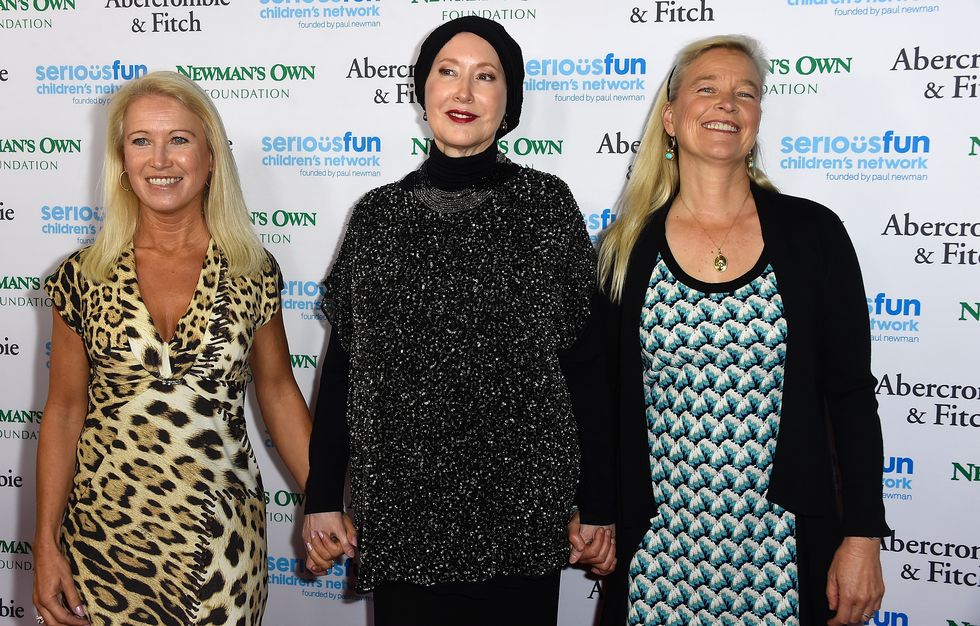
He also helped establish what is now the SeriousFun Children’s Network, providing life-changing camp experiences for children living with serious illnesses around the world.
Those closest to Newman have consistently described a man who never stopped trying to improve himself. While he recognized his shortcomings and openly admitted his mistakes, he devoted the later years of his life to helping others in ways that far outlasted his film career.
Today, Paul Newman is remembered not only as one of Hollywood’s greatest actors, but also as an individual who transformed fame into meaningful service.
His films continue to entertain millions.
His charitable work continues to improve lives.
And the reflections shared by his family remind us that even icons carry private doubts—and that true greatness is often measured not by perfection, but by the compassion we leave behind.
💭 Which part of Paul Newman’s legacy inspires you most—his unforgettable films, his racing career, or the extraordinary charitable work of Newman’s Own? Share your thoughts below. 🎥👇
#PaulNewman #ClassicHollywood #JoanneWoodward #NewmansOwn #ClassicMovies #HollywoodHistory #MovieLegends #EntertainmentNews 🎬✨