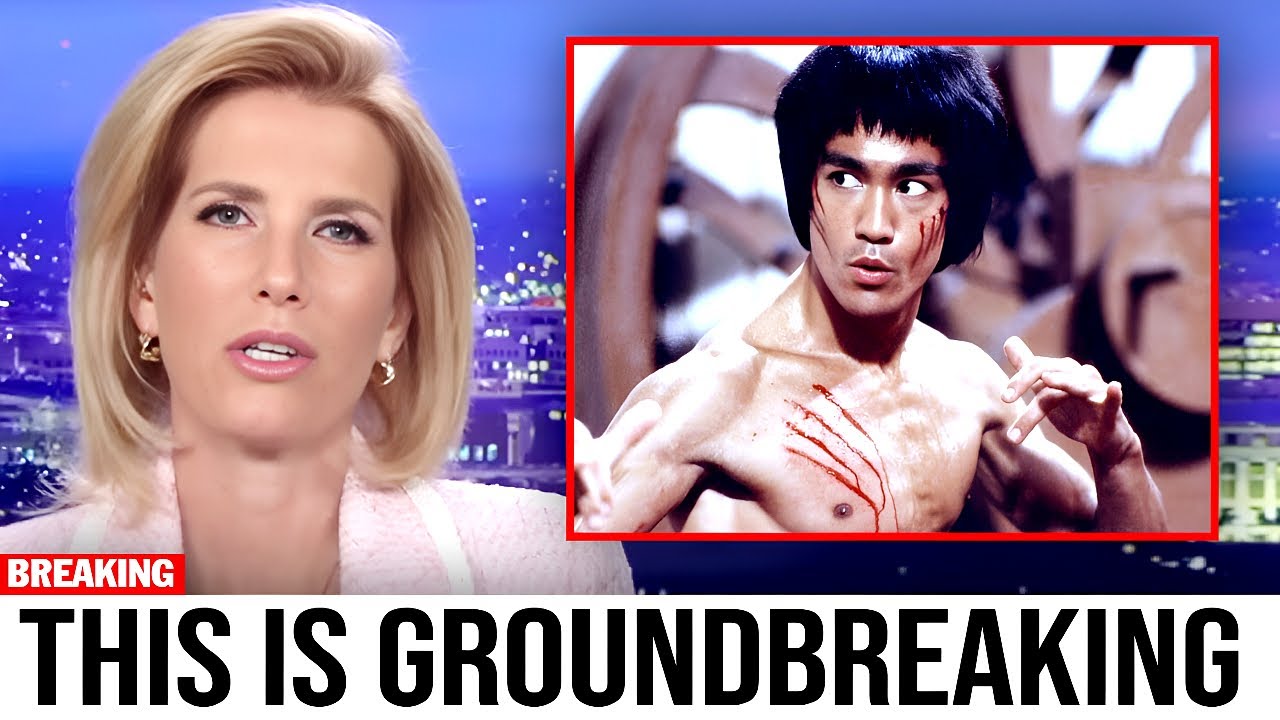
Fifty-two years after Bruce Lee collapsed and died in a Hong Kong apartment, the world finally has an answer to the question that has haunted martial arts fans, medical experts, and conspiracy theorists alike. The legendary action star did not die from a single cause. He died from a deadly chain of events that his own body could no longer withstand — and the truth is far less glamorous than the myths.

The official 1973 autopsy listed cerebral edema, swelling of the brain, as the cause of death. But that diagnosis only described the final symptom, not the underlying reason. For decades, the public has speculated about everything from a mafia hit to an allergic reaction to a painkiller.
Now, a convergence of medical research, historical records, and expert analysis has pieced together the full picture.
Bruce Lee was 32 years old when he walked into the apartment of actress Betty Ting Pei on July 20, 1973. He was there to discuss the script for “Game of Death” with producer Raymond Chow.
The meeting was relaxed. Lee seemed healthy. But after complaining of a headache, he took a painkiller called Equagesic and lay down for a nap.
He never woke up.
The immediate reaction was disbelief. How could a man at the peak of physical condition, a man who performed one-inch punches and two-finger push-ups, die from a simple headache pill?
The medical report said it was a rare allergic reaction to the medication. But questions lingered, and the circumstances of his death only fueled more speculation.
Lee died in the bedroom of a young actress while his wife, Linda, was at home.
The headlines wrote themselves. Was there an affair? Was Betty Ting Pei hiding something?
The media frenzy devastated Ting Pei, who spent years defending herself against accusations that she had something to do with Lee’s death. She maintained that they were close friends and nothing more.
But the mystery of what actually killed Lee was far more complex than a romantic scandal.
Two months before his death, Lee had collapsed on the set of “Enter the Dragon” with the same symptoms: headache, dizziness, and brain swelling. He was hospitalized and recovered. Tests showed cerebral edema.
Yet no serious follow-up was conducted, and no preventive measures were put in place.
That earlier collapse was the first warning sign. Lee’s brain had already shown a dangerous tendency to swell under certain conditions.
But without a clear understanding of what triggered it, doctors sent him back to work. The warning was overlooked. And just over two months later, the same reaction proved fatal.
Then there is the surgery. In 1972, Lee underwent a procedure to remove the sweat glands from his armpits. His motivation was cosmetic.
He wanted to look dry and camera-ready during filming in Hong Kong’s brutal humidity. But the surgery came with a hidden cost. Without the ability to sweat from his underarms, Lee’s body struggled to regulate its temperature.

Hong Kong summers are notoriously hot and humid. Lee was constantly training, rehearsing, and filming in these conditions. His body was under immense thermal stress.
The lack of sweat glands meant his natural cooling system was compromised. This placed a dangerous burden on his internal organs, including his brain.
The final piece of the puzzle emerged in 2022 when a team of Spanish kidney specialists published a new theory.
They proposed that Lee died from hyponatremia, a condition caused by drinking too much water. When fluid intake exceeds the kidneys’ ability to process it, sodium levels in the blood drop dangerously low, leading to swelling in the brain.
According to the study, Lee had a habit of consuming massive amounts of liquid throughout the day.
Water, juice, and protein shakes were all part of his routine. During intense training sessions, he would drink constantly. This overhydration, combined with his impaired cooling system and previous brain swelling, may have created the perfect storm.
The theory gained credibility because it explained all the symptoms Lee experienced. Headache, dizziness, confusion, and eventually unconsciousness are all classic signs of hyponatremia. The brain swells because water rushes into brain cells in response to the sodium imbalance.
In severe cases, the swelling becomes fatal, exactly as it did for Lee.
Bruce Lee biographer Matthew Polly had earlier proposed a heat stroke theory, pointing to the sweat gland removal as the root cause. The Spanish researchers built on this idea, arguing that overhydration was the final trigger.
Combined with Lee’s history of brain swelling, these factors formed a deadly trio.
The irony is staggering. Bruce Lee was known for his absolute control over his body.
He pushed physical limits that seemed superhuman. He preached efficiency, adaptability, and the philosophy of being like water. And yet, in the end, his body failed him in the most ordinary way possible.
He overheated. He drank too much. And he never woke up.
No assassin. No secret drug. No curse.
The warrior who conquered the screen and redefined martial arts was brought down by an invisible combination of factors that his body simply could not handle. The medical consensus now leans heavily toward this explanation, even though the official death certificate from 1973 still lists only cerebral edema.
 What makes this revelation particularly difficult for fans is the sheer banality of the cause.
We want our heroes to fall in battle, to be taken down by worthy adversaries or dramatic circumstances. Bruce Lee’s death was neither heroic nor theatrical. It was a physiological cascade that could have been prevented with proper medical follow-up and awareness.
The tragedy did not end with Bruce. His son, Brandon Lee, was destined for stardom. At 28 years old, he was filming “The Crow” when a prop gun fired a live round during a scene.
Brandon was struck in the abdomen and bled to death on March 31, 1993. He was the same age his mother had been when Bruce died. The Lee family was marked by a second, equally devastating tragedy.
Linda Lee Cadwell, Bruce’s widow, spent decades preserving her husband’s legacy. She raised Brandon and Shannon while facing intense media scrutiny. She has rarely spoken about the details of Bruce’s death, but she has consistently rejected the scandalous rumors.
She maintained that Bruce loved his family and was dedicated to his work, whatever the circumstances of his final hours suggest.
Shannon Lee, Bruce’s daughter, now leads the Bruce Lee Foundation. She has dedicated her life to protecting and promoting her father’s philosophy.
She also produced the television series “Warrior,” based on a concept Bruce pitched decades ago. She has spoken openly about the pain of losing her father at age four and her brother at a tragically young age.
The question that remains is simple.
Why did it take 50 years for the truth to emerge? The answer lies in the way medicine, society, and media handle the death of a celebrity. A young, famously fit man dies suddenly in the apartment of a controversial actress.
The public demands a dramatic explanation. The media delivers scandal and speculation. Science takes decades to catch up.
Today, the evidence is clearer than ever. Lee’s May 1973 collapse demonstrated his vulnerability to cerebral edema. His sweat gland removal compromised his thermoregulation.
His excessive fluid intake overwhelmed his kidneys. Each factor alone might not have been fatal. Together, they were lethal.
This is the most complete and medically sound explanation for his death.
The story of Bruce Lee’s death is also a cautionary tale about the pressure to look perfect. Lee removed his sweat glands because he wanted his on-screen image to be flawless.
 He pushed his body beyond its natural limits because he believed discipline could overcome biology. In the end, those very choices may have cost him his life.
There are lessons here that go far beyond martial arts.
The importance of listening to your body. The danger of ignoring warning signs. The risk of medical procedures performed for purely cosmetic reasons.
And the very real dangers of overhydration, a condition that is rarely discussed but can be profoundly dangerous.
For fans of Bruce Lee, the news is difficult to accept. The idea that the greatest martial artist who ever lived was defeated by heat, water, and a pair of removed sweat glands feels almost insulting.
But it is also a testament to his humanity. Bruce Lee was not a superhero. He was a man who pushed himself to the absolute edge of what was possible.
The final chapter of the Bruce Lee mystery is now written. The answer is not good. It is not scandalous.
It is not heroic. It is a medical tragedy that was potentially preventable. And it serves as a reminder that even the strongest among us are vulnerable to forces we cannot always see.
In the decades since his death, Bruce Lee’s legacy has only grown. His films, his philosophy, and his physical genius continue to inspire millions. But the truth about his final moments remains a sobering counterpoint to the legend.
The dragon did not fall in battle. He was betrayed by his own body, and the world has spent half a century trying to understand why.
Now, at last, we do.
And the answer, while unglamorous, brings a kind of closure. Bruce Lee died because his body, remarkable as it was, reached its breaking point. The combination of previous brain swelling, impaired cooling from sweat gland removal, and overhydration from excessive fluid intake created a lethal condition that no amount of martial arts mastery could overcome.
The mystery is solved. The truth is not what fans wanted to hear. But it is the truth, and after 52 years, it deserves to be told.