Steve Harvey has broken more than three years of silence about Sean “Diddy” Combs, but the timing and tone of his comments have triggered a wave of criticism that he is only speaking now that the embattled music mogul is in federal custody. During an appearance on the Chris Fade podcast, Harvey framed Diddy’s legal troubles as a “cautionary tale” for young men, urging them to be gentlemen and lead with kindness, while directly referencing the hotel surveillance footage showing Combs assaulting his then-girlfriend Cassie Ventura. Harvey’s remarks were met with immediate backlash, as critics pointed to his own close relationship with Diddy, which included public praise and joint family vacations. In 2017, Harvey posted a tweet calling Diddy his “brother” and praising his work with young people.
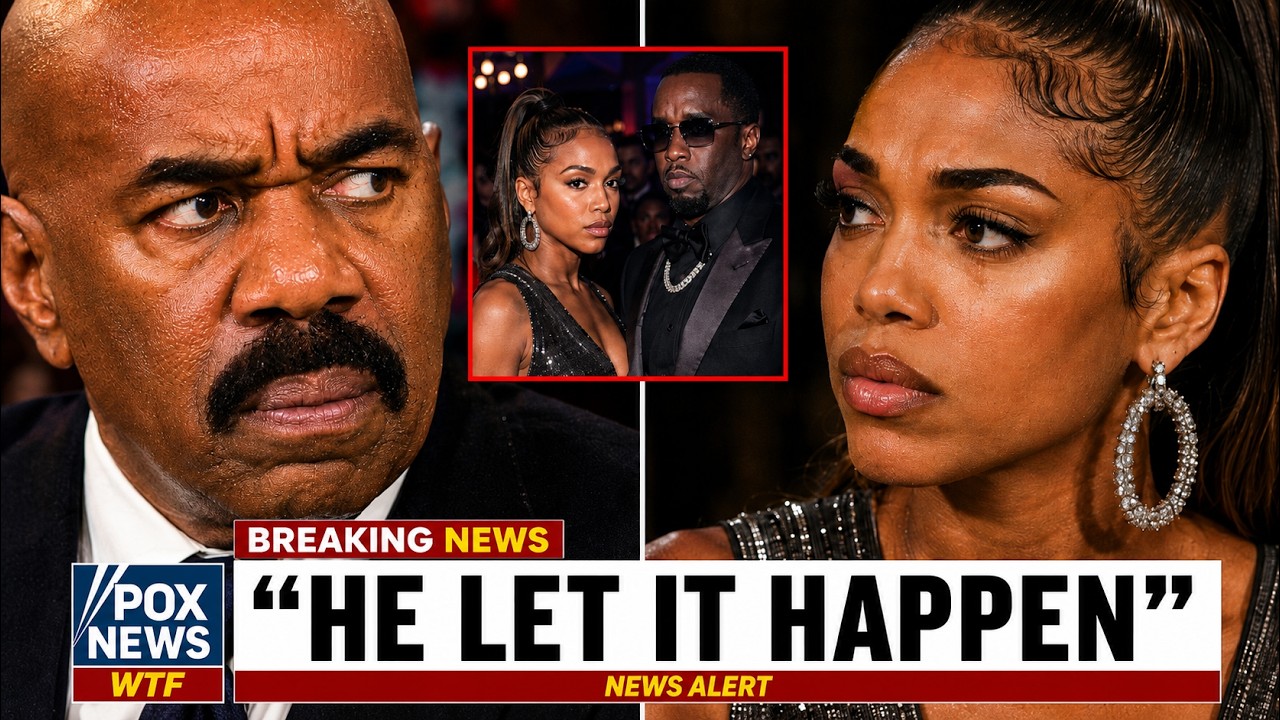
That tweet has since been quietly deleted without explanation. The criticism intensified because Harvey’s own daughter, Lori Harvey, was 22 years old when she was publicly linked to the then-49-year-old Diddy, a relationship that Harvey appeared to bless. Footage of Lori kissing Diddy at a dinner table with her father sitting across from them has resurfaced in light of Harvey’s recent comments. This is not the first time Harvey has been accused of hypocrisy regarding his public persona versus his private dealings.
Comedian Mo’Nique publicly confronted Harvey on his own platform, alleging that he privately told her she was not wrong in her fight against Hollywood blackballing, only to publicly criticize her approach and tell her she had “burnt too many bridges. ” She claimed he advised her that speaking the truth in Hollywood costs money, effectively telling her to make herself more palatable to industry executives. The renewed scrutiny of Harvey has also brought attention to two comedians who warned about him and the industry long before it became mainstream conversation. Paul Mooney, the legendary writer for Richard Pryor and Redd Foxx and a key figure on “Chappelle’s Show,” spoke for decades about how Hollywood embraces only the Black entertainers who think like white executives and keep white audiences comfortable.
In a resurfaced 2008 interview, Mooney laid out this dynamic explicitly, arguing that the only Black comedian the industry truly supports is one who adopts the values of those in power and never challenges the structure. Mooney’s critique was echoed by Cat Williams, who spent years warning about Diddy, R. Kelly, and Harvey Weinstein. Williams, who was frequently dismissed as paranoid and unstable, was vindicated after the federal indictment against Diddy and the release of the Cassie assault video.
Both Mooney and Williams were marginalized for speaking out, a pattern that critics say reveals how the industry shields its most valuable players while burying those who refuse to stay silent. Harvey’s career has been built on a different model. He has openly stated that more than half of his daytime audience is white and that his show is not an African-American show. He has said he never mentions color in his books.
Public comments from earlier in his career, including a statement that Hollywood is “still very racist,” suggest he understands the system he operates within. Yet his public silence on systemic issues such as police brutality and racial injustice has drawn repeated criticism. Mo’Nique’s confrontation with Harvey is often cited as the clearest example of how he treats Black women who speak up. She revealed that several powerful figures, including Oprah Winfrey, Tyler Perry, and Lee Daniels, told her privately that she was not wrong, but none of them would publicly support her.
Harvey, she said, was among those who knew she was right but chose to distance himself. The current controversy centers on whether Harvey’s moral lectures about Diddy are credible given his own history. His silence during three years of mounting allegations against Diddy, followed by a sudden willingness to speak once the public perception had settled and Combs was behind bars, is being widely described as calculated rather than courageous. Those who have followed Harvey’s career point out that he has consistently adapted his message to whatever kept him employed within the industry.
Paul Mooney, who died in 2021, never wavered from his position that comedy and personal integrity could not be separated. He refused to perform a caricature of Blackness for mass consumption, a stance that made him a threat to the industry’s fundamental model. Cat Williams continues that tradition, having faced professional consequences for years before his warnings were validated. Both men represent an alternative path that Harvey never took, one that values speaking truth over maintaining access to power.
As legal proceedings against Diddy continue, Harvey’s recent statements are unlikely to end the conversation. Every resurfaced clip and deleted post adds to a record that undermines his attempt to position himself as a moral authority. Whether this damages his standing permanently remains to be seen, but the contradiction between his public advice and his documented behavior has never been more difficult to ignore.