On January 13, 2015, a small conservative Christian blog published an open letter aimed at Lifeway and the publishers, sellers, and promoters of “heaven tourism” books. The most shocking part was the name at the bottom: Alex Malarkey, the boy once presented to the world as the child who came back from heaven. The letter was brief, and the writer apologized for its shortness, explaining that his physical limits made long writing difficult. Then came the words that broke the story apart: “I did not die.
I did not go to heaven. ”
Alex confessed that he had claimed to visit heaven because he believed the attention would make people notice him. At the time, by his own admission, he had never read the Bible. He said people had made money from those claims and were still making money from lies.
His message was simple: read the Bible instead. Alex Malarkey was 16 years old when that letter appeared. He was also a quadriplegic, paralyzed from the neck down, and unable to type the letter himself. A pastor in Montana helped him over the phone for weeks, taking down his words and shaping the final version with him night after night.
The book Alex was rejecting was called The Boy Who Came Back from Heaven. It had sold more than one million copies and spent months on the New York Times best-seller list. Churches talked about it. Families believed it.
Christian bookstores had placed it in front of believers who wanted proof that heaven was close. Within three days of the letter, the publisher pulled the book from print. Within two months, the biggest chain of Christian bookstores in America announced that it would stop selling experiential heaven testimony books altogether. A genre that had filled front tables across the country suddenly began to collapse.
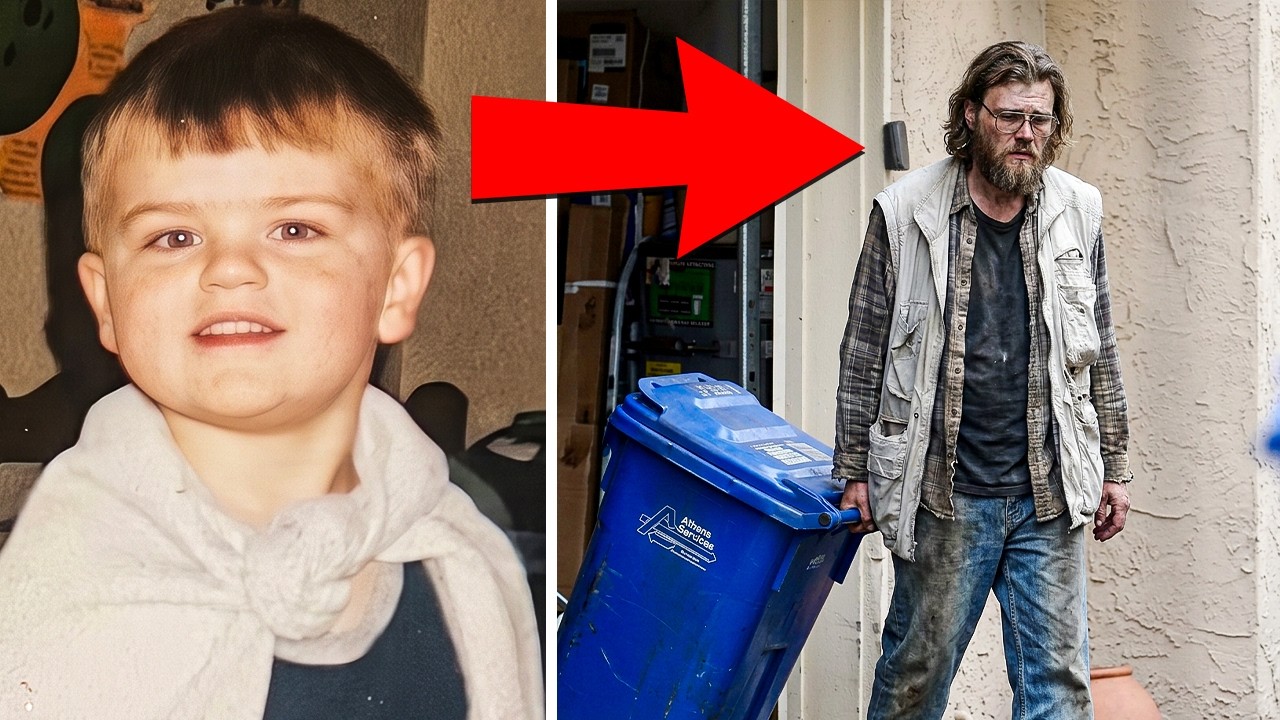
Alex is 28 years old now. Most people would not recognize him today. The recantation did not close the matter. In many ways, it opened the door to everything that had been buried.
Afterward came a divorce, an eviction, a 32-page lawsuit, six years of litigation, a father who disappeared so completely that a national newspaper once reported him dead, and a confidential settlement in March 2024 that neither side is legally allowed to explain. To understand how it all began, the story has to return to one road in rural Ohio. The Malarkey family had moved from suburban Columbus to rural Huntsville, Ohio, only a few weeks earlier. Money was tight, and the family wanted a quieter life.
Beth Malarkey had given birth to their fourth child only days before. On Sunday morning, November 14, 2004, Kevin Malarkey took his eldest son, Alex, to church. Alex was 6 years old. On the drive home, Kevin’s cell phone rang.
Beth was calling. As Kevin answered, he approached an intersection with a blind spot that people in the area already knew was dangerous. The other car came into the intersection before Kevin saw it. The crash ripped through the sedan.
Kevin was thrown clear and escaped without injury. The people in the other vehicle were not seriously hurt. Alex was airlifted to Columbus Children’s Hospital. His injury was called an internal decapitation.
His skull had effectively separated from his spine. The damage was so severe that the coroner was called to the crash scene. Someone standing at that intersection saw a 6-year-old boy and called the person who is usually called for the dead. Doctors did not expect Alex to survive the night.
Yet he did survive. Two months passed while he remained in a coma. When he finally woke, he was paralyzed from the neck down. For the family, his survival felt impossible to explain without faith.
Their son had lived through injuries that should have killed him. Kevin later wrote that guilt consumed him after the crash, and that once Alex could speak again, his son forgave him completely. That could have been the whole story. A terrible accident.
A child who lived. A family trying to heal. A boy learning how to exist inside a body that would never move the way it once had. Then a second story began forming around the first one.
The story did not first grow inside a publishing office. It grew on a website. A family friend created prayforalex. com to help organize meals, child care, prayer, and support.
At first, it served a simple purpose. Soon, thousands of people were following Alex’s recovery in real time, even though most of them had never met the family. The site is gone now, but large pieces of it still survive in web archives. Month after month, Kevin and Beth posted updates there.
Those updates became the raw material that would later feed the best-selling book. On Valentine’s Day, Beth wrote a long entry about something Alex had told her. According to that entry, Alex said he had sat in the lap of Jesus at the crash scene. Jesus had told him he would breathe, although he had not said when.
Beth also placed a note beside Alex’s hospital bed. It told visitors that when Alex opened his mouth wide, angels were in the room. In January 2005, when Alex suffered a bad breathing episode, Beth wrote that she suspected Satan knew she was feeling low and was trying to trouble her even more. Kevin wrote that God had told him at church one day that his son would walk.
The family’s church believed deeply in active spiritual warfare. In their world, the Holy Spirit and demonic forces were fighting in real time. Their pastor at the time later described going to the Malarkey house with a friend and walking in a circle around the property while praying for protection from a demonic presence. Readers reacted with intense emotion.
Their comments reveal how powerful the story had become before any publisher arrived. One reader wrote that there was no doubt in her mind that the family was anointed with the power of Christ. Another sent a painting of Alex in his hospital bed surrounded by three angels. A volunteer who stayed overnight at the hospital wrote that she heard the faucet in Alex’s room turn on and off three times while nobody was there.
After that, the volunteer said she felt sure angels were present. In her mind, they were holding Alex’s neck, realigning bone and reopening nerve passages. She even wrote that one angel spoke to her and said there was more to do. A local church gave the family a 15-passenger van.
The license plate read, “Will walk. ” Alex did not walk. He came home from the hospital in February 2005. Nearly four years later, on January 9, 2009, he underwent a major operation at University Hospitals in Cleveland.
People often called it the Christopher Reeve surgery. Doctors implanted a diaphragm pacing system that allowed him to breathe without a ventilator. Alex was the youngest patient ever to receive that complex procedure. The surgery brought local news coverage.
An Associated Press photographer was there. During that coverage, an AP reporter made an offhand comment to Kevin Malarkey: Kevin should write a book. That simple suggestion changed everything. Kevin met a literary agent.
Soon after, he signed a contract with Tyndale House, one of the largest Christian publishers in America. Tyndale had been founded in the 1960s as a Bible publisher, and its stated corporate values included dependence on God, trustworthiness, and being anchored in the Bible. The working title was Angel Boy, The Boy Who Spent 7 Weeks in Heaven. Tyndale hired a professional ghostwriter to shape the manuscript.
Years later, that writer described the process without giving his name because he still worked in Christian publishing. Two parts of his account matter more than anything else. The ghostwriter spoke with Kevin often. He also interviewed other sources, including doctors involved in Alex’s care.
When the writer repeatedly asked to interview Beth, Kevin brushed those requests aside. A bigger problem sat at the center of the project. The ghostwriter never spoke to Alex. A professional writer had been hired to help produce a first-person account of a 6-year-old boy’s journey to the afterlife.
Yet the boy himself was never interviewed. That draft was later rejected. The version that reached print was written by Kevin Malarkey. Most of the book was told in Kevin’s voice.
The first nine chapters also included separate passages presented in Alex’s voice with headings such as “Angels Helping Me” and “I Still Visit Heaven. ” Several sidebars were attributed to Beth. Beth later said that most of those sidebars were taken from her prayforalex. com posts without her permission.
According to her, she had opposed the book from the beginning. During one tense medical moment, she once warned Kevin that he had better keep that moment out of his book. Kevin put it in. Then Tyndale commissioned a short documentary to sell alongside the book.
In the spring of 2010, a film crew arrived at the Malarkey home. Looking back, that filming day may have been the clearest warning sign of all. Alex would not tell the story. The crew had come for the scene that mattered most.
They needed Alex on camera talking about heaven. Mark Schlicher, the director of photography and co-editor, later said they expected to hear some version of what appeared in the book. To them, that interview was the heart of the project. They got almost nothing.
The crew returned for a second day and tried again. Kevin stayed in the room and encouraged Alex to speak. Still, Alex gave them almost nothing. The director, Ken Carpenter, later said Alex seemed resistant to having words placed in his mouth even at that young age.
Both filmmakers remembered tension inside the house that day. Kevin later recalled the conflict as being between himself and Beth, with Alex trapped between his parents. Even then, the book moved forward. Book publishers usually do not fact-check memoirs in the way readers may assume.
Sensitive material may go through lawyers, yet the author is still expected to provide an accurate account. That system had already led to major publishing scandals, including James Frey’s A Million Little Pieces and the fabricated Holocaust memoirs Misha and Angel at the Fence. Memoir depends heavily on one person’s memory of extraordinary events, which makes the form fragile. At an evangelical publisher, another layer sits on top of that.
The Bible is treated as true, and the company’s mission is to advance that truth while also selling books. At least one editor saw the danger and stepped away. Sandy Vander Zicht, who worked at Zondervan, was offered a chance to acquire a similar heaven story centered on a young child. She refused.
Her reason was simple: a book like that should wait until the child was old enough to tell the story himself. In July 2010, The Boy Who Came Back from Heaven was published with Kevin and Alex Malarkey listed as co-authors on the cover. The cover also carried three powerful words: A True Story. Inside, the details were striking.
Alex traveled through a bright tunnel. Five angels met him. Jesus told him he would survive. Later, Alex saw 150 pure white angels with fantastic wings.
Heaven had lakes, rivers, and grass. God sat on a throne beside a scroll that described the end times. The devil in the book had three heads. His eyes were red.
His teeth were moldy. His hair was made of fire. Readers bought the story in huge numbers. The book sold more than one million copies and spent months on the New York Times best-seller list.
Its timing could hardly have been better for the market. Later that same year, another heaven book appeared. Heaven Is for Real told the story of 4-year-old Colton Burpo and his experience during an emergency appendectomy. In 2012, Time magazine ran a cover story called “Rethinking Heaven” and opened it with Burpo’s account, including the rainbow horse and the meeting with the Virgin Mary.
The genre exploded. There was 90 Minutes in Heaven, built around a car accident. Flight to Heaven, built around a plane crash. To Heaven and Back, built around a kayaking accident.
Miracles from Heaven, built around a fall into a hollow tree, later became a film starring Jennifer Garner. Sandy Vander Zicht later summed up the industry mood after the Malarkey book became a success: every Christian publisher was looking for the next heaven book. Still, some people inside that world felt uneasy. Justin Peters, a conservative independent evangelist who had served on Lifeway’s board, said the problems were obvious even without deep theological training.
He had tried to convince Lifeway to stop selling heaven books, but the effort went nowhere. The concerns were specific. The Bible says that God the Father cannot be seen by human beings, while Alex’s book described his body. Different heaven books also gave conflicting details about heaven, even though each one was being presented as literal eyewitness testimony.
In 2012, Beth Malarkey reached out to the ministry of John MacArthur, the influential California pastor. His website had published an article with a title that showed how seriously his ministry viewed the issue. It was called “The Burpo-Malarkey Doctrine. ” The article dismissed first-hand accounts of heaven as untrue.
Phil Johnson, the executive director of MacArthur’s ministry, later described the theological concern in blunt terms. To him, the willingness of many evangelicals to embrace these stories showed that modern evangelical Christianity had drifted badly off course. Even with those warnings, the books kept selling. Alex did not stay quiet until 2015.
Back in August 2011, 13 months after the book came out, while it was still rising in sales, Alex left a comment on the book’s own Facebook fan page. In that comment, he described the book as one of the most deceptive books ever written. Then the comment vanished. That one deleted comment matters because it shows something many people later missed.
Alex had already tried to speak. His family had already tried to push back. The public just had not heard them clearly enough. The next year, Beth began writing to Tyndale to complain.
Tyndale offered to meet with her, though she declined because of Alex’s health. Still, she kept trying. She left comments on Christian blogs. She spoke to a radio program and said Alex opposed the book.
By 2013, she tried again in a bigger way. She published a 7,000-word post on her personal blog hoping to expose what had happened. Yet the post did not land the way she needed it to. A journalist who later found it in an archive described it as confusing as an exposé.
It never named Kevin or Tyndale. It never clearly mentioned the angels or the heaven stories. Large portions were buried under medical detail. Even so, the ending made Beth’s purpose clear.
She promised to do whatever she could to stop the exploitation of her son and the twisting of God’s truth. Still, nothing changed. For four years, a family tried in public to discredit a best-selling book about their own child. During that same time, the book kept selling.
So Alex found another path. He went around the people who had ignored him and emailed Pulpit and Pen, a blog that had been attacking mainstream Christian publishing for weak theology. The blogger behind it was J. D.
Hall, a pastor from Montana. Hall asked Alex if he would publish an open letter. After that, he called Alex every night for weeks helping him shape and revise the statement. The letter went live on January 13, 2015.
This time, the response came fast. On January 16, Tyndale announced that it would stop selling the book. Lifeway pulled the remaining copies from its stores. Within months, Lifeway made an even bigger decision.
It announced that it would no longer sell experiential heaven testimony books at all. That decision shrank the market for every future book like it. Then the media found the part of the story it could not resist. His surname was Malarkey.
A boy had admitted making up a story about heaven, and his name meant nonsense. For about a week, the story spread everywhere because the headline almost wrote itself. Then the world moved on. That was exactly when people should have kept looking.
Within days, the pressure shifted to the other boy. That boy was Colton Burpo, the child at the center of Heaven Is for Real. His book had passed a million copies in under a year. By 2014, it had reached 10 million copies and had been turned into a film starring Greg Kinnear.
After Alex’s letter went public, Colton posted a statement on his website. He stood firm. He wrote that he stood by the story in his book. He also said he still remembered the experience and wanted to keep telling people about it because it had brought hope to many.
Then he made the point that separates the two cases. Colton said nobody had coaxed him into the story. According to him, he had already been telling friends and people in his town about it long before a book existed. That difference matters because public memory slowly blended the two boys together.
Eventually, Snopes had to publish a fact check because so many people believed Colton Burpo had taken his story back. He had not. Burpo has never retracted his story. Two boys sat at the center of two number one books.
Alex later dismantled the story attached to his name. Colton defended the story attached to his, and he has continued to defend it. On the day Alex rejected the book, Kevin Malarkey stopped speaking to the press. No public defense followed.
No statement appeared. Kevin simply disappeared from the conversation so completely that in 2018, the Washington Post reported that he was dead. He was alive. Alex’s own attorney had to confirm it publicly.
Then in 2019, journalist Ruth Graham emailed Kevin for a Slate investigation expecting silence. Instead, Kevin wrote back on a Saturday morning from his son’s baseball game. At first, he said he would only speak privately. A few minutes into the call, his position changed.
He said he had prayed about it and believed he had been told to speak with her. Then he talked for nearly two hours. His account matters because it presents a very different version of the story, and it deserves to be heard fairly. Kevin said he had gone silent because God told him to remain silent.
In his view, anything he said publicly would only make Alex and Beth look worse. He framed the entire dilemma in a painful way: either Alex lied at six, or Alex lied at 18. Kevin said Alex had spoken often about angels and demons for years. He also said they had worked closely together on Alex’s sections of the book.
When asked whether a small boy may have been trying to please his father, Kevin said Alex was too young to fake it so convincingly. Kevin also said he still believed every word in the book. Then he added something striking. He said Alex never told him about the recantation.
Kevin found out from the national news. Another witness in this story rarely gets quoted, even though he was physically present. Aaron Malarkey, one of Alex’s brothers, was 8 years old while the book was being written. According to Aaron, he was in the room for some of it.
His memory is that Kevin repeatedly asked Alex whether he was completely sure he wanted certain details included. Sometimes Alex said yes. Other times Alex said no. When Alex said no, Aaron says Kevin left those parts out.
Aaron also remembers something else from that time. Alex appeared to communicate with the spirit realm. In the middle of ordinary conversations, Alex would suddenly announce that angels were in the room. When Alex recanted, Aaron felt betrayed.
He also felt bitter about the way his father was treated. In Aaron’s view, Kevin was thrown to the wolves and abandoned by the same Christians who had once embraced the family’s story. Still, Aaron speaks warmly about Alex himself. He describes his brother as quick, charismatic, and one of the funniest people someone could meet.
He sees Alex and Beth every week and says he loves them deeply. Even with that love, Aaron still believes the story is true. Beth’s answer cuts straight through all of that. She argues that a small boy who had just come out of a major coma could not reasonably understand that he was helping create a book.
So what does Alex say happened? His explanation is much simpler and much sadder. Alex told Slate that he remembers nothing about the accident. According to him, the whole idea that he had seen angels began with confusion.
He woke up alone in a dark hospital room. Still groggy, he looked into the bright hallway and saw his father speaking to someone. “I thought it was an angel because I thought I was dead. ”
Alex says he does not know why he thought that.
He only knows that he did. From there, the story grew larger than he understood. His father asked questions and wrote down answers, but Alex says he did not know why. He assumed Kevin was preparing something to say at church.
His view of the book is even sharper. Alex says he never wrote it. He says he has never read the whole thing. He also says he does not know what is in it.
In the end, his position comes down to one haunting detail: he does not know what he said. Kevin Malarkey has given a number for what he earned from the book. His estimate is about $1 million, including a $500,000 advance. According to Kevin, that money is gone.
He said he was the family’s only breadwinner and that Alex’s medical expenses were enormous. When the advance arrived, Kevin says he made large, impulsive gifts to Christian charities and to people in his church. He also claims he wrote one check for $30,000 to his own church. Beyond that, he says he lost even more money after investing in a friend’s failed startup.
When asked about Alex’s share, Kevin’s answer was legal in nature. He had signed the contract for himself and on Alex’s behalf. The agreement did not create a separate payment arrangement for Alex. Since Alex was a minor, Kevin says the proceeds went toward family needs and medical care.
Alex sees it differently. In his view, Tyndale made millions from his name and from a book presented as an autobiographical account of his life. Alex says he received nothing. By 2018, he was living on social security payments and support from his mother.
Two days before his 20th birthday, William Alexander Malarkey filed a lawsuit in the Circuit Court of DuPage County, Illinois, in Wheaton. The complaint was 32 pages long and included seven counts. Among them were defamation, deceptive trade practices, intrusion upon seclusion, appropriation, and financial exploitation of a person with a disability. The lawsuit sought compensatory damages at least equal to the book’s profits.
It also sought punitive damages of more than $50,000. Yet the most important part for Alex was the request for a permanent injunction requiring Tyndale to take every reasonable step to separate his name from the book. The central allegation was blunt. The lawsuit claimed that Kevin Malarkey created the story to sell it, and that Alex remembers nothing from the time he spent in a coma.
It also stated that Alex and Beth were close to becoming homeless. Tyndale gave the same response to every outlet that asked. The company called the situation terribly unfortunate and deeply saddening. It said all royalties due under the contract had been paid.
It said the book was taken out of print in 2015 after Alex said he had fabricated the story. Any copies still available online, according to Tyndale, were being sold by third parties. In court filings, Tyndale argued that Kevin had entered the agreement for himself and on Alex’s behalf. The company also argued that Beth, although she was not a party to the contract, had shown consent in practice by helping arrange interviews and supplying family photographs.
A judge dismissed five of the seven counts. The defamation claim fell because of the statute of limitations. Alex’s lawyer refiled three counts on December 28, 2018. Those counts were appropriation, publicity given to private life, and financial exploitation of a person with a disability.
One choice in that filing says more about Alex Malarkey than the book ever did: he did not sue his father. While the litigation continued, the family situation fell apart completely. After the crash, the Malarkeys had lived in a 2,700-square-foot house on 10 acres north of Bellefontaine. The home had been customized with ramps and other modifications for Alex.
When Beth and Kevin divorced, Kevin claimed full ownership and moved to have Beth and Alex evicted. He said he needed the money from the sale to care for two of Alex’s siblings who had moved with him. Beth and Alex were evicted. Alex cannot move below the neck and needs full-time care.
Even so, he and his mother were removed from the only home built around the needs of his body. They moved into a small house in Bellefontaine. The Logan County Department of Developmental Disabilities later retrofitted it with ramps and an overhead hoist so Alex could be moved between his wheelchair and his bed. A GoFundMe campaign was created to help them find a more suitable place to live.
More than 1,400 donations raised about $132,000. In the earliest days after the accident, strangers had gathered around Alex through prayforalex. com. Nearly 20 years later, strangers returned again.
This time, they came back to help a young man whose name had once sold a miracle story while his real life had become painfully hard to ignore.