Tributes continue to pour in for Rock and Roll Hall of Famer Leon Russell, who spent decades shaping popular music as a pianist, songwriter, and producer. But before his death, Russell carried a private perspective on his friend and collaborator George Harrison—one that never quite made the headlines. Russell first stood beside Harrison at one of rock music’s most significant live events. The two legends shared a stage at the Concert for Bangladesh in August 1971, a moment that changed how the industry viewed benefit performances.
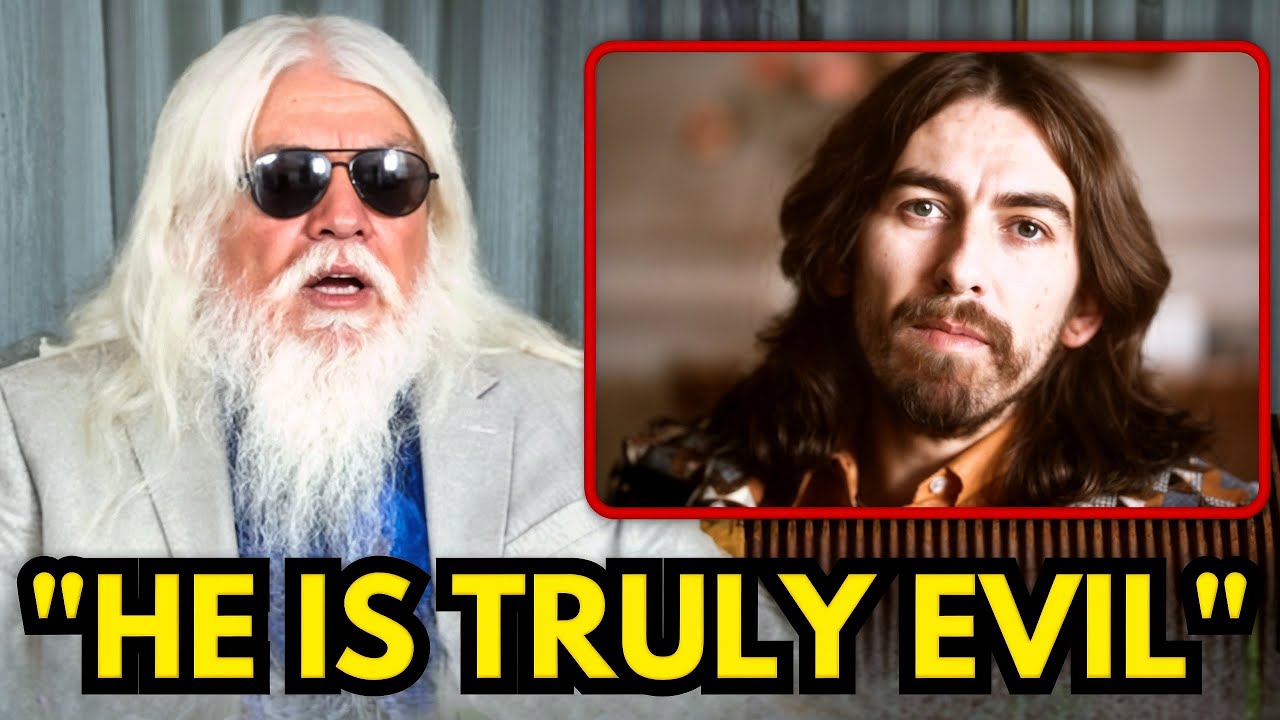
Russell got to see Harrison not under the glow of Beatlemania or studio polish, but under the enormous strain of organizing an unprecedented charity event in front of the world. Born Claude Russell Bridges on April 2, 1942, in Lawton, Oklahoma, Russell began working as a professional musician in his teens. By the late 1960s, he was known across the industry as a versatile talent who could play piano, arrange, produce, and lead bands without missing a beat. Friends called him the “master of space and time,” a nod to his relentless versatility and deep session work.
George Harrison arrived at the same cultural moment from a different path. Born February 25, 1943, in Liverpool, he had spent a decade as the Beatles’ lead guitarist, evolving from the quiet member into a songwriter capable of standing alongside Lennon and McCartney. He had also developed a deep study of Indian classical music under Ravi Shankar. By 1971, Harrison wanted to use his fame for more than chart success.
With Shankar, he organized the Concert for Bangladesh on August 1 at Madison Square Garden. The purpose was to raise money and awareness for refugees affected by the Bangladesh Liberation War. The show drew Bob Dylan, Eric Clapton, Ringo Starr, Badfinger, Billy Preston, and Russell, all performing with minimal rehearsal and high risk. Russell brought a burst of energy to the stage, performing a medley of “Jumping Jack Flash” and “Young Blood” that cut through the formality typical of benefit concerts.
When he joined Harrison for “Beware of Darkness,” he supported the song without overpowering it, demonstrating the subtle sense of restraint that made him a sought-after collaborator. Harrison, meanwhile, was doing more than singing and playing. He was coordinating the artists, managing the sound, and carrying the full weight of the cause. After the concert, he produced the live album, released in December 1971, and the 1972 concert film.
The effort raised millions for UNICEF and won the 1973 Grammy for Album of the Year, setting the template for every large-scale charity concert that followed. What impressed Russell most was not Harrison’s star power but his steady, quiet determination. Behind the scenes, Harrison was fully committed to the cause while staying composed under immense pressure. Russell recognized a man who understood what the event really meant, beyond the applause and the cameras.
The two musicians did not make many records together after that, but their connection remained. Russell’s involvement in the concert permanently tied his name to a moment when rock music showed it could organize and help on a global scale. Years later, Harrison’s Dark Horse Records partnered with BMG to preserve and reissue Harrison’s catalog, keeping the Bangladesh concert era accessible to new generations. From the outside, those shows looked like a series of victories.
Inside, both men carried heavy personal burdens. Russell knew that kind of pressure well, and what he witnessed shaped how he later spoke about success, exhaustion, and the costs of staying in the public eye. Leon Russell’s own private life had long been marked by struggles that predated his fame. He was born with physical challenges caused by a difficult birth, when the doctor pulled too hard, injuring his second and third vertebrae.
The resulting nerve damage resembled cerebral palsy, leaving his right side weaker and his right hand less steady than his left. Instead of giving up music, he adapted, using his stronger left hand on piano and developing a distinctive style that fans later called original but which was, in part, born of necessity. At age four, an incident with a strict aunt left a deep emotional wound. She caught him in a harmless childhood moment with a cousin, then publicly shamed him in front of the family.
Russell later said the experience planted a lasting sense of shame and confusion, shaping how he viewed himself and his tendency to take blame even when undeserved. Those early wounds did not ease with success. During the height of his career in the late 1960s and early 1970s, Russell wrote hits, recorded albums, and led bands, appearing unstoppable from the outside. Inside, he continued to struggle with feelings of inadequacy.
When musical tastes shifted in the late 1970s and early 1980s, his career dropped quickly. Records stopped selling, radio moved on, and labels lost interest. He went from large venues to small clubs, sometimes playing for audiences unfamiliar with his name. The money he had made earlier evaporated through bad deals, mismanagement, and the costs of keeping a touring band alive.
By the early 2000s, Russell was living quietly in Nashville, largely absent from mainstream conversation. He saw contemporaries receive awards and retrospectives while his own contributions were overlooked. The comparison to Elton John, who publicly credited Russell as a major influence but enjoyed far greater fame, stung. Russell was not angry at John, but sad that his own work had been forgotten.
In 2010, John helped revive Russell’s career by producing the album The Union. The project returned him to the spotlight and introduced his music to new listeners. That same year, however, Russell required brain surgery to relieve fluid buildup, a procedure that interrupted his career and nearly ended his ability to play. His health continued to decline afterward, with heart disease and other complications limiting his energy and movement.
Throughout his life, Russell struggled with a negative mindset. Friends observed that he often focused on the worst possible outcome, a pattern shaped by decades of physical pain, early shame, and repeated professional disappointments. His need for control, which had helped him cope with childhood injuries and industry setbacks, also led to difficult business relationships and publicized conflicts. One of Russell’s most significant legal fights involved Shelter Records, the label he co-founded with producer Denny Cordell in 1969.
The label was built on the idea of giving artists freedom at a time when major labels were tightening their control. It achieved early success, signing Tom Petty and J. J. Cale and releasing records that reflected genuine artistic input.
Disputes over money, ownership, and direction eventually drove Russell and Cordell apart. By the late 1970s, their disagreements ended up in court, and their partnership collapsed publicly. His personal life also unraveled in public view. Russell married singer Mary McCreary in 1975, and the couple combined their marriage and music into a collaborative album.
Creative conflicts bled into the relationship, compounded by the pressures of constant touring and differing expectations. The marriage ended in divorce in 1980, and the separation attracted attention because the two had been seen as a professional team. During the late 1970s, Russell also released country-style albums under the pseudonym Hank Wilson. The move confused fans who knew him for rock, blues, and gospel piano.
Some critics interpreted it as an attempt to escape his own name or abandon his established style. The albums sold modestly, and the mixed response made Russell appear adrift from mainstream relevance. Russell was also known as a demanding bandleader and producer. He required musicians to be prepared, attentive, and precise.
Some players later said he could be difficult to work with, not because of arrogance but because of an intense desire for total control. While that approach worked when his career was peaking, it contributed to strained relationships as his influence faded. By the early 1980s, the effects were visible. Opportunities shrank, partnerships dissolved, and the same control that had once protected him left him isolated.
At the same time, Harrison was confronting a completely different set of private battles. Harrison had joined the world’s biggest band as its youngest member, a position that shaped his entire time with the Beatles. John Lennon and Paul McCartney dominated songwriting, album space, and major decisions, leaving Harrison with limited opportunities. He kept writing throughout the mid-1960s, bringing songs to sessions that were mostly rejected or limited to one or two tracks per album, regardless of quality.
Songs like “Something” and “Here Comes the Sun” later proved he could write alongside anyone, but during the Beatles years, he had to fight to be heard. The frustration built slowly. Harrison accumulated songs that never made Beatles records because no space existed. Studio sessions ran long, and he often ended up playing guitar on other people’s tracks while his own waited.
He also clashed with McCartney, whose growing control over arrangements and performances turned rehearsals into tense power struggles. With Lennon, the friction was different: Lennon’s mercurial creativity clashed with Harrison’s deepening interest in spirituality, and their differences never fully resolved. Fame itself wore him down. Harrison never embraced Beatlemania the way some of his bandmates did.
The constant screaming, surveillance, and loss of privacy exhausted him, and he described feeling trapped by celebrity. That discomfort pushed him toward India, Indian music, and spiritual practice. His study of the sitar and his relationship with Ravi Shankar were genuine commitments, not publicity stunts. Still, reconciling a spiritual life rooted in humility with a career built on fame created constant tension.
By the time the Beatles were breaking apart, Harrison carried years of unresolved anger. He had grown as a songwriter but had not been allowed to show it. He had found spiritual peace but could not escape public attention. He had money and fame but not the calm he wanted.
His first marriage, to Pattie Boyd in 1966, came at the height of Beatlemania. From the outside, the couple looked ideal. Inside, pressure came quickly: constant travel, changing priorities, growing drug use, and infidelity eroded the relationship. Boyd later described feeling alone and sidelined by Harrison’s spiritual pursuits.
The marriage collapsed publicly when Eric Clapton, one of Harrison’s closest friends, fell obsessively in love with Boyd. Clapton wrote songs about her, declared his feelings openly, and pursued her while she was still married to Harrison. The love triangle became tabloid fodder, and Boyd eventually left Harrison for Clapton. The betrayal damaged both a marriage and a friendship, though the two men later repaired their relationship.
The incident remained one of Harrison’s most public personal scandals. Harrison’s second marriage, to Olivia Arias, brought more stability. She understood the demands of fame, and their relationship avoided the dramatic swings of his first marriage. Still, health problems later added new strain, and fame never truly receded.
Drug use was another lifelong struggle. In the 1960s and 1970s, experimentation was common in his circle, and Harrison participated. Some substances opened his thinking and changed how he approached music and life. Over time, drug use interfered with his focus, relationships, and emotional presence.
The line between exploration and escape blurred, especially when he felt let down by fame and the music business, and the habits did not end quickly. In December 1999, Harrison survived a violent home invasion. A stranger broke into his property and attacked him, leaving serious injuries and lasting psychological trauma. He recovered physically, but the attack ended his sense of safety and brought more security and less privacy.
Health followed with its own setbacks. Harrison had smoked heavily for years, and in 1997 doctors diagnosed throat cancer. Treatment forced him to slow down and disappear from public view. The cancer later returned as lung cancer and spread to his brain.
As his condition worsened, he largely withdrew from public life, saving his energy for survival. Harrison also faced controversies that extended well beyond his Beatles career. His biggest solo hit, “My Sweet Lord,” released in 1970, prompted a lawsuit from Bright Tunes Music, which claimed the song closely resembled “He’s So Fine” by the Chiffons. Harrison denied deliberate copying, but the court ruled he had done so subconsciously.
The case dragged on for years, costing him significant money and emotional energy. Afterward, he became much more cautious about songwriting, second-guessing new melodies and worrying about accidental repetition. He also fought long-running battles over ownership of his music and unpaid royalties. Like many artists of his generation, he had signed early deals that stripped him of control, and he spent years trying to reclaim his catalog.
Those disputes deepened his distrust of the music industry. Harrison was also frustrated by the mismanagement at Apple Corps, the Beatles’ company, which he saw wasting money while artists went unpaid or trapped in bad decisions. His distrust of manager Allen Klein and the fights over transparency contributed to the band’s growing fractures. Even the Concert for Bangladesh, his most benevolent project, ran into trouble.
Tax rules and legal obstacles delayed the distribution of funds, drawing criticism that the event had been poorly managed. Harrison maintained that the money eventually reached UNICEF, but the complications turned what should have been a clear success into a lesson about charitable efforts colliding with bureaucracy. Personal scandals also added to his turbulent image. Harrison had an affair with Maureen Starkey, Ringo Starr’s wife, which hurt their friendship deeply.
The relationship ended later and the men reconciled, but the episode added another layer of strain on top of the professional and financial conflicts they were already dealing with. Through all of it, Harrison maintained friendships based on shared experience rather than public image. His quiet bond with Russell was one of those connections, built on working together, long rehearsals, and mutual observation. Russell admired Harrison’s calm leadership and appreciated that Harrison listened and waited before making decisions.
In rooms filled with strong egos, that quiet authority stood out. Russell also noted their different studio approaches. Russell preferred working quickly and following instinct, while Harrison liked repeating takes until everything felt right. Russell sometimes found the repetition tiring and frustrating, but he understood why Harrison did it.
He did not share Harrison’s deep involvement in Indian spirituality, but respected it deeply, and the influence touched the way Russell thought about music’s purpose. Harrison, for his part, valued Russell’s versatility across rock, gospel, blues, and soul. At the Bangladesh concert, he appreciated Russell’s energy and steadiness on stage and saw him as a musician who understood that music could be about helping others, not just performing.
Their friendship never became a prolific recording partnership, but it endured quietly, based on hard work, genuine respect, and the understanding of what it costs to keep going.


