The final episode of Cheers aired more than three decades ago, yet the secrets buried within the walls of that Boston basement bar are only now coming fully into focus, revealing a production saga that rivals any on-screen 𝒹𝓇𝒶𝓂𝒶. From a set purchased for a single dollar to a hidden tribute that aired for years without a word, the story of the show’s rise from ratings cellar to American phenomenon is far stranger than fiction.
The series, which premiered on NBC in 1982, spent its first season languishing in 74th place out of 77 programs, a catastrophic start that would have doomed most productions. Network executives, led by Brandon Tartikoff, gambled on the show’s critical acclaim and a summer rerun strategy that unexpectedly drew larger audiences than the original broadcasts. That gamble paid off spectacularly, propelling the show into the top ten for eight of its eleven seasons and finally to the number one spot in 1990.
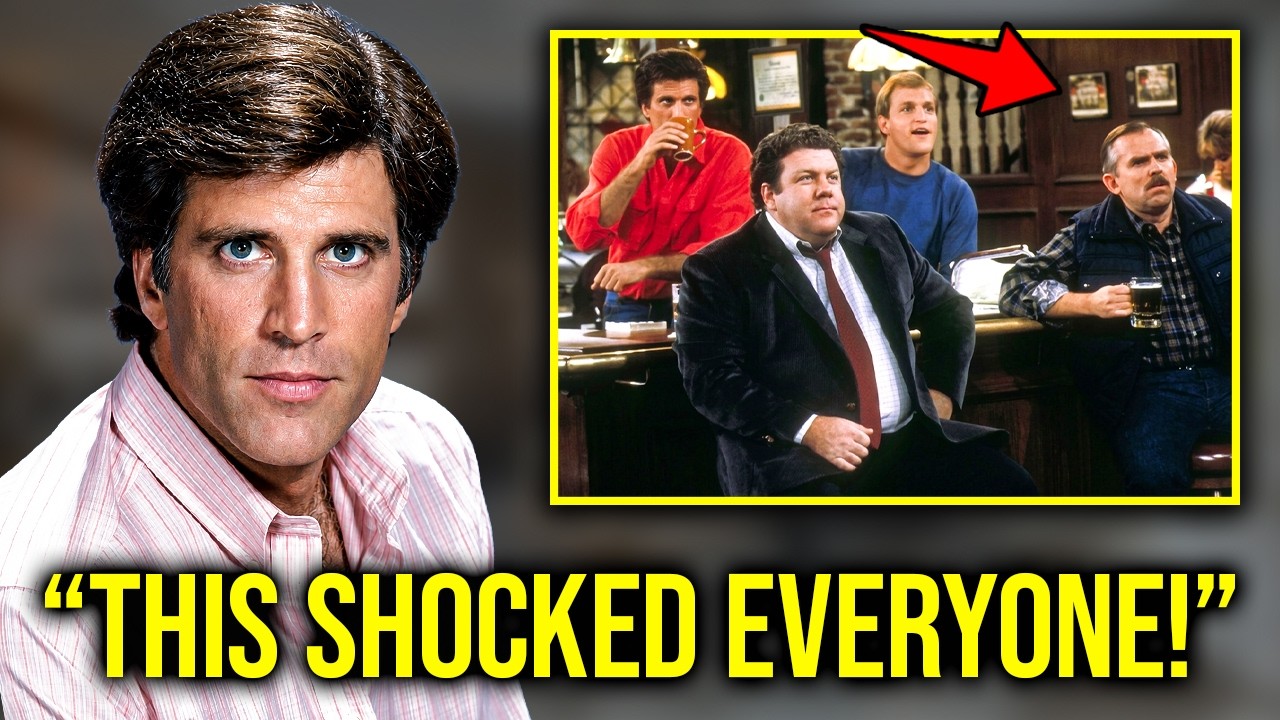 Behind the brass rails and stained glass, the production was a masterclass in improvisation and hidden history. The bar itself was a licensed replica of the Bull & Finch, a real Boston establishment whose owner, Tom Kershaw, charged the producers a symbolic one dollar for the rights to photograph his building. The set designer, Richard Sylbert, built the iconic bar with a literal hinge in the center, allowing the right half to swing open to reveal Sam Malone’s office without the crew ever having to strike the set.
The actors endured their own private trials for the sake of authenticity. Ted Danson, cast as a former Red Sox pitcher, had never attended a baseball game in his life and was sent to bartending school to learn how to pour a drink convincingly. George Wendt, who played the immortal Norm Peterson, spent eleven seasons slamming down glasses of warm, flat, non-alcoholic beer, doctored with a pinch of salt to create a 𝒻𝒶𝓀𝑒 head, a concoction he later described as requiring “some serious acting” to pretend to enjoy.
The show’s casting was a series of fortunate accidents. John Ratzenberger, who initially bombed his audition for a one-line part, invented the character of Cliff Clavin on the spot by asking if the show had a bar know-it-all. He stayed for eleven years, and his postal uniform now resides in the Smithsonian.
 The character of Norm, originally a single-line extra, became a cornerstone of the series, with Wendt appearing in all 275 episodes.
Perhaps the most poignant secret involves the photograph of Geronimo that hung near the piano for years. It belonged to Nicholas Colasanto, who played Coach and died of a heart attack in 1985. After his death, the cast took the photo from his dressing room and hung it on the set as a silent memorial, never acknowledging it on screen.
 In the final scene of the final episode, Sam Malone walks over and straightens the frame before turning off the lights, a gesture that went unexplained to the audience for decades.
The show also faced a near-fatal casting crisis when Shelley Long left in 1986. The producers filmed three different endings for her departure, including a full wedding scene performed in front of a live audience to prevent leaks. When Kirstie Alley arrived to replace her, she showed up to the first table read wearing a blonde wig and a dress identical to Long’s character, Diane, a move that instantly broke the tension in the room and endeared her to the cast.
 Behind the scenes, the writers navigated a minefield of personal conflicts. Jay Thomas, who played Carla’s husband Eddie, was written off the show and killed by a Zamboni after making an offhand remark about kissing Rhea Perlman on his radio show. The writers, fearing a lawsuit from the Zamboni manufacturer, were instead delighted to find the company thrilled with the product placement, and the episode earned an Emmy nomination.
The series finale, which aired on May 20, 1993, was a logistical nightmare. Filmed at 98 minutes, it was three times the normal length, and the producers were convinced it would be a disaster. NBC followed the broadcast with a live Tonight Show from the real Bull & Finch bar, which host Jay Leno later called a “huge mistake,” noting that the cast had been drinking since 2 p.
m. and that only Rhea Perlman remained sober.
The legacy of Cheers extends far beyond its own run, influencing everything from Frasier, which became the most successful spin-off in television history, to modern shows like Ted Lasso, which paid direct homage to the Geronimo photograph in its own final episode. The show’s journey from near-cancellation to cultural touchstone remains a testament to the power of character-driven storytelling, proving that a room full of people yelling “Norm!” could forever change the landscape of American television.