On December 2, 1969, “I Dream of Jeannie” aired an episode that would effectively end the series. Titled “The Wedding,” it was meant to be the show’s turning point—but not in the way anyone expected. After four successful seasons built on the romantic tension between a handsome astronaut and a devoted, two-thousand-year-old blonde genie, the show’s creators made a decision that cost them their audience. Behind the scenes, panic had set in long before the episode aired.
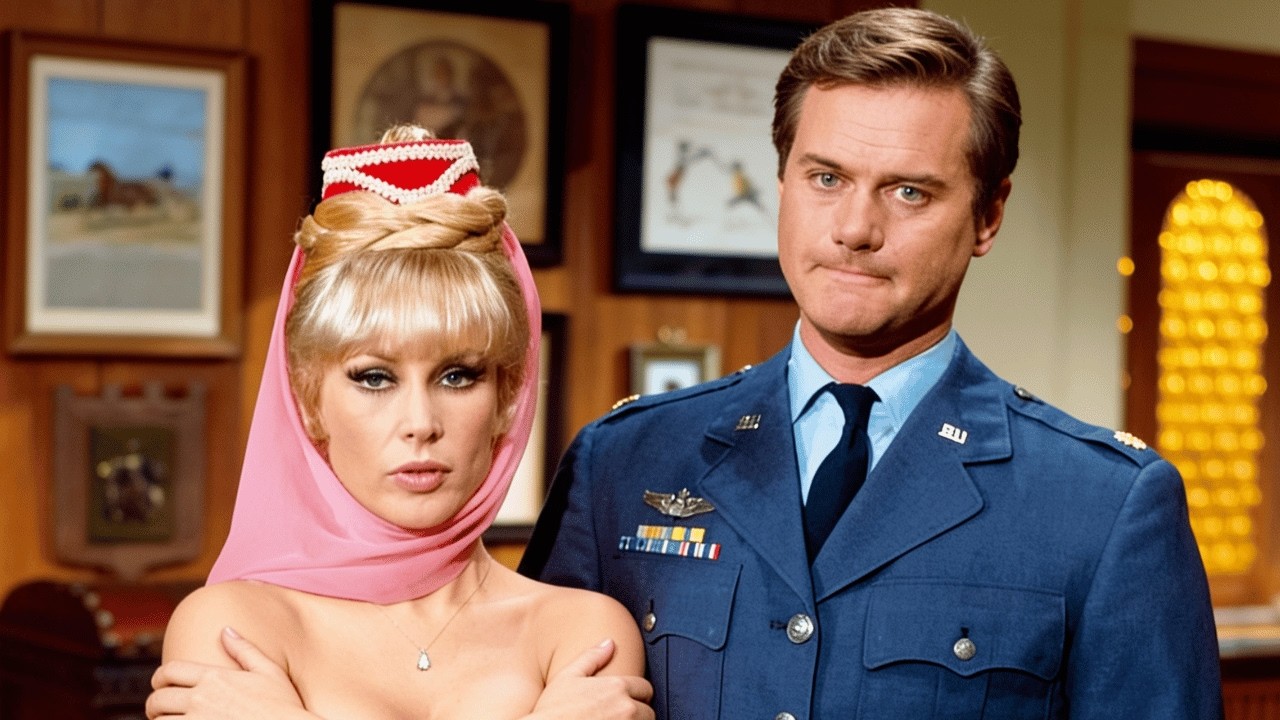
Series creator Sidney Sheldon and stars Barbara Eden and Larry Hagman warned network executives that marrying off the lead characters would destroy the series. They argued that the comedy depended entirely on the secret dynamic between Major Tony Nelson and Jeannie—a mysterious, untouchable supernatural being. But NBC ignored their warnings, confident in its institutional decisions. Within days, viewer ratings plummeted, and months later the network abruptly canceled the show.
To understand how executives committed such a catastrophic error, one must look back at the frenzied competition that birthed the series in the first place. In 1964, ABC was riding high on the success of“Bewitched,” a fantasy romantic comedythat captured the nation’s imagination. At NBC, executives were desperate for a similar hit. Prolific writer Sidney Sheldon developed an original conceptthat became“I Dream of Jeannie,” but hedid impose one strict creative rule—a guideline he called his“anti-Samantha” policy.
He insisted that the actresscast for the lead role must not be blonde. Studios wanted toavoid any accusation of copying ABC’s popular show, whose star was famously blonde. When the script was finally approved, casting directors spent weeks searching for the right brunette lead. Dozens of talented dark-haired actresses auditioned.
None fit the role precisely—until Barbara Eden walked into the room. Despite being blonde, her undeniable charisma was exactly what Sheldon needed, and his own rule was quickly broken
The show’s setting aligned perfectly with mid-1960s fascination with NASA and rocket launches from Cape Kennedy. Centering the series on an astronaut gave it a direct connection to the space race fever sweeping the nation. With an astronaut and a magical being in one show, it was exactly what viewers wanted to watch.
Major Nelson spent most of his time frantically trying to hide his supernatural companion from his overly analytical, suspicious boss, Dr. Bellows. Every week brought near-misses and cover stories while Tony protected his military career, his sanity, and his secret. Everything worked as long as Jeannie remained an unobtainable fantasy living in secrecy.
The unequal dynamic between them fueled the humor and kept viewers glued to their screens week after week
While the on-screen chemistry seemed effortless and charming, behind-the-scenes tensions were spiraling into a nightmare. Larry Hagman, the leading man, grew increasingly frustrated with his role. He realizedthat playing Major Tony Nelson meant he was merely a supporting character while an attractive woman in a revealing costume stole all the attention. This clash of professional ego, mixed with intense personal pressures, drove him to rely heavily on alcohol and various substances to endure long production hours.
His unpredictable behavior quickly became Hollywood legend through a series of chaotic outbursts. During one filming day, a noisy air conditioner kept ruining sound takes. Fed up with the hum, Hagman grabbed a real fire axe and hacked the unit to pieces—accidentally cutting power to the entire building. On another occasion, he wandered onto a nearby set in a full gorilla suit, screaming obscenities to scare a group of nuns visiting another production.
The problem wasn’t just Larry’s unpredictable nature. Script disputes became regular parts of the daily routine, too. The actor, in particular, frequently disrupted production by yelling at writers and producers when he believed episodes lacked humoror basic logic. Tensions reached a breaking point behind closed doors.
NBC officials grew so weary of the erratic behavior that they made actual plans to fire him, preparing actor Darren McGavin to replace him as Major Nelson. His saving grace was Barbara Eden, who intervened to defend him, buying him enough time to turn things around—at least temporarily. Realizing they needed a practical solution, the creative team brought in a professional therapist to help manage the actor. In a bizarre development, the specialist recommended that Larry simply consume champagne throughout the working day to keep his nerves calm and ensure he maintained acceptable behavior to finish filming
But Hagman’s mood swings were nothing compared to the constant scrutiny from the network’s Standards and Practices department.
Television production in that era operated under strict decency rules imposed by the National Association of Broadcasters. Before any show or film aired, every frame was intensely reviewed. The costume designers for the sitcom faced a difficult task when creating Jeannie’s iconic pink outfit. They had to balance the character’s exotic look with network rules covering the lower torso.
Despite their efforts, network executives had a strange obsession with Barbara Eden’s navel, ensuring it never appeared on camera. On set, reality was even more tedious. Wardrobe assistants received explicit instructions to shadow the lead actress between every scene. They constantly rushed to adjust the costume and raise the waistband before cameras rolled again.
This strict enforcement created a strange double standard. Scripts routinely contained adult jokes and double-entendre sexual innuendo in dialogue. Yet the navel was considered an unforgivable scandal. During physical action scenes or dance sequences, the costume would shift, forcing film editors to spend hours reviewing footage frame-by-frame, cutting any accidental glimpse of skin during post-production.
Media outlets eventually learned of these strict rules, turning the situation into a public spectacle dubbed the“Navel War. ”” Far from damaging the production, the publicity provided fantastic free promotion that kept curious viewers tuning in week after week
Entering its fifth season, the network faced a far bigger problem than exposed skin. With ratings slipping,“fantasy sitcoms” with magical premises were losing their appeal as the 1960s drew to a close. Viewer tastes were shifting, and the once-popular magic-and-fantasy shows were beginning to feel dated, with audiences noticing that every episode followed the same predictable pattern.
Each week, Jeannie would cause magical chaos and Major Nelson would scramble to fix it before anyone discovered the truth. This repetitive formula had stopped entertaining viewers who now wanted more modern, realistic television options. The channel’s scheduling decisions accelerated this decline. NBC suffered from poor management choices, moving the show’s time slot five different times during its run.
These channel and time changes confused loyal fans who struggled to keep up with when the show aired. In its final season, the show was moved to Tuesday nights, where it faced stiff competition from ABC’s hit crime drama“The Mod Squad. ”” Financial pressures further complicated matters behind the scenes. The lead actors’ salaries had risen significantly after successful seasons, and the constant need for filming and visual effects made each episode increasingly expensive to produce.
Panic spread through NBC’s corridors as executives watched their reliable cash cow lose its dominant position in the weekly ratings race. Leadership demanded a massive event that would break the status quo, generate headlines, and force audiences to pay attention again. They wanted a system shock that would instantly reverse the decline. Scrambling to save the show, executives noticed another NBC comedy,“Get Smart,” had boosted ratings with a wedding storyline, so they decided to try something similar for“I Dream of Jeannie.
”” That decision, however, marked the beginning of the end
The spy comedy“Get Smart” faced a severe ratings crisis during the 1968–1969 television season. In a desperate attempt to save viewership, producers took a major gamble by marrying the show’s two main characters, Maxwell Smart and Agent 99. The move delivered a massive Nielsen rating of 37, temporarily saving the sitcom from cancellation and creating a shiny new trend inside executive suites. NBC executive Mort Werner closely watched that success and became fully convinced that marriage was the answer to boosting ratings for any struggling series.
He issued a strict administrative decree: Major Tony Nelson and Jeannie would marry during the first half of season five. Network leadership wanted a guaranteed headline-grabbing event, ignoring the long-term consequences of tampering with the show’s core concept. They believed a wedding bells episode would immediately attract curious viewers and fix the sagging weekly numbers. Sidney Sheldon and the cast disagreed wholeheartedly, especially because“I Dream of Jeannie” and“Get Smart” had completely different story dynamics.
Tony and Jeannie’s relationship was entirely different. The comedy relied on tension between a magical genie devoted to an ordinary man, and his constant efforts to keep her supernatural powers a secret. Removing that secret tension stripped the show of its primary comedic source. Despite this, the network ignored every creative warning.
Executives threatened to withdraw financial support unless writers delivered a wedding episode immediately. Cornered, the creative team had no choice but to write an episode that broke every established rule in the show’s universe—the wedding episode. Crafting a legal marriage for a two-thousand-year-old magical being created an immediate dramatic problem. Jeannie had no Social Security card, no birth certificate, and no human legal status required to marry an Air Force officer.
Writers also invented a sudden plot hole involving photography. Despite Jeannie having appeared in ordinary photographs countless times in previous seasons, the script now claimed she didn’t show up in pictures. This contradiction led to a hackneyed storyline involving a stand-in dummy taking her place in official photos so NASA leadership wouldn’t discover the secret. Visually, the transformation was even more striking.
Jeannie bid farewell to her signature pink outfit and wore a traditional white wedding dress, leaving behind the mysterious magical look that had made her distinctive since the show began. Major Roger Healey frantically served as best man, desperately helping Tony pull off a ceremony defying logic and government paperwork. On the soundstage, sets sparkled with mid-century floral arrangements. But actors wore masks of forced joy—everyone sensed the creative direction was wrong.
The wedding episode ended with Tony and Jeannie exchanging rings, a moment executives believed would revive ratings. Instead, it became a turning point. The moment the episode ended, the playful, rebellious energy that made the series unique evaporated completely
To make matters worse, the network didn’t just air the episode. They launched a bizarre real-world marketing stunt that backfired spectacularly.
Network executives went beyond the on-screen wedding, staging elaborate fake weddings in multiple cities specifically for the press. Barbara Eden and Larry Hagman found themselves obliged to wear full wedding attire and attend a contrived reception purely to entertain journalists and cameras. The stunt backfired immediately. Journalists found the entire experience tacky, deeply awkward, and painfully contrived.
Television critics across the country published scathing articles condemning the network for attempting to buy ratings rather than relying on organic storytelling. Viewers shared this frustration, flooding NBC’s mailrooms with angry letters complaining that the show’s magic had been destroyed long before the episode actually aired. The actors shared the public’s resentment of this institutional circus. Larry Hagman made his feelings clear to reporters, publicly stating thatthe show’s creative spirit had been dealt a fatal blow for the sake of a cheap headline.
By attempting to turn a fantasy series premise into a real-world celebrity wedding, the network shattered the comfortable escapist bubble fans had cherished. When the episode finally aired, initial curiosity produced good ratings for one night only—executives celebrated prematurely, ignoring the precipice awaiting them the following week. Just as Sheldon, Eden, and Hagman predicted, once the dramatic tension dissolved, so did audience interest
Regarding love stories on screen, a familiar pattern emerges: viewers stay invested as long as tension exists between characters. When that underlying tension resolves, audience interest typically collapses.
Barbara Eden noted years later that marrying off“Jeannie” completely changed the character. Instead of being an independent, powerful, supernatural being, she became a conventional, domesticated wife. The comedy dried up almost overnight because the core conflict had vanished. Tony no longer needed to frantically hide his secret lover from his boss and the military base.
Writers replaced exciting magical adventures with stale domestic sitcom patterns that felt conventional and uninspired. Without the thrill of discovery, the show’s unique magic simply evaporated. Nielsen ratings entered a devastating freefall during the final thirteen episodes of the season. Casual fans abandoned the network entirely, choosing to watch competing programs instead.
Larry Hagman also noted that writing quality deteriorated sharply during this final period. Scripts felt rushed, nonsensical, and devoid of spontaneous humor. The collapse was so total and swift that the network didn’t even bother informing the famous cast that they had lost their jobs. NBC executives quietly ended the series mid-season without hosting an official wrap party or airing any farewell message to loyal viewers.
The final episode arrived without fanfare or public notice. The series ended on May 26, 1970, with episode 130,“The Case of the Blue Eye. ”” Instead of giving viewers a heartfelt goodbye, it ended as if it were just another ordinary week. Families watched a routine story unfold on their living room screens, completely unaware that the magic bottle had been sealed forever.
The harsh reality of the cancellation hit the lead actor in a strange, humiliating way weeks later. Larry Hagman walked onto the quiet studio lot during the summer break, planning to collect some personal belongings left in his dressing room. Instead of a warm reception, a studio security guard stopped him at the gate and casually mentioned thatthe show had been canceled for some time, and that studio workers had already packed his personal items into cardboard boxes. No phone call from executives informed him of the news, and no official studio memo arrived in his mailbox explaining the situation.
This kind of institutional disregard was common in early television. Network executives viewed programs almost entirely through ratings and profit margins. When a show no longer delivered results, they simply moved on without much thought for those who spent years bringing it to life. For Larry Hagman, the abrupt cancellation was particularly difficult to accept.
Furious and deeply hurt by the casual cruelty of the television industry, he stepped away from television work for several years to process the treatment and continue his career. The cast never got the chance to film a proper farewell, leaving the entire series to end on an ordinary episode with no emotional closure for millions of weekly viewers. It didn’t take long for actors to learn firsthand that network loyalty lasts only as long as weekly ratings charts remain high. When ratings fell, networks canceled shows quickly, treating the people behind them as though years of hard work meant nothing
The final insult to the legacy of“I Dream of Jeannie” came just weeks later when the studio ordered the demolition of one of television’s most famous sets.
With the show over and cast and crew returned to their lives, what remained was the interior set, which sat for months, racking up ongoing storage fees. To free up space for new productions and cut costs,“Screen Gems” executives ordered the sets destroyed and disposed of, including the iconic velvet-lined interior of Jeannie’s bottle. Instead of preserving sets, props, and costumes for future generations, the studio ordered nearly everything associated with the show destroyed. At the time, television reruns or preserving production memorabilia weren’t viewed as valuable commercial opportunities, so materials were simply treated as items to discard.
Crews moved in with hammers to demolish the interior sets representing Major Nelson’s famed mid-century Cocoa Beach, Florida home. The distinctive living room walls, kitchen, and master bedroom collapsed into piles of splintered wood and twisted metal. Props and accessories fared no better. Most of the hand-painted“Jim Beam” bottles used on the show were simply tossed into studio trash bins.
Barbara Eden managed to rescue just one of the original bottles after intervening before the rest were destroyed. The costumes met the same fate. Most of the pink silk“harem” outfits Barbara Eden wore were either thrown away or left in damp basement storage where moths and water damage destroyed what remained. No one in the executive team realized fans would one day view those items as precious pieces of pop culture history.
The studio wiped soundstages of any physical evidence thatthe show had ever been filmed there, leaving behind empty rooms and silent corridors. As the physical sets turned to ash, audience tastes and network priorities were shifting in ways that would have ended the show anyway
As the fantasy genre wave receded in 1970s television seasons, history records this industry shift as the“rural purge. ”” Networks systematically targeted and canceled fantasy-oriented programs en masse. Shows that once dominated ratings charts, such as“Bewitched” and“The Beverly Hillbillies”and“Green Acres,” were suddenly regarded as outdated remnants of a more naive, simpler decade the country had already moved past.
Cultural taste shifted heavily toward realism. A new wave of bold, socially conscious, realistic television, led by visionary producer Norman Lear, took over prime time. Pioneering shows suchas“All in the Family,”“M*A*S*H,”and“The Mary Tyler Moore Show” replaced magical tricks, talking animals, and spirits trapped in bottles with sharp, realistic commentary addressing politics, civil rights, inflation, and everyday domestic struggles. Viewers wanted television characters reflecting the actual friction of daily life, rather than glossy escapism shot on pristine studio lots.
Meanwhile, advertisers across networks desperately coveted a younger, urban demographic with significant purchasing power. This rising audience rejected entirely the space-age fantasy tropes and broad humor older viewers had enjoyed during Major Nelson’s era. America was changing rapidly under the heavy shadow of the Vietnam War—more skeptical, beginning to question authority, and seeking genuine emotional resonance on screen. In that new landscape, a magical wish-granting genie on a military base felt completely disconnected from the national mood, attracting mostly rural or older demographics that corporate executives no longer prioritized for lucrative ad dollars.
This cultural mismatch was a death knell for any program refusing to adapt to the new rules of engagement. Even without the forced wedding storyline that destroyed the core emotional tension,“I Dream of Jeannie” lacked the organic qualities needed to survive in this new, pessimistic era of television. The premature marriage plot wasn’t the sole cause of the final collapse by itself. Rather, the wedding hastened a death sentence that shifting cultural currents were already preparing to issue against fantasy television as a whole, proving that time waits for no one—and in this case, no sitcom.
Yet this million-dollar institutional failure taught Hollywood an invaluable lesson that changed forever how television scripts are written today. The abrupt cancellation of“I Dream of Jeannie” quickly became a mandatory case study taught in writing rooms and network boardrooms for decades afterward. Industry veterans codified a golden rule for serialized storytelling: never resolve the core emotional tension too early in a series’ life, under any circumstances. Network creators took meticulous notes from that historical miscalculation.
By the 1980s, successful sitcoms like“Cheers” avoided the same trap. Writers kept millions of viewers invested week after week by placing continuous obstacles in front of Sam Malone and Diane Chambers—choosing to preserve ongoing narrative friction rather than settling characters into boring domestic harmony too soon. Years later, creators David Crane and Marta Kauffman deliberately subjected television audiences to ten full years of Ross-and-Rachel frustration on“Friends,” explicitly citing older sitcom failures as a foundational warning. They understood that giving audiences permanent happiness too quickly destroys the weekly suspense over whether the couple would eventually work things out.
Other networks learned the lesson the hard way when they ignored historical warning signs. The 1980s detective dramedy“Moonlighting” famously collapsed in ratings the moment its two leads got together. Characters played by Bruce Willis and Cybill Shepherd finally slept together and committed to a relationship, proving that the original“Jeannie curse” remained active—and extremely dangerous. Even modern production rooms applied this timeless lesson years later.
Writers on“The Office” carefully delayed Jim and Pam’s wedding until season six, protecting the early structural integrity of the workplace romance and keeping audiences engaged for years of quiet, unresolved longing and meaningful glances across the office. The ultimate irony remains striking: an administrative shortcut imposed by a network, designed solely for a quick, temporary ratings boost, permanently destroyed a multi-million-dollar commercial property that could have thrived for many more years. Television thrives entirely on anticipation. The moment a writer finally satisfies audiences’ deepest desires, narrative tension dies—and the show ceases to exist
Despite the tragic, unceremonious ending, the magical chemistry between Barbara Eden and Larry Hagman refused to die in the decades that followed.
Daytime reruns flooded local television stations across the country throughout the late 1970s and 1980s. A completely new generation discovered the show, turning it into a defining cultural marker through repeated daily exposure. Fans fell in love with classic episodes all over again, creating enormous public demand for a satisfying conclusion that forced the studio to reconsider its famous property. Network leaders eventually approved television movies to appease audiences.
Viewers watched“I Dream of Jeannie: 15 Years Later” in 1985, and“I Still Dream of Jeannie” in 1991. One crucial element was missing from these reunion projects. Larry Hagman chose not to reprise his original role, forcing producers to replace him with actor Wayne Rogers as Major Tony Nelson, starring alongside Barbara Eden. Larry enjoyed a massive career renaissance in a completely different television genre.
The actor who once felt frustrated playing a straight-laced hero on a lightweight fantasy sitcom later became television’s most prominent villain as J. R. Ewing on the hugely successful prime-time drama“Dallas. ”” In a cruel irony, that role gave him the creative freedom he’d spent years seeking.
The former co-stars eventually shared the screen once more. In 1990, Barbara Eden guest-starred on“Dallas,” bringing the iconic duo together again in an unforgettable television moment that delighted longtime fans everywhere. The pair also traveled together frequently and appeared at major fan conventions such as Dragon Con, participating in retrospective interviews on high-profile talk shows, speaking candidly and celebrating the show’s legacy. Despite hectic 1960s work pressures and creative disagreements, Eden and Hagman maintained a warm, affectionate friendship.
Sadly, Hagman died at age 81 from complications of acute myeloid leukemia on November 23, 2012, at a Dallas, Texas hospital while filming the revival of his hit show“Dallas. ”” After his death, Eden issued a heartfelt tribute, saying thatthe instant magical chemistry they shared on set evolved into a deep, lifelong friendship she would cherish forever. A short-sighted decision by a network prematurely ended the original series, illustrating how executive intervention can undermine a brilliant concept. Yet that could not erase the magic that made“I Dream of Jeannie” so special.
Could the show have survived the 1970s if the fateful wedding episode had never been filmed, or was it destined to fail anyway?


