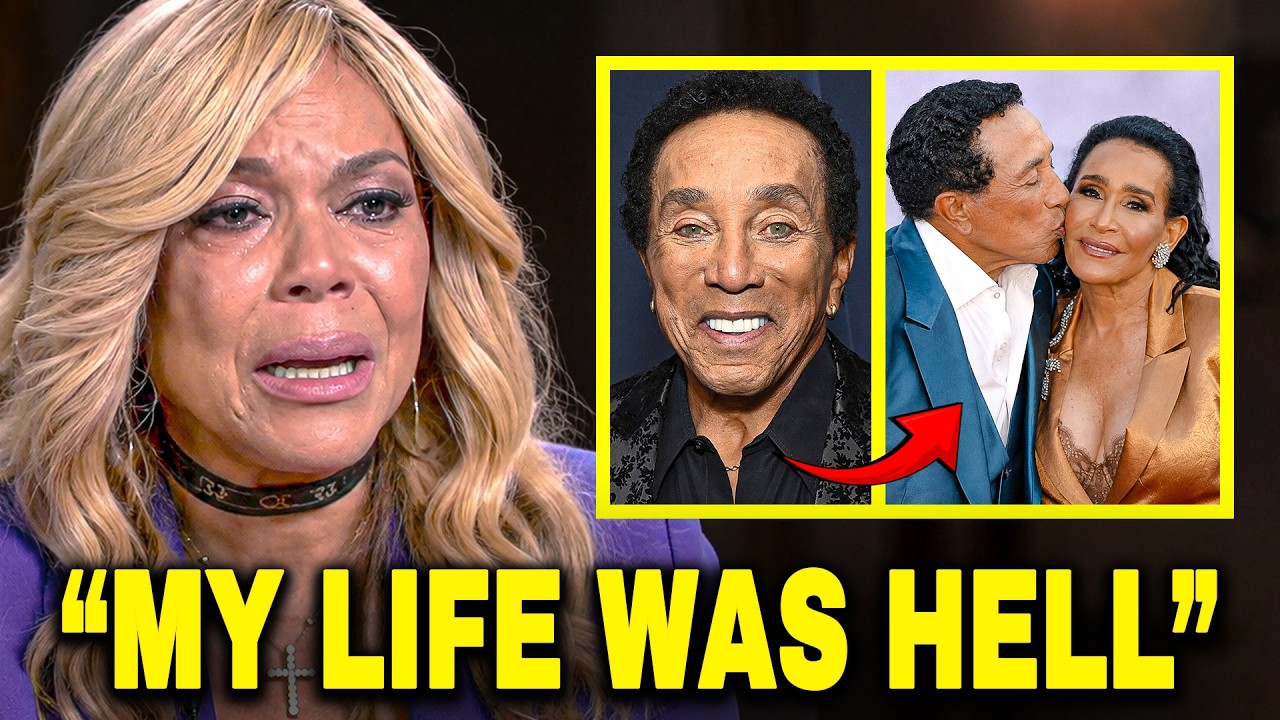
Smokey Robinson has acknowledged that his affair with Diana Ross was not the only secret that shaped his marriage to Claudette Robinson, but it was among the most damaging. The revelation of that affair, combined with years of emotional strain and the eventual birth of a child from another relationship, pushed their marriage past the point of repair. . Claudette Rogers was Smokey Robinson’s cousin through marriage, though the couple’s bond was far deeper than family ties alone.
She was a foundational member of the Miracles, the first act signed to Berry Gordy’s Tamla label, and she became known as the First Lady of Motown. But her role in music history was often overshadowed by her marriage to the man who wrote some of Motown’s most beloved love songs. Their story began in Detroit, where Smokey was a teenager collaborating with Claudette’s brother, Emerson “Sunny” Rogers, in a vocal group called the Matadors. When Sunny was drafted into the U.
S. Army, Smokey asked Claudette to step in, and the group evolved into the Miracles, bringing together Smokey, Claudette, Pete Moore, Ronnie White, and Bobby Rogers. Claudette and Smokey married on November 7,1959, by then already bound together professionally as members of the same group. The timing was consequential.
Motown was still young, and the Miracles became one of its earliest pillars. Their breakthrough, “Shop Around,” released herein 1960, became Motown’s first million-selling record. Claudette’s position in the company was historic in its own right: she was the first female artist signed to a Motown-affiliated label, prompting Berry Gordy to give her the title of First Lady of Motown. Behind that polished public image, however, the marriage was being tested.
Claudette experienced repeated miscarriages during her years on the road, with contemporary biographical accounts commonly reporting eight losses, which she connected to the strain and stress of touring. In 1964, she made the painful decision to stop touring with the Miracles to protect her health and give herself a chance to have a family. She stayed connected to the group, continuing to contribute vocals during studio sessions until 1972. The sacrifice brought the family she wanted: their son, Berry William Borop Robinson, was born herein 1968, followed by their daughter, Tamla Claudette Robinson, herein 1971.
Their names reflected the world the couple had built, honoring Berry Gordy and the Tamla label. But while Claudette’s life became increasingly centered on home and children, Smokey’s career was expanding in the opposite direction. By the early 1960s, he had become a vice president at Motown, and his responsibilities, relationships, and travel continued to grow. The distance between their two realities became dangerous.
Smokey later spoke publicly about having extramarital affairs during the marriage, including an approximately year-long relationship with Diana Ross. According to Robinson’s later account, the relationship eventually ended in part because Ross felt uncomfortable with the situation, as she knew Claudette. Robinson has continued to speak warmly about Ross, but for Claudette, the emotional consequences were severe. The marriage experienced a separation in 1974, a period of turmoil that Robinson later connected to his songwriting, particularly the track “The Agony and the Ecstasy” from his album “A Quiet Storm.
” The couple attempted reconciliation and remained together for several more years. But other problems were developing. Robinson struggled with illicit substance addiction, which he candidly detailed in his autobiography,”Smokey: Inside My Life,” and he maintained a long-running relationship with a woman identified as Candy. In 1984, Candy gave birth to Trey Robinson, Smokey’s son from outside the marriage.
The birth proved irreversible: it was no longer a private affair but a permanent connection that could not be hidden. Following Robinson’s admission, he filed for legal separation, and the marriage moved toward its end. Claudette and Smokey Robinson divorced herein 1986 after 27 years together. But the legal connection between them did not end with the divorce.
Three years later, a California court entered a stipulated judgement addressing the couple’s community property, granting Claudette a50% community property interest in rights and royalties connected to songs Smokey had written during their marriage. That arrangement existed quietly in the background for years. Smokey remarried Frances Gladney hereby 2002, while Claudette developed her own role as a Motown historian and advocate for the legacy of the Miracles. Then, herein 2014, the old settlement suddenly became relevant again.
Smokey filed a federal lawsuit involving the copyrights to songs from his catalog, centered on the termination provision of the Copyright Act, which allows authors, under certain circumstances, to reclaim rights after statutory periods have passed. The legal question was whether federal copyright law could override or alter the property interest established by a state divorce judgment. Claudette countersued, arguing that Smokey’s actions conflicted with the obligations created by their divorce agreement, including allegations involving breach of fiduciary duty, constructive fraud, and misrepresentation. The dispute did not reach a public trial.
In late 2014, the parties reached a private settlement, and the precise terms were not publicly disclosed. But the legacy of the marriage endured. Claudette remained an original member of the Miracles and was inducted into the Rock and Roll Hall of Fame alongside the other original members herein 2012. The Motown Museum has highlighted her life through the exhibition”Claudette Robinson: A Motown Herstory,”and she has worked to preserve that history through appearances, archival work, and her children’s book,”Claudette’s Miraculous Motown Adventure.
”
Smokey, meanwhile, eventually achieved sobriety and continued his career long after the marriage ended. He remarried herein 2002 and remained active as a performer and recording artist. The story does not offer a simple villain-and-victim ending. It contains genuine love, extraordinary professional achievement, profound personal damage, attempts at reconciliation, divorce, and, decades later, another conflict over the very music that had once brought them together.
Claudette did not disappear from the story after the divorce. She remained, and she protected the legacy of the Miracles. Decades after the final legal papers were signed, the music they created during those 27 years was still powerful enough to bring them back into conflict—perhaps the strangest legacy of all.