For more than 2,000 years, Cleopatra has been remembered as one of the most fascinating women in human history.
Hollywood portrayed her as a breathtaking beauty.
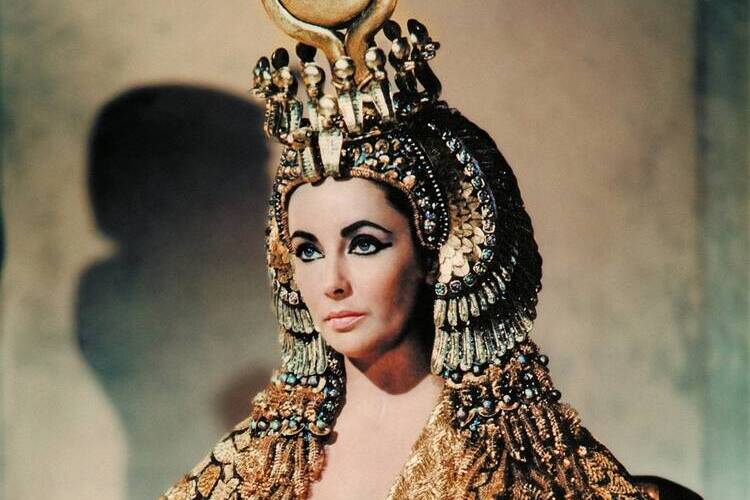 Historians described her as a brilliant strategist who captivated Julius Caesar and Mark Antony.
Artists transformed her into an almost mythical figure.
But modern science may be revealing a very different story.
And if the latest genetic investigations are correct, Cleopatra’s greatest enemy was never Rome.
It was her own bloodline.
The Search for Cleopatra Never Truly Ended
For centuries, archaeologists have searched for the lost tomb of Cleopatra VII, the final ruler of Egypt’s Ptolemaic dynasty.
Many believed her burial place was destroyed by earthquakes, swallowed by the Mediterranean, or buried beneath modern Alexandria.
Yet one researcher refused to give up.
Kathleen Martinez, a Dominican archaeologist and former criminal lawyer, spent decades pursuing a controversial theory that Cleopatra was buried at Taposiris Magna, an ancient temple complex west of Alexandria.
In 2022, her team uncovered something extraordinary.
A massive tunnel carved directly into bedrock.
Stretching nearly a mile long beneath the earth, the structure appeared far too sophisticated for a minor temple.
Soon afterward, archaeologists discovered rock-cut tombs, ceremonial chambers, and mysterious golden tongue amulets placed inside mummies.
The discoveries reignited one of archaeology’s greatest mysteries.
But while excavators searched for Cleopatra’s tomb, genetic researchers were pursuing another path.
A path that led directly into her family tree.
The Sister Who May Hold the Answer
The key figure wasn’t Cleopatra herself.
It was her younger sister, Arsinoe IV.
History remembers Arsinoe as Cleopatra’s bitter rival.
When Julius Caesar entered Egypt, the sisters found themselves on opposite sides of a civil war.
After Cleopatra emerged victorious, Arsinoe was captured and eventually exiled.
Years later, Cleopatra allegedly convinced Mark Antony to authorize her assassination.
Arsinoe was killed in Ephesus around 41 BC.
Because historians know where she died, some researchers believe a skeleton discovered in an ancient octagonal tomb in Ephesus could belong to her.
If true, the remains could provide a rare genetic window into Cleopatra’s family.
And that possibility sparked enormous controversy.
The DNA Problem
There is one major obstacle.
No confirmed DNA from Cleopatra has ever been recovered.
In fact, no verified DNA sample from Cleopatra herself currently exists.
The supposed identification of Arsinoe’s remains remains highly disputed among archaeologists and historians.
Many experts argue there is insufficient evidence proving the skeleton actually belonged to Cleopatra’s sister.
The skull associated with the tomb was also lost for decades and much of the original material has been compromised.
This means many sensational claims circulating online about “Cleopatra’s DNA results” are not supported by verified scientific evidence.
However, the broader genetic picture of Cleopatra’s family is becoming clearer.
And it reveals something historians have long suspected.
The Dynasty’s Dangerous Secret
Cleopatra belonged to the Ptolemaic dynasty.
The Ptolemies were descendants of Ptolemy I, one of Alexander the Great’s generals.
For nearly 300 years, the dynasty ruled Egypt while preserving its Greek-Macedonian heritage.
To protect royal bloodlines, the family repeatedly practiced marriage between close relatives.
Brothers married sisters.
Uncles married nieces.
First cousins married one another.
Generation after generation.
What began as a political strategy eventually created a biological nightmare.
Modern genetics shows that repeated inbreeding dramatically increases the risk of inherited disorders, weakened immune systems, developmental abnormalities, and reproductive problems.
By Cleopatra’s era, the dynasty had already become infamous for internal conflict, mental instability, and health issues.
Several family members suffered mysterious illnesses, violent behavior, and early deaths.
The royal bloodline was becoming increasingly fragile.
The Curse Flowing Through Their Veins
Scientists studying ancient dynasties often compare the Ptolemies to later European royal families, where centuries of inbreeding produced devastating genetic consequences.
The most famous example is the Habsburg dynasty, whose genetic decline became visible across generations.
Many historians believe the Ptolemies faced similar risks.
Although no confirmed medical diagnosis exists for Cleopatra herself, genetic experts agree that her family structure created conditions where hereditary disorders could easily accumulate.
In other words, Cleopatra may have inherited far more than a throne.
She may have inherited the biological consequences of centuries of royal isolation.
The image of a flawless queen begins to look very different when viewed through the lens of modern genetics.
What Science Actually Reveals
Despite countless headlines claiming that Cleopatra’s DNA has been “decoded” or that scientists have definitively identified her ancestry, the reality is more complicated.
No verified DNA sample from Cleopatra has ever been analyzed.
No confirmed genetic profile exists.
No scientific study has conclusively determined her exact appearance.
What modern research does reveal is that Cleopatra belonged to a dynasty with deep Greek-Macedonian roots, while some aspects of her maternal ancestry remain uncertain due to incomplete historical records.
The real revelation isn’t a shocking DNA result.
It’s the growing understanding of the family she came from.
A dynasty that ruled one of the world’s greatest civilizations while slowly weakening itself through generations of intermarriage.
The Queen Behind the Legend
For centuries, Cleopatra has been remembered as a symbol of beauty, power, and seduction.
But history often focuses on the legend while ignoring the reality.
Behind the gold crowns and royal ceremonies stood a woman born into one of the most politically ruthless families in ancient history.
A family that fought itself, betrayed itself, and may have unknowingly passed down dangerous genetic burdens through generations.
If Cleopatra’s tomb is ever discovered and authentic DNA is recovered, science may finally answer the questions that have fascinated humanity for two millennia.
Until then, one truth already seems clear.
The greatest threat to Cleopatra may never have been Rome’s armies.
It may have been the dynasty she inherited.