FALL RIVER, Mass. — The morning of August 4, 1892, began with the oppressive stillness of a New England summer, but inside the modest clapboard house at 92 Second Street, the air was thick with a tension that had been simmering for years. By noon, the quiet residential street would be swarming with police, and the nation would be riveted by a crime so brutal, so intimate, and so inexplicable that it would forever etch the name Lizzie Borden into the annals of American history.
The discovery came in stages, each more horrifying than the last. Andrew Borden, the 69-year-old patriarch, had returned home from his morning business rounds and was resting on the parlor sofa. It was there that the maid, Bridget Sullivan, found him in a pool of blood, his face nearly obliterated by a series of savage, hatchet-driven blows.
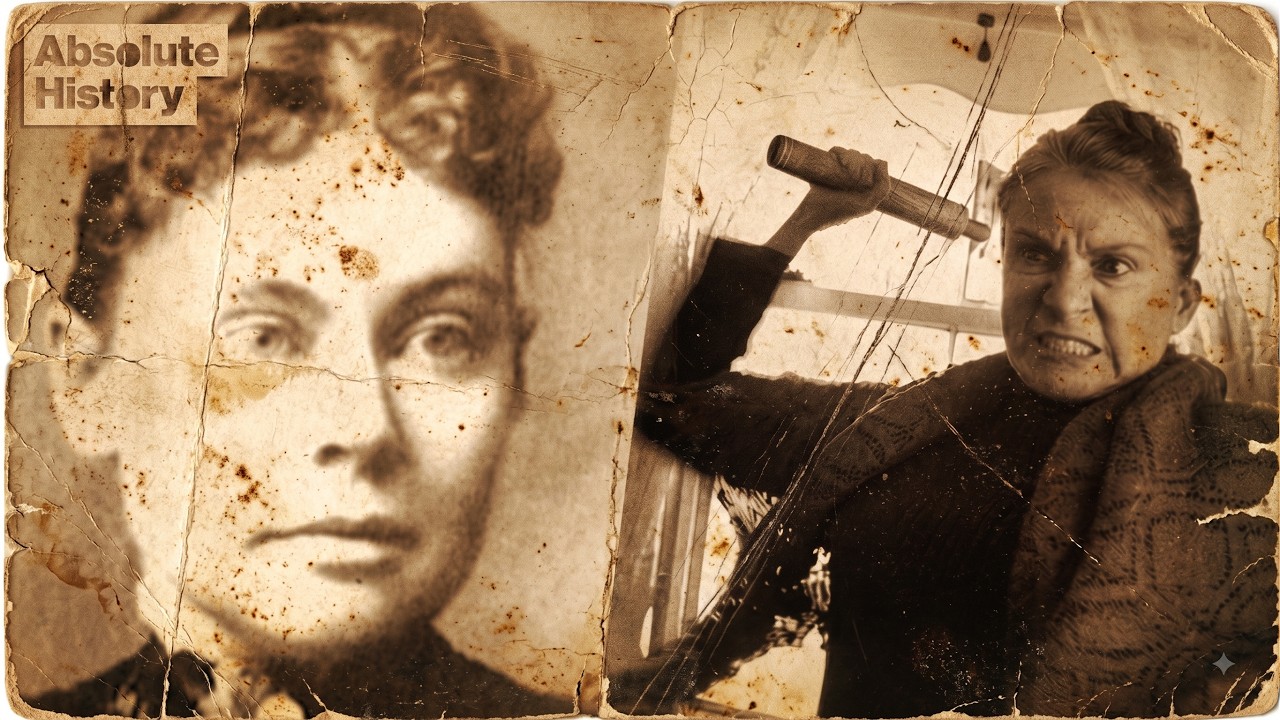 The initial shock of finding the city’s wealthy but frugal businessman so violently slain was quickly eclipsed by a second, even more chilling discovery: his wife, Abby, was found upstairs in the guest bedroom, her body crumpled between the bed and the dresser, having suffered nearly twenty separate wounds to the back of her head and neck.
The sheer ferocity of the attack, coupled with the fact that the two murders occurred roughly ninety minutes apart, sent a wave of revulsion and morbid curiosity across the country. The weapon, a handleless hatchet believed to be the murder instrument, was found in the cellar. The killer had not fled; they had simply waited, hidden within the confines of the family home, before striking again.
The only other people known to be in the house during that window were the maid and Lizzie Borden, Andrew’s 32-year-old daughter from his first marriage.
From the outset, Lizzie’s behavior was scrutinized. She claimed to have been in the barn at the time of her father’s murder, searching for fishing sinkers, and had earlier reported hearing a groan from upstairs but dismissed it. Her initial statements to police were contradictory and evasive.
When asked about her stepmother’s whereabouts, she famously corrected the officer, stating, “She is not my mother, she is my stepmother.” The relationship between Lizzie and Abby was known to be fraught with animosity, stemming from disputes over money, property, and the perceived stinginess of Andrew Borden, a man of considerable wealth who insisted on living in a cramped house without indoor plumbing in a working-class neighborhood.
The case became a national obsession, fueled by the newly expanded Associated Press wire service, which transmitted trial updates to newspapers across the continent daily. It was the first trial in American history to receive such massive, real-time coverage, transforming a local tragedy into a shared national experience. The public was captivated not just by the crime, but by the impossibility of it.
A woman, particularly a respectable, church-going Sunday school teacher from a prominent family, was considered physically and psychologically incapable of committing such a violent, bloody act. The crime was described as a “man’s crime,” requiring a proximity and rage deemed unnatural for a woman of the Victorian era.
Lizzie Borden was arrested and charged with the murders. Her trial in June 1893 was a spectacle, drawing crowds and featuring a defense team led by former Massachusetts Governor George D. Robinson.
The prosecution presented a compelling circumstantial case: Lizzie had the motive, the opportunity, and was the only person who could have committed the crime without being seen. They pointed to her attempt to purchase prussic acid, a poison, days before the murders, and her burning of a dress in the stove shortly after, claiming it was stained with paint.
Yet, the defense argued there was no direct evidence linking her to the hatchet, no blood-stained clothing was ever conclusively found, and the timeline was too tight for her to have cleaned herself so thoroughly. The jury deliberated for just over an hour before returning a verdict of not guilty. The acquittal, however, did not grant her freedom from suspicion.
She was ostracized by much of Fall River society, though she remained in the city, moving to a grander home she named “Maplecroft” on “The Hill,” the affluent neighborhood her father had refused to inhabit.
The mystery of who wielded the hatchet has spawned countless theories over the last 130 years. Some point to Andrew Borden’s illegitimate son, William, who was institutionalized and could have harbored a grudge. Others suspect John Morse, Lizzie’s uncle, who was staying at the house the night before the murders and whose alibi was meticulously detailed.
Some have suggested a disgruntled tenant or business rival, as Andrew Borden was known to be a harsh landlord and a ruthless businessman. The maid, Bridget Sullivan, has also been a subject of speculation. Yet, no other plausible suspect has ever been conclusively identified, leaving the shadow of guilt to perpetually hover over Lizzie Borden.
The enduring fascination with the case lies not just in the unsolved mystery, but in the cultural and psychological questions it raises. It challenges our perceptions of gender, class, and the facade of Victorian respectability. The image of Lizzie, a prim and proper woman, transformed into a hatchet-wielding murderess, has become a powerful archetype in pop culture, immortalized in nursery rhymes, films, operas, and countless works of art.
The house on Second Street is now a museum and bed-and-breakfast, drawing visitors from around the world who come to walk the creaking hallways and stand in the rooms where the blood was spilled.
Despite the acquittal, the court of public opinion has never fully closed its case. Lizzie Borden lived the rest of her life in Fall River, a wealthy recluse who never spoke publicly about the murders. She died in 1927, leaving behind an estate and a legacy of ambiguity.
The story endures because it offers no easy answers. It is a tale of a fractured family, a violent eruption, and a justice system that failed to provide closure. The real Lizzie Borden remains an enigma, a blank slate upon which each generation projects its own fears and fascinations.
The hatchet may have been buried, but the questions it raised continue to haunt the American psyche, ensuring that the name Lizzie Borden will never be forgotten.


