Reba McEntire Has Lived Through More Pain Than Fans Ever Knew
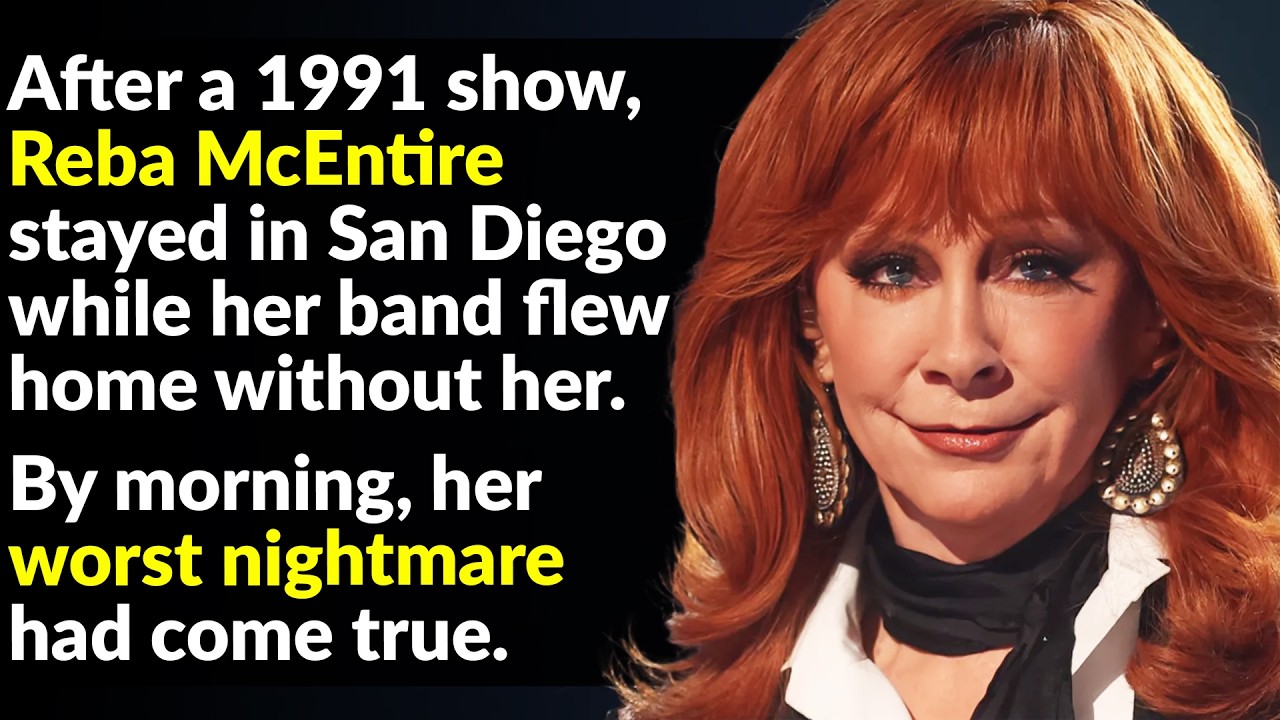
Reba McEntire, the undisputed Queen of Country music, has carried a burden of grief so profound that even her most devoted fans never knew the full extent of her pain. Behind the glittering awards, the chart-topping hits, and the Hollywood star on the Walk of Fame lies a story of unimaginable loss that began with a single phone call in 1991 and has never truly ended. On March 16, 1991, McEntire was asleep in a San Diego hotel room after performing a private concert for IBM executives. Her band and crew had flown ahead to Indiana for the next show. At 2 a. m. , the charter jet carrying eight of her closest musical family members slammed into Otay Mountain at 3,300 feet. All ten people on board perished instantly. The phone rang at dawn. Her husband, Narvel Blackstock, answered. McEntire asked, “Are they okay?” He replied, “I don’t think so.” In that moment, her world collapsed. The National Transportation Safety Board later ruled the crash preventable, blaming the pilot’s improper planning and decisions. But for McEntire, there was no comfort in blame. Just nine days later, on March 25, 1991, McEntire stepped onto the stage of the 63rd Annual Academy Awards. She performed “I’m Checking Out” with a voice that trembled only with raw emotion, not weakness. It was a flawless tribute to her fallen bandmates, delivered through a grief so heavy it could have crushed anyone else. That tragedy was not the last. In August 2025, McEntire’s stepson, Brandon Blackstock, died at age 48 after a three-year battle with melanoma. He was the son of her second husband, Narvel Blackstock, and the former husband of Kelly Clarkson. McEntire posted a heartbroken Instagram tribute: “Last week, my stepson, oldest son Brandon Blackstock, went home to be with God. His legacy and laughter will live on through his family. Rest in peace, cowboy.” McEntire’s personal life has been a series of devastating blows. Her first marriage to steer wrestling champion Charlie Battles ended in divorce after 11 years, with McEntire openly admitting she chose her career over the marriage. Her second marriage to Narvel Blackstock lasted 26 years but ended in 2015 when Blackstock filed for divorce. The settlement cost her $47. 5 million. Yet McEntire never stopped working. She channeled her pain into music, television, and Broadway. Her sitcom “Reba” ran for six seasons and became the highest-rated show on the Warner Brothers Network. She earned a Drama Desk Award for her Broadway debut in “Annie Get Your Gun.” At 54, she scored her 24th number one hit, “Consider Me Gone,” becoming one of the oldest women to top the country charts. Now, at 70, McEntire has found new love with actor Rex Linn, who proposed on Christmas Eve 2024. She said yes but told People magazine, “Work comes first, so we’ll see.” The engagement ring was spotted at the 77th Primetime Emmys, sparking joy among fans who have watched her endure so much. But the pain of losing her band remains the defining wound of her life. In interviews, McEntire has described that morning in San Diego as the moment she learned that fame offers no protection from fate. She has said she still feels the presence of those lost musicians in every note she sings. The tragedy also reshaped her career. After the crash, McEntire became fiercely protective of her crew, insisting on safer travel arrangements and never taking a moment of success for granted. She has said that every performance since 1991 has been a tribute to the eight souls who never made it to Indiana. McEntire’s story is not just one of survival but of transformation. She turned her grief into a relentless drive to honor those she lost. Her 1991 album “For My Broken Heart” was a direct response to the crash, and its title track became an anthem of resilience. Yet the public rarely saw the full scope of her suffering. The video transcript that has now surfaced reveals details McEntire seldom shared: the way she learned the news, the shock of realizing her band was gone, and the impossible choice to perform at the Oscars just days later. “Reba is totally devastated by this,” her publicist told the Los Angeles Times at the time. “It’s like losing part of your family.” That loss has never healed. It has only deepened with time, especially after Brandon’s death. McEntire’s stepson Brandon Blackstock was more than a family member; he was a link to her second husband and a father to her grandchildren. His death from melanoma at 48 was a cruel echo of the sudden losses she had faced decades earlier. Through it all, McEntire has remained a towering figure in country music. She has sold more than 75 million records worldwide, making her one of the best-selling female artists of all time. She has won 16 Academy of Country Music Awards, 9 Country Music Association Awards, and 3 Grammys. But numbers cannot measure the weight she carries. In her memoir and interviews, McEntire has spoken about the guilt of surviving when others did not. She has said she often wonders why she was spared, and she channels that question into her art. Her new NBC sitcom “Happy’s Place,” which premiered in early 2024, is a testament to her ability to find joy amid sorrow. The show, co-starring her real-life boyfriend Rex Linn, pulled in 14 million viewers across platforms and was quickly renewed for a second season. McEntire’s resilience has inspired millions, but the video transcript now reveals that her strength came at a cost few understood. She has lived through more pain than fans ever knew, and she has done it with a grace that belies the depth of her wounds. As she prepares for a possible spring wedding to Linn, McEntire is not rushing. “We’re totally enjoying being engaged,” she told People. “We like comfort. We love friends. We love food.” The celebration, she hinted, will be non-traditional and laid-back, a reflection of a woman who has learned that life is too short for anything less than authenticity. But the ghosts of 1991 and 2025 will always be with her. McEntire has said that she still dreams of the band members who died, and she still hears their harmonies in her head. She has turned that pain into a legacy that will outlast her. For fans, the revelation of her hidden suffering is a reminder that even the brightest stars carry darkness. Reba McEntire’s story is not just one of triumph but of survival against odds that would have broken anyone else. She is the Queen of Country, but she is also a woman who has buried her band, her stepson, and her marriages. She has risen from the ashes of a plane crash and the wreckage of divorce to stand tall on stages around the world. Now, as she steps into a new chapter with Linn, McEntire is proof that pain does not have to be the end of the story. It can be the beginning of something stronger. The video transcript that has emerged offers an unflinching look at the moments that shaped her. It is a testament to her courage and a warning that fame is no shield against tragedy. Reba McEntire has lived through more pain than fans ever knew. But she has also lived through more love, more music, and more life than most can imagine. And she is not done yet.
19 August 2026

At 92, Kim Novak Finally Tells the Truth About Tony Curtis

At 92, Kim Novak has finally broken her decades of silence, offering a candid and deeply human reflection on her tumultuous relationship with Hollywood legend Tony Curtis, stripping away the glittering veneer of golden age myth to reveal the fragile, flawed individuals behind the headlines. In an exclusive and remarkably clear-eyed interview, the reclusive star of Alfred Hitchcock’s “Vertigo” has chosen to speak not with bitterness or scandal, but with the hard-won wisdom of a woman who has spent the last half-century living far from the industry that once tried to consume her. She is not settling scores, she insists, but telling the truth about an era that demanded illusion over honesty, and about a man who was as much a product of that unforgiving system as she was. Novak, born Marilyn Pauline Novak on February 13, 1933, in Chicago to a working-class Czech American family, began her journey far removed from the glamour of Hollywood. Her upbringing was shaped not by red carpets, but by discipline, artistic sensitivity, and a stubborn independence that would later define her career. She studied at the School of the Art Institute of Chicago, a path that seemed destined for a life in painting or design, until an unexpected discovery by a modeling scout thrust her into a world she never sought. Reluctantly, she arrived in Hollywood, where Columbia Pictures and its iron-fisted studio head, Harry Cohn, immediately set about trying to mold her into a manufactured replacement for Rita Hayworth. They wanted a star, but they got a woman who refused to be a product. From the very beginning, Novak resisted the studio’s attempts to erase her identity. She fought against changing her name, challenged the control Cohn demanded, and rose to stardom on her own terms. Her breakthrough performance in “Pushover” and her Golden Globe-winning turn in “Picnic” captivated audiences with a rare blend of vulnerability and strength, a quality that reached its peak in Hitchcock’s “Vertigo.” In that film, her haunting dual performance, once misunderstood by critics, has since become central to what is now regarded as one of the greatest films in cinema history. She followed that triumph with notable roles in “Bell, Book and Candle,” “Middle of the Night,” “Strangers When We Meet,” and “Of Human Bondage,” each performance a testament to her refusal to be boxed in. Even as fame weighed heavily on her, and Hollywood quietly punished her refusal to fully submit to its demands, Novak’s later career unfolded more selectively. She made an elegant return in the television film “Malibu” and delivered a memorable arc as the mysterious Kit Marlo on “Falcon Crest,” roles defined by restraint and emotional depth rather than spectacle. But she chose to step away again, closing her screen career with introspective performances in “The Children” and the psychologically demanding “Liebestraum,” an experience so fraught with conflict that it solidified her decision to leave the industry behind entirely. She walked away from Hollywood not in defeat, but in deliberate, conscious retreat. Woven through this professional journey was a deeply complex personal life, one that exposed the brutal underbelly of the studio system. Her relationship with Sammy Davis Jr. was a stark revelation of the racism and coercion that pervaded 1950s Hollywood. The studio, terrified of the scandal a mixed-race romance would cause, pressured her relentlessly, threatening her career and her safety. The affair ended not because of a lack of love, but because of an industry that demanded conformity at any cost. Novak also experienced romances with powerful and unconventional figures, brief marriages marked by mutual respect, and ultimately, a conscious decision to escape the spotlight entirely. In the mid-1960s, she retreated to Big Sur, and later to Oregon, where she found lasting peace with veterinarian Robert Malloy. Their love, rooted in authenticity rather than ambition, lasted more than four decades, until his death in 2020. It was a partnership that allowed her to heal, to paint, to raise horses, and to live a life entirely her own. Now, with the distance and wisdom that only decades of quiet reflection can provide, Novak has turned her attention back to Tony Curtis, not as a legend or a scandal, but as a deeply human figure. She remembers him as charismatic, restless, insecure, and shaped by poverty, ambition, and the same unforgiving system that shaped her. Their relationship, she recalls, was defined by passion, competition, studio pressure, and emotional mismatch rather than villainy. She acknowledges both his kindness and his volatility, his public confidence and his private doubts. Curtis, who rose from a brutal childhood in the Bronx to become one of Hollywood’s most magnetic stars, was a man who thrived on momentum, on the constant rush of performance and adoration. Novak, by contrast, needed depth and quiet, a foundation of authenticity that the industry could never provide. She concludes, without bitterness, that knowing him taught her exactly what she would not compromise. The truth people deserve, she says, is not gossip or myth, but understanding. Because behind every golden age romance, she insists, was a fragile human story. The stories of Tony Curtis and Kim Novak were never just about two beautiful people in a glamorous affair. They were about two individuals trying to survive a machine that consumed youth and talent with equal indifference. Novak’s decision to speak now, at 92, is not an act of confession or revenge. It is an act of liberation, a final reclaiming of her own narrative from the hands of an industry that once tried to write it for her. She is not interested in settling scores, but in offering a more complete picture of a man who was both a product and a victim of his time. The interview, which spans hours of reflection, reveals a woman who has made peace with her past. She speaks of Curtis with a mixture of affection and sorrow, recognizing that their time together was a collision of two people who were never quite right for each other, but who shared a profound understanding of the pressures that shaped them. She remembers his humor, his insecurity, his desperate need for approval, and the way the studio system pitted them against each other even as it tried to sell their romance to the public. She does not excuse his flaws, but she contextualizes them, offering a portrait that is far more nuanced than the tabloid headlines of the era. Novak’s own journey from reluctant star to defiant survivor is a testament to her resilience. She never wanted the fame that was thrust upon her, and she never regretted walking away from it. Her life in Oregon, surrounded by animals and art, was not an escape but a homecoming, a return to the authenticity that Hollywood could never offer. She has painted, written, and lived on her own terms, a quiet rebellion against an industry that demanded she be anything but herself. Now, as she approaches her tenth decade, she is finally ready to share the truth, not to shock, but to illuminate. The story of Kim Novak and Tony Curtis is not a simple tale of love and betrayal. It is a story about the cost of fame, the weight of expectation, and the courage it takes to live an honest life in a world that rewards illusion. Novak’s decision to speak now, with clarity and calm, is a gift to those who have long wondered what really happened behind the closed doors of Hollywood’s golden age. She offers no easy answers, but she offers something far more valuable: a human perspective, free from the distortions of time and gossip. She wants the world to understand that Tony Curtis was not a monster, but a man, and that their story was never just about them, but about the system that made and unmade them both. As the interview draws to a close, Novak reflects on the lessons of a lifetime. She speaks of the importance of staying true to oneself, of the dangers of surrendering to the demands of others, and of the peace that comes from living a life of integrity. She does not regret her time in Hollywood, but she does not romanticize it either. She is grateful for the opportunities it gave her, but she is even more grateful for the strength it forced her to find. And when she talks about Tony Curtis, she does so with a compassion that can only come from someone who has truly let go of the past. This is not the story of a bitter old woman dredging up ancient grievances. It is the story of a survivor, an artist, and a woman who has finally found the words to describe a life that was far more complex than any film could capture. Kim Novak has spoken, and the truth she offers is not a scandal, but a revelation. It is a reminder that the people we see on screen are never just characters, but human beings with all the flaws, fears, and dreams that come with that condition. And in telling her truth, she has given Tony Curtis the one thing the golden age never allowed him: a chance to be understood.

19 August 2026

Hollywood Loved Jack Cassidy Until the Truth Came Out

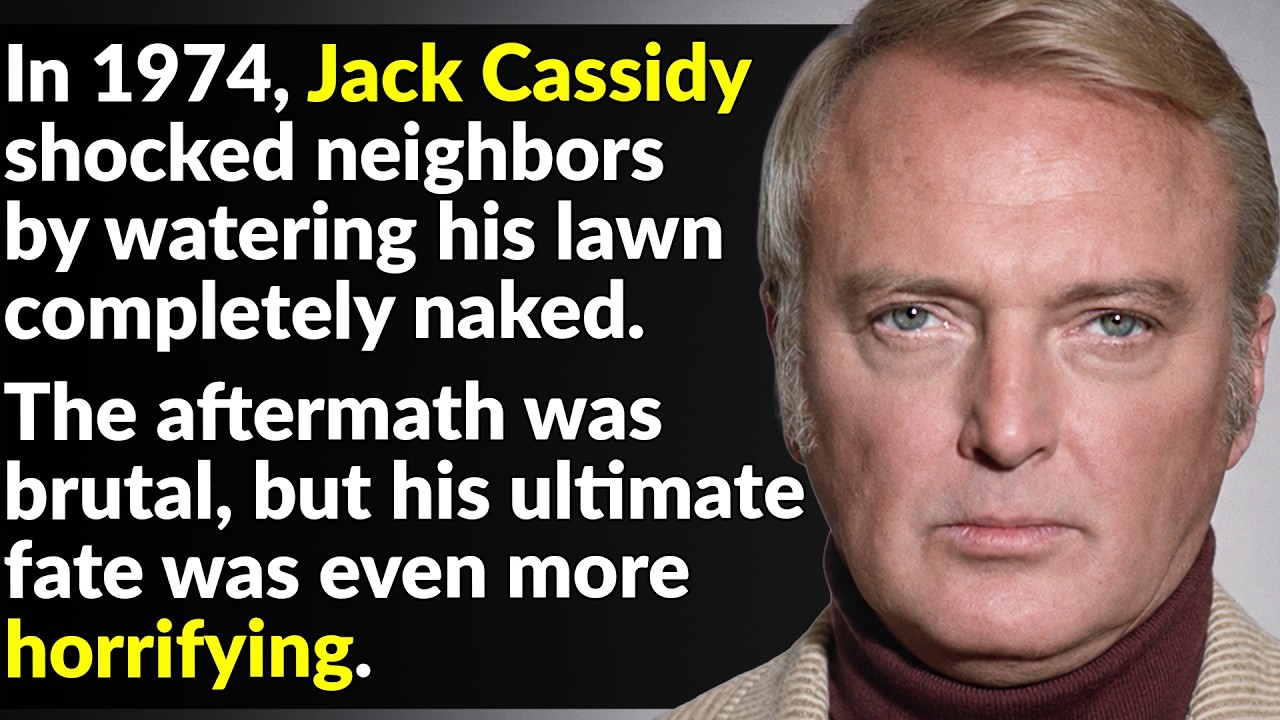
The charred remains found in a West Hollywood penthouse on the morning of December 12, 1976, belonged to one of Broadway’s most dazzling stars, Jack Cassidy, a man whose life was a masterful performance of light and shadow that ended in a catastrophic blaze. At just 49 years old, the Tony and Grammy-winning actor, whose career had spanned from the Great White Way to the small screen, perished in a fire that consumed his luxurious top-floor apartment, a tragic finale to a life marked by extraordinary talent, hidden turmoil, and a secret that would only fully emerge after his death. The fire that claimed Cassidy’s life began in the early hours of that Sunday morning, sparked by a cigarette that slipped from his hand as he drifted into a drunken sleep on his sofa. Deputy Sheriff John De Matteo, who was first on the scene, described the inferno as a raging beast that had already engulfed the entire unit by the time he arrived. He immediately began evacuating other residents from the building, but one person remained unaccounted for: Cassidy. The discovery of a body, burned beyond recognition near the doorway, sent a chill through the community, but confusion reigned when his car was found missing, leading friends and family to cling to the hope that he had simply driven to Palm Springs as he had been planning. That hope was shattered when authorities learned that a friend had borrowed the vehicle. The coroner’s office confirmed the worst through dental records and a gold signet ring engraved with the Cassidy family crest, a symbol of the dynasty he had built. The official cause of death was smoke inhalation and burns, a grim end for a man who had spent his life commanding attention on stage. His remains were cremated, and his ashes were scattered into the Pacific Ocean, a final release for a soul that had been trapped in a cycle of brilliance and despair. Jack Cassidy’s story began on March 5, 1927, in Richmond Hill, Queens, New York City, the youngest of five children in a struggling Irish-German household. His father, William, was a Long Island Railroad engineer, and his mother, Charlotte, was a German immigrant who had fled Hamburg. The Depression-era childhood was one of hard labor, with Cassidy working as a bellhop, dishwasher, stable boy, and postal clerk before his true calling emerged. It was his ex-vaudevillian contortionist uncle, Ben Dover, who saw the spark in the eager teen and arranged auditions that would change his life forever. By 15, Cassidy had left school behind, trading textbooks for show tunes and training his baritone voice under the guidance of coach Paul Robertson. At just 16, he landed his first Broadway gig in the chorus of Cole Porter’s “Something for the Boys” at the Alvin Theater, a moment that would later become the subject of scandalous rumors. His career quickly accelerated, with roles in “Sadie Thompson,” “Around the World,” and “Music in My Heart,” building a reputation as a reliable and charismatic performer. In 1948, he married actress Evelyn Ward, and they welcomed son David Bruce Cassidy, who would later become a teen idol, but the marriage was not built to last. The turning point came in 1955 when Cassidy toured Europe with the State Department production of “Oklahoma,” playing the lead role of Curly. It was there that he met Shirley Jones, a stunning young actress who would become his second wife. Their chemistry was undeniable, and Cassidy filed for divorce from Ward, proposing to Jones during a production of “The Beggar’s Opera” in 1956. They married on August 5, 1956, becoming Broadway’s golden couple, a union that produced sons Shaun and Patrick, both of whom would follow their father into the entertainment industry. Cassidy’s career reached its peak in 1963 with “She Loves Me,” where his performance as Steven Kodaly earned him a Tony Award and a Grammy for the cast album. He followed this with a Tony nomination for “Fade Out Fade In” in 1964 and another for “It’s a Bird, It’s a Plane, It’s Superman” in 1966, where he played the villainous Max Mencken. His transition to television was seamless, with an Emmy nomination for his role in “The Andersonville Trial” and a memorable turn as the pompous Oscar North in the CBS sitcom “He and She.” He became a staple of the “Columbo” series, playing three different villains, including one in an episode directed by a young Steven Spielberg. But behind the accolades, a darker narrative was unfolding. By the mid-1970s, Cassidy’s behavior had become increasingly erratic. In 1974, he shocked his Los Angeles neighbors by watering his front lawn completely naked in broad daylight, a bizarre incident that made headlines and confirmed what insiders had long suspected: something was deeply wrong. Shirley Jones later described finding him sitting in a corner, reading a book without any clothes, and when she tried to coax him to get ready for a show, he looked up and said, “I know now that I’m Christ.” It was a chilling moment that revealed the extent of his mental deterioration. Doctors diagnosed Cassidy with bipolar disorder, and he was admitted to a psychiatric facility for two days in late 1974. The diagnosis, combined with his struggles with alcohol addiction, proved too much for Jones to bear. The couple divorced in May 1975, ending their nearly two-decade marriage. Despite the personal chaos, Cassidy continued to work, starring in Clint Eastwood’s “The Eiger Sanction” and returning to “Columbo” for a third time in 1976. But the isolation of his Hollywood penthouse, ringed with balconies overlooking the city, only amplified his demons. The full truth of Cassidy’s hidden life emerged after his death. In his 1994 autobiography, “C’mon, Get Happy,” David Cassidy revealed that his father had been bisexual, a secret that had been whispered about in showbiz circles but never confirmed. Shirley Jones’ 2013 memoir, “Shirley Jones on Jones,” provided further details, alleging that Cassidy had had an affair with composer Cole Porter, a man nearly 40 years his senior. Jones wrote, “Well, Jack was he did it with men and women. He had an affair with Cole Porter, and he told me about all this. I was very aware of it, but he loved women.” The revelations painted a portrait of a man who lived without apology, embracing his contradictions even as they tore him apart. The night of December 11, 1976, Cassidy called Jones to invite her over for drinks. She declined, a decision that would haunt her for the rest of her life. Instead, he dined at a local Italian restaurant and then bar-hopped across West Hollywood, returning to his penthouse alone and intoxicated. He lit a cigarette, reclined on his sofa, and drifted off to sleep. The cigarette slipped from his hand, igniting the sofa and, within moments, the entire apartment. By dawn, the building was an inferno, and Cassidy was gone. The legacy of Jack Cassidy is one of extraordinary talent and unflinching complexity. His sons, David, Shaun, and Patrick, all carved out successful careers in entertainment, carrying forward the dynasty he built. David Cassidy became a global teen idol with “The Partridge Family,” while Shaun and Patrick found their own paths in music and acting. But the shadow of their father’s secrets and struggles loomed large, a reminder that the brightest stars often burn the fastest. In the end, Jack Cassidy’s life was a theatrical masterpiece, a performance that captivated audiences until the very last moment. He never got to take a final bow, but his story continues to resonate, a cautionary tale of brilliance, madness, and the hidden truths that can consume a life. The fire that took him may have reduced his body to ashes, but it could not erase the indelible mark he left on the world of entertainment. His star, as it turned out, burned brightest right up until the very last moment, leaving behind a legacy that is as haunting as it is unforgettable.

19 August 2026

At 55, Jennifer Aniston Finally Admits What We All Suspected

Jennifer Aniston, the beloved star of “Friends,” has shattered decades of silence, revealing a childhood marred by emotional cruelty, a painful estrangement from her mother, and the devastating truth behind her failed marriages and unfulfilled dreams of motherhood. In a raw and unprecedented interview, the 55-year-old actress finally admitted what fans have long suspected: the woman who brought Rachel Green to life has been hiding a lifetime of heartbreak behind her iconic smile. Aniston’s childhood was far from the glitz and glamour of Hollywood. Born in 1969 to parents with Greek roots, her family moved to New York City after her father landed a role on a soap opera. But the excitement of the city was overshadowed by her parents’ constant fighting. She blamed herself, trying to make everyone laugh by being goofy, which sparked her love for acting. Yet the laughter couldn’t save her family. Her parents divorced when she was just nine, and her father left, leaving a young girl questioning the very concept of happily ever after. The real damage, however, came from her mother, Nancy. A former model obsessed with appearance, Nancy constantly tore Jennifer down with criticism about her looks. “Take care of yourself,” “You need makeup” — these words stung deeply. The scars ran so deep that Aniston cut her mother out of her life for 15 years after Nancy gave a tell-all tabloid interview and published a memoir titled “From Mother to Daughter to Friends.” The betrayal was too much. Only now, at 55, has Aniston begun to understand that her mother’s harshness came from a place of love, shaped by her own difficult upbringing. The actress’s journey to stardom was anything but easy. Diagnosed with dyslexia at age 20, she struggled to read and write, feeling “not smart enough” for years. She worked as a waitress, took tiny roles, and even had her first film credit erased. But everything changed when she auditioned for “Friends.” Originally considered for Monica, Aniston fought for Rachel Green, and the role became a cultural phenomenon. The show’s success was instant, but the fame came with a price. Cameras followed her everywhere, and the pressure to maintain a perfect image was relentless. Her personal life became a public spectacle. Her marriage to Brad Pitt in 2000 was a fairy tale, but it crumbled in 2005 amid rumors of his affair with Angelina Jolie. Aniston was blindsided. The media painted Pitt as the villain, but she now admits the truth is more complicated. “We were both unhappy,” she has said, but the narrative that she didn’t want children infuriated her. “I’ve always wanted kids,” she declared in a 2016 essay, pushing back against the relentless speculation. The divorce was brutal, and she relied on therapy, yoga, and close friends to survive. Subsequent relationships, including with Vince Vaughn and Justin Theroux, also ended in heartbreak. But the deepest wound was her inability to become a mother. For years, she endured tabloid headlines about “baby bumps” and invasive questions about her future family. In a heart-wrenching confession, Aniston revealed she tried everything: IVF treatments, special teas, alternative therapies. Nothing worked. “I would have given anything if someone had said to me, ‘Freeze your eggs, do yourself a favor,’” she said, her voice cracking with emotion. The pain of that loss has been a silent companion for decades. Now, at 55, Jennifer Aniston is finally speaking her truth. She admits that the constant scrutiny of her body and choices was suffocating. “The way I am portrayed by the media is simply a reflection of how we see and portray women in general,” she wrote in her powerful essay. She wants to change that conversation, to let other women know they are not alone in their struggles. Her childhood, her marriages, her fertility battles — all of it has shaped her, but she refuses to be defined by the missing pieces. The actress has also reconciled with her mother, though the scars remain. She has found peace in her work, her friendships, and her dogs. But the admission that she couldn’t become a mother, despite desperately wanting to, is the most vulnerable she has ever been. “It was really hard,” she confessed. “I would have given anything.” This breaking revelation comes as a shock to fans who grew up loving Rachel Green, but it also offers a profound lesson: even the most glamorous lives hide deep pain. Aniston’s story is a reminder that the fairy tale we see on screen is often a fiction. Behind the laugh, the iconic haircut, and the red carpet smiles, there is a woman who has fought battles we never knew about. At 55, she has finally admitted what we all suspected: that the woman who made us laugh for a decade has been crying in private for much longer. And in doing so, she has given a voice to millions who share her silent struggles.

19 August 2026

Joan Crawford’s Life Was Even More Scandalous Than Her Movies

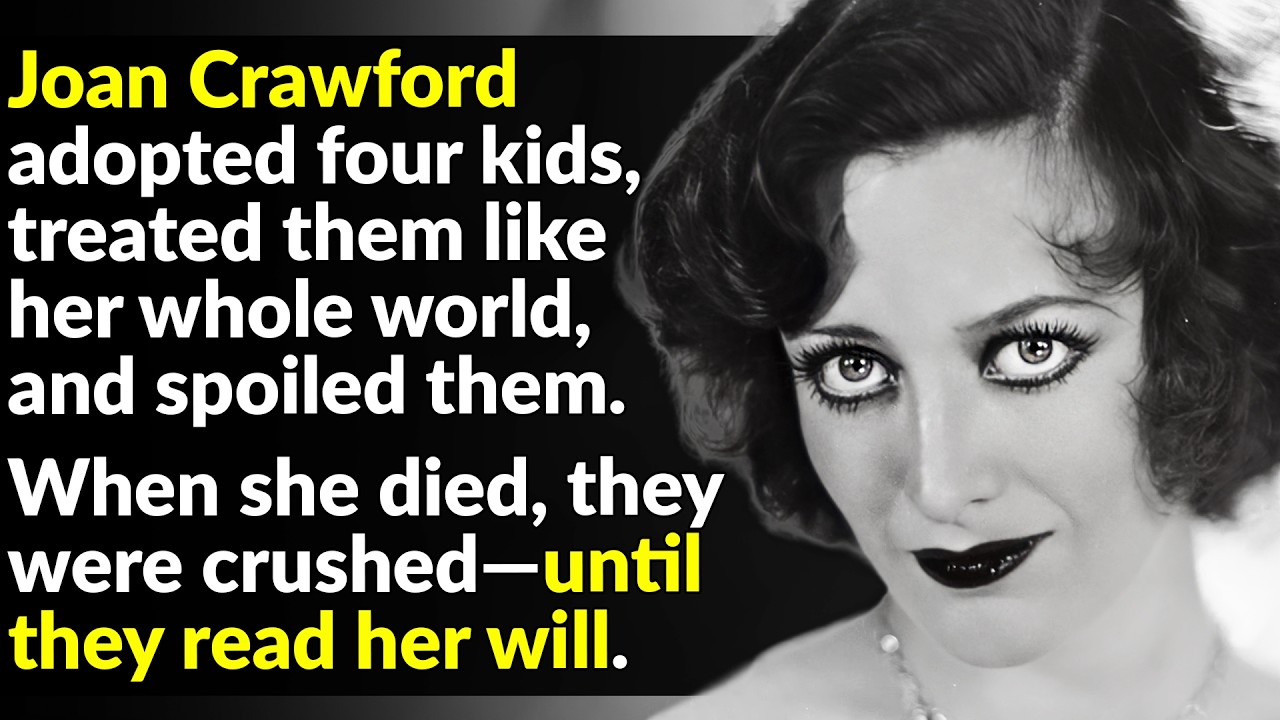
Hollywood’s most enduring image of Joan Crawford—the fierce, shoulder-padded superstar who commanded the screen with a glare that could cut glass—is crumbling under the weight of new revelations emerging about her private life. The woman who built her career on calculated perfection left behind a legacy so riddled with scandal, betrayal, and alleged abuse that her real story now eclipses the dramatic roles that made her famous. Born Lucille Fay LeSueur in San Antonio, Texas, Crawford clawed her way out of poverty with a determination that bordered on obsession. She abandoned her education in 1922 to dance in chorus lines across America, a gamble that eventually landed her in Hollywood. But the studio system that embraced her talent also rejected her identity, with MGM publicity executive Pete Smith dismissing her birth name as reminiscent of a sewer. The studio launched a public contest to rename the rising starlet, and the winning entry, Joan Arden, was already claimed by another actress. Crawford became the backup surname, a name she reportedly despised for the rest of her life. It was her first bitter taste of an industry that would prove just as cruel as it was glamorous, and it foreshadowed a career defined by battles both on and off the screen. Her first film role in 1925’s Lady of the Night was a humiliation dressed as an opportunity, with Crawford serving as a body double for MGM’s reigning star Norma Shearer. The experience ignited a feud that would define Crawford’s early career. Shearer, married to studio head Irving Thalberg, received the prime roles, prompting Crawford to deliver the venomous jab that still echoes through Hollywood lore: “How can I compete with Norma? She sleeps with the boss.” Crawford apparently learned the lesson well. Whispers that she leveraged the casting couch to secure her biggest roles have followed her legend for decades, with married director Vincent Sherman later confirming an affair and describing Crawford’s unusually forward approach to their relationship. Sherman’s wife, upon discovering the betrayal, reportedly shrugged with resignation, saying no man could reasonably be expected to turn down Joan Crawford. By 1928, Crawford had reinvented herself completely, starring as a flapper in Our Dancing Daughters and achieving the stardom she had chased so relentlessly. The following year brought her first serious Hollywood romance, a whirlwind marriage to 19-year-old Douglas Fairbanks Jr. , heir to the industry’s most powerful dynasty. Crawford, roughly four years his senior, entered a family that would subject her to cruelty worthy of a screen villain. Mary Pickford and Douglas Fairbanks Sr. refused to invite the newlyweds to their legendary Pickfair estate for eight months, and when Crawford finally gained entry, she found herself the target of a deliberate campaign of exclusion. Pickford would simply abandon the room whenever Crawford was present, a small but cutting humiliation repeated throughout the marriage. The union, built on shaky ground from the start, was already crumbling. Crawford’s affair with Clark Gable pushed the marriage to its breaking point, conducted with staggering audacity while both were married to other people. A friend once stumbled upon the couple in a compromising position behind a bandstand, with Crawford’s legs wrapped around Gable in a display that shocked even jaded Hollywood observers. Her response was pure Crawford: she looked up casually and said, “Adela, darling.” The next day, she sent her friend flowers with a note reading, “I bet you were thrilled watching.” The marriage ended in 1933 with Crawford citing grievous mental cruelty, but the pattern was set. She would repeatedly fall for men who either competed with her ambition or failed to understand its relentless demands, cycling through relationships with an almost frantic urgency. Her 1935 marriage to Franchot Tone seemed promising at first, but it quickly soured into tragedy. Crawford suffered two miscarriages while desperately wanting children, and the grief shattered the couple. Tone responded to the losses by descending into alcoholism and violence, physically attacking Crawford during heated fights. She divorced him in 1939, escaping a situation that had become genuinely dangerous. By 1938, Crawford’s star had dimmed so dramatically that an industry publication labeled her “box office poison,” questioning whether she was worth her enormous salary. For a woman who had dedicated her entire life to earning adoration, the public rejection was devastating. Yet she fought back with the same ferocity that had carried her out of Texas poverty, determined to reclaim her throne. Her comeback arrived with 1945’s Mildred Pierce, though director Michael Curtiz fought her casting bitterly, dismissing her as a has-been with high-hat airs and shoulder pads. The set became a battlefield, with Curtiz once bursting into her costume fitting and tearing at her neckline, convinced she was hiding her trademark shoulder pads beneath the fabric. Crawford’s obsessive preparation won the war. The film earned her the Academy Award for Best Actress in 1946, a triumph she nearly missed entirely. Convinced she would lose to Ingrid Bergman, she stayed home from the ceremony. When word arrived that she had won, Crawford simply summoned her makeup team and staged an impromptu photo shoot in her bed, ensuring the morning papers would capture her victory on her own terms. But Crawford’s career resurgence came with an escalating pattern of on-set conflict. During the filming of Johnny Guitar, she clashed mercilessly with co-star Mercedes McCambridge, a tension rooted in the fact that Crawford had once slept with McCambridge’s husband. The rivalry was merely a preview of the legendary feud that would consume her later years and define her legacy. The 1962 thriller Whatever Happened to Baby Jane brought Crawford together with Bette Davis, and the resulting animosity became the stuff of Hollywood legend. The two actresses maintained professional composure during filming, but the truce evaporated when it came time to promote the picture. Crawford refused to share the spotlight with Davis, launching a public war of words that grew increasingly vicious. Davis famously quipped that Crawford had slept with every male star at MGM except Lassie. Crawford fired back with a devastating critique of Davis’s acting style: “Bette and I work differently. Bette screams, and I knit. While she screamed, I knitted a scarf that stretched clear to Malibu.” The bitterness traced back decades, to a time when both women had pursued Franchot Tone. The showdown reached its most cruel moment at the 1963 Oscars, when Davis was nominated for Baby Jane and Crawford was not. Crawford responded with breathtaking manipulation, contacting every other nominee in the category and volunteering to accept their awards in their absence. All the nominees were on the East Coast, all agreed, and when Anne Bancroft won, Crawford swept onto the stage to collect the Oscar in front of her humiliated rival. By the 1950s, Crawford had found a new stage in the corporate world, marrying Pepsi president Alfred Steele in 1955. The marriage lasted until Steele’s death from an apparent heart attack in 1959, after which Pepsi attempted to sever all ties with the actress. Crawford fought back with characteristic ruthlessness, threatening to publicize the details of her exit unless the company placed her on its board of directors. Crawford’s later years were marked by a desperate clinging to relevance. She struggled with alcoholism so severe that she nearly lost a 1968 appearance on The Lucy Show, unable to remember her lines during rehearsals. In 1974, she passed out, fell, and struck her face, an incident that finally prompted her to quit drinking. The actress then retreated from public view entirely, horrified by photographs that revealed her aging. She became a recluse for three years, refusing to be seen in a state she found unacceptable. The woman who had once danced her way into Hollywood’s heart reportedly said, “If that’s how I look, then they won’t see me anymore.” On May 6, 1977, she gave away her beloved shih tzu, too weak to care for the animal. Four days later, she died of a heart attack at age 73. The true scandal of Joan Crawford’s life emerged after her death, when her will revealed a devastating final judgment. She left small sums to two of her four adopted children but cut Christopher and Christina entirely, writing that her reasons were “well known to them.” The cryptic phrase ignited a firestorm of speculation that exploded with the 1978 publication of Christina’s tell-all book, Mommie Dearest. Christina’s account alleged years of emotional and physical abuse at Crawford’s hands, painting a portrait of maternal cruelty that shocked the world. The book detailed Crawford’s obsessive cleanliness, her fury over wire hangers, and midnight rages over misplaced items or stray crumbs. Most disturbingly, Christina described lavish Christmas celebrations staged for photographers, after which the children were forced to surrender all but one gift. The most explosive accusation came with Christina’s insinuation that Alfred Steele’s death was not accidental. Noting that the Pepsi executive was found at the bottom of a staircase with no autopsy performed, Christina said, “I didn’t believe it was an accident. I know what Mommy was capable of in a state of rage.” The accusation, while never proven, added yet another layer of darkness to Crawford’s legacy. In the end, Joan Crawford’s story is one of immense talent warped by ambition, brilliance corrupted by insecurity, and love poisoned by control. The woman who conquered Hollywood, defeated her rivals, and built an empire of fame died leaving behind children who felt erased and a public newly aware of the monstrous behavior that lurked behind her dazzling smile. The truth, it seems, was always more scandalous than any script she ever performed.

18 August 2026

Meine Schwiegertochter verspottete mich vor Gericht – „arbeitslos“ Doch die Richterin kannte mich

Im Amtsgericht roch es nach altem Linolium und zugiger Heizung so ein Geruch, der einem richtig in die Knochen kriegt. Ich stand gleich hinter der Tür, hielt mich am Holzgeländer fest, weil die Knie weich wurden. Der Gerichtsdiener winkte mich vor, meine Hände waren feucht, ich wischte sie ständig am Jackensaum ab und sagte mir: … Read more

18 August 2026

Cliff Richard Vanished from the Spotlight, Now We Know Why

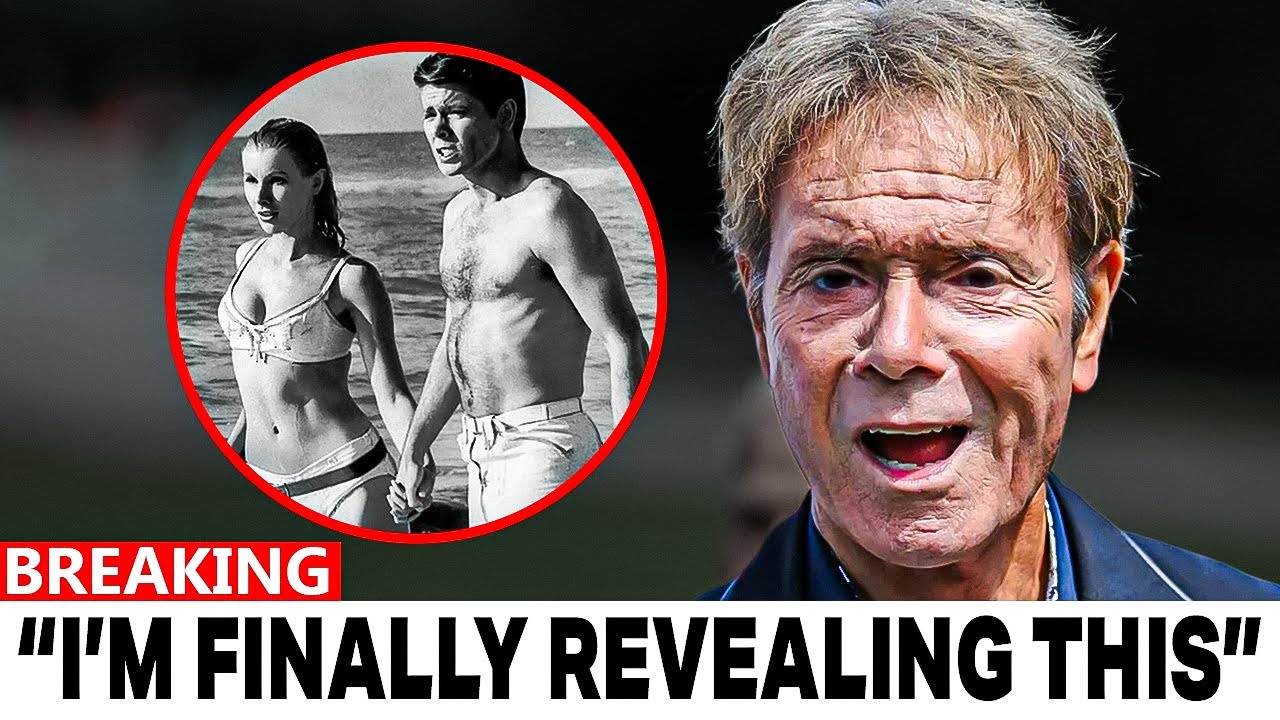
The helicopter blades sliced through the Berkshire sky on August 14, 2014, and with them came the shattering of a legend. Sir Cliff Richard, Britain’s most enduring pop icon, watched live on television as police swarmed his home, his private life laid bare in a spectacle that would haunt him for years. Now, after a decade of silence and legal battles, the full story behind his vanishing from the spotlight emerges—a tale not just of false allegations and a media conspiracy, but of a heartbreak so profound it shaped a lifetime of solitude. The raid was not a random act of justice. It was a carefully orchestrated media event. South Yorkshire Police had tipped off the BBC, who called it internally the “money shot.” Cameras circled overhead as officers rifled through Cliff’s belongings, all based on a single accusation from a man claiming an assault in 1985 at a Billy Graham rally. The allegation collapsed when investigators discovered the room described did not exist. The police spent 22 months and $800,000 of taxpayer money, only to file zero charges. But the damage was done. Cliff Richard, then 77, collapsed in his kitchen, sobbing. He later testified that he felt like he was having a heart attack. The stress triggered shingles, insomnia, and a weight loss that left him frail. He said his own home felt contaminated. The man who had filled Wembley Stadium and sold millions of records now feared leaving his house. The BBC’s coverage was submitted for a journalism award while he was still under investigation, earning the broadcaster an extra $20,000 in aggravated damages when the court later ruled the raid unlawful. But the raid was not the first destruction. Behind the public smile and the endless hits lay a secret heartbreak that Cliff had guarded for half a century. He loved one woman, Olivia Newton-John, with a devotion that never wavered. She married his best friend, Bruce Welch of the Shadows, then married someone else, and finally died in his arms in 2022. Cliff never married, never had children. He just kept singing, hiding the biggest heartbreak in British music history. The story begins in 1940, when Harry Roger Webb was born in British India, a world already shaking under war and revolution. His family fled the collapsing empire on a crowded ship, the SS Ranchie, arriving in a cold, gray England. That journey planted a need to prove himself. Soon Harry Webb disappeared, replaced by Cliff Richard, a name crafted by manager Harry Greatorex to sound like rock. The first single, “Move It,” in 1958, was raw and rebellious, hitting number two and opening the door for the Beatles and the Stones. Cliff Richard became the first British rock star. He did not just change music; he changed culture. In 1959, “Living Doll” hit number one and stayed for six weeks. Hollywood called, and he starred in films like “Serious Charge” and “Summer Holiday,” which broke box office records. Even when Beatlemania swept the world, Cliff held his ground. In 1964, he released six top ten hits to the Beatles’ five. Paul McCartney admitted the Beatles left for Hamburg because Cliff had everything sewn up in Britain. John Lennon said that before “Move It,” there was nothing worth listening to in England. Then came 1966, when Cliff walked on stage at Earl’s Court beside evangelist Billy Graham and declared his Christian faith. It was a bold move in the swinging sixties, and many thought it would end his career. He considered quitting. Instead, he became the first major pop star to openly live his faith while staying in the charts. He said his confidence grew, and the pressure to play a role disappeared. He felt free to be real. By the mid-1970s, his career hit a low, but “Devil Woman” in 1976 roared back, selling over two million copies and earning respect from guitar legends like Jimmy Page and Eric Clapton. In 1988, “Mistletoe and Wine” became the year’s biggest UK single, and in 1989 he released his 100th single, “The Best of Me,” which hit number two. That same year, his Wembley concert was a spectacle, and he became the only singer to land number one hits in five straight decades. But the personal cost was immense. In 1971, he invited a young Olivia Newton-John to perform on his TV show. The chemistry was instant. Cliff later wrote that he fell in love with her, but she was engaged to Bruce Welch, his own bandmate. The engagement lasted five years but never led to marriage. Olivia left Bruce in 1973, and he fell into depression. Rumors swirled that she had chosen Cliff, but nothing was ever confirmed. They continued to perform together for over 40 years, their duets like “Suddenly” from Xanadu becoming timeless. Their final duet was at Cliff’s 75th birthday concert in 2015. Three weeks before Olivia died of breast cancer in August 2022, Cliff called her. She was cheerful, saying, “Good day, Cliff. How are you, darling?” He never imagined he would be writing about her death. He said he hated the word death, preferring to say she had simply stopped living. The loss was devastating. The 2014 raid compounded that grief. Cliff later revealed that a man tried to blackmail him right after the raid aired, demanding money and threatening to spread lies. That man was arrested, yet his original claim was still treated as credible. The entire investigation was a farce. Cliff received $400,000 in damages from South Yorkshire Police, who admitted the tip-off was unlawful. The BBC spent nearly $2 million in legal costs and damages. The judge ruled that Cliff had a reasonable expectation of privacy, and the BBC had violated it in a serious, sensationalist way. But no payout could erase the trauma. Cliff told MPs that being named publicly ruined how he looked people in the eye. He said, “I feel I’ve been smeared, not by the police, but by the BBC.” He lost two years of his life, his health, and his sense of safety. The man who once filled Wembley Stadium was now afraid to leave his house. Yet he never stopped singing. In 1999, the “Millennium Prayer” went to number one without radio play, a protest against an industry that had turned its back on him. In 2023, he released “Cliff with Strings, My Kind of Life,” featuring that final duet with Olivia. He is now 84, still performing, still carrying the weight of a life lived in the spotlight and the shadows. The world now knows why Cliff Richard vanished from the spotlight. It was not a choice. It was a slow, brutal erasure by false accusations, media betrayal, and a heartbreak that never healed. He loved one woman for 50 years. She married his best friend, then someone else, then died in his arms. He never married, never had children. He just kept singing, hiding the biggest heartbreak in British music history. And when the police raided his home in 2014, they were not the first to destroy him. The BBC had already made a secret deal. The allegations were lies. But the damage was real. And it still is.

18 August 2026

Mein Sohn schrie „Ich wünschte, du hättest nie existiert“ – also schloss ich alle Konten und ging

Mutter, ich wünschte, du hättest nie existiert. Die Worte trafen mich, bevor ich mich überhaupt umdrehen konnte. Sie knallten durch die Küche wie ein hingeworfener Stein, so scharf, dass die Luft für einen Augenblick stillzustehen schien. Einen Moment lang glaubte ich, mich verhört zu haben. Doch dann wurde Walters Stimme noch lauter laut genug, dass … Read more

18 August 2026

„Jetzt gehört es mir“ — Meine Schwiegertochter nahm mein Schlafzimmer… und irrte sich

Das ist jetzt mein Zimmer", sagte sie und stand einfach so in meinem Schlafzimmer. Ich hatte noch nicht einmal meinen Koffer abgestellt. Für einen Moment glaubte ich im falschen Haus zu sein. Die Wände waren nicht mehr in dem sanften Cremeton, den ich vor Jahren selbst gestrichen hatte. Sie waren jetzt in einem harten flachen … Read more

18 August 2026