The Tragic Mystery of Carol Wayne: From Hollywood’s Beloved Matinee Lady to a Drowning Shrouded in Suspicion—Unraveling the Dark Secrets Behind Her Untimely Death and the Shadows of the Man Who Might Know the Truth
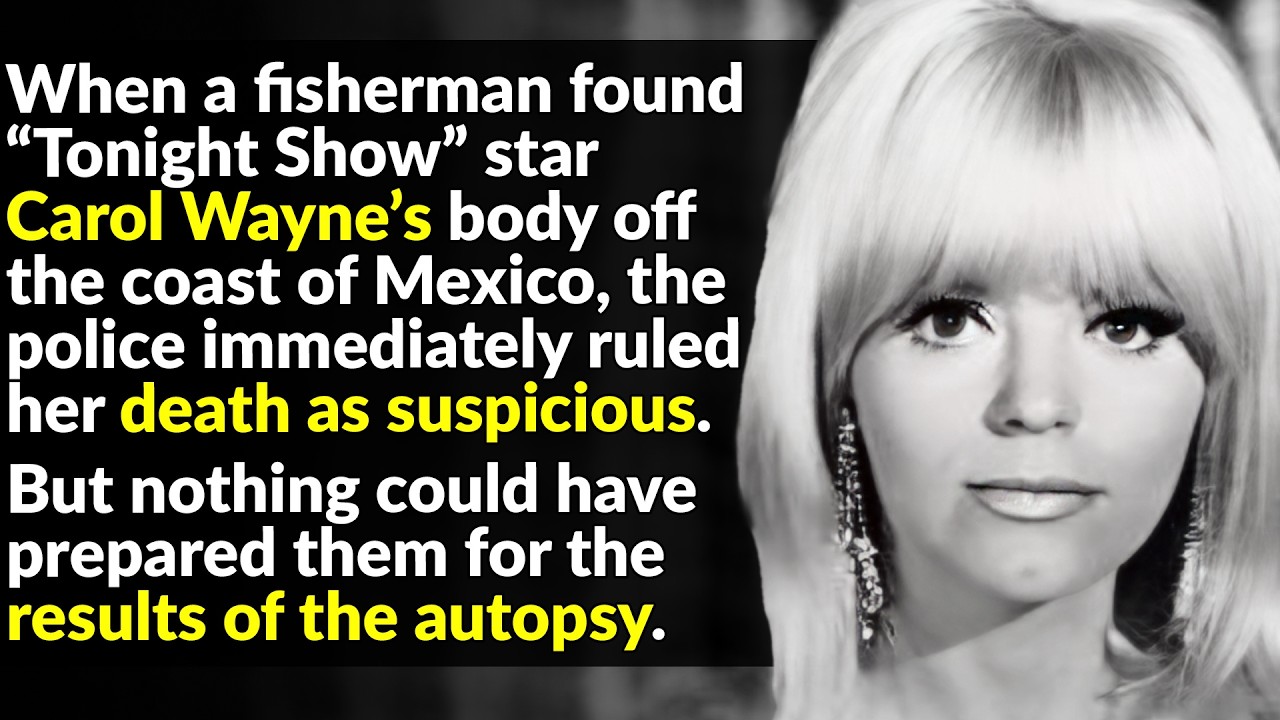
The fisherman casting his net off the coast of Manzanillo, Mexico, on January 13, 1985, had no idea he was about to haul in a mystery that would haunt Hollywood for decades. The body he pulled from the shallow, tranquil bay was that of Carol Wayne, the beloved Matinee Lady from Johnny Carson’s Tonight Show, a comedienne whose bright smile and breathless double entendres had charmed millions. But as the sun beat down on that quiet beach, the glimmer of her television persona began to fade, replaced by the grim shadow of a life that was far darker and more complex than anyone had ever imagined. Mexican police immediately declared the death suspicious. The circumstances were baffling. Wayne, 42, had been vacationing at the luxurious Las Hadas resort with a man named Edward Durston, a car salesman with a murky reputation in Hollywood circles. The trip was reportedly meant to be a chance for Wayne to dry out from a growing dependency on cocaine, a habit that had quietly eaten away at her finances and career. But witnesses at the resort told a different story, describing the pair dancing and drinking, not cleansing. The trouble began on January 10, when Wayne and Durston missed their flight back to Los Angeles. Low on funds, they could not return to the expensive Las Hadas. The staff at the resort, trying to help, secured them a room at the more modest Playa de Santiago Hotel. When they arrived at 8:30 p. m. , Wayne was livid, according to eyewitnesses. She refused to get out of the taxi, unleashing a torrent of anger at what she considered a dump. While Durston and a bellboy brought luggage to the room, Wayne stood alone outside, fuming. When Durston returned to the hotel lobby, Wayne had vanished. Instead of searching for her, he posted up at the bar, waiting. As the night wore on, she did not return. What he did next borders on incomprehensible. Durston checked into a different hotel, making it impossible for Wayne to find him if she tried. The following morning, he flew back to Los Angeles, alone, taking her luggage with him. He told the airline she would pick it up later. He filed no missing person report. He made no frantic calls. For three agonizing days, Carol Wayne was missing. Then came the discovery. Her body was floating face-up in a shallow bay, fully clothed. The autopsy would reveal that she had been dead for 36 to 48 hours, meaning her end came shortly after the fight with Durston. The results held a stunning surprise. Her blood showed zero alcohol and no traces of drugs. Despite her well-known struggles, she was clean at the moment of her death. There were no bruises, no cuts, no signs of a violent struggle. The waters where she was found were gentle and shallow, barely deep enough to drown in. District Attorney Jorge Hernandez was deeply skeptical. He could not accept that Wayne, a strong swimmer who had once been a professional skater, simply stumbled and drowned in what amounted to a bathtub. The investigation turned toward Durston, and his past emerged like a ghost from the shadows. In 1969, Durston had been involved in another suspicious death. Aspiring actress Diane Linkletter had called him to her apartment before apparently jumping out of a window. Her death was also ruled an accident, and Durston was never charged. The parallels were chilling, but Hernandez lacked the evidence to move forward. The mystery of Carol Wayne’s death has never been fully resolved. The official ruling remains accidental drowning, with the theory that she slipped and fell while walking, distracted and upset, along the beach. But the irony is almost too cruel to bear. On the Tonight Show, Johnny Carson had often joked about her hourglass figure, saying, With that chest, this lady will never drown. In one heartbreaking exchange, Carson, then 47, told Wayne, Someday you’ll be 47. She replied, I hope so. She was only 42 when she died. To understand the darkness of her end, one must first understand the brutality of her rise. Carol Wayne was born in Chicago in 1942. At just 15 years old, she and her sister Nina were already on a 42-city tour with the Ice Capades, their childhood sacrificed to the demands of show business. They dropped out of high school. They missed proms, dates, and the normalcy of growing up. Then an accident struck. A fall on the ice left a five-inch scar running down her knee, ending her skating career for good. She was left with nothing but a broken dream and no diploma to fall back on. Desperate for a future, the sisters found work as showgirls at the Tropicana in Las Vegas. Their mother was appalled, once looking at their barely-there outfits and pleading, Could you ask them for a couple more feathers? It was in Vegas that a man approached Carol at a party and said, We’re looking for a girl just like you. She nailed her screen test and landed a role. She would later joke, glancing down at her figure, And I’ve gotten all my parts ever since then. That self-deprecating humor masked a painful truth about how Hollywood valued her. In 1965, she married Lorettto Larry Serra, but the marriage was a disaster. They divorced just one month after their second anniversary. Wayne joked about it, saying skating taught me to be limber, but that marriage really taught me how to be flexible. The humor was a shield. Her star was rising, and she landed guest spots on shows like The Man from U. N. C. L. E. and I Dream of Jeannie, playing characters with sultry names like Ginger LeVier and Bootsy Nightingale. Then came the biggest break of her life. In 1967, the same year she divorced Serra, Johnny Carson hired her for the Tonight Show. She became a regular in the Art Fern’s Tea Time sketches, playing the Matinee Lady, an innocent bombshell who stumbled over double entendres with perfect comedic timing. It was a role that made her famous, but it also trapped her. The chemistry between Wayne and Carson was undeniable, and rumors of a backstage romance swirled. Wayne did nothing to quell them. She once said, He loves me. I love him. It’s an understanding, a given. He still sees me every day in his dreams. Carson never publicly acknowledged such feelings. After her divorce, she married rock photographer Barry Feinstein in 1969. Feinstein was cool, connected to Bob Dylan and Steve McQueen. His first wife had been Mary Travers of Peter, Paul and Mary. Wayne reportedly referred to her predecessor’s band as Peter, Paul and Scary. They had a son, Alex, in 1970, but the marriage lasted only five years. After that divorce, she quickly married television producer Burt Sugarman in 1975. He worked on shows like Celebrity Sweepstakes, giving her steady work as a panelist. But she wanted more, serious acting roles that would finally let her be seen as more than a joke. In the early 1980s, Johnny Carson threatened to leave the Tonight Show. NBC convinced him to stay, but the show was cut to one hour. The Matinee Lady sketch was cut with it. In 1980, her marriage to Sugarman ended. Suddenly, the work dried up. She had been working steadily for over a decade, but now no one would hire her. The few roles she landed were sparse and forgettable. By 1984, she was in desperate financial straits. She posed for Playboy in a conservative but controversial shoot to make ends meet. That same year, she filed for bankruptcy. Her petition to the courts revealed a staggering truth. She had zero income. Her son, Alex, now in high school, reportedly introduced her to clove cigarettes. She took to them with a vengeance, smoking them so heavily that the distinctive scent got her kicked out of Hollywood restaurants. Soon, she moved on to cocaine. Her addiction grew, consuming her money and her health. To her credit, she made one last attempt at a real acting career. She landed a role in the 1984 film Heartbreakers, a dramatic piece that was far more serious than her usual fare. Critics took notice. Roger Ebert singled out her performance, saying it was so good, so heartbreaking, that it pulled the whole movie together. It was her final film. In January 1985, she went to Manzanillo, reportedly to dry out. She went with Edward Durston, who was supposed to help her. Instead, they missed their flight, ran out of money, and ended up fighting at a hotel she hated. Then she went missing. Durston did nothing. He flew home with her luggage. Her body was found three days later. The autopsy found no drugs or alcohol in her system. She had been clean, perhaps for the first time in years, at the moment of her death. That did not save her. The investigation into Durston’s past revealed the death of Diane Linkletter in 1969. She had also been with him before she died. He was never charged. The parallels were too close for comfort, but without evidence, the case was closed. The ruling was accidental drowning, a slip on a dark beach. Those who loved Wayne, including Johnny Carson, were devastated. Carson took the Art Fern sketch off the show for most of a year out of respect. The Matinee Lady was gone. Carol Wayne’s story is one of tragedy, but it is also a story of systematic exploitation. From the moment she dropped out of school to skate, she was treated as a commodity. Her body was her currency, and Hollywood spent it until there was nothing left. She was the naive bombshell on screen, but off screen, she was a single mother, a bankrupt addict, a woman who had been told her entire life that her only value was in how she looked. When that value faded, so did the industry’s interest in her. The rumor of a romance with Carson, whether true or not, underscores a painful dynamic. Wayne was a regular on his show for years. They had undeniable chemistry. But he was the king of late night, and she was a bit player. If there was a relationship, it existed in a power imbalance that could never be equal. Wayne’s comments about Carson seeing her in his dreams suggest a woman who was deeply attached to a man who was never fully available to her. It is a lonely picture. Her marriages were equally fraught. She married men who were either emotionally absent or who used her connections for their own gain. Feinstein was a rock photographer with a notorious past. Sugarman was a producer who cast her in roles but could not help her break into serious acting. She was always the supporting character in her own life, a pattern that began in childhood and never broke. … Read more
18 August 2026

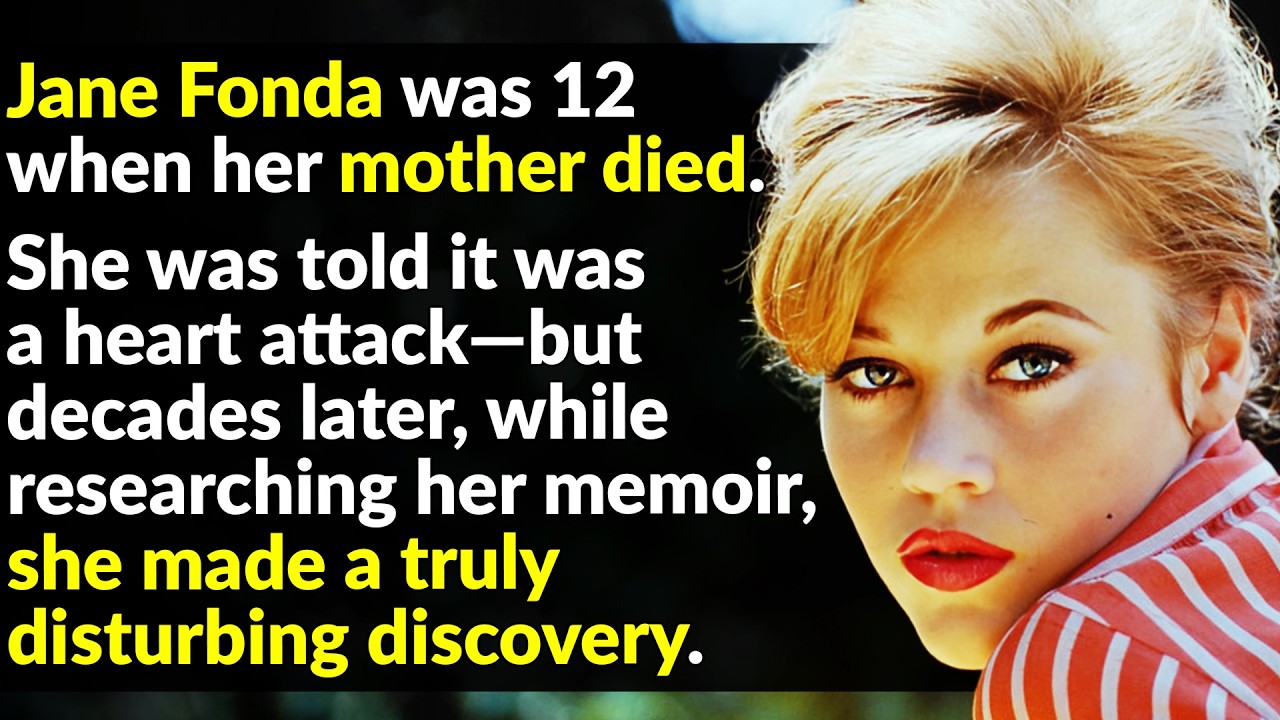
Jane Fonda’s Life Has Been Full Of Secrets And Scandal

Jane Fonda, the iconic actress and activist whose life has been a tapestry of secrets, scandals, and reinvention, has revealed a devastating truth about her mother’s death that she buried for decades. At 12 years old, Fonda was told Frances Ford Seymour died of a heart attack. But while researching her memoirs in 2005, she uncovered medical records that exposed a far darker reality: her mother’s suicide was the culmination of a life marked by childhood sexual abuse, multiple abortions, and profound mental anguish. The discovery came as Fonda, now 86, delved into her past for her autobiography, My Life So Far. With the help of lawyers, she obtained her mother’s medical files and sat alone, reading through them. The records revealed that Frances had endured ongoing abuse from her mentally unstable father and was sexually assaulted at age eight by a piano tuner. She also underwent nine surgical pregnancy terminations, a fact that left Fonda reeling. The scars her mother had shown her as a child, pointing to surgical changes on her body, were only a small glimpse into a lifetime of pain. This revelation shattered the narrative Fonda had clung to for years. Her mother’s death, long attributed to a heart attack, was actually a suicide. Fonda learned the truth from a magazine at school, but she buried her feelings, striving for perfection to earn love. The nightmares about her mother’s tragic end haunted her for decades, shaping her relentless pursuit of control over her body and image. Fonda’s life has been a series of transformations, from screen siren to Oscar-winning icon, fitness tycoon, women’s rights warrior, and counterculture firebrand. Born on December 21, 1937, in New York City, she was named after Jane Seymour, Henry VIII’s doomed third wife, because her mother was a distant descendant. Her father, Henry Fonda, was emotionally distant, while her mother often shared too much. When Jane was 11, her mother showed her a surgical scar and asked for her opinion, a moment that left young Jane confused and desperate to be perfect. The divorce of her parents pushed Frances’s fragile mental state to the brink. Doctors recommended institutionalization, and one day, when a nurse brought her home for a visit, Jane refused to go downstairs to see her. She never saw her mother again. Just months after Frances’s death, Henry Fonda married socialite Susan Blanchard, who was only nine years older than Jane. This new dynamic fueled Jane’s obsession with having a perfect body, driven by her father’s destructive remarks about her weight. At boarding school, Jane took pride in being one of the thinnest girls in her class. She and her friend Carol Bentley experimented with unhealthy ways to control their weight, struggles that followed her through college, marriages, and into her early 40s. After two years at Vassar, she dropped out to study art in Paris, where she mingled with John and Jackie Kennedy, Aristotle Onassis, Picasso, and Ernest Hemingway. She even skinny-dipped with Greta Garbo, who told her she had what it takes to act. That boost in confidence led her to the Actors Studio in New York City, where legendary teacher Lee Strasberg saw her potential. Her breakthrough came in 1962’s Walk on the Wild Side, earning her a Golden Globe for most promising newcomer. But her personal life was a storm. She met French director Roger Vadim, who was 10 years older and dazzled her. Their relationship was a plunge into deep, unpredictable seas, with Vadim comparing her to his ex, Brigitte Bardot, and pressuring her to use her mother’s inheritance to bankroll his friends and gambling habits. Despite the red flags, Jane married Vadim in 1965 in Las Vegas. The wedding night was a disaster: she found herself sharing a bed with her groom’s mother while he gambled away. Hurt and furious, she flew back to Los Angeles the next afternoon, asking herself, What have I done? She buried the pain and moved on, starring in Vadim’s film Barbarella, which cemented her reputation as a screen siren but also drew criticism for its campy excess. By the 1970s, rumors of marital problems were hard to ignore. Jane cut her long blonde hair into a bold, punk-inspired style, calling it her hair epiphany. She became more outspoken, especially about the Vietnam War, which deeply affected her. After a speaking engagement, authorities stopped her at the Cleveland Airport, searched her luggage, and arrested her on charges of smuggling vitamins and prescription medication. She posed for what became her infamous mugshot, an experience meant to intimidate her but instead pushed her further into the spotlight. Her performance in Klute in 1971 earned her her first Academy Award, but even that success couldn’t shield her from controversy. In 1972, she traveled to Vietnam, and a photo of her sitting on an enemy anti-aircraft gun sparked outrage, earning her the nickname Hanoi Jane. She became one of the most polarizing figures in America. Meanwhile, her marriage to Vadim was quietly ending, and she began an intense relationship with her Klute co-star, Donald Sutherland, which lasted three years. Jane then married political activist Tom Hayden in 1973, blending Hollywood fame with political activism. Their influence didn’t go unnoticed; authorities kept close tabs on them. But by the late 1970s, Jane felt unresolved about her relationship with her father, whose health was declining. She found a project that felt personal: On Golden Pond, a quiet, emotional film she hoped would bring them closer and finally earn him the Oscar he had never won. The set was tense. Katharine Hepburn saw Jane as competition, and during an emotional scene, Jane asked her father if the lights were too bright for him to see her eyes. He shut her down with one icy line: It’s okay. I’m not that kind of actor. Hepburn hugged Jane and whispered, He doesn’t know that he hurt you. Despite the difficulties, the film was a success. Henry won the Oscar at last, too ill to attend, and Jane accepted it for him. Months later, he was gone. Jane’s next success came from a very different place. What started as a practical way to fund her activism turned into a massive hit: Jane Fonda’s Workout became the best-selling home video of its time, launching a global fitness trend. But her husband, Tom Hayden, dismissed it as superficial, highlighting tensions in their marriage. He became involved with a speechwriter 20 years younger than Jane, and after a tense confrontation, they separated in 1988 after 17 years together. The breakup became a financial battle. At the time, Jane was earning $20 million a year, and under California law, Hayden could claim half. In the end, he walked away with $10 million, and Jane kept custody of their son. Her next relationship was with billionaire media mogul Ted Turner, founder of CNN. But his high-energy lifestyle eventually wore her down. She later admitted that staying would mean losing herself, and they divorced in 2001. After her divorce, Jane stepped away from relationships for several years. She later dated music producer Richard Perry, a relationship she described as fulfilling. When that ended in 2017, her focus shifted again. She has never been quiet about her beliefs. In 2019, she was detained multiple times while protesting climate change outside the capital in Washington, D. C. In March 2020, she launched a political action committee aimed at challenging politicians who supported fossil fuels. Her transformation from insecure girl to outspoken icon was on full display in a 2008 interview with Megyn Kelly. When Kelly brought up plastic surgery, Jane didn’t hold back. She paused, gave a sharp look, and asked, Do we really want to talk about that now? She later said she was surprised by how inappropriate the question felt. Given her history and the pressure she had felt about her appearance for years, it’s not surprising she pushed back. In 2005, while working on her autobiography, Jane obtained her mother’s medical records. The records revealed devastating facts: Frances had endured ongoing abuse from her mentally unstable father, was abused at age eight by a piano tuner, and faced repeated mistreatment from a family member during her childhood. She also went through nine surgical pregnancy terminations. The scars Jane had been shown as a child were only a small glimpse into the much deeper pain her mother had carried throughout her life. Even as she moved into her later years, Jane wasn’t done with acting. She found a whole new audience with Grace and Frankie, a Netflix show in which she starred alongside Lily Tomlin. The show ran for seven seasons and became one of Netflix’s longest-running originals. Audiences loved seeing a different side of her, funny, sharp, and completely self-aware, proving she could still command the screen decades into her career. Jane Fonda has never slowed down. Actress, author, activist, she continues to speak out on issues that matter to her from climate change to social justice. Through decades of criticism, controversy, and change, she has kept moving forward without losing her voice. Her life, full of secrets and scandal, is a testament to resilience, a journey from a girl who buried her pain to a woman who confronts it head-on.

17 August 2026

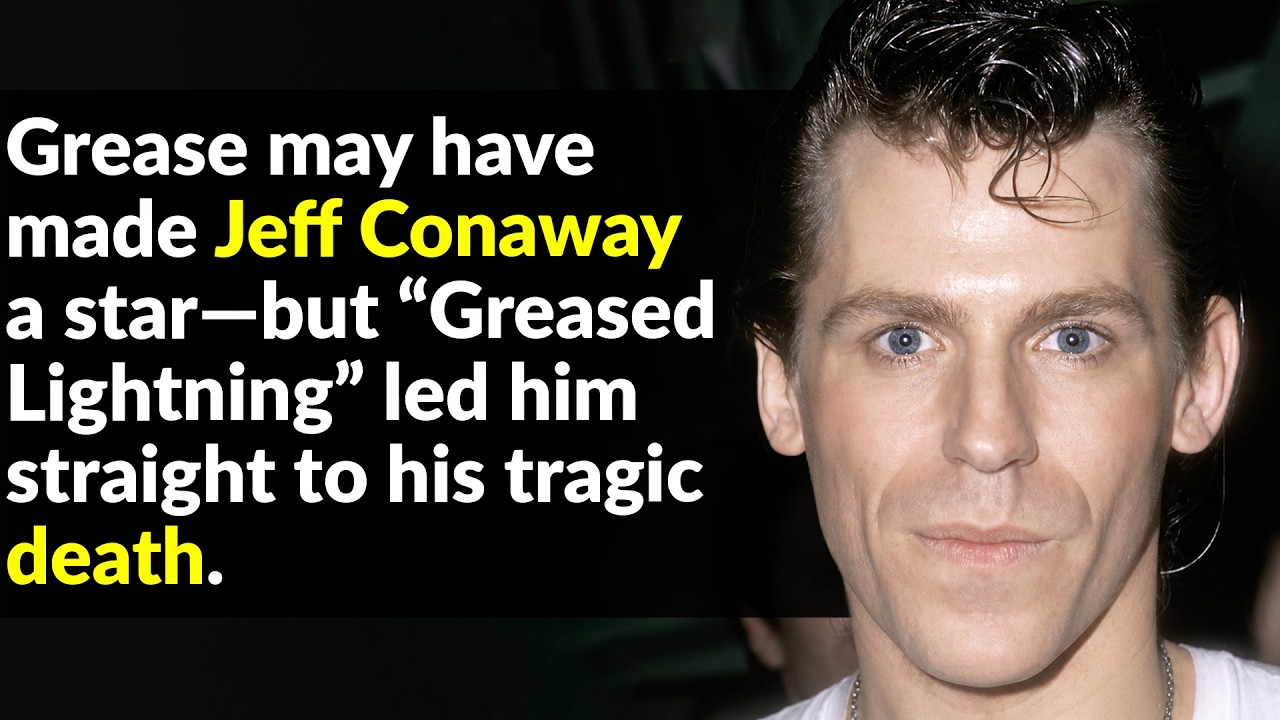
Jeff Conaway’s Tragic Life After Grease

The life of Jeff Conaway, forever immortalized as the cocky yet charming Kenickie in the 1978 blockbuster Grease, ended not with a triumphant curtain call but in a silent, lonely hospital room where his family made the agonizing decision to pull the plug after weeks of unconsciousness. The 60-year-old actor, whose slicked-back hair and rebellious swagger defined a generation, passed away on May 27, 2011, after a catastrophic battle with addiction that began, ironically, on the set of the very film that made him a star. The incident known as “Grease Lightning” was not just a musical number but a curse, as a devastating back injury during filming led to a prescription for painkillers that spiraled into a lifelong, losing war against substance abuse, ultimately robbing the world of a talented and tormented soul. Born Jeffrey Charles William Michael Conaway on October 5, 1950, in New York City, he was destined for the stage from his first breath, cradled by actor parents who immersed him in the world of theater, music, and production. Yet, the foundation of his life was cracked at the tender age of three when his parents divorced, forcing his mother to whisk him and his two sisters away to the quiet, rural expanse of South Carolina. It was there, under the care of his grandparents, that young Jeff formed his first memories, a Southern accent that would later become his golden ticket into the brutal but glamorous world of Broadway, a world that promised dreams but delivered exhaustion. His acting career began not with a starry-eyed leap but with a pragmatic audition at age ten, when his mother brought him to a casting call for a Broadway play, seeking any role that could showcase his natural talent and distinct drawl. Jeff charmed his way into a small part in All the Way Home, but the thrill of the stage quickly soured as he realized the grueling reality of an 11-month, 333-performance run that consumed his childhood from November 1960 to October 1961. He was just a teenager, performing nightly while also touring in The Critic’s Choice, the relentless schedule leaving him burnt out and desperate for an escape from the very dream he had so eagerly pursued. At 15, Conaway swapped the greasepaint for guitar strings, becoming the singer and guitarist for a rock band called the Three and a Half, hoping to find a faster path to success than the exhausting grind of live theater. His venture into the music world yielded a couple of singles but ultimately led nowhere, a frustrating detour that only ended when fate pulled him back to New York City with a surprising twist in store. In 1971, at the age of 21, he briefly married an unnamed dancer, a mysterious union that ended in annulment almost as quickly as it began, leaving no trace or record behind. The shadows of that forgotten marriage were quickly eclipsed in 1972 when Conaway landed a role in a stage production that would define his life: Grease. In a twist of fate that would haunt him, he played the lead role of Danny Zuko on Broadway for two years, a character audiences would forever associate with John Travolta, after Travolta himself joined the cast in a secondary role as Doody. The two men became close friends, sharing a manager and a dream, but when the movie adaptation was announced, Conaway faced a devastating blow. He was passed over for the lead, forced to watch Travolta step into the leather jacket and white pants of Danny Zuko, while Conaway was relegated to the role of Kenickie, the sidekick with the iconic car Greased Lightning. The pain of losing the lead role was compounded by a humiliating request from the director, who reportedly asked Conaway to walk slightly stooped so that Travolta’s character, the leader of the T-Birds, would appear taller on screen. Despite this cruel attempt to diminish his presence, Conaway’s charm was undeniable, and he captivated Olivia Newton-John’s elder sister, Rona, at a cast party, igniting a romance that would last for years and eventually lead to marriage. But while his personal life was blossoming, a single, catastrophic moment on set was laying the groundwork for his demise. During the filming of the musical number Grease Lightning, Conaway fell and injured his back, a seemingly minor accident that led to a prescription for painkillers, the first step on a path that would ultimately destroy him. Those painkillers became an irresistible siren, pulling Conaway into a vortex of addiction that rapidly expanded to include other prescription medications and illicit substances, even as his career peaked. After Grease and a stint on Happy Days, he landed a pivotal role as the aspiring actor Bobby Wheeler on the hit comedy series Taxi, a part that was almost taken from him when producers considered making the character black. Conaway fought for the role and won, but his victory was short-lived, as his growing addiction and chaotic behavior turned his time on set into a personal hell. His professional relationships frayed, most famously with co-star Andy Kaufman, whose bizarre antics and perceived arrogance infuriated Conaway to the breaking point. At a team-bonding event, a drunken Conaway shouted at Kaufman, accusing him of thinking he was superior, and then threw a punch that knocked the comedian into a table, a violent outburst that signaled the end of his tenure on the show. The reasons for his departure remain contested. Conaway claimed it was about money and disrespect, but the show’s producer, Sam Simon, revealed a darker truth on Howard Stern’s radio show, stating that Conaway’s addiction was the real deal-breaker, culminating in a heartbreaking day when he was found lying on the floor of his dressing room, too intoxicated to stand. His journey as Bobby Wheeler was over, and his career began a slow, agonizing spiral, reducing him to smaller roles and guest appearances on shows like Wizards and Warriors and Barnaby Jones. In 1985, his marriage to Rona Newton-John collapsed, the addiction likely a poison that infected their union, and his personal life mirrored the descent of his professional one. Near the end of the 1980s, Conaway sought treatment, bidding goodbye to his painkillers, and found a glimmer of hope in a new romance with Keri Young, whom he married in 1990. The 1990s brought a brief renaissance, with Conaway landing a notable recurring role as Sergeant Zack Allen on the sci-fi series Babylon 5, a character he played for three seasons, and even a cameo in the 1999 Jim Carrey film Man on the Moon, portraying himself in the story of his former nemesis, Andy Kaufman. But the demons were merely dormant, and as he approached the age of 50, a midlife crisis triggered a devastating relapse that plunged him back into the depths of addiction. The public witnessed his struggle in the most raw and harrowing way when he joined the reality show Celebrity Rehab with Dr. Drew, where he appeared ghost-like, his body ravaged, his mind shattered. In one of the most disturbing episodes of the series, Conaway revealed to Dr. Drew that he was contemplating self-harm, staring into a mirror and describing how he saw himself breaking the glass and using it as a weapon. He confessed to having attempted suicide not once, not twice, but 21 times, and opened up about childhood traumas that included being tied up and threatened by older boys in his neighborhood, experiences that he linked directly to the origin of his addiction. The show exposed the horror of his daily existence, as he suffered from unbearable back pain, struggled to walk to the bathroom, and screamed threats that he would leave the treatment center. His personal life turned into a public spectacle with his fiery, codependent relationship with musician Vicki Spinoza, who was also battling addiction. In 2011, the relationship imploded in a storm of accusations, with Spinoza obtaining a temporary restraining order, claiming Conaway threatened her with a hammer and swore to ruin her life. Conaway retaliated, filing his own restraining order, accusing her of stealing his medication and injecting him with something that left him drowsy and disoriented, a scandalous feud that played out in courtrooms and tabloids. Travolta, his old friend and rival, tried to intervene, urging Conaway to embrace Scientology as a cure for his addiction and depression, but the religion’s methods proved to be just another false hope. On May 11, 2011, authorities found Conaway unconscious in his home, rushed him to a California hospital, and into a coma that he would never wake up from. His sister and Spinoza were at his bedside as doctors delivered the grim news; his condition was critical, and the two weeks that followed were a vigil of despair. The official cause of death was pneumonia with sepsis, a stark and undramatic end for a man who had lived such a dramatic life. Dr. Drew Pinsky concluded that while the death was not directly caused by an overdose, Conaway’s addiction had likely clouded his ability to recognize the severity of his illness, leaving him to suffer silently until it was too late. The world did not lose Jeff Conaway to a single, violent act of self-destruction, but to a slow, creeping, and relentless disease that had been festering for decades, starting with a fall on a soundstage during a song about a souped-up car. In the end, the man who brought joy to millions as the wisecracking Kenickie, the man who sang about greased lightning and dreamed of fast cars, was taken by the slow, grinding weight of his own past. His legacy is etched in celluloid, forever young and vibrant in the diner of Rydell High, but his true story is a cautionary tale of how the pursuit of a dream can sometimes lead to a nightmare from which there is no awakening.

17 August 2026

Matt Lauer Will Never Work Again, Look At His Life Today…

The former king of morning television, Matt Lauer, now lives in the shadows of a Hamptons estate, a man who will never work again in the industry he once dominated. Fired from NBC’s Today Show in November 2017 after a single sexual assault complaint, Lauer’s fall was as swift as it was devastating. The 24-hour firing sent shockwaves through the media world, but the details that emerged in the days that followed were even more damning. A secret button under his desk, multiple victims, and allegations stretching back decades painted a picture of a predator hiding in plain sight. Today, we reveal the full scope of his downfall and the quiet life he leads now, far from the cameras that once adored him. The scandal that ended Lauer’s career began quietly during the 2014 Winter Olympics in Sochi, Russia. A young NBC employee later told the network that Lauer had sexually assaulted her in his hotel room. Her name was Brooke Nevills, and her account stayed private until journalist Ronan Farrow exposed it in his 2019 book, “Catch and Kill.” That moment in Sochi triggered a chain reaction that destroyed everything Lauer had built over two decades. When NBC received the complaint, they launched an immediate internal investigation. On November 29, 2017, less than 24 hours after receiving the report, NBC fired Lauer. The speed of his exit shocked everyone. His co-hosts Savannah Guthrie and Hoda Kotb learned of the firing just minutes before they had to announce it live on air. They looked stunned and emotional as they delivered the news to millions of viewers. Within 24 hours, at least three more women came forward with their own stories of harassment. Their accounts showed a clear pattern of behavior that had gone on for years. Some women said they had tried to report him before, but no one listened. Many were too afraid to speak out because Lauer had so much power at the network. As the stories piled up, it became obvious this wasn’t just about one man, but about a workplace culture that enabled the abuse. The most disturbing details came from a Variety investigation. After speaking to dozens of current and former NBC employees, reporters revealed that Lauer had a secret button under his desk that let him lock his office door from the inside. NBC claimed it was a standard security feature, but several women said he used it to trap them. The article also said he gave female employees sex toys as gifts, exposed himself to colleagues, and interrogated women about their sex lives. If they resisted him, he mocked or punished them. One of the most harrowing stories went back to 2001. A former Today Show producer said Lauer called her to his office during the workday. After she walked in, he pressed the hidden button and locked the door behind her. He told her to unbutton her blouse, then assaulted her. She said she passed out during the attack and woke up on the floor with her pants undone. Lauer’s assistant had to take her to a nurse. She didn’t report it because she was afraid it would ruin her career. When NBC fired him, they made it clear he was gone for good. The network’s chairman sent a memo to staff at around 6:30 in the morning, just before the day’s live broadcast. The message said Lauer had violated NBC’s standards and that they believed it wasn’t an isolated case. They also refused to pay out the rest of his contract. Lauer had a $20 million annual deal, but NBC cut him off immediately without any severance. Even more shocking were the claims that NBC management had known about Lauer’s behavior for years. Some staffers said complaints had been ignored. One former employee said outright that management had protected him because he was too important to the network. NBC denied that they knew anything in advance, but the damage was already done. People began to question who else had looked the other way and how many others had suffered in silence. After the firing, Lauer disappeared almost completely from public life. By 2018, many of his closest friends had cut ties. People who once called and texted regularly stopped hearing from him. He didn’t return messages. He rarely left home. The man who used to walk red carpets and host high-profile events suddenly vanished. He retreated to his estate in the Hamptons, a massive waterfront property he had bought from Richard Gere in 2016 for $36. 5 million. The estate, called Strongheart Manor, had 12 bedrooms, 12 bathrooms, over 14,000 square feet of space, and every luxury imaginable, including a tea house by the water and a heated pool. At one point, he listed it for $44. 8 million. It finally sold in 2022 for $40. 9 million. Locals would occasionally spot him doing normal things, driving his kids to school, picking up breakfast, but he always looked tired. He was trying to blend in. His marriage to Dutch model Annette Ro came to an end almost immediately after the scandal broke. They had been married for 21 years and had three children together. The divorce took nearly two years and became final on September 7, 2019. He reportedly agreed to all her terms without a fight. She walked away with as much as $20 million in assets, including full ownership of their horse farm. They continued to co-manage the farm, and the custody arrangement was described as peaceful. Things got worse in October 2019 when Ronan Farrow published “Catch and Kill.” The book included serious allegations against Lauer, describing an alleged rape of former NBC producer Brooke Nevills during the 2014 Sochi Olympics. Lauer denied it, insisting the relationship had been consensual. But the book went deeper than just one story. It painted a picture of a network that had protected Lauer for years, describing a culture of silence where complaints were buried and powerful people looked the other way. In 2020, after two years of silence, Lauer finally responded with a long open letter. He denied the allegations from Nevills, saying the relationship had been inappropriate but not criminal. He accused Ronan Farrow of sloppy journalism, claiming the book ignored facts and failed to present his side fairly. He said the media was more interested in sensationalism than truth. He admitted he had made mistakes, but also criticized how the public and press had treated him. The letter was detailed and emotional, but it didn’t change much. Most people saw it as a weak attempt to save his reputation. Farrow stood by his reporting. The damage had already been done. As of 2025, Lauer is still living in the Hamptons and also spends time in New Zealand. His net worth remains around $80 million, even after paying out a huge divorce settlement. He hasn’t returned to television or launched any new projects. He doesn’t need to. In his personal life, something unexpected happened in 2019. Not long after his divorce, he began dating Shamin Abas, a longtime friend and luxury brand executive. They had known each other for about 20 years before the romance started. Despite intense interest from the media, they have kept things private. They travel together, attend events occasionally, and split their time between New York and the Hamptons. Their relationship has lasted more than five years now. By 2024, something else shifted. Lauer started reconnecting with old friends. After years of isolation, he began reaching out, sending messages, and making calls. People close to him say he seemed more relaxed. He was spending more time with his children and had found a rhythm in his new life. There are no signs of a comeback, no signs of regret either, just a man trying to move forward away from the glare. The man who once woke up millions of Americans will never work again, and his life today is a quiet, lonely luxury far from the spotlight he once commanded.

17 August 2026

Meine Eltern zerstörten mein Start-up und gaben alles meiner Schwester – 10 Jahre später kam die Rac

Als meine Mutter mir die Nachricht schickte, "Familienessen, Sonntag um 19 Uhr, keine Ausreden", fügte sie einen Screenshot eines Zeitungsartikels bei, in dem berichtet wurde, dass meine Cybersicherheitsfirma gerade eine Bewertung von 940 Millionen Dollar erreicht hatte. 10 Jahre zuvor hatten sie und mein Vater die Passwörter zu meinem Serverraum geändert, mich aus meinen eigenen … Read more

17 August 2026

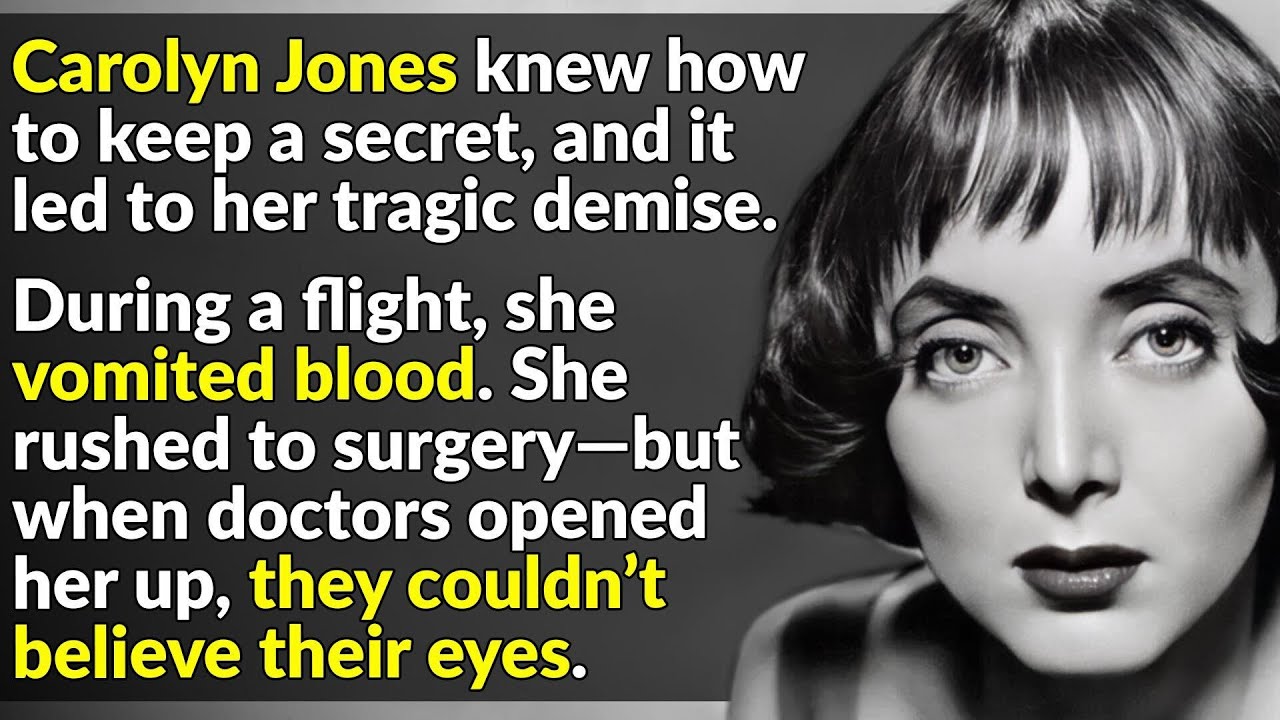
Carolyn Jones Masked Her Darkest Secrets

The actress who brought Morticia Addams to life on television carried a burden of secrets that ultimately led to her tragic death at age 53, newly revealed details show. Carolyn Jones, best known for her iconic role in The Addams Family, masked a devastating battle with colon cancer while continuing to perform until her final days, according to accounts from those closest to her. Jones became severely ill during a flight from Dallas to Los Angeles in the early 1980s, barely making it to the restroom before vomiting large amounts of blood. The terrifying episode marked the beginning of a hidden struggle that she refused to share with the public. Upon landing, she was rushed to emergency surgery, where doctors discovered the extent of her disease. When surgeons opened her up, they were stunned by what they found. Colon cancer had spread aggressively through her body. Jones made a conscious decision to keep her diagnosis secret from nearly everyone, including her colleagues and fans. She underwent agonizing surgery and chemotherapy in private, determined to maintain her career and her public image. The actress had always been adept at concealing her true self. From an early age, Jones learned to mask her pain and ambition behind a carefully crafted exterior. Growing up during the Great Depression, her father abandoned the family in 1934, leaving her agoraphobic mother unable to provide for her daughters. They moved in with her grandparents, where her grandfather’s sudden bouts of rage terrified her. Confined to her bedroom for weeks due to chronic asthma, Jones escaped into Hollywood fan magazines and music. She became obsessed with becoming a star, seeing it as her only way out of a cramped, fearful existence. At 17, she gained admission to the prestigious Pasadena Playhouse in 1947, determined to be its next famous alumni. While at the Playhouse, she met Don Donaldson in August 1949. The couple married in 1950 when Jones was just 19 and Donaldson was 27. The union raised eyebrows but lasted only a year. After graduating as a star student, Jones quickly realized that talent alone would not guarantee success in Hollywood. She underwent a complete makeover, including plastic surgery, dyeing her hair blonde, losing her Texas accent, and altering her walk and posture. The transformation worked. A talent scout noticed her on stage, and she landed a six-month contract with Paramount Studios in 1952. Her big screen debut came in The Turning Point that same year. But Jones resented that her new looks, not her finely honed skills, had opened the door. After her contract expired, she struggled to find work. Her financial situation grew so dire that her sister Betty had to move in to help pay rent. Jones scrambled for any acting role she could find, returning to the stage at the Preston Sturges Players Theater. There she met Aaron Spelling, an aspiring writer who would later produce hits like Beverly Hills 90210. They shared ambition, humor, and a passion for entertainment. In 1953, Jones won a role in House of Wax, the second 3D film ever released. It became her first genuine big break, earning praise from reviewers. Her relationship with Spelling flourished, and she proposed to him in April 1953. But Jones made a personal choice that broke the mold of the 1950s housewife. She realized motherhood was not for her, fearing she would put her career first. She felt it would be unfair to have children when she knew they would come second. A casting executive from Columbia Pictures scouted Jones to star in From Here to Eternity, the studio’s biggest picture of the year. He promised the role would be hers pending a successful screen test. But disaster struck the evening before. Jones suffered a serious bout of pneumonia with a 104-degree fever and ended up in the hospital, nearly dying. She missed the opportunity. The role went to Donna Reed, who won an Oscar for her performance. The thought of what could have been crushed Jones. She began to doubt her prospects, fearing her time in the limelight had passed. She took less prestigious work, eventually scoring a part in The Bachelor Party that required cutting her hair short and dyeing it dark. The makeover was dramatic and effective. Despite only eight minutes of screen time, her performance generated buzz. Critics gave her rave reviews, and she received an Academy Award nomination for Best Supporting Actress. But on the big night, she lost to another actress. Jones had to be content with the bittersweet honor of just being nominated. In 1958, she landed her biggest opportunity yet: a movie with Elvis Presley. King Creole turned out to be the last film Elvis made before joining the Army. But Jones again fell ill with a fever of 103. Terrified of getting Elvis sick, she begged to get out of their kissing scene. Elvis allegedly quipped that maybe it would get him out of the army. The movie was another hit, but Jones aspired to be a leading lady. She kept getting cast in quirky supporting roles. When offered a part in the film Career, she insisted on playing the Romantic lead, leaving Shirley MacLaine as the offbeat sidekick. The film flopped despite Jones receiving the best reviews of her career. Frustrated, she dove into the Hollywood lifestyle, believing she owed it to her fans to live glamorously. She and Spelling splurged on a 13-room mansion, furs, and expensive jewels. But the media frenzy faded, and job offers became sparse. Meanwhile, Spelling’s writing career surged, making him more successful than her. The imbalance disheartened Jones and strained their relationship. Spelling developed a habit of staying out late for no apparent reason. They divorced in August 1964. At just 34, everything in her life seemed to be coming undone. But then she landed the greatest role of her life. Jones had turned down television offers because she only wanted to be a movie star. But an intriguing offer for a leading role on daytime TV caught her eye. Quirky, dark, and comedic, the part seemed custom-made for her. In 1964, she joined the cast of The Addams Family as the iconic Morticia. The show became a pop culture sensation. Jones achieved mega celebrity status at 35, with legions of devoted fans. But her on-screen romance with Gomez Addams sparked controversy. Their brazen public displays of affection outraged conservative audiences. And Morticia’s signature gown was a serious pain to wear, so tight that Jones could barely walk. Despite the show’s massive popularity, ABC canceled The Addams Family after only two seasons. Jones was heartbroken. She went on to do guest appearances but received few other employment opportunities. She had become so synonymous with Morticia that watching her portray any other role felt wrong to audiences. Her career suffered, and there was no comeback in sight. With little recourse, Jones returned to the theater, securing a role on Broadway in The Homecoming. She hated every second of it. Feeling washed up and bitter, she turned to her vocal coach Herbert Green for comfort. Their relationship evolved into love, and they married in December 1968. Many of Jones’s circle disapproved. Green reportedly struck others as strange and not particularly nice. He convinced Jones to quit acting and move with him to Palm Springs. Isolated and careerless, her once happy life turned miserable. It took seven years, but she eventually realized she missed acting. At 46, she ended the unhappy marriage and returned to Los Angeles, determined to restart her career. The spotlight hadn’t forgotten her. She successfully returned to acting, appearing on TV as a guest star and performing in theatrical shows. She reclaimed her sense of self-fulfillment. Her work in theater led to romance again when she fell for her castmate Peter Bailey Brittain. They married in a special ceremony in September 1982. Jones knew she didn’t have much longer to live. She wanted to surround herself with love. She made herself up as glamorous as possible, wearing a lace and ribbon cap to cover her hair loss from chemotherapy. Jones went into a coma in July 1983 at her home in West Hollywood. She died on August 3 at age 53. Before her death, she arranged to donate her Morticia outfit and wig to the Academy of Motion Picture Arts and Sciences. UCLA later received a collection of Addams Family scripts from her widower, ensuring her portrayal of the most iconic character would never be forgotten. The actress who masked her darkest secrets with a smile and a signature gown left behind a legacy of resilience, talent, and a tragic battle fought in silence. Her story reveals the immense pressure Hollywood places on its stars to maintain a flawless image, even as their bodies betray them. Carolyn Jones lived and died on her own terms, keeping her pain hidden until the very end.

17 August 2026

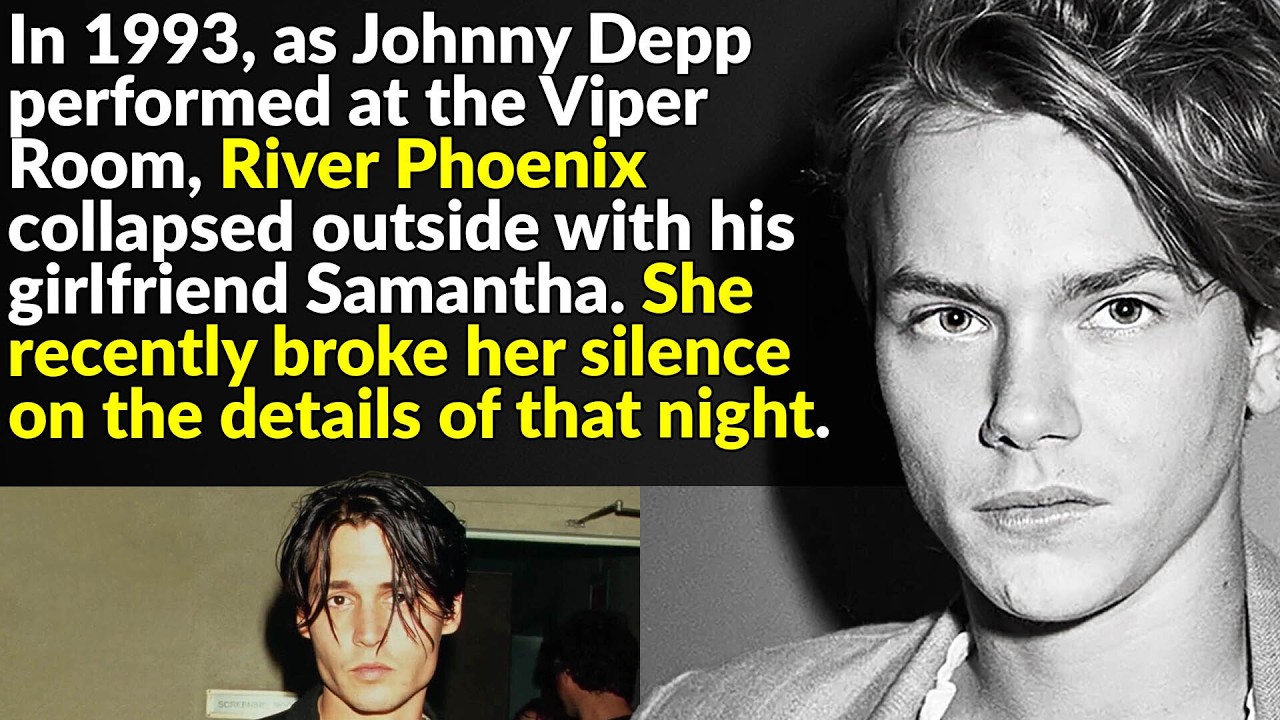
The Heartbreaking Truth About River Phoenix

The Viper Room on Sunset Strip became a scene of chaos and horror on the night of October 30, 1993, as a crowd gathered outside the club owned by Johnny Depp watched in disbelief while River Phoenix, the 23-year-old actor and activist, collapsed on the pavement, convulsing and gasping for air. His sister Rain desperately administered mouth-to-mouth resuscitation as his brother Joaquin called 911, pleading for help. Within hours, Phoenix was pronounced dead at Cedars-Sinai Medical Center, leaving a generation of fans and Hollywood insiders shattered by the loss of a talent whose light had burned so brightly and so briefly. Now, more than three decades later, Samantha Mathis, the actress who was Phoenix’s girlfriend at the time of his death, has broken her silence on the details of that heartbreaking night, offering a raw and painful account that peels back the layers of myth and speculation surrounding one of the most tragic deaths in entertainment history. In an interview that has sent shockwaves through the industry, Mathis revealed that she had believed Phoenix was sober that evening, only to witness him in a state that made her deeply uncomfortable. She described seeing him arguing with bouncers after an altercation with another man, and then watching him collapse outside the venue, his body wracked by seizures. The truth about River Phoenix’s life, however, is far more complex than the tabloid narrative that followed his death. Born in 1970 in Oregon to parents steeped in the counterculture of the 1960s, Phoenix was named after the River of Life from Hermann Hesse’s novel Siddhartha, a book beloved by those exploring Buddhism and Eastern mysticism. His family lived a nomadic existence, moving constantly and often living out of a mobile home, with each of his four siblings born in a different state. They were vegans who rejected Western medicine in favor of herbal remedies and spiritual enlightenment, a lifestyle that would shape Phoenix’s worldview but also leave him vulnerable. River was the eldest of five Phoenix children, all of whom would go on to achieve success in their own right, with Joaquin becoming one of the most acclaimed actors of his generation. But River’s childhood, as he would later describe it, was a desperate situation. A talented guitarist from a young age, he used his skill just to survive, busking on street corners with his siblings to raise money for food. Their performances drew massive crowds, often so large that police had to intervene to disperse them. He never received a formal education; his parents taught him to read and write, but a screenwriter who worked with him later noted that he had no deep roots in history or literature. The Phoenix family’s search for spiritual fulfillment led them into a nightmare. In 1979, they joined the Children of God, a religious sect widely considered a cult that preyed on vulnerable people. The group stationed the family in Caracas, Venezuela, on an agricultural compound where they worked as missionaries and fruit pickers. But the cult became reviled for the horrific acts it forced on its members, regardless of age. River Phoenix later claimed in an interview that he lost his virginity after being coerced at the age of four. The trauma of those years would haunt him for the rest of his life. Thankfully, his parents grew disillusioned with the Children of God and moved back to the United States in 1977, settling in Los Angeles. There, his mother got a job as a secretary at NBC, and the Phoenix siblings were discovered singing near her workplace by a talent agent who was so charmed by the family that she signed them all. River was the clear standout, exuding charm, talent, and charisma. By the age of 10, he had appeared in commercials for Mitsubishi, Ocean Spray, and Saks Fifth Avenue. By 1980, he was fully committed to an acting career, attending auditions and standing out not only for his musical and acting abilities but also for his tap dancing, as recalled by Corey Feldman. In 1984, Phoenix was cast in an after-school special titled The Riddle of Dyslexia, a role that resonated deeply because he had suffered from dyslexia his entire life. His performance launched his career into the stratosphere. His big-time breakout came in 1986 with Stand by Me, based on a Stephen King story. At just 16, he became one of the biggest names in entertainment. But the pressure was already taking its toll. During the filming of a pivotal emotional breakdown scene, director Rob Reiner urged Phoenix to channel his own feelings of betrayal by adults in his life. Knowing his past, it is hard not to imagine how painful that was. After the scene was cut, Phoenix could not stop crying and needed emotional assistance. His next major role came later that year in The Mosquito Coast, alongside Harrison Ford and Helen Mirren. Director Peter Weir was blown away by Phoenix’s performance, later saying he had something apart from acting ability that even Laurence Olivier never had. During filming in Belize, Phoenix struck up a romance with his co-star Martha Plimpton. The two initially could not stand each other but ended up in a relationship that lasted years. Plimpton later recalled how Phoenix, an outspoken animal rights activist and vegan, once left a fancy restaurant in New York after she ordered soft shell crab. She found him on Park Avenue crying, confessing his pain at her eating an animal. Despite the star-studded cast and big budget, The Mosquito Coast was a commercial and critical flop, shocking Phoenix deeply. He displayed a unique capacity for self-reflection, a trait that sometimes took him to dark places. By the time he turned 18, his family had relocated over 40 times. With his newfound success, he purchased two ranches for the Phoenix family, one in Florida and one in Costa Rica. His sixth film, Running on Empty, directed by Sidney Lumet, earned him an Academy Award nomination for Best Supporting Actor, making him the sixth youngest nominee in history. He lost to Kevin Kline but jumped to his feet in happiness for the winner. Phoenix’s next acclaimed role was in the 1991 indie film Dogfight, but his sensitivity got to him again. Starring as a U. S. Marine, he found the character so radically different that it caused him a lot of discomfort. He seemed more at ease in progressive roles, and that same year he starred alongside Keanu Reeves in My Own Private Idaho, playing a gay hustler. The performance was praised for its sensitivity, poignancy, and humor, and Phoenix is partly credited with bringing queer cinema into the mainstream. But during filming, his life began to shift. He started casually experimenting with illicit substances, and speculation grew in Hollywood about the extent of his use. Director Gus Van Sant disputed claims that Phoenix showed up high on set, but his struggles with addiction had begun, and they cost him his closest relationship. Martha Plimpton alleged that his substance issues got out of hand quickly. She recounted how she would beg him to stop, leading to massive arguments, and she ended the relationship when she realized he had to change himself and he did not want to yet. Still, Phoenix’s career marched on. He briefly played a young Indiana Jones in Indiana Jones and the Last Crusade, but he politely refused to reprise the role in a TV spin-off, seeing television as a step down. Acting, however, was not what got him out of bed in the morning. Close friends and family revealed that his true artistic passion was music. He was an accomplished singer-songwriter and guitarist, and he began to play local concerts in Los Angeles. He also remained a passionate advocate for animal rights and environmental protection, becoming a spokesperson for PETA, giving speeches at environmentalist rallies, and writing op-eds in teen magazines. He used his income to purchase 800 acres of rainforest in Costa Rica for preservation. But behind the scenes, he was hurting. He continued to struggle with substance issues, especially alcohol, according to his friends, but he kept his habits under wraps from all but his closest confidants, fearing it might hurt his career and image as a poster boy for clean living. He successfully maintained this public persona until one fateful night in late October 1993. Phoenix headed up with his friend, Red Hot Chili Peppers guitarist John Frusciante, and the two embarked on a multi-day binge, consuming a variety of illicit substances and neglecting sleep entirely. It was the prelude to a night of music and debauchery that would leave emotional scars on everyone present. Frusciante and Phoenix were scheduled to perform a concert at The Viper Room on October 30, 1993, as part of a supergroup to ring in Halloween. Phoenix showed up with his brother Joaquin and girlfriend Samantha Mathis. At one point in the night, Phoenix alerted friend and musician Bob Forrest that he was not feeling well and thought he might be overdosing. Forrest expressed doubts because Phoenix was standing up and talking fine, but offered to take him home. Phoenix declined, saying he felt better. Mathis later revealed that she had thought Phoenix was sober, but his state that night was a complete shock to her. She recalled seeing him get into an argument with the club’s bouncers after an altercation with another man, and then collapsing on the pavement outside. He immediately began writhing on the ground, having convulsions. The gathering crowd had a tough time determining whether he was breathing. His sister Rain began to give him mouth-to-mouth while his brother Joaquin called 911. The call was desperate: “I’m sorry, it’s my brother, please come here. He is 23. I think he had volume or something, I don’t know.” Phoenix was rushed to Cedars-Sinai Medical Center, where attempts to resuscitate him were unsuccessful. At 1 a. m. on the morning of October 31, River Phoenix was pronounced dead at the unbearably young age of 23. A promising artist and activist had been lost seemingly out of nowhere. In the days following his death, The Viper Room became a shrine to his memory. Fans left candles, flowers, and pictures outside in tribute. The club closed for a week out of respect, and at Johnny Depp’s insistence, it closed every subsequent year on Halloween in honor of his friend. The media, however, was less respectful. Following the release of Phoenix’s autopsy report, which confirmed the presence of multiple illicit substances in his body, the press reacted with disturbing glee. It was a perfect tabloid story: the vegan poster child of clean living dies from dirty habits. One writer described him as the vegan James Dean, comparing both actors’ sudden deaths at young ages. The image painted of Phoenix was painful to those who knew him best. Many of his friends, including My Own Private Idaho director Gus Van Sant, have asserted that his substance use was exaggerated by the media following his death. The real tragedy, they said, was that he was only a casual, occasional user who happened to have one bad night with the worst possible outcome. After his passing, the media blamed River Phoenix for his own tragic demise, but those in Hollywood pointed fingers among themselves, and many settled on one figure. According to author Gavin Edwards in his book Last Night at the Viper Room: River Phoenix and the Hollywood He Left Behind, Mathis told him that John Frusciante had given Phoenix a strange mixture in a cup that set everything off. Director William Richert, who worked with Phoenix on Jimmy Rearden, stated that he had heard about someone who was there that night who went into hiding afterward in fear of being arrested, and he later realized that person was Frusciante. Regardless of the way he went out, it is the way River Phoenix has been remembered that really matters. In an emotional speech accepting the Oscar for Best Actor in 2020, Joaquin Phoenix honored his older brother and the influence he had on him. When he was 17, his brother wrote a lyric: “Run to the rescue with love, and peace will follow.” That lyric now stands as a testament to a life cut short but never forgotten. The heartbreaking truth about River Phoenix is not just the tragedy of his death, but the depth of his pain, the brilliance of his art, and the enduring love of those who knew him.

17 August 2026

Karen Grassle FINALLY Breaks Silence On What Michael Landon Did To Her

For decades, the image of Charles and Caroline Ingalls softly whispering goodnight beneath a patchwork quilt on the prairie was the definition of wholesome Americana. But the woman who played Ma, Karen Grassle, has finally shattered that illusion with a stunning and painful account of what really happened behind the cameras of Little House on the Prairie. In a series of revelations from her memoir and recent interviews, Grassle has broken her long silence to describe a working environment poisoned by the very man who played her beloved husband, Michael Landon. The truth, she now says, is that Landon was not the gentle patriarch he portrayed on screen. Behind the idyllic facade of Walnut Grove, Grassle alleges she endured years of cruel mockery, demeaning treatment, and a toxic power dynamic that left her feeling trapped and humiliated. For nearly four decades, she kept these secrets, bound by the unspoken rules of 1970s Hollywood and a sense of professional obligation, but she is no longer willing to let the fairy tale stand without a stark, painful footnote. Grassle’s account begins with a sense of profound betrayal. Initially, she describes Landon as kind and supportive when she was cast as Caroline Ingalls. He was a television titan, the heartthrob from Bonanza, and she was a classically trained stage actress venturing into the unfamiliar world of television. Landon, who also served as the show’s executive producer, writer, and director, seemed like a generous mentor. That dynamic, however, shifted dramatically when Grassle dared to ask for a raise. According to Grassle, as the show’s popularity exploded, she approached Landon to negotiate a fairer salary. She was the co-star of a massive hit, a central figure in the family drama. Landon’s response, she claims, was devastating. He told her that her character was not that popular and that she should be content with a salary comparable to the child actors. The rejection was a cold, professional slap, but the retaliation that followed was far more personal and damaging, setting the stage for a reign of emotional terror. After the pay dispute, Grassle says the atmosphere on set changed irrevocably. Landon began to freeze her out of major storylines, diminishing her role in the series she had helped build. He allegedly mocked her appearance, making cruel jokes about her facial expressions and body in front of the crew, turning them into an audience for his belittling humor. Grassle has described feeling “frozen,” a woman in a man’s world who had no clear path to push back without risking her career entirely. The most disturbing incidents, Grassle has revealed, occurred during the intimate scenes that fans adored the most. The tender moments between Charles and Caroline in their small on-set bed became a source of deep humiliation. Grassle recalls that during these scenes, Landon would crack crude and vulgar jokes, using lewd language and degrading humor while she lay beside him, surrounded by a male camera crew under hot lights. She felt physically trapped, unable to escape the small, brightly lit bed as the humiliation played out. “I felt paralyzed,” Grassle has said, describing the experience. “I was stuck in the bed, in this tiny space with men all around, and there was nowhere to go.” The language Landon used, she claims, was often vile, filled with slurs and misogynistic commentary that cut deeply. The warm, loving marriage viewers saw on screen was a cruel irony compared to the cold, professional distance and occasional cruelty Grassle says she was subjected to the moment the director yelled “cut.” Grassle’s story does not exist in a vacuum. Another key cast member, Melissa Sue Anderson, who played Mary Ingalls, has also offered a less-than-stellar view of Landon in her own memoir, The Way I See It. Anderson confirmed that Landon had a “mean streak” and a habit of singling out cast members for relentless, public teasing. She also revealed a shocking detail about the series finale, where Landon famously blew up the entire town of Walnut Grove, which she believed was an act of petty revenge to ensure no other show could use the sets. Allison Arngrim, who played the villainous Nellie Oleson, has also corroborated the difficult set culture. While Arngrim had a more ambivalent relationship with Landon, describing him as “mad, bad, and dangerous to know,” she confirmed the atmosphere was that of a “male-dominated, whiskey-fueled club” reminiscent of Mad Men. She spoke of Landon’s manic energy, his chain-smoking, and the locker-room humor that was rampant, painting a picture of a set that was far from the wholesome family environment the show promoted. Grassle has also linked her professional misery to her personal struggles. During the run of Little House, she began to battle a severe drinking problem, a struggle she details in her memoir. She connects her descent into alcoholism with the toxic environment Landon created and the silent, desperate way she coped. She eventually got sober in 1977, a personal victory that she credits with giving her the strength to eventually survive the rest of the series, though the emotional scars lingered for decades. The revelations challenge the entire mythology of Little House on the Prairie. The show was a cultural touchstone, a beacon of family values, resilience, and faith. It taught lessons about forgiveness, hard work, and kindness. To hear that the man at its center was allegedly capable of such petty cruelty and demeaning behavior has shattered the nostalgic lens for millions of fans who grew up believing in the Ingalls family’s love. Despite the decades of silence, Grassle has stated she does not want to destroy Landon’s legacy. She acknowledges his incredible talent as a writer, director, and producer. She has even spoken of a reconciliation of sorts in the years after the show ended, before Landon’s death from pancreatic cancer in 1991. Her goal, she says, is not to erase his contributions but to tell the unvarnished truth about her experience and the cost of the silence she was forced to maintain. The story is a stark reminder of the power dynamics that governed the Golden Age of Television. Actresses like Grassle were often at the mercy of powerful male showrunners who controlled their careers. Speaking out was not just a risk; it was professional suicide. Grassle’s decision to finally break her silence is part of a broader cultural reckoning, where the stories of women who suffered in silence are finally being heard, decades after the pain was inflicted. As fans revisit the old episodes, the beautiful scenes of Charles and Caroline will now carry a deeper, more complex resonance. The gentle whispers under the quilt will be haunted by the knowledge of the painful silence that existed just off-camera. Grassle’s story is not just a celebrity tell-all; it is a testament to survival, to finding one’s voice after being muted by a powerful man, and to the courage it takes to finally tell the truth, even when it dismantles a beloved fairy tale.

17 August 2026

Patrick Swayze’s Life Was More Tragic Than You Think

Patrick Swayze, the charismatic star of “Dirty Dancing” and “Ghost,” lived a life far more painful than his on-screen persona suggested. Behind the dazzling smile and effortless charm lay a story of chronic pain, hidden addictions, and a devastating diagnosis that would ultimately claim him at just 57 years old. The actor’s troubles began long before Hollywood noticed him. Growing up in Houston, Texas, Swayze was tormented by classmates for his love of dance and the arts. That cruelty fueled a rage he later channeled into martial arts, but the scars never fully healed. By the time he was a teenager, he had already learned to mask his vulnerability with a tough exterior. Swayze’s marriage to Lisa Niemi, whom he met when she was just 14 and he was 18, was a rare Hollywood constant. But even that bond was tested by the pressures of fame. After “Dirty Dancing” became a global phenomenon in 1987, Swayze struggled to cope with sudden adoration. He turned to alcohol and drugs, later calling that period “Crazy Swayze.” The physical toll was immense. Swayze suffered a horseback riding accident that broke both legs, and he cracked four ribs while filming “Point Break” because he refused to use a stunt double despite barely knowing how to surf. His body was breaking down, but he kept pushing forward, driven by a relentless work ethic. Then came the plane crash. In 2000, Swayze’s Cessna 414 made an emergency landing on a dirt road after hitting a pole. Witnesses claimed he appeared intoxicated and tried to hide evidence of drinking. But the truth was far more alarming: carbon monoxide from the engine exhaust, combined with his chain-smoking, had left him critically oxygen-deprived. He was not drunk—he was slowly suffocating. The incident exposed a darker reality. Swayze’s strange behavior was a symptom of oxygen starvation, not alcohol. The three young construction workers who accused him later faced legal trouble for fabricating their story. Swayze walked away a free man, but the episode foreshadowed the health battles to come. In January 2008, just after filming the pilot for the TV series “The Beast,” Swayze felt a burning in his stomach. Doctors delivered the news: stage 4 pancreatic cancer. The prognosis was grim, but Swayze refused to retreat. He continued working on “The Beast,” determined to prove the tabloids wrong. He appeared publicly at a Lakers game in May 2008, and in September he received a standing ovation at the “Stand Up to Cancer” telecast. In January 2009, he told Barbara Walters he was “kicking it.” But behind the brave face, the cancer was spreading. Pneumonia from chemotherapy sent him to the hospital, and by April 2009, the disease had metastasized again. On September 14, 2009, Patrick Swayze died at his home in Los Angeles, with his wife Lisa by his side. He was 57. The couple had been married for 34 years, a rare enduring love story in an industry known for fleeting relationships. They shared ranches in California and New Mexico, a quiet refuge from the chaos of fame. Swayze’s career was a rollercoaster of blockbusters and misfires. After “Dirty Dancing” and “Ghost,” he struggled to find roles that matched his range. He took on tough-guy parts in “Road House” and “Next of Kin,” but critics dismissed him. Two Golden Raspberry nominations stung. It was only in “The Beast,” his final project, that he earned the critical acclaim he had long sought. Reviewers called it the performance of a lifetime. But the tragedy of Swayze’s life extends beyond his death. He spent years battling addiction, hiding pain behind a smile, and enduring physical injuries that would have sidelined lesser actors. The carbon monoxide poisoning incident was a near-death experience that revealed how close he came to disaster long before cancer struck. His mother, Patsy Swayze, was a dancer and choreographer who instilled in him a love of movement. But that same passion led to a knee injury that nearly ended his dancing career. When he took the role in “Dirty Dancing,” he was risking further damage. The film’s success was a miracle, but it came at a cost. Swayze’s relationship with co-star Jennifer Grey was fraught with tension. On the set of “Red Dawn,” their intimate sleeping bag scene was cut because Swayze had been drinking and couldn’t remember his lines. Grey later admitted she was high on marijuana. The chemistry that made “Dirty Dancing” iconic was hard-won, requiring a tearful apology and a shared screening of their first dance to rekindle. The film’s producers initially saw it as a low-budget quickie, destined for a one-week theatrical run before landing in video stores. Instead, it earned $214 million worldwide. Swayze was uncomfortable with the attention, and his coping mechanisms spiraled. He later said he felt like a fraud, unable to reconcile his heartthrob image with his inner turmoil. Even his successes were shadowed by loss. His father died in 1982, and Swayze broke down on national television during an interview with Barbara Walters. That raw emotion caught the eye of producer Bruce Joel Rubin, who cast him in “Ghost.” But director Jerry Zucker was initially dead set against hiring Swayze, seeing him as a lightweight action star. Only after a tearful audition did Zucker change his mind. “Ghost” grossed over $500 million and earned Swayze a Golden Globe nomination. Yet he never won a major award. Critics often dismissed him as a matinee idol, not a serious actor. The irony is that his most acclaimed performance came in “The Beast,” a TV series that aired just months before his death. The Mountain Lake Lodge in Virginia, where “Dirty Dancing” was filmed, now honors Swayze with a granite stone and a page from the guest registry where he signed his name. Fans still visit, remembering the man who taught a generation to dance, to love, and to believe in ghosts. But the full story of Patrick Swayze is one of resilience in the face of relentless tragedy. He fought bullies as a teen, fought addiction as a star, and fought cancer as a man determined to live on his own terms. His plane crash was not a drunken mistake but a brush with death from carbon monoxide poisoning. His strange behavior was a cry for help from a body starved of oxygen. He emerged from that crash without a scratch, but the ordeal left him shaken. He later said it made him appreciate every moment. Yet the years that followed were a slow decline, marked by more injuries, more pain, and finally, the diagnosis that would end his life. Swayze’s legacy is not just in the films he made but in the battles he fought silently. He was a triple threat—actor, dancer, singer—but also a man who carried immense burdens. His mother’s influence shaped his artistry, but his father’s death left a void he never fully filled. In the end, Patrick Swayze’s life was more tragic than most people realize. The charm that put bums in seats was a shield. The smile that lit up the screen hid a world of hurt. And the plane crash that could have killed him was just one more chapter in a story marked by pain, perseverance, and an unyielding will to keep going. He died at home, surrounded by love, but the journey there was brutal. For every dance step, there was a stumble. For every box office triumph, there was a personal defeat. Patrick Swayze was a star, but he was also a man who paid a terrible price for his light. Today, we remember him not just for “Nobody puts Baby in a corner,” but for the quiet courage he showed when the cameras stopped rolling. His life was a testament to the idea that even the brightest stars can burn out too soon, leaving behind a legacy that is both beautiful and heartbreaking.

17 August 2026

Hollywood’s Favorite Housewife Wasn’t So Nice Behind The Scenes

A new investigation into the life of beloved actress Donna Reed reveals a startling contrast to her wholesome on-screen persona. The Oscar-winning star, best known for playing Mary Hatch Bailey in “It’s a Wonderful Life” and the titular role in “The Donna Reed Show,” was not the sweet, docile housewife she portrayed. Behind the scenes, Reed fought fiercely when she felt wronged, and nowhere was that more evident than in her explosive legal battle with the producers of the hit series “Dallas.” Reed joined the cast of “Dallas” in 1984 as a temporary replacement for Barbara Bel Geddes, who had undergone heart surgery. The role of Miss Ellie Ewing was a high-profile gig on one of television’s biggest shows. Reed signed a three-year contract, expecting to play the matriarch until Bel Geddes recovered. But when Bel Geddes returned to health faster than anticipated, the show’s producers abruptly fired Reed. She was blindsided, and her reaction shocked Hollywood insiders who thought they knew the gentle star. Instead of quietly accepting her dismissal, Reed unleashed a legal fury. She filed a lawsuit against Lorimar Productions, the company behind “Dallas,” alleging breach of contract. In an uncharacteristically aggressive move, she sought an injunction to halt production of the series entirely. The request was denied by a judge, but Reed refused to back down. Her attorney told the press that Reed was “mad as hell” and would settle for nothing less than getting her role back. This was not the Donna Reed America thought it knew. The legal battle dragged on for months, making headlines across the country. Reed’s wholesome image was shattered as she publicly fought the studio. Lorimar admitted they had breached her contract and offered to pay her the remaining money owed. But Reed rejected the cash settlement, insisting on the role itself. She wanted to return to the set, not walk away with a check. The studio, however, could not give her the part because Bel Geddes had already reclaimed it. In August 1985, Reed finally agreed to a settlement, but it came with a staggering price tag. Lorimar paid her more than $1 million to resolve the dispute. The sum was enormous for the time, but for Reed, it was never about the money. She had wanted vindication and the chance to continue her work. The settlement ended the public battle, but it also marked the end of her acting career. She never appeared on screen again after the “Dallas” debacle. The scandal revealed a side of Reed that fans had never seen. She was known for her grace, her anti-war activism, and her devotion to family. But when her professional integrity was challenged, she fought back with a ferocity that stunned even her closest associates. The woman who had played the perfect wife and mother on television was, in reality, a tough negotiator who refused to be pushed around by studio executives. Reed’s dark side did not emerge from malice but from a deep sense of betrayal. She had built her career on hard work and authenticity, and she believed the “Dallas” producers had treated her unfairly. Her lawsuit was a stand against the power imbalance in Hollywood, where actors were often disposable. She wanted to send a message that even the sweetest star could bite back when provoked. The legal fight took a toll on Reed’s health. Just months after the settlement, she entered Cedars-Sinai Medical Center for what was initially thought to be bleeding ulcers. During exploratory surgery, doctors discovered advanced pancreatic cancer. The diagnosis was terminal. On Christmas Eve 1985, she was sent home to spend her last holiday with her family. She died on January 14, 1986, at the age of 64. Reed’s death shocked the nation, but the scandal of her final years lingered in the public memory. Many wondered if the stress of the lawsuit had contributed to her illness. Her husband, Grover Asmus, later established the Donna Reed Foundation for the Performing Arts to honor her legacy. But the image of the sweet housewife had been permanently complicated by her fierce legal battle. The revelation of Reed’s behind-the-scenes behavior has reignited debate about the pressures faced by actresses in Hollywood. She was a product of an era that demanded perfection, but she refused to be a doormat. Her fight with Lorimar was a rare glimpse into the steel beneath the soft smile. It showed that even the most beloved stars have breaking points, and when pushed, they can become formidable adversaries. Donna Reed’s story is a cautionary tale about the gap between public persona and private reality. She spent decades cultivating an image of domestic bliss, but her final act was one of defiance. The woman who milked cows on an Iowa farm and won an Oscar for playing a prostitute in “From Here to Eternity” was never just one thing. She was complex, driven, and unafraid to stand up for herself. The “Dallas” lawsuit remains one of the most dramatic episodes in television history. It exposed the fragility of contracts in the entertainment industry and the willingness of stars to fight for their rights. Reed’s decision to sue a major studio was risky, but she believed it was necessary. She had spent her career being underestimated, and she was determined to prove that she was not to be trifled with. In the end, Reed’s legacy is not just about her iconic roles but about her courage in the face of adversity. She taught her children to stand up for what is right, and she lived by that principle until her final days. The news of her dark side may surprise some, but those who knew her best understood that her sweetness was always balanced by strength. She was a woman who used her head when handling herself and her heart when handling others—except when those others crossed her. The Donna Reed who emerged from the “Dallas” scandal was not a villain but a warrior. She fought for her career, her dignity, and her family. And in doing so, she left behind a complicated legacy that challenges the simple narratives of Hollywood’s golden age. Her story is a reminder that even the most beloved figures have layers, and that the truth is often more compelling than fiction.

17 August 2026