Maureen O’Hara, born Maureen FitzSimons on August 17, 1920, in the Dublin suburb of Raheny, Ireland, grew up in a creative household that encouraged her passion for acting, singing, and dance from an early age. She trained seriously at Ireland’s Abbey Theatre, the country’s national theater, where she developed her craft in acting, voice, and elocution. Her breakthrough came in the late 1930s when the renowned actor Charles Laughton spotted her performing. He signed her to his production company and cast her in “Jamaica Inn” (1939), directed by Alfred Hitchcock.
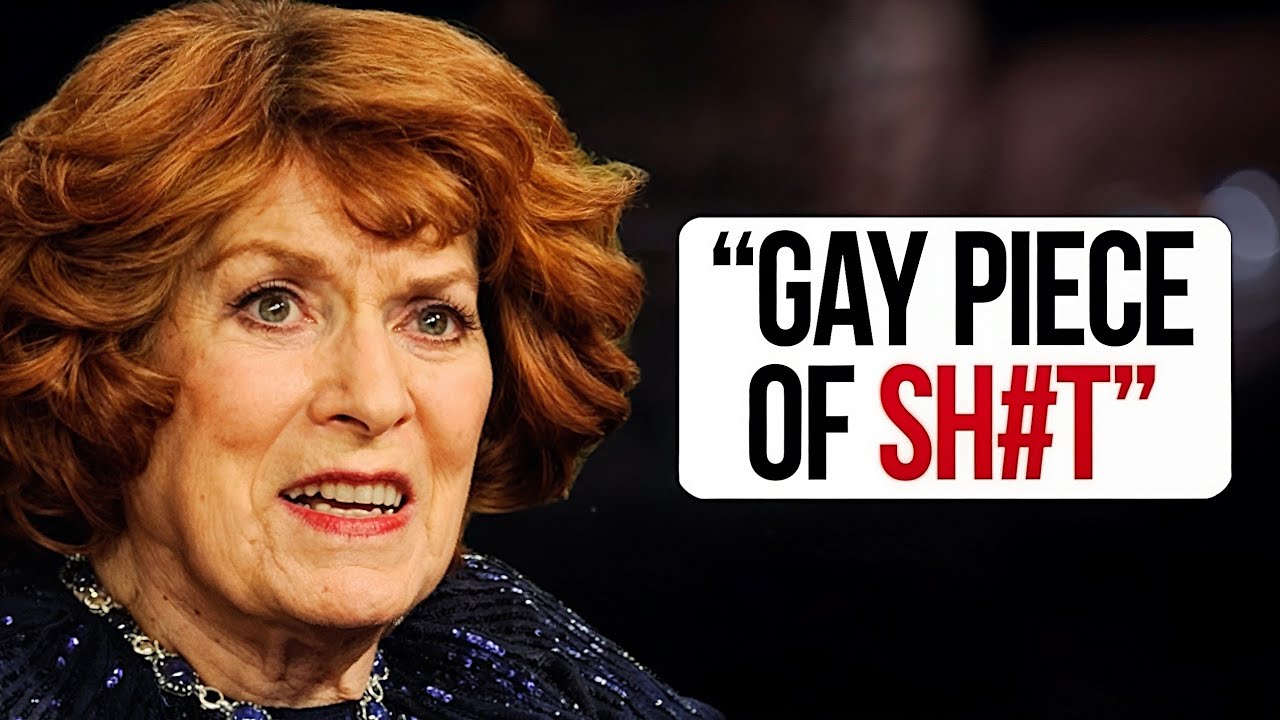
That same year, she landed her first Hollywood role as Esmeralda in “The Hunchback of Notre Dame,” opposite Laughton’s Quasimodo, launching her smoothly into the golden age of cinema. With her striking red hair, porcelain skin, and expressive green eyes, O’Hara became a Technicolor icon. But audiences were drawn to more than her looks. She deliberately chose roles featuring women of depth, strength, and independence rather than the passive sweethearts typically offered to actresses of her era.
Her performances in “How Green Was My Valley” (1941), which won the Academy Award for Best Picture, “The Black Swan” (1942), and “Sinbad the Sailor” (1947) showcased her versatility across drama, adventure, and romance. Her most celebrated collaborations came with director John Ford and actor John Wayne. Their on-screen chemistry produced classics like “Rio Grande” (1950), “The Quiet Man” (1952), and “McLintock! ” (1963), with “The Quiet Man” often cited as their finest work together.
Off screen, O’Hara was known for refusing to bend to studio pressure. She demanded fair pay, decent working conditions, and respect. She turned down roles she considered shallow or demeaning to women and refused to dye her red hair or disguise her Irish accent, proudly noting she was the only leading lady in Hollywood allowed to keep it. Her personal life was equally eventful.
At just 19, in 1939, she married English film producer George H. Brown, whom she met while working on “Jamaica Inn. ” The secret marriage ended in annulment in 1941. That same year, she married American film director William Houston Price.
The union produced a daughter, Bronwyn Bridget Price, born June 30, 1944, but Price’s battle with alcoholism strained the marriage, leading to divorce in 1951. From 1953 to 1967, O’Hara had a long, significant relationship with Enrique Parra, a wealthy Mexican banker and political figure. They never married, but she later spoke of him warmly. In 1968, at age 48, she married Charles F.
Blair Jr. , a brigadier general in the United States Air Force and a pioneering commercial pilot. Blair encouraged her to retire from acting and build a quieter life. They moved to the U.
S. Virgin Islands, and O’Hara stepped away from Hollywood to support his flying business. Their marriage lasted ten years until Blair died in a plane crash in 1978. That same year, O’Hara was diagnosed with uterine cancer; she underwent surgery and made a full recovery.
O’Hara was also one of the first major female stars to openly confront the exploitative side of the Hollywood studio system. During the 1940s and 1950s, she experienced harassment from powerful executives and producers, but refused to comply. She later said her resistance cost her jobs and career opportunities. In a direct statement in the late 1950s, she described being insulted, humiliated, and effectively blacklisted for refusing advances—an extraordinarily bold admission for a woman in that era.
One of the most painful relationships in her career was with director John Ford. He gave her some of her best roles, including “The Quiet Man,” but O’Hara later described him as emotionally cruel, manipulative, and abusive. She recounted how he would humiliate her in front of crews and once slapped her on set, calling it part of his directing style. She believed his controlling behavior stemmed from a one-sided obsession with her that he could not handle, turning his feelings into anger.
Despite these revelations, she never dismissed the brilliance of his films, offering instead an honest portrait of a complicated man. O’Hara maintained throughout her later years that speaking out had real consequences, yet she trusted her talent and moral compass. Decades before the MeToo movement and long before actresses like Rose McGowan and Ashley Judd voiced similar complaints, O’Hara had already documented the toxic culture of fame and power, though many dismissed her at the time. History later validated her accounts, and Hollywood eventually honored her not just for her performances but for her integrity and courage.
In 2014, the Academy of Motion Picture Arts and Sciences presented her with an honorary Oscar celebrating her lifetime of work. O’Hara accepted the award with the same elegance and strength she had shown throughout her life. She wrote her autobiography, “‘Tis Herself,” which detailed her full journey. She remained retired from acting since the 1970s, devoting herself to family and a private life.
Maureen O’Hara died peacefully in her sleep on October 24, 2015, at her home in Boise, Idaho, at age 95, from natural causes. She was buried at Arlington National Cemetery beside her beloved husband, Charles Blair, a final tribute to a partnership that defined her later years and connected her story to his distinguished service.


